
Wesco – Wesco enters into definitive agreement to acquire Newark Engineering Group, expanding data center cooling and lifecycle services

PITTSBURGH, June 8, 2026 /PRNewswire/ — Wesco International (NYSE: WCC), a leading provider of business-to-business distribution, logistics services, and supply chain solutions, today announced it has entered into a definitive agreement to acquire Newark Engineering Group (“Newark”), a Singapore-based provider of engineered cooling solutions and lifecycle services for data centers.
The acquisition expands Wesco’s capabilities in data center cooling and lifecycle services and strengthens its presence in the fast-growing Southeast Asia region.
Newark specializes in the design, supply, installation, commissioning and maintenance of advanced thermal management systems that are mission-critical to data center performance and reliability. The company serves customers across Southeast Asia, including Singapore, Malaysia, and Indonesia, delivering integrated solutions across the full data center lifecycle—from design and installation to ongoing maintenance and optimization.
Under the terms of the agreement, Wesco will acquire 100% of Newark for a cash-free, debt-free purchase price of 175 million Singapore dollars (approximately $136 million USD).
“Newark provides integrated, turnkey cooling solutions, with strong partnerships and a blue-chip customer base that includes global technology and Fortune 500 companies,” said John Engel, Chairman, President, and Chief Executive Officer of Wesco.
Mr. Engel continued, “This acquisition expands our participation in the data center value chain, particularly in engineered cooling and lifecycle services, and provides a strong growth platform in Southeast Asia. It’s a service-led business with attractive margins, and we see a clear path to above-market growth by leveraging Wesco’s global customer relationships and expanding solutions portfolio. We expect this acquisition to enhance our growth profile, support margin expansion, and generate attractive returns within the first year.”
The combination creates meaningful commercial opportunities by bringing together Newark’s established regional customer relationships with Wesco’s global account coverage. Wesco expects to expand access to hyperscale, enterprise, and colocation data center customers while increasing share of wallet through cross-selling electrical, communications, and supply chain solutions across Newark’s installed base.
Newark generated approximately USD$60 million in revenue in 2025 and is EBITDA margin accretive to the Wesco portfolio with a purchase multiple below Wesco’s current trading multiple.
“Partnering with Wesco will accelerate our growth and expand our ability to serve data center customers across Southeast Asia,” said Fanny Lee, Managing Director of Newark Engineering Group. “Wesco’s global platform and complementary capabilities will allow us to broaden our solutions portfolio, access new customers, and scale the business.”
The transaction is expected to close in the third quarter of 2026, subject to customary regulatory approvals and closing conditions.
SourceWesco
EMR Analysis
More information on WESCO: See the full profile on EMR Executive Services
More information on Anixter by WESCO: See the full profile on EMR Executive Services
More information on John J. Engel (Chairman, President & Chief Executive Officer, WESCO): See the full profile on EMR Executive Services
More information on Indraneel Dev (Executive Vice President & Chief Financial Officer, WESCO): See the full profile on EMR Executive Services
More information on Newark Engineering Group by WESCO: https://newark.com.sg/ + Headquartered in Singapore with offices in Malaysia and Indonesia, Newark Engineering Group is a provider of mission-critical cooling and thermal management solutions, delivering integrated customized HVAC solutions spanning design support, equipment supply, installation, commissioning and lifecycle services for data centers and other mission-critical infrastructure across Southeast Asia.
Newark Engineering Pte Ltd (Newark Engineering) is a fast growing, integrated full service fluid and air handling solutions provider.
Since its humble inception in 1992, Newark Engineering has established its mark in China, Malaysia, Vietnam, Indonesia, Singapore and neighboring countries driving and expanding geographical and industry footprint.
- 1,565 MW of IT cooling installed over the past 3 years
- 33 Years of commitment to our customers
- 7 Countries successfully delivered projects worldwide
- 4 Offices in Southeast Asia
More information on Fanny Lee (Managing Director, Newark Engineering Group, WESCO): See the full profile on EMR Executive Services
EMR Additional Notes:
- Supply Chain:
- A supply chain is the end-to-end network of individuals, organizations, resources, activities, data, and technologies involved in the creation and delivery of a product or service—from raw materials to the final customer.
- A supply chain includes not only physical flows (goods), but also information flows and financial flows across all participants.
- At the most fundamental level, Supply Chain Management (SCM) is the integrated planning, coordination, and optimization of the flow of:
- goods
- information
- and finances
- from raw material sourcing to final delivery.
- At its core, SCM is not just “management of flows” but the optimization of those flows across cost, service level, speed, and risk.
- Supply Chain vs Logistics:
- Supply Chain: entire ecosystem (end-to-end)
- Logistics: subset focused on movement and storage of goods
- Cloud Computing:
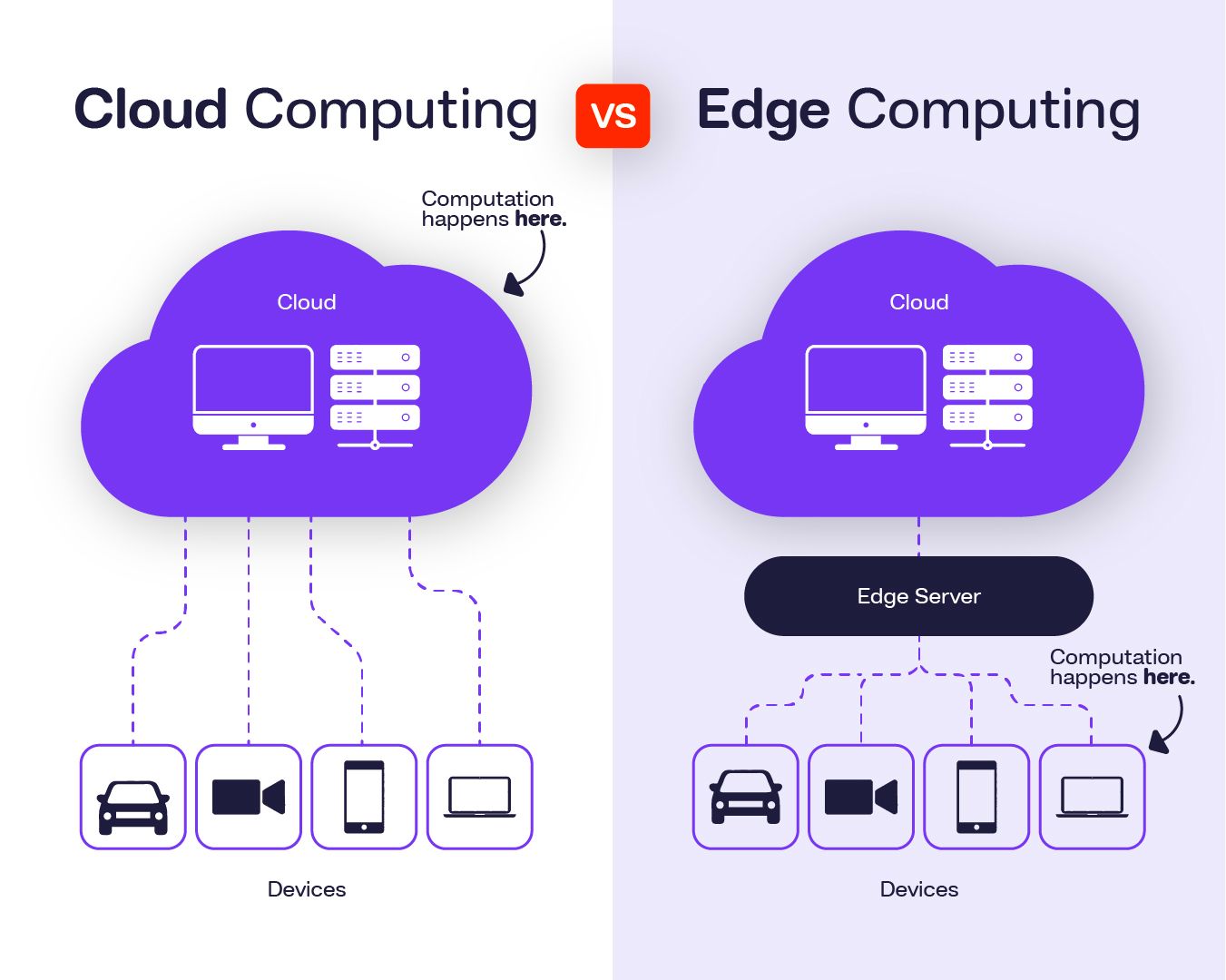
- Cloud computing is a general term for anything that involves delivering hosted services over the internet. It is the on-demand availability of computer system resources, especially data storage and computing power, without direct active management by the user. Large clouds often have functions distributed over multiple locations, each location being a data center. Cloud services typically include IaaS, PaaS, and SaaS service models.
- Edge Computing:
- Edge computing is a form of computing that is done on site or near a particular data source, minimizing the need for data to be processed in a remote data center.
- Edge computing can enable more effective city traffic management. Examples of this include optimising bus frequency given fluctuations in demand, managing the opening and closing of extra lanes, and, in future, managing autonomous car flows.
- An edge device is any piece of hardware that controls data flow at the boundary between two networks. Edge devices fulfill a variety of roles, depending on what type of device they are, but they essentially serve as network entry — or exit — points.
- There are five main types of edge computing devices: IoT sensors, smart cameras, uCPE equipment, servers and processors. IoT sensors, smart cameras and uCPE equipment will reside on the customer premises, whereas servers and processors will reside in an edge computing data centre.
- In service-based industries such as the finance and e-commerce sector, edge computing devices also have roles to play. In this case, a smart phone, laptop, or tablet becomes the edge computing device.
- Edge Devices:
- Edge devices encompass a broad range of device types, including sensors, actuators and other endpoints, as well as IoT gateways. Within a local area network (LAN), switches in the access layer — that is, those connecting end-user devices to the aggregation layer — are sometimes called edge switches.
- Edge devices act as the interface between the physical world (data generation) and digital networks.
- Hybrid Computing:
- A hybrid cloud integrates private, on-premises infrastructure with public cloud services, offering flexibility to distribute workloads between these environments. Hybrid models often incorporate edge computing, allowing organizations to run critical workloads locally at the edge while using the cloud for other tasks, thereby optimizing performance, cost, and data management for various business needs.
- HPC (Hight-Performance Computing):
- Practice of aggregating computing resources to gain performance greater than that of a single workstation, server, or computer. HPC can take the form of custom-built supercomputers or groups of individual computers called clusters.
- HPC is typically used for simulation, scientific computing, AI training, and complex modeling.
- Data Centers – Physical Infrastructure:
- A data center is a facility that centralizes an organization’s shared IT operations and equipment for the purposes of storing, processing, and disseminating data and applications. Because they house an organization’s most critical and proprietary assets, data centers are vital to the continuity of daily operations.
- Hyperscale Data Centers – Physical Infrastructure:
- The clue is in the name: hyperscale data centers are massive facilities built by companies with vast data processing and storage needs. These firms may derive their income directly from the applications or websites the equipment supports, or sell technology management services to third parties.
- Hyperscale Data Centers are typically operated by large cloud providers (e.g., hyperscalers) and designed for horizontal scalability.
- White Space and Grey Space in Data Centers – Physical Infrastructure:
- White space in a data center refers to the area where IT equipment is placed. It typically houses servers, storage, network gear, and racks.
- Gray space, on the other hand, is the area where the back-end infrastructure is located. This space is essential for supporting the IT equipment and includes areas for switchgear, UPS, transformers, chillers, and generators.
- Colocation in Data Centers – Physical Infrastructure:
- A colocation data center is a facility where businesses rent space, power, and cooling to house their own servers and networking hardware, rather than maintaining them in-house. It offers a cost-effective way to access high-level security, internet connectivity, and 24/7 technical support while retaining control of the equipment.
- Edge & Cloud Services – Integrated Architecture (Edge-to-Cloud):
- Edge services perform data processing on local devices and servers near the data source, reducing latency for time-sensitive operations, while cloud services centralize large computations and storage in remote datacenters, offering massive scalability and flexibility for general workloads.
- Most organizations use both, creating an “edge-to-cloud” architecture where edge devices handle immediate tasks, and the cloud manages large-scale data processing and complex applications, providing a seamless and efficient experience.
- Data Center Cooling Technologies:
- Air Cooling:
- Uses Computer Room Air Conditioners (CRAC) or Air Handlers (CRAH) combined with hot aisle / cold aisle containment to circulate cold air through the facility.
- It is widely used and cost-effective, but becomes inefficient at very high rack power densities (typically >20–30 kW per rack).
- Liquid Cooling:
- Liquid cooling uses water or dielectric fluids to remove heat more efficiently than air, enabling higher power densities required for AI and HPC workloads.
- Direct-to-Chip (DTC) Cooling:
- A Direct-to-Chip (DTC) cooling system is a liquid-cooling technology used to cool high-performance computer chips—such as CPUs, GPUs, and accelerators—by bringing a liquid coolant directly to the chip surface through a cold plate (heat exchanger attached to the chip).
- It is one of the most efficient and fastest-growing cooling methods in modern data centers, especially in AI, HPC (High-Performance Computing), and high-density server environments.
- RDHX (Rear Door Heat Exchanger) – Rack-level Heat Exchange:
- A Rear Door Heat Exchanger (RDHx) is a rack-mounted liquid-to-air heat exchanger installed on the rear of an IT rack.
- Chilled water flows through the door, and hot air from servers passes through it, removing heat before it enters the data center room (air-neutral or near-zero heat rejection to white space).
- Can be passive (no fans) or active (with fans)
- Enables high-density racks without requiring full liquid cooling at the chip level.
- HDU (Heat Dissipation Unit):
- Unlike a CDU that transfers heat to the facility water loop, a Heat Dissipation Unit (HDU) rejects heat from the server rack to the data center air (white space).
- This means heat is ultimately removed by room-level cooling systems (CRAC/CRAH), making it a hybrid approach between air and liquid cooling.
- CDU (Coolant Distribution Unit):
- A coolant distribution unit contains pumps, heat exchangers, valves, and control systems that circulate coolant through a network of pipes, distributing it to servers or racks.
- Coolant Distribution Units are essential in liquid-cooled data centers, providing:
- flow control
- pressure regulation
- temperature management
- hydraulic separation between facility loop and IT loop.
- They interface between facility water (building loop) and IT cooling loops, ensuring safe and controlled heat transfer.
- Chillers:
- Mechanical systems that remove heat from a building’s liquid coolant (typically water) and transfer it to the outside environment (via air or water loops).
- Unlike systems that cool air directly, chillers generate chilled water that circulates through cooling systems such as CDUs, CRAH/CRAC units, or heat exchangers.
- They are essential for cooling large-scale data centers and industrial facilities, especially where free cooling is not sufficient.
- Condensors:
- A condenser is a heat exchanger that cools a gas or vapor, causing it to condense into a liquid, releasing latent heat.
- In cooling systems, condensers are typically part of chiller or refrigeration cycles, where they reject heat to ambient air or water (e.g., cooling towers or dry coolers).
- Technology Cooling System (TCS):
- Non-standard / umbrella term that refers to an integrated cooling architecture used to manage heat in technology environments (e.g., data centers, industrial systems).
- A TCS may include:
- Chillers
- CDUs
- Pumps and piping
- Heat exchangers
- Control systems
- Air Cooling:
- Commissioning:
- Commissioning ensures the system not only works but also works efficiently and effectively to meet its intended purpose. It is a quality assurance process that ensures a newly installed system is designed, installed, tested, and maintained to operate according to the owner’s requirements.
- Commissioning also verifies performance against design intent and operational requirements—not just functionality.
- It goes beyond a simple installation. Commissioning is a formal, documented process that involves several key steps:
- Pre-Installation
- Installation Verification.
- Functional Performance Testing.
- Documentation & Training.
- Handover & Ongoing Commissioning.
- Blue-Chip:
- The term “blue chip” originates from poker, where blue chips hold the highest value.
- A blue-chip company is a publicly traded, well-established company with a strong market position, proven business model, and a long track record of stable financial performance.
- Blue-chip companies are typically characterized by:
- large market capitalization and industry leadership
- strong and consistent revenues and profitability
- solid balance sheets and financial resilience
- recognized brands and global or national presence
- reliable dividend payments (in many, but not all cases)
- They are generally considered lower-risk, long-term investments, as they tend to perform more resiliently during economic downturns, although they are not risk-free.
- EBIT:
- Earnings Before Interest and Taxes (EBIT) is a measure of a company’s operating profitability before accounting for interest expenses and income taxes. It is also known as operating profit and shows how effectively a company’s core business is generating profit from its operations.
- EBITA:
- Earnings before interest, taxes, and amortization (EBITA) is a measure of company profitability used by investors. It is helpful for comparing one company to another in the same line of business.
- EBITA = Net income + Interest + Taxes + Amortization
- EBITDA:
- Earnings before interest, taxes, depreciation, and amortization (EBITDA) is an alternate measure of profitability to net income. By including depreciation and amortization as well as taxes and debt payment costs, EBITDA attempts to represent the cash profit generated by the company’s operations.
- EBITDA and EBITA are both measures of profitability. The difference is that EBITDA also excludes depreciation.
- EBITDA is the more commonly used measure because it adds depreciation—the accounting practice of recording the reduced value of a company’s tangible assets over time—to the list of factors.
- EV/EBITDA (Enterprise Multiple):
- Enterprise multiple, also known as the EV-to-EBITDA multiple, is a ratio used to determine the value of a company.
- It is computed by dividing enterprise value by EBITDA.
- The enterprise multiple takes into account a company’s debt and cash levels in addition to its stock price and relates that value to the firm’s cash profitability.
- Enterprise multiples can vary depending on the industry.
- Higher enterprise multiples are expected in high-growth industries and lower multiples in industries with slow growth.