Schneider Electric – Schneider Electric and Apple introduce new smart thermostat for Apple Home Collection and power mount for Apple HomeView

- Schneider Electric’s residential energy portfolio continues to expand, built to deliver home energy intelligence.
- Schneider Home introduces its first Smart Thermostat designed in collaboration with Apple for Apple Home Collection.
- Schneider Home’s new Power Mount is purpose-built for Apple HomeView (Wall Mounted).
Schneider Electric, a global energy technology leader, today announced a new Smart Thermostat, co-developed with Apple for Apple Home Collection, and an exclusive Power Mount for the newly announced Apple HomeView (Wall Mounted). Both products combine Schneider Electric’s expertise in home energy with the Apple Home experience. Homeowners can privately control their energy for even more comfort in Apple Home, furthering Schneider Electric’s mission to bring energy intelligence to the home.
Home energy, seamlessly integrated with Apple Home
The collaboration unites Schneider Electric’s deep domain leadership in energy technology with Apple’s seamless ecosystem and user experience. Together, the two companies are bringing new products – a Smart Thermostat, Room Sensor, and Power Mount for Apple HomeView – that deliver seamless energy management to Apple Home. The products will be available within Schneider Electric’s Schneider Home residential portfolio.
- Schneider Home’s Smart Thermostat, co-developed for Apple Home Collection. Through the Apple Home app, Smart Thermostat brings Adaptive Temperature to help homeowners balance comfort, convenience, and energy orchestration. Users can adjust the temperature hands-free using Siri on Apple products. The small metal bezel features a smooth silver finish, blending perfectly in any environment. Its translucent display gives it a soft matte face with no glare, and proximity awareness makes every interaction effortless and gentle on the eyes in a dark room. Built-in sensing plus optional Room Sensors allow the system to sense conditions including temperature and humidity, adapting to the unique needs of users’ homes. Smart Thermostat also works with the Clean Energy Guidance feature from Apple, using EnergyKit to power the grid forecast feature in the Apple Home app.*
- Set up, connectivity, and security have never been better, with effortless tap-to-pair NFC functionality even when Smart Thermostat is not powered, allowing set up in seconds by simply bringing an iPhone nearby. With Matter compliance and Thread, the system remains connected to the home network even during an internet outage. Smart Thermostat and the Room Sensors are also end-to-end encrypted in Apple Home, so only users and the people they choose can access their home data.
- Schneider Home’s Power Mount, designed exclusively for Apple’s new Apple HomeView (Wall Mounted). Power Mount’s design is purpose-built for Apple HomeView, offering an elegant wall-mounted installation in three configurations: USB-C Wall Connector; AC Wired; and Power over Ethernet (PoE) Wired. All three Power Mounts feature precision magnets to securely hold Apple HomeView against the wall to stay powered. For a seamless professional installation with no visible wires, the AC Wired Power Mount connects to electrical wiring through a single wall box, and the PoE Wired Power Mount receives power and data through a standard ethernet cable hidden in the wall.
“The smartest home is one where every part works together, and that’s only possible through technology that enables energy intelligence,” said Olivier Blum, CEO of Schneider Electric. “Advancing energy tech is the core of Schneider Electric’s mission, and Schneider Home is advancing energy tech in everyday living. Collaborating with Apple brings together smart energy management, exceptional user experience, and seamless home operation with Apple HomeView to make energy feel effortless and help the home perform at its best.”
“At Apple, our goal is to deliver great products that make everyday experiences simpler and more enjoyable, with privacy at the core, ” said Matthew Costello, Apple’s vice president of Hardware Engineering. “These new products bring Schneider Electric’s deep expertise in energy into Apple Home in a smarter, more thoughtful way. They’re easy to set up, intuitive to use, and designed to work seamlessly with Apple Home — a natural extension of the experience our customers already know and love.”
Home energy is becoming more complex, benefiting from different sources of electricity, consuming more power, and operating in a siloed ecosystem across heating and cooling, water heating, EV charging, appliances, and connected devices. Schneider Home brings energy intelligence to the home, with solutions including the Smart Thermostat, EV chargers, circuit breakers, electrical panels, uninterruptible power supply (UPS) and connected wiring devices. Schneider Home represents a vision for how home energy technologies can work together with seamless orchestration, helping homeowners better understand, manage, and optimize their energy use, without compromising comfort, simplicity, or cost.
Schneider Electric has a deep legacy in home energy, with its technologies found in 4 out of 10 U.S. homes today. With 190 years of expertise in the home’s electrical panel and delivered through a trusted ecosystem of more than 1 million electricians, installers, builders, and technology partners, Schneider Electric brings energy intelligence to life in a way that feels coordinated, more responsive, and easy to adopt. Learn more about Schneider Home at schneiderhome.com, and more details will be shared at the 2027 Consumer Electronics Show (CES) in Las Vegas.
Privacy in Apple Home
Privacy is foundational to Apple Home. Personal data in the Apple Home app is stored end-to-end encrypted and never accessible to Schneider Electric or Apple.
Professional installation available at Apple Retail
For customers who prefer to have their smart home accessories professionally installed, Apple Retail now offers third-party installation from ADT for an additional charge, available in the U.S. starting this fall. ADT also leverages the nationwide installer network from Qmerit, backed by Schneider Electric.
Availability
Customers in the U.S. and Canada can purchase Smart Thermostat and the accompanying Room Sensors in the Apple Store beginning early next year. Smart Thermostat retails for a suggested MSRP of $199.99; Room Sensor retails for a suggested MSRP of $39.99.
Customers in Australia, Canada, India, New Zealand, Singapore, South Africa, the U.K., and the U.S. can order the USB-C Wall Connector and AC Wired Power Mounts for Apple HomeView on Apple.com, with availability in Apple Retail Stores beginning Friday, November 13. Customers can purchase the PoE Wired Power Mount beginning early next year. In India, the AC Wired Power Mount will be coming later. In the U.S., the USB-C Wall Connector Power Mount retails for a suggested MSRP of $59.99; the AC Wired for $79.99; and the PoE Wired for $129.99.
*EnergyKit disclaimer on availability and requirements:
- Apps. EnergyKit is currently designed for use with EV charging and smart thermostat apps, and requires iOS 26 or iPadOS 26 or later.
- Regions. EnergyKit is only available in the contiguous United States.
SourceSchneider Electric
EMR Analysis
More information on Schneider Electric: See the full profile on EMR Executive Services
More information on Olivier Blum (Chief Executive Officer, Schneider Electric): See the full profile on EMR Executive Services
More information on Nathan Fast ( Member of the Executive Committee and Executive Vice President, Group Chief Financial Officer, Schneider Electric): See the full profile on EMR Executive Services
More information on Digital Flywheel by Schneider Electric: See the full profile on EMR Executive Services
More information on Energy Management by Schneider Electric: See the full profile on EMR Executive Services
More information on Frédéric Godémél (Member of the Executive Committee and Executive Vice President, Energy Management, Schneider Electric): See the full profile on EMR Executive Services
More information on Schneider Home by Energy Management by Schneider Electric: https://www.se.com/us/en/home/ + Take charge of your home energy. New ways to understand, manage and optimize your home energy
Schneider Home is an integrated residential energy management and smart home system by Schneider Electric designed to automate, monitor, and optimize electricity production, storage, and consumption
Schneider Home ecosystem includes Power Mount, Climate Control, Switchboard and Enclosures, Electric Vehicle Charging and Electrical Protection and Control.
More information on Apple: https://www.apple.com/ + Apple revolutionized personal technology with the introduction of the Macintosh in 1984. Today, Apple leads the world in innovation with iPhone, iPad, Mac, AirPods, Apple Watch, and Apple Vision Pro. Apple’s six software platforms — iOS, iPadOS, macOS, watchOS, visionOS, and tvOS — provide seamless experiences across all Apple devices and empower people with breakthrough services including the App Store, Apple Music, Apple Pay, iCloud, and Apple TV. Apple’s more than 150,000 employees are dedicated to making the best products on earth and to leaving the world better than we found it.
More information on John Ternus (Chief Executive Officer, Apple): https://www.apple.com/leadership/ + https://www.linkedin.com/in/john-ternus-2392b76/
More information on Johny Srouji (Chied Hardware Officer, Apple): https://www.apple.com/leadership/ + https://www.linkedin.com/in/johny-srouji-1b7a944/
More information on Matthew Costello (Vice President, Hardware Engineering, Apple): https://www.linkedin.com/in/matthew-costello-b9a92310/
More information on Apple Home Collection by Apple: https://www.apple.com/newsroom/2026/10/introducing-apple-home-collection-a-new-lineup-of-smart-home-accessories/ + In collaboration with LG Electronics and Schneider Electric, Apple brings the simplicity, reliability, and privacy of iPhone and Apple Home to a new suite of smart cameras, thermostats, and a door lock. Building on the thousands of Works with Apple Home and Matter accessories available today, Apple Home Collection offers customers a new array of recommended products to better understand what’s happening inside and outside their home, manage access, and keep the temperature just right throughout the day. Availability for all products begins in December, with select accessories available starting early 2027.
More information on Apple HomeView by Apple: https://www.apple.com/apple-homeview/ + A new way to enjoy entertainment, stay connected, and manage the home.
With a stunning 7-inch Liquid Retina display, HomeView brings entertainment, connection, and smart home management together in one place, from playing music and making FaceTime calls to home monitoring and hands-free automations with voice control — all designed with privacy and security at the core. HomeView recognizes users by their faces, adapting so they can access their personal content in Messages, FaceTime, Calendar, Reminders, and Find My. HomeView features Siri AI, an entirely new version of Siri that’s profoundly more capable and conversational, with broad world knowledge that powers richer music discovery and onscreen awareness. When paired with an Apple Intelligence-enabled device, it can also draw on a user’s personal context, such as their Calendar, Messages, and relevant information across their apps, to provide more helpful, personalized responses.
Designed to fit in any space, HomeView can be placed on a tabletop as the center of the home or wall-mounted to fit in spaces like the entryway or hallway. Pre-orders start today, with availability beginning November 13, 2026.
More information on Connectivity Standards Alliance (CSA) – Previously named the Zigbee Alliance: https://csa-iot.org/ + The Alliance is the Foundation and Future of the IoT.
With over 20 years of operating as a global, open standards Member-driven organization, the Alliance has evolved, continuing to expand in scale, scope, and impact. From our founding technology, Zigbee, to our IP-based open standard, Matter, the Alliance is home to several standards. We aim to develop a collection of market-guided technology standards supporting the future of the IoT while simultaneously expanding the market and enhancing the value it delivers.
Our wide-ranging global membership is on a mission to ignite creativity and collaboration in the Internet of Things by developing, evolving, and promoting universal open standards, enabling all objects to connect and interact securely. With regional diversity in our Board, and with broad representation throughout the supply chain, we ensure that our standards reflect the needs of a global ecosystem. We believe all objects can work together to enhance the way we live, work, and play.
The Zigbee Alliance announced on 11.05.2021 its organizational rebrand to the Connectivity Standards Alliance (CSA). The Alliance will continue to develop Zigbee technology and will retain the Zigbee technology brand.
More information on Tobin Richardson (President and Chief Executive Officer, CSA): https://csa-iot.org/staff/ + https://www.linkedin.com/in/tobinrichardson/
More information on Matter Connectivity Standard by Connectivity Standards Alliance (CSA): https://csa-iot.org/all-solutions/matter/ + The Foundation for Connected Things.
One protocol to connect compatible devices and systems with one another. Smart home devices should be secure, reliable, and seamless to use. And with Matter, they are.
Matter is a unifying, IP-based connectivity protocol built on proven technologies, helping you connect to and build reliable, secure IoT ecosystems.
Matter is built around a shared belief that smart home devices should be secure, reliable, and seamless to use. By building upon Internet Protocol (IP), Matter will enable communication across smart home devices, mobile app, and cloud services, and define a specific set of IP-based networking technologies for device certification.
More information on Thread Group: https://threadgroup.org/ + Thread Group delivers an open and global wireless mesh networking protocol that extends IP infrastructure in homes and buildings through industry collaboration. This low-power, reliable, and secure mesh network enables the most diverse ecosystem of IoT devices.
Formed in 2014, the non-profit Thread Group is focused on making Thread the foundation for the Internet of Things in homes and commercial buildings. Built on open standards, Thread is a low power wireless mesh networking protocol that enables direct, end-to-end, secure, and scalable connectivity between more than 1,500 certified IoT devices, mobile devices, and the internet. Because Thread is IP-based, it seamlessly integrates with many environments, apps, devices, and clouds. The Thread Group provides a rigorous certification program to ensure device interoperability and positive user experience.
Thread is backed by more than 240 industry-leading companies including Amazon, Apple, ASSA ABLOY, Fortune Brands Innovations, Google, Lutron, Inventronics, Nordic Semiconductors, NXP Semiconductors, Qualcomm, Schneider Electric, Siemens, Silicon Labs, and Samsung SmartThings.
More information on Ann Olivo (President, Thread Group): https://threadgroup.org/newsroom/press-release/thread-group-appoints-ann-olivo-as-its-new-president + https://www.linkedin.com/in/amolivo/
More information on Consumer Technology Association (CTA): https://www.cta.tech/ + As North America’s largest technology trade association, the Consumer Technology Association (CTA)® is the tech sector. Our members are the world’s leading innovators – from startups to global brands – helping support more than 18 million American jobs. CTA owns and produces CES® – the most powerful tech event in the world.
More information on Gary Shapiro (Executive Chair, Consumer Technology Association (CTA)): https://www.cta.tech/about/thought-leaders/ + https://www.linkedin.com/in/gary-shapiro/
More information on Kinsey Fabrizio (President and Chief Executive Officer, Consumer Technology Association (CTA)): https://www.cta.tech/about/thought-leaders/ + https://www.linkedin.com/in/kinsey-fabrizio/
More information on CES 2027 (January 6-9, 2027 – Las Vegas, NV, United States) by CTA: https://www.ces.tech/ + CES is owned and produced by the Consumer Technology Association (CTA)®, which provides the ultimate platform for technology leaders to connect, collaborate, and propel consumer technology forward.
This is where brands get business done, meet new partners and where the industry’s sharpest minds take the stage to unveil their latest releases and boldest breakthroughs.
CES unites the brightest tech luminaries to pioneer the future and solve the world’s biggest challenges.
CES connects innovators, decision makers, media, influencers, visionaries, and potential customers across the entire tech ecosystem.
More information on ADT: https://www.adt.com/ + For 150 years, ADT has made the security of our customers our top priority. Today, more than 13,000 professionals in over 150 locations throughout the U.S. ensure that our over 6 million customers stay as safe and secure as possible.
ADT is a leading provider of security, interactive, and smart home solutions serving residential and small business customers in the U.S. Through innovative offerings, unrivaled safety, and a premium customer experience delivered by the largest network of smart home security professionals in the U.S., ADT empowers people to protect and connect to what matters most, every second, every day.
More information on Jim DeVries (Chairman, President and Chief Executive Officer, ADT): https://www.adt.com/about-adt + https://www.linkedin.com/in/jim-devries-a6515522/
More information on Qmerit: https://qmerit.com/ + Qmerit provides a simpler way to get trusted electrical services at homes and businesses through America’s premier electrical contractor network.
Qmerit simplifies EV charging and electrical services for homeowners and businesses. We make it easy to get your project done right with America’s largest network of certified electricians and expert guidance from start to finish.
More information on Oliver Phillips (President, Qmerit): https://qmerit.com/news/tracy-k-price-to-retire-as-qmerit-ceo/ + https://www.linkedin.com/in/oliver-phillips-4311576b/
EMR Additional Notes:
- Grid, Microgrids, DERs and DERM’s:
- Grid / Power Grid:
- The power grid is a network for delivering electricity to consumers. The power grid includes power generation facilities, substations, transmission lines and towers, distribution networks, protection and control equipment, and associated communication and monitoring infrastructure.
- The grid continuously balances electricity generation and consumption while maintaining system stability and power quality, supplying electricity for applications ranging from industry to household appliances.
- Electric grids perform three major functions or stages of electricity supply: power generation, transmission, and distribution. Grid operation also includes functions such as system balancing, protection, control, monitoring, and, increasingly, energy storage and demand-side management.
- The power grid is a network for delivering electricity to consumers. The power grid includes power generation facilities, substations, transmission lines and towers, distribution networks, protection and control equipment, and associated communication and monitoring infrastructure.
- Microgrid:
- A microgrid is a group of interconnected loads and distributed energy resources (DERs) within clearly defined electrical boundaries that acts as a single controllable entity with respect to the main grid and can operate either connected to the main grid or, when appropriately designed, intentionally and controllably in an islanded mode.
- Microgrids can integrate local generation, energy storage, controllable loads, and other DERs to improve resilience, flexibility, efficiency, or local energy management.
- A microgrid is a group of interconnected loads and distributed energy resources (DERs) within clearly defined electrical boundaries that acts as a single controllable entity with respect to the main grid and can operate either connected to the main grid or, when appropriately designed, intentionally and controllably in an islanded mode.
- Smart Grid:
- A smart grid is an electrical grid enhanced with digital communications, sensing, automation, control, and data/analytics technologies across generation, transmission, distribution, and/or customer-side systems to improve the monitoring, operation, efficiency, reliability, resilience, and flexibility of the power system.
- Distributed Energy Resources (DERs):
- Distributed energy resources (DERs) are relatively small-scale electricity generation, storage, and flexible demand resources, located at or near the distribution system or customer premises, that can supply, store, or modify electricity consumption and are interconnected to the electric grid. They are often located close to load centers and can be used individually or in aggregate to provide value to the grid.
- Common examples of DERs include rooftop solar PV units, small wind turbines, small gas-fired generators or engines/turbines, microturbines, biomass generators, fuel cells, combined heat and power (CHP) or tri-generation systems with electrical generation, battery storage, electric vehicles and controllable EV charging or discharging where they can provide grid flexibility, and demand response applications.
- Distributed energy resources (DERs) are relatively small-scale electricity generation, storage, and flexible demand resources, located at or near the distribution system or customer premises, that can supply, store, or modify electricity consumption and are interconnected to the electric grid. They are often located close to load centers and can be used individually or in aggregate to provide value to the grid.
- Distributed Energy Resources Management Systems (DERMS):
- Distributed Energy Resources Management Systems (DERMS) are software platforms that help utilities, distribution system operators (DSOs), aggregators, and other energy-sector organizations monitor, provide visibility into, forecast, coordinate, optimize, and, where supported, control distributed energy resources (DERs).
- DERMS can be used to aggregate and coordinate large numbers of DERs and flexible loads for grid services, including voltage and power-flow management, congestion and constraint management, balancing, flexibility services, resilience, and participation in demand-response or other electricity markets. DERMS can be defined in many ways, depending on the use case, the types of DERs being managed, the responsibilities of the organization using the system, and the architecture of the power system.
- Distributed Energy Resources Management Systems (DERMS) are software platforms that help utilities, distribution system operators (DSOs), aggregators, and other energy-sector organizations monitor, provide visibility into, forecast, coordinate, optimize, and, where supported, control distributed energy resources (DERs).
- Grid / Power Grid:
- NFC (Near Field Communication):
- https://nfc-forum.org + Near Field Communication (NFC) is a short-range wireless communication technology that enables compatible electronic devices to exchange data when brought into close proximity, typically within a few centimetres. Operating at 13.56 MHz, NFC uses electromagnetic induction between nearby antennas to establish communication, commonly through a simple tap or close approach.
- NFC is widely used for contactless payments, public transport ticketing, access control, identity applications, information exchange and convenient pairing of electronic devices. Depending on the application and device configuration, communication may occur between two powered devices or between an active device and a passive tag or card. Passive NFC devices can draw the energy required for communication from the electromagnetic field generated by the active device, allowing operation without an internal battery.
- NFC technology is based on international standards, including relevant ISO/IEC specifications. The NFC Forum develops technical specifications and certification programmes intended to support interoperability between NFC-enabled devices and systems. NFC also builds on a large ecosystem of deployed contactless cards, readers, smartphones and other compatible devices.
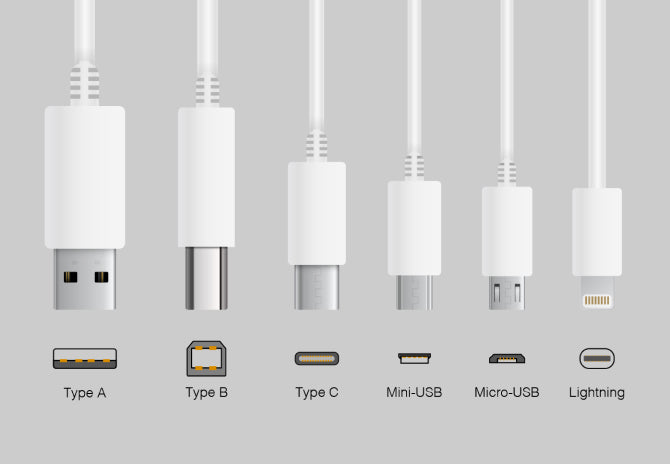
- USB vs. Power Supply / Delivery USB Charger + USB Types:
- A Power Supply is intended to provide a constant voltage to static applications, whereas a Charger is designed to provide a continuously regulated current to mobile devices, which have an integrated Battery.
- USB-PD can charge smartphones/tablets up to 70% faster than a standard USB charger with 5 watts of power.
- AC (Alternating Current) & DC (Direct Current) & UC (Universal Current):
- Direct Current (DC):
- Electric current that is unidirectional, meaning the flow of charge is always in the same direction. Unlike alternating current, the direction does not change. It is used in many household electronics and in all battery-powered devices.
- Direct current has many uses, from charging batteries to supplying power for electronic systems, motors, and industrial processes. Very large quantities of DC power are used in applications such as aluminum smelting and other electrochemical processes.
- DC is more efficient for long-distance transmission at very high voltages (HVDC) because it avoids reactive power losses and reduces skin effect and capacitive losses, especially over long distances and submarine cables.
- Alternating Current (AC):
- Alternating current is an electric current in which the direction of flow periodically reverses (typically 50 or 60 Hz).
- AC is used in power grids and homes because it can be easily transformed to higher or lower voltages using transformers. This allows efficient transmission at high voltage over long distances and safe distribution at low voltage for end users.
- DC can also be converted to different voltage levels, but it requires power electronics (converters), not simple transformers.
- Universal Current (UC): .
- Universal Current (UC) means a device can operate with either AC or DC input.
- For example, a 24 V UC input can accept either 24 V AC or 24 V DC.
- UC is not a type of current, but a device input specification indicating compatibility with both AC and DC supplies.
- Direct Current (DC):
- Volts of Direct Current (VDC):
- VDC stands for Volts of Direct Current, representing electric potential in a system where current flows consistently in one direction, from positive to negative. Unlike VAC (Alternating Current), VDC is used by batteries, solar panels, and electronics, providing stable, non-reversing power, typically for low-voltage devices, electronics, and industrial sensors.
- VDC Main Distribution Bus:
- A VDC (Volts Direct Current) main distribution bus is a central, heavy-duty electrical conductor—typically a copper or aluminum bar—used to collect and distribute direct current power from sources (like batteries, solar panels, or rectifiers) to various loads in a high-power system. It acts as the central backbone of a DC power architecture, commonly operating at higher voltages (e.g., 380V, 400V, 800V, or 1000V) in modern industrial, data center, and marine applications to increase efficiency and reduce copper losses.
- Ethernet:
- Ethernet is a family of wired networking technologies defined by the IEEE 802.3 standards, used to connect devices within Local Area Networks (LANs).
- It enables reliable, high-speed data communication over physical media such as:
- Twisted-pair copper cables
- Fiber optics
- Ethernet operates using standardized protocols for data framing, MAC (Media Access Control) addressing, and data transmission, forming the foundation of most modern enterprise IT networks, industrial automation systems, and data center networks.
- Single Pair Ethernet (SPE):
- Single Pair Ethernet (SPE) is an Ethernet variant that transmits data over a single twisted pair of copper wires instead of the traditional two or four pairs used in conventional Ethernet.
- It enables lightweight, cost-efficient connectivity for edge devices such as:
- Sensors
- Actuators
- Controllers
- Edge computing devices
- SPE can also deliver electrical power using Power over Data Line (PoDL), making it particularly well suited for Industrial IoT (IIoT), automotive, and building automation applications.
- Compared with conventional Ethernet, SPE reduces cable size, weight, installation cost, and connector complexity while maintaining Ethernet compatibility.
- Advanced Physical Layer (APL):
- Ethernet-APL (Advanced Physical Layer) is an industrial physical layer based on Single Pair Ethernet (SPE) specifically designed for the process industries.
- It enables Ethernet communication over:
- Two-wire cables
- Long distances (up to approximately 1,000 meters)
- Intrinsically safe connections for hazardous areas
- Ethernet-APL bridges the gap between Operational Technology (OT) and Information Technology (IT) by allowing field devices such as transmitters, analyzers, and valves to communicate directly over Ethernet without requiring proprietary fieldbus gateways.
- It is especially used in industries such as:
- Oil & Gas
- Chemicals
- Pharmaceuticals
- Food & Beverage
- Water & Wastewater
- Ethernet-APL can be viewed as the ruggedized industrial implementation of SPE for harsh and hazardous environments.
- PoE (Power over Ethernet):
- Power over Ethernet (PoE) is a technology that delivers both electrical power and Ethernet data over the same standard copper Ethernet cable, eliminating the need for separate power wiring.
- Typical powered devices include:
- IP cameras
- Wireless access points
- VoIP phones
- Building automation devices
- Industrial sensors
- Power levels include approximately:
- IEEE 802.3af (PoE): up to 15.4 W
- IEEE 802.3at (PoE+): up to 30 W
- IEEE 802.3bt Type 3 (PoE++): up to 60 W
- IEEE 802.3bt Type 4 (PoE++): up to 90–100 W
- PoE is a power delivery technology—not a networking protocol—and operates over standard Ethernet infrastructure.
- EtherCAT (Ethernet for Control Automation Technology):
- https://www.ethercat.org/default.htm
- EtherCAT (Ethernet for Control Automation Technology) is a high-performance real-time Industrial Ethernet protocol originally developed by Beckhoff Automation.
- Unlike conventional Ethernet switches that receive, process, and forward packets, EtherCAT devices process Ethernet frames on the fly as they pass through each node.
- This architecture provides:
- Extremely low latency
- Deterministic communication
- High synchronization accuracy
- Excellent performance for motion control and robotics
- EtherCAT is widely used in:
- Robotics
- CNC machines
- Packaging machinery
- Semiconductor manufacturing
- Motion control systems
- EtherCAT Technology Group (ETG):
- https://www.ethercat.org/en/tech_group.html
- The EtherCAT Technology Group (ETG) is the world’s largest Industrial Ethernet organization, with over 6,900 member companies worldwide.
- The ETG develops, promotes, certifies, and standardizes EtherCAT technology across the industrial automation industry.
- Single Pair Ethernet System Alliance:
- https://singlepairethernet.com/en/
- The Single Pair Ethernet System Alliance is a global consortium established to promote the adoption and standardization of Single Pair Ethernet (SPE) technologies.
- Its founding members include:
- Weidmüller
- Phoenix Contact
- Rosenberger
- Datwyler
- Draka
- R&M
- The Alliance works to accelerate SPE adoption across industrial automation, transportation, building automation, and IIoT applications.
- EtherNet/IP (Ethernet Industrial Protocol) Networks:
- EtherNet/IP (Ethernet Industrial Protocol) is an open Industrial Ethernet communication protocol that implements the Common Industrial Protocol (CIP) over standard Ethernet (IEEE 802.3) and TCP/IP networks.
- It is managed by ODVA (Open DeviceNet Vendors Association) and is one of the most widely used industrial communication protocols in factory automation worldwide.
- Despite its name, the “IP” stands for Industrial Protocol, not Internet Protocol.
- EtherNet/IP is commonly used for communication between:
- PLCs
- HMIs
- Variable Frequency Drives (VFDs)
- Servo drives
- Remote I/O
- Industrial robots
- Switchgear (Core Concept):
- Broad term that describes a wide variety of switching devices that all fulfill a common need: controlling, protecting, and isolating electrical power systems.
It also includes devices for protection, switching, isolation, and in some cases measurement (metering), although metering is typically handled by dedicated instruments. - Switchgear contains fuses, switches, and other conductive and protective components. However, circuit breakers are typically the primary and most critical component in modern switchgear.
- It performs the function of controlling and protecting (not “metering” as a primary function) the flow of electrical power, as well as interrupting fault currents to prevent damage to equipment and ensure safety.
- There are three types of switchgear, namely:
- LV (Low Voltage)
- MV (Medium Voltage)
- HV (High Voltage)
- Broad term that describes a wide variety of switching devices that all fulfill a common need: controlling, protecting, and isolating electrical power systems.
- Fuses (Core Protection Devices):
- A fuse is a single-use overcurrent protection device that interrupts a circuit by melting a calibrated conductor when excessive current flows.
- Fuses are widely used from low voltage (LV) up to medium voltage (MV) and, more rarely, high voltage (HV) applications.
- It is an electrical safety device whose essential component is a metal wire or strip that melts when too much current flows, thereby interrupting the current.
- Circuit Breakers (Core Protection Devices):
- A circuit breaker is a mechanical electrical switch designed to protect an electrical circuit from damage caused by overcurrent, overload, or short circuit.
- Its basic function is to interrupt current flow automatically upon fault detection (either via internal thermal/magnetic mechanisms in LV systems or external protection relays in MV/HV systems).
- Unlike fuses, circuit breakers are resettable and reusable.
- Disconnectors (Core Protection Devices):
- A disconnector (also known as Isolator) is a mechanical switching device operated manually (or motorized) and only under no-load conditions to provide safe isolation.
- They are used to isolate equipment for maintenance and ensure visible and verifiable separation from live circuits (critical for safety procedures).
- Contactors (Core Protection Devices):
- A contactor is a remotely operated electrical switch used for frequent switching of circuits, especially motors.
- It is a special type of relay designed for higher current applications.
- Contactors cannot interrupt fault currents and therefore must always be used in combination with protective devices such as fuses or circuit breakers.
- Fuse Switch-Disconnectors (Hybrid – Combined Devices):
- A fuse switch-disconnector combines both protection and safe manual isolation in one device; it provides overcurrent protection like a fuse, and it also allows for manual disconnection of the circuit for isolation purposes.
- RCCB – Residual Current Circuit Breakers (Hybrid – Combined Devices):
- Protects against earth leakage (residual current) and electric shock.
- It does not protect against overload or short circuit and must therefore be used together with an MCB or fuse.
- RCD – Residual Current Devices (Hybrid – Combined Devices):
- General term for devices that disconnect circuits upon detecting leakage current.
- Trips typically within 10–50 ms, protecting against electrocution and fire.
- RCBO – Residual Current Breakers with Over-Current (Hybrid – Combined Devices):
- An RCBO protects against overcurrent + earth leakage in one device. It is a combination of:
- MCB (overcurrent protection)
- RCD (earth leakage protection)
- An RCBO protects against overcurrent + earth leakage in one device. It is a combination of:
- Circuit Breakers (By Application / Technology):
- MCB (Miniature Circuit Breakers):
- Used in domestic and light commercial installations.
- Rated current: typically up to 100–125 A
- Protects against overload and short circuit
- Widely replacing fuses in LV installations due to reset capability and ease of use
- Used in domestic and light commercial installations.
- MCCB (Molded Case Circuit Breakers):
- Used in industrial and commercial systems.
- Rated current: up to ~2500 A
- Higher breaking capacity than MCB
- Often includes adjustable trip settings for more precise protection
- Used in industrial and commercial systems.
- ACB (Air Circuit Breakers):
- Uses air as the arc insulating / quenching medium.
- Used in low voltage but high current applications (e.g., main incomers in buildings)
- VCB (Vacuum Circuit Breakers):
- Uses vacuum for arc quenching.
- Common in medium voltage systems
- OCB (Oil Circuit Breakers):
- Uses insulating oil for arc quenching.
- Now largely obsolete / being phased out due to fire risk, maintenance complexity, and environmental concerns
- Solid-State Circuit Breakers (also known as Semiconductor Circuit Breaker):
- Electronic devices using semiconductors to interrupt current extremely fast (microseconds).
- No moving parts
- Used in DC systems, data centers, EVs
- Key advantage: ultra-fast fault interruption compared to mechanical breakers
- Electronic devices using semiconductors to interrupt current extremely fast (microseconds).
- Hybrid Circuit Breakers:
- Combine mechanical + solid-state switching for:
- fast response
- low losses
- Combine mechanical + solid-state switching for:
- PTCB eFuse Circuit Breaker:
- An Electronic eFuse Circuit Breaker (PTCB) is an electronic micro fuse for DIN rail protecting very low currents (typically below 1A in control and electronics circuits) to facilitate clear fault detection and precise fault localization.
- Response times are shorter compared to conventional fuse protection and the exact current value can be adjusted at any time
- MCB (Miniature Circuit Breakers):
- Specialized Fuses:
- Reducer Fuses:
- A reducer fuse is not a fuse itself, but rather an adapter that allows a physically smaller fuse to be installed into a larger fuse holder. A fuse reducer typically consists of a non-conductive, insulating body that encases the smaller fuse.
- Electrified Vehicle (EV) Fuses:
- EV fuses are specialized safety devices designed to protect the high-voltage DC systems in electric vehicles.
- Specialized for:
- High-voltage DC (500–1000V+)
- High fault currents
- Harsh environments (temperature, vibration)
- Also designed to safely interrupt DC arcs, which are more difficult to extinguish than AC arcs
- Reducer Fuses:
- Switchgear Technologies:
- AIS (Air Insulated Switchgears):
- Uses air as insulation.
- Common in MV and HV outdoor substations due to simplicity and lower cost
- AIS controls, protects and isolates electrical equipment in power transmission and distribution systems.
- GIS (Gas Insulated Switchgears):
- Uses SF₆ gas (or alternatives) for insulation.
- It is a compact metal encapsulated switchgear consisting of high-voltage components such as circuit-breakers and disconnectors, which can be safely operated in space-constrained environments (e.g., cities).
- Pad-Mount Switchgears:
- Outdoor, ground-mounted distribution switchgear used in utility and commercial networks
- The pad-mount switchgear is made from the same modular switch and interrupter components as the vault switchgear. This means all components are sealed, submersible and protected, so you don’t have to worry about tracking, animal infestation, corrosion or the effects of condensation inside the enclosure.
- Ring Main Unit (RMU):
- A ring Main Unit (RMU) is a Medium-Voltage, gas-insulated, fully sealed cabinet used to measure, connect, and integrate transformer protection functions with a fixed type breaker. Ring Main Units are safe, reliable, low-maintenance, and easy to replace switchgear.
- A Ring Main Unit (RMU) is a factory assembled, metal enclosed set of switchgear used at the load connection points of a ring-type distribution network.
- Dead Tank Circuit Breaker (DTB):
- A Dead Tank Circuit Breaker (DTB) is a high-voltage, air-insulated switchgear where the interrupter units are housed in a grounded, metallic tank filled with insulating gas (typically SF6 or eco-friendly alternatives). It provides superior safety, seismic resistance, and allows for direct integration of current transformers, making it ideal for substation applications up to 800 kV.
- AIS (Air Insulated Switchgears):
- Distribution Systems:
- Load Center (Residential Distribution) – Panel Board (Commercial/industrial LV Distribution) – Switch Board (Large-scale industrial/commercial systems):
- A Load Center is used in residential and light commercial applications to distribute electricity supplied by the utility company throughout the home or building to feed all the branch circuits. Each branch circuit is protected by the circuit breaker housed in the load center.
- Panelboards are typically deeper and used in commercial/industrial LV systems, supporting more configurations.
- Panelboards are only accessible from the front while Switchboards allow rear access as well.
- Switchboards are used in large commercial and industrial systems and can handle higher currents and more complex distribution architectures.
- Distribution Box – Cabinets – Enclosures:
- General term for protective housings for electrical distribution components.
- Enclosures provide mechanical protection, electrical safety, and environmental isolation (dust, moisture, etc.)
- It can refer to enclosures containing Panelboards, Switchboards, or other distribution equipment.
- In terms of use, distribution boxes are generally used for households (smaller enclosures), and distribution cabinets are mostly used for centralized power supply. Distribution boxes and cabinets are complete sets of equipment. Distribution boxes are low-voltage complete sets of equipment. Cabinets have both high and low voltages.
- An enclosure or distribution enclosure in a general term for any type of protective housing for electrical distribution components. It’s essentially a cabinet or box designed to safeguard components from environmental factors, prevent electrical shock, and potentially shield against electromagnetic interference.
- Load Center (Residential Distribution) – Panel Board (Commercial/industrial LV Distribution) – Switch Board (Large-scale industrial/commercial systems):
- Distribution Hierachy:
- Main Distribution Boards (MDB):
- Primary distribution point receiving power from:
- Utility
- Transformer
- Generator
- An MDB is a panel or enclosure that houses the fuses, circuit breakers and ground leakage protection units where the electrical energy, which is used to distribute electrical power to numerous individual circuits or consumer points, is taken in from the transformer or an upstream panel.
- Primary distribution point receiving power from:
- Sub-Distribution Boards (SDB):
- Subsidiary from Main Distribution Board that distribute electricity to specific areas/zones of a building.
- A sub-distribution board or sub-board is usually a smaller breaker panel acting as a subsidiary to a larger Distribution Panel. This enables greater control and isolation of a subset of smaller circuits and breakers.
- Final Distribution Boards (FDB):
- Distribution Boards that received from the Sub-Distribution Boards and supply to the final switches that connect electrical devices and appliances.
- Main Distribution Boards (MDB):
- Meter Cabinet (Meter Box):
- This is the entry point for utility power into a building. It houses the electricity meter that measures power consumption and the main fuses belonging to the utility company.
- Typically sealed and controlled by the utility to prevent tampering with unmetered energy
- UPS (Uninterruptible Power Supply):
- An uninterruptible power supply (UPS) is an electrical device that provides temporary backup power and, depending on its design, power conditioning to connected equipment when the normal power supply fails or falls outside acceptable operating limits. A UPS typically includes an energy-storage system, usually a battery, together with power-conversion and control circuitry that maintains the supply to critical loads during an interruption or disturbance.
- UPS systems are used to protect equipment such as servers, data-center infrastructure, telecommunications systems, industrial control equipment, medical devices and security systems against power interruptions and certain power-quality disturbances. Depending on the topology and capabilities of the unit, protection may include support during power outages, voltage sags and surges, undervoltage, overvoltage and some forms of electrical noise or frequency variation.
- The available backup time depends on the stored energy, connected load, battery condition and system efficiency. Common UPS topologies include standby (offline), line-interactive and online double-conversion systems, which differ in how they condition the supply and respond to disturbances. A UPS generally provides short-term continuity, allowing equipment to continue operating temporarily or to shut down safely; longer backup periods may require additional batteries or a generator.