NKT – NKT celebrates commercial operation of the Champlain Hudson Power Express transmission line in the US
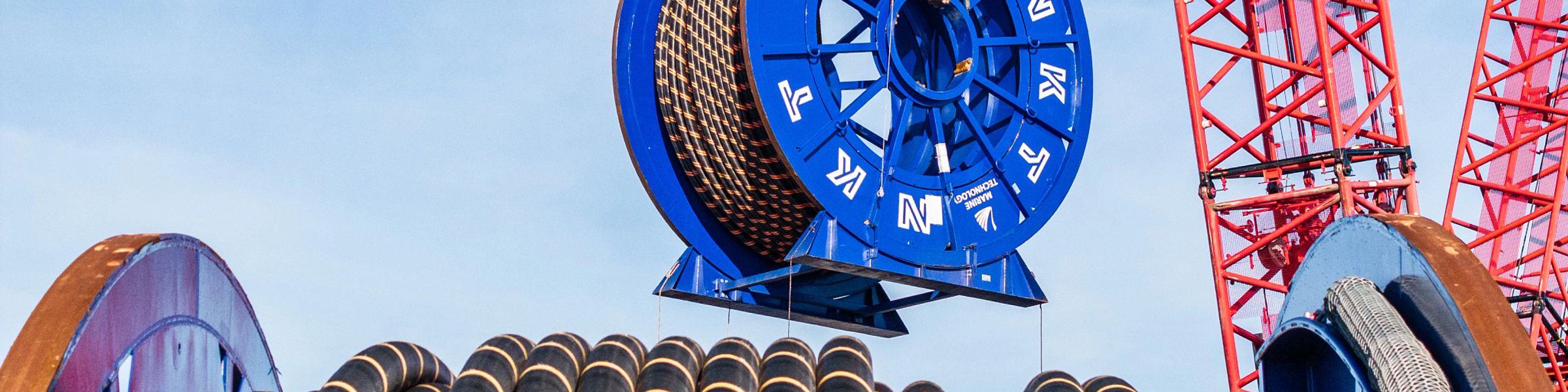
NKT participated in the official inauguration of the high-voltage direct current (HVDC) Champlain Hudson Power Express transmission line in New York City in the United States.
This marks a significant milestone enabling the transition to renewable energy in the city.
At an event in New York, NKT celebrated the official inauguration of the 400 kV HVDC interconnector Champlain Hudson Power Express with its customers Transmission Developers (TDI) and Hydro-Québec. The transmission line spans more than 600 km (372 miles) from Québec, Canada, to the heart of New York City. It represents a major step in transforming the city’s energy system capable of supplying enough Canadian hydropower to cover up to 20% of electricity demand – equivalent to power for approximately one million households.
Awarded in 2022, the turnkey project has been executed by NKT and has comprised engineering, manufacturing as well as installation of the 400 kV HVDC power cable system. The transmission line reached commercial operation in May, ahead of schedule.
“The inauguration of the Champlain Hudson Power Express is a tremendous milestone for NKT and the transition to renewable energy in New York City. It reflects the value of strong collaboration and long-term partnerships, and it has been a privilege to work with TDI, Hydro-Québec and our partners to realise this important project contributing to the energy transition in the United States,” says Claes Westerlind, President and CEO of NKT.
The Champlain Hudson Power Express is now capable of transmitting up to 1,250 megawatts of renewable hydropower from Canada to New York City as a substantial contribution to the city’s energy transition.
The project has involved extensive manufacturing as well as large-scale onshore and offshore installation works across multiple environments, including Lake Champlain and the Hudson and Harlem rivers.
NKT has previously completed the grid connection on the Canadian side of the border, enabling a fully integrated transmission link to New York City. The commissioning follows years of planning, development and installation, and was marked at the official inauguration event held in New York City on 16 June 2026.
SourceNKT
EMR Analysis
More information on NKT: See the full profile on EMR Executive Services
More information on Claes Westerlind (President and Chief Executive Officer, NKT): See the full profile on EMR Executive Services
More information on Michael Yong (Member of the Global Leadership Team, Executive Vice President, Chief Financial Officer, NKT): See the full profile on EMR Executive Services
More information on Charging Forward (Corporate Strategy 2025) by NKT: See the full profile on EMR Executive Services
More information on Hydro-Québec: https://www.hydroquebec.com/residential/ + We have been generating, transmitting and distributing electricity for over 75 years.
We do our utmost to provide you with a reliable supply of electricity and services tailored to your needs at competitive prices, while helping you consume energy wisely.
By making use of clean, renewable energy sources, we contribute to Québec’s prosperity and play a central role in the emergence of a green, sustainable economy.
But we want to do even more. That’s why we’re counting on the collective strength of Quebecers to help us build the energy future of our dreams.
Its sole shareholder is the Government of Quebec. By law, the producer supplies the distributor with an annual volume of heritage electricity, beyond which the distributor procures electricity on the open market in a competitive environment.
More information on Claudine Bourchard (President & Chief Executive Officer, Hydro-Québec): https://www.hydroquebec.com/about/governance/management-team.html + https://www.linkedin.com/in/claudine-bouchard-asc-a02abb11/
More information on Transmission Developers (TDI): https://transmissiondevelopers.com/ + Transmission Developers develops unique clean energy transmission projects in an environmentally responsible manner. Our projects use proven high-voltage direct current (HVDC) cable technology to link trapped generation resources such as wind, hydro and other renewables with markets that are seeking new sources of clean power. By installing our projects underground or underwater we avoid the negative impacts of overhead transmission. These buried lines increase the electric grid’s safety and reliability, while providing hardened infrastructure that is less susceptible to damage from natural disasters.
Transmission Developers is owned by Blackstone Inc., a global leader in alternative asset management. The company is currently focused on developing two projects in the Northeast region of the U.S.: (1) the Champlain Hudson Power Express®, a fully-buried transmission line from the U.S.-Canadian border to New York City, and (2) the New England Clean Power Link®, a fully-buried transmission line located in Vermont that will serve the New England market.
More information on Justin Sauber (Chief Executive Officer, Champlain Hudson Power Express (CHPE)): https://chpexpress.com/about-transmission-developers/ + https://www.linkedin.com/in/jtsauber/
More information on Champlain Hudson Power Express (CHPE) by Transmission Developers (TDI): https://chpexpress.com/ + Construction of the Champlain Hudson Power Express® (CHPE) began on November 30, 2022, and all major construction work was completed in January 2026 with restoration activities along the project route continuing into this summer. CHPE became operational on May 13, 2026.
Some key facts and figures about the project’s construction include:
- Approximately 339-mile HVDC line installed, including:
- 192+ miles of submarine cable in Lake Champlain and the Hudson and Harlem Rivers
- 146+ miles of underground cable, primarily in road and railway rights-of-way, that involved clearing trees and growth, digging trenches and installing the conduit to house CHPE’s cables, performing horizontal directional drilling to go under large obstacles and avoid environmentally sensitive areas, and pulling and splicing cables together
- State-of-the-art converter station built in Astoria, Queens
- First ever conversion of a fossil-fuel site into a grid-scale zero-emissions facility in New York
- 3.5 miles of new duct bank and cable installed in Queens to upgrade the New York City’s electric grid
- 1,400 union jobs created and more than 7 million hours worked
- $6 billion investment in New York State
More information on Blackstone: http://www.blackstone.com/ + Blackstone is the world’s largest alternative asset manager. Blackstone seeks to deliver compelling returns for institutional and individual investors by strengthening the companies in which the firm invests. Blackstone’s over $1.3 trillion in assets under management include global investment strategies focused on real estate, private equity, credit, infrastructure, life sciences, growth equity, secondaries and hedge funds.
Our scale – with ~12,500 real estate assets and 250+ portfolio companies (As of December 31, 2025)– enables us to invest in dynamic sectors positioned for long-term growth.
More information on Stephen A. Schwarzman (Chairman, Chief Executive Officer & Co-Founder, Blackstone): https://www.blackstone.com/the-firm/our-people/#bio-stephen-a-schwarzman + https://www.linkedin.com/in/stephenschwarzman/
EMR Additional Notes:
- AC (Alternating Current) & DC (Direct Current) & UC (Universal Current):
- Direct Current (DC):
- Electric current that is unidirectional, meaning the flow of charge is always in the same direction. Unlike alternating current, the direction does not change. It is used in many household electronics and in all battery-powered devices.
- Direct current has many uses, from charging batteries to supplying power for electronic systems, motors, and industrial processes. Very large quantities of DC power are used in applications such as aluminum smelting and other electrochemical processes.
- DC is more efficient for long-distance transmission at very high voltages (HVDC) because it avoids reactive power losses and reduces skin effect and capacitive losses, especially over long distances and submarine cables.
- Alternating Current (AC):
- Alternating current is an electric current in which the direction of flow periodically reverses (typically 50 or 60 Hz).
- AC is used in power grids and homes because it can be easily transformed to higher or lower voltages using transformers. This allows efficient transmission at high voltage over long distances and safe distribution at low voltage for end users.
- DC can also be converted to different voltage levels, but it requires power electronics (converters), not simple transformers.
- Universal Current (UC): .
- Universal Current (UC) means a device can operate with either AC or DC input.
- For example, a 24 V UC input can accept either 24 V AC or 24 V DC.
- UC is not a type of current, but a device input specification indicating compatibility with both AC and DC supplies.
- Direct Current (DC):
- Extra Low-Voltage (ELV):
- Extra-Low Voltage (ELV) is defined as a voltage of ≤ 50 V AC (RMS) or ≤ 120 V DC (ripple-free).
- ELV systems are typically used where electrical safety is critical (e.g., building automation, control circuits, lighting, telecom).
- Low-Voltage (LV):
- The International Electrotechnical Commission (IEC) defines Low Voltage (LV) for supply systems as voltage in the range > 50–1000 V AC or > 120–1500 V DC.
- Medium-Voltage (MV):
- Medium Voltage (MV) is a voltage class that typically falls between low voltage and high voltage, with a common range being from > 1 kV up to ~30–36 kV (typical IEC practice).
- Some regions (e.g., North America) extend MV up to ~69 kV, depending on utility definitions.
- High-Voltage (HV):
- The International Electrotechnical Commission defines high voltage as above 1000 V AC and above 1500 V DC.
- In practice, HV is often considered from ~36 kV up to ~230 kV in transmission systems.
- Super High-Voltage or Extra High-Voltage (EHV):
- Extra High-Voltage (EHV) is the voltage class used for long-distance bulk power transmission. The range for EHV systems is typically from ~220 kV to ~765–800 kV. “Super High Voltage” is not a standard IEC term.
- Ultra High-Voltage (UHV):
- Ultra High-Voltage (UHV) is the highest voltage class used in electrical transmission, defined as a voltage of ≥ 800 kV (AC) and ≥ 800–1000 kV (DC, depending on classification).
- HVDC Light:
- HVDC Light is a modern HVDC technology based on Voltage Source Converters (VSCs). It is a flexible, modular, and environmentally friendly solution for power transmission using submarine cables, underground cables, overhead lines, or back-to-back systems.
- HVDC Light is designed to transmit power efficiently over medium to long distances, especially where AC transmission is difficult or impractical (e.g., offshore wind, urban environments).
- It offers environmental benefits, including:
- Minimal visual impact (underground/submarine cables instead of overhead lines)
- Low electromagnetic field emissions (no alternating field as in AC systems)
- Oil-free or low-impact cable technologies
- Compact converter stations compared to conventional HVDC
- HVDC (High-Voltage Direct Current):
- HVDC is a power transmission technology that uses direct current (DC) to transmit electricity over long distances.
- It is a key enabler for:
- Long-distance bulk power transmission with lower losses than HVAC
- Interconnection of asynchronous AC grids
- Integration of renewable energy (offshore wind, remote solar/hydro)
- HVDC Links:
- HVDC allows power transmission between AC systems that are not synchronized in frequency or phase.
- Key advantages:
- Precise control of power flow (independent of phase angle)
- Improved grid stability and damping of disturbances
- Lower losses over long distances compared to HVAC (especially >500–800 km overhead or >50–100 km submarine)
- See the world map of HVDC Links here: https://openinframap.org/#2.45/12.96/62.26
- EHVAC / UHVAC & UHVDC:
- EHVAC / UHVAC (Extra/Ultra-High Voltage Alternating Current):
- Refers to AC transmission at >220 kV up to ~1000 kV.
- These lines are used to transmit large amounts of electricity efficiently over long distances.
- UHVDC (Ultra-High Voltage Direct Current):
- Refers DC transmission at ≥800 kV, enabling multi-GW transmission over >1000 km
- EHVAC / UHVAC (Extra/Ultra-High Voltage Alternating Current):
- Voltage Source Converter (VSC):
- Voltage Source Converters (VSC) are self-commutated power electronic converters used to connect AC and DC systems, typically using IGBTs (Insulated Gate Bipolar Transistors).
- They:
- Control voltage, current, active power, and reactive power independently
- Can generate their own AC voltage waveform (do not rely on grid voltage)
- Require smaller filters compared to LCC systems
- Fundamental Units of Electricity:
- Ampere – Amp (A):
- Amperes measure the flow of electrical current (charge) through a circuit. Ampere (A) is the unit of measure for the rate of electron flow, or current, in an electrical conductor.
- One ampere is defined as one coulomb of electric charge moving past a point in one second. The ampere is named after the French physicist André-Marie Ampère, who made significant contributions to the study of electromagnetism.
- Milliampere (mA) is a unit of electric current equal to one-thousandth of an ampere (1mA=10−3A). The prefix “milli” signifies 10−3 in the metric system. This unit is commonly used to measure small currents in electronic circuits and consumer devices.
- Volts measure the electric potential difference that drives the flow of electrons through a circuit.
- Kilovolt (kV) is a unit of potential difference equal to 1,000 volts.
- Watts measure the rate of energy consumption or generation, also known as power.
- Amperes measure the flow of electrical current (charge) through a circuit. Ampere (A) is the unit of measure for the rate of electron flow, or current, in an electrical conductor.
- Power vs. Energy: how electricity is measured and billed.
- Power (measured in kW, MW, GW, TW): Rate at which energy is used or generated at a given moment.
- Energy (measured in kWh, MWh, GWh, TWh): Total amount of power consumed or generated over a period of time (i.e., Power x Time).
- Real Power Units: actual power that performs work.
- Kilowatt (KW):
- A kilowatt is simply a measure of how much power an electric appliance consumes—it’s 1,000 watts to be exact. You can quickly convert watts (W) to kilowatts (kW) by dividing your wattage by 1,000: 1,000W 1,000 = 1 kW.
- Megawatt (MW):
- One megawatt equals one million watts or 1,000 kilowatts, roughly enough electricity for the instantaneous demand of ~500–1,000 homes (depending on region and consumption patterns).
- Gigawatt (GW):
- A gigawatt (GW) is a unit of power, and it is equal to one billion watts.
- According to the Department of Energy, generating one GW of power takes over three million solar panels or 310 utility-scale wind turbines
- Terawatt (TW):
- One terawatt is equal to one trillion watts (1,000,000,000,000 watts). The main use of terawatts is found in the electric power industry, particularly for measuring very large-scale power generation or consumption.
- According to the U.S. Energy Information Administration, America is one of the largest electricity consumers in the world, using about 4,146.2 terawatt-hours (TWh) of energy per year.
- Energy consumption should be expressed in TWh (energy), not TW (power).
- Kilowatt (KW):
- Apparent Power Units: measures the total power in a circuit, including power that does not perform useful work.
- Kilovolt-Amperes (kVA):
- Kilovolt-Amperes (kVA) stands for Kilo-volt-amperes, a term used for the rating of an electrical circuit. A kVA is a unit of apparent power, which is the product of the circuit’s maximum voltage and current rating.
- The difference between real power (kW) and apparent power (kVA) is crucial. Real power (kW) is the actual power that performs work, while apparent power (kVA) is the total power delivered to a circuit, including the real power and the reactive power (kVAR) that doesn’t do useful work. The relationship between them is defined by the power factor. Since the power factor is typically less than 1, the kVA value will always be higher than the kW value.
- Megavolt-Amperes (MVA):
- Megavolt-Amperes (MVA) is a unit used to measure the apparent power in a circuit, primarily for very large electrical systems like power plants and substations. It’s a product of the voltage and current in a circuit.
- 1 MVA is equivalent to 1,000 kVA, or 1,000,000 volt-amperes.
- Kilovolt-Amperes (kVA):
- Specialized Power Units: used specifically for renewable energy, especially solar.
- KiloWatt ‘peak’ (KWp):
- kWp stands for kilowatt ‘peak’ power output of a system. It is most commonly applied to solar arrays. For example, a solar panel system with a peak power of 3 kWp working at its maximum capacity for one hour will produce 3 kWh.
- kWp (kilowatt peak) is the total kW rating of the system, the theoretical ‘peak’ output under standard test conditions (STC). e.g. If the system has 4 × 270 watt panels, then it is 4 × 0.27 kWp = 1.08 kWp.
- kWp does not universally correspond to 1,000 kWh/year; actual production depends strongly on location, irradiation, and system efficiency (typically ~800–1,200 kWh/year in Europe).
- KiloWatt ‘peak’ (KWp):
- Ampere – Amp (A):
- Power Cable:
- A power cable is a type of electrical cable used to transmit and distribute electrical power. It typically consists of one or more electrical conductors (copper or aluminum) insulated and surrounded by protective layers (insulation, shielding, armoring, and outer sheath depending on application).
- Types of power cables by installation method:
- Overhead cables: These are suspended from poles or towers and are commonly used for long-distance power transmission (typically bare conductors, not always “cables” in the strict sense).
- Underground cables: These are installed underground and are typically used for distribution or in areas where overhead lines are impractical or unsafe.
- Submarine cables: These are laid underwater to connect islands, countries, or offshore wind farms to the mainland power grid and require specialized insulation and mechanical protection (e.g., armoring, water barriers).
- Types of power cables by voltage level:
- Low-voltage (LV) cables: ≤ 1 kV, used for final distribution to homes and businesses.
- Medium-voltage (MV) cables: ~1 kV to 36 kV, used for distribution from substations to local networks.
- High-voltage (HV) cables: > 36 kV to ~220 kV
- Extra-high voltage (EHV): > 220 kV
- Superconducting Power Cable:
- A superconducting power cable is a type of electrical cable that uses superconducting materials to conduct electricity with near-zero electrical resistance under cryogenic conditions.
- This significantly reduces resistive losses compared to traditional copper or aluminum cables.
- However, total system losses are not zero due to cooling requirements (cryogenic systems) and ancillary equipment.
- Superconducting cables can be used to transmit large amounts of power in compact corridors (high power density), especially in urban or space-constrained environments.
- High-Temperature Superconducting (HTS) Cable:
- High-temperature superconducting (HTS) cables are electrical cables that can carry large amounts of current with near-zero resistance when cooled to cryogenic temperatures.
- The “high-temperature” designation is relative, meaning they can operate at temperatures achievable with liquid nitrogen (~ -196°C), rather than the much colder liquid helium required for older superconductors.
- They still require continuous cooling systems, making deployment complex and costly despite high efficiency.
- Telecommunication Cable:
- A telecommunication cable is a distinct category of cable designed to transmit information (signals), not electrical power.
- Telecommunication cables transmit signals such as voice, data, and video over distances and include types such as:
- Twisted pair cables (copper, electrical signals)
- Coaxial cables (shielded electrical signals)
- Fiber optic cables (light-based transmission, not electrical)
- Unlike power cables, telecom cables prioritize signal integrity, bandwidth, and low interference—not power delivery.
- A telecommunication cable is a distinct category of cable designed to transmit information (signals), not electrical power.
- Grid, Microgrids, DERs and DERM’s:
- Grid / Power Grid:
- The power grid is a network for delivering electricity to consumers. The power grid includes generator stations, transmission lines and towers, and distribution networks.
- The grid constantly balances the supply and demand for the energy that powers everything from industry to household appliances.
- Electric grids perform three major functions: generation, transmission, and distribution
- Microgrid:
- Small-scale power grid that can operate independently or collaboratively with other grids. The practice of using microgrids is known as distributed, dispersed, decentralized, district or embedded energy production.
- Group of interconnected loads and DERs (Distributed Energy Resources) within clearly defined electrical and geographical boundaries which acts as a single controllable entity with respect to the main grid.
- A microgrid can operate in both grid-connected mode and islanded (off-grid) mode.
- Smart Grid:
- An electrical grid enhanced with digital communication, automation, and IT systems across generation, transmission, distribution, and consumption levels.
- Enables real-time monitoring, control, demand response, and integration of DERs.
- Distributed Energy Resources (DERs):
- Small-scale electricity supply and demand-side resources (typically in the range of a few kW up to tens of MW, depending on definition) that are interconnected to the electric grid. They are power generation resources and are usually located close to load centers, and can be used individually or in aggregate to provide value to the grid.
- Common examples of DERs include rooftop solar PV units, natural gas turbines, microturbines, wind turbines, biomass generators, fuel cells, tri-generation units, battery storage, electric vehicles (EV) and EV chargers, and demand response resources (load flexibility).
- Distributed Energy Resources Management Systems (DERMS):
- Platforms which help mostly distribution system operators (DSO) manage their grids that are mainly based on distributed energy resources (DER).
- DERMS are used by utilities and other energy companies to aggregate and orchestrate distributed energy resources for participation in the demand response market and grid services (e.g., flexibility, voltage control, congestion management).
- Grid / Power Grid:
- Commissioning:
- Commissioning ensures the system not only works but also works efficiently and effectively to meet its intended purpose. It is a quality assurance process that ensures a newly installed system is designed, installed, tested, and maintained to operate according to the owner’s requirements.
- Commissioning also verifies performance against design intent and operational requirements—not just functionality.
- It goes beyond a simple installation. Commissioning is a formal, documented process that involves several key steps:
- Pre-Installation
- Installation Verification.
- Functional Performance Testing.
- Documentation & Training.
- Handover & Ongoing Commissioning.