Hitachi Energy – Hitachi Energy bolsters the regional transformer market with strategic investment in North America
Announces signing of definitive agreement to acquire Canduct, a leading manufacturer of transformer insulation kits and components
Hitachi Energy, a global leader in electrification, today announced a major expansion of its North American transformer insulation business through signing a definitive agreement to acquire Canduct Group. The investment addresses a critical bottleneck in the region’s transformer supply chain by expanding the company’s North America regional insulation and components capabilities, strengthening resilience, and accelerating the delivery of essential grid infrastructure.
See the video on YouTube
Hitachi Energy’s acquisition of Canduct is expected to close at the beginning of the third calendar quarter of 2026, subject to customary closing conditions.
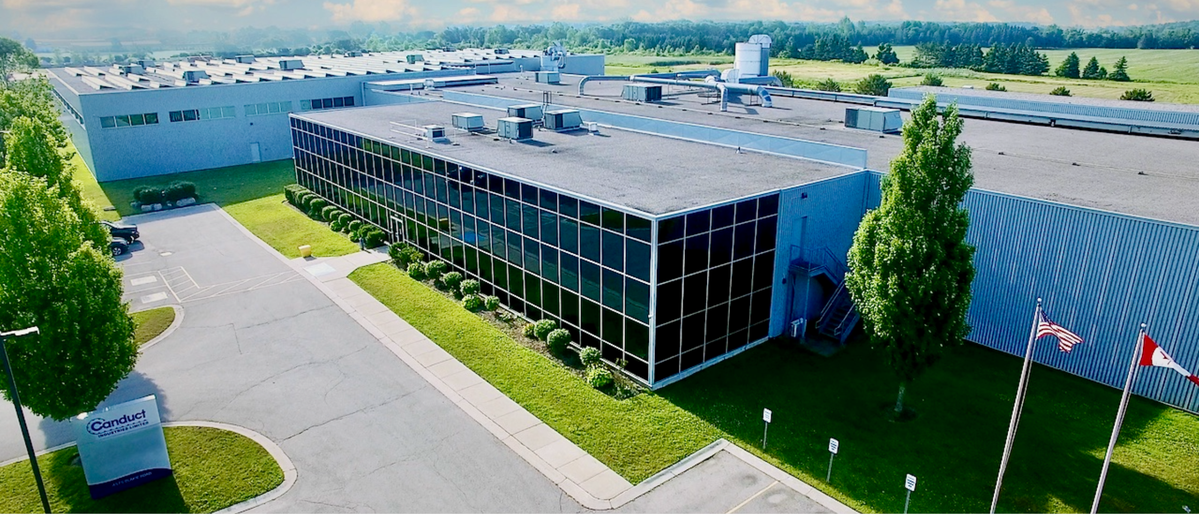
Canduct, headquartered in Ontario, Canada, is a leading manufacturer of transformer insulation kits and components, serving original equipment manufacturers (OEM) and repair companies across the U.S. and Canada. Founded in 1982, the company has supplied high-quality transformer insulation solutions to Hitachi Energy for over two decades. By integrating Canduct’s operations and more than 300 employees, Hitachi Energy will expand its capabilities to deliver critical transformer components needed to support the unprecedented growth in electricity demand.
“Hitachi Energy is strengthening its leadership in transformer insulation through this strategic expansion in North America. By acquiring Canduct Group, we are expanding regional capabilities, strengthening supply chains for insulation kits and components, and supporting the growing demand for electrification across the region.”
Bruno Melles
CEO of Business Unit Transformers
Hitachi Energy
For over a century, Hitachi Energy has been a trusted supplier for transformer insulation and components to OEMs and distributors of power and distribution transformers worldwide. As essential components of power infrastructure, transformers and their components, including bushings, tap-changers, insulation materials and accessories play a critical role in ensuring the safe and reliable operation of electricity networks.
SourceHitachi Energy
EMR Analysis
More information on Hitachi Ltd.: https://www.hitachi.com + Through its Social Innovation Business (SIB) that brings together IT, OT (Operational Technology) and products, Hitachi aims to be a global leader in continuously transforming social infrastructure through digital, contributing to a harmonized society where the environment, wellbeing, and economic growth are in balance. Hitachi operates worldwide across four sectors – Digital Systems & Services, Energy, Mobility, and Connective Industries – as well as a Strategic SIB Business Unit focused on new growth areas. With Lumada at its core, Hitachi creates value by combining data, technology and domain knowledge to solve customer and social challenges. Revenues for FY2025 (ended March 31, 2026) totaled 10,586.7 billion yen, with 606 consolidated subsidiaries and approximately 290,000 employees worldwide.
More information on Toshiaki Higashihara (Executive Chairman, Hitachi Ltd.): https://www.hitachi.com/corporate/about/officers/index.html#toshiaki-higashihara
More information on Toshiaki Tokunaga (President & Chief Executive Officer, Hitachi Ltd.): https://www.hitachi.com/New/cnews/month/2024/12/f_241216.pdf + https://www.linkedin.com/in/toshiaki-tokunaga-7113381aa/
More information on Hitachi Energy by Hitachi Ltd.: See the full profile on EMR Executive Services
More information on Andreas Schierenbeck (Senior Vice President and Executive Officer, Head of Energy Business, Hitachi, Ltd. + Chief Executive Officer, Hitachi Energy Ltd.): See the full profile on EMR Executive Services
More information on Ismo Haka (Chief Financial Officer and Executive Vice President, Hitachi Energy, Hitachi Energy Ltd.): See the full profile on EMR Executive Services
More information on Business Unit Transformers by Hitachi Energy: See the full profile on EMR Executive Services
More information on Bruno Melles (Managing Director, Business Unit Transformers, Hitachi Energy): See the full profile on EMR Executive Services
More information on Canduct Group by Hitachi Energy: https://www.canduct.com/ + Welcome to the Canduct Group, your premier destination for comprehensive solutions in the transformer insulation industry. By bringing together Canduct Industries, Specialty Transformer Components, and Canadian Motivel, we offer unmatched customer service and quality under one roof. With a shared dedication to excellence and innovation, our combined expertise ensures tailored solutions to meet the diverse needs of our partners. From cutting-edge insulation products to specialized transformer components, Canduct Group leads the industry, providing top-tier service and support. Experience the convenience and quality of our integrated approach, where transformer and related product manufacturers find everything they need, delivered exactly as they need it.
Canduct, headquartered in Ontario, Canada, is a leading manufacturer of transformer insulation kits and components, serving original equipment manufacturers (OEM) and repair companies across the U.S. and Canada. Founded in 1982, the company with more than 300 employees has supplied high-quality transformer insulation solutions to Hitachi Energy for over two decades.
More information on Jeffrey Hansen (President and Chief Executive Officer, Canduct Group, Hitachi Energy): See the full profile on EMR Executive Services
EMR Additional Notes:
- Substation:
- A power station is where the power is generated. A substation is a critical part of an electrical transmission and distribution system (not generation itself), where power is transformed, switched, controlled, and distributed further into the grid.
- Substations contain specialized equipment that allows the voltage of electricity to be transformed and controlled. The voltage is stepped up or down through transformers located within the substation.
- Substations also perform protection, monitoring, and grid control functions—not just voltage transformation.
- Substations typically include:
- Transformers: The core components for voltage transformation.
- Circuit Breakers: To isolate and protect equipment.
- Switchgear: For controlling and protecting the flow of electricity.
- Shunt Reactors (sometimes): Used to improve system stability.
- Other equipment: Measuring instruments, control panels, etc.
- Transformers (Power Transformers, Distribution Transformers, Traction Transformers, HVDC Converters, Solid State Transformers (SST), Rectifier Transformers):
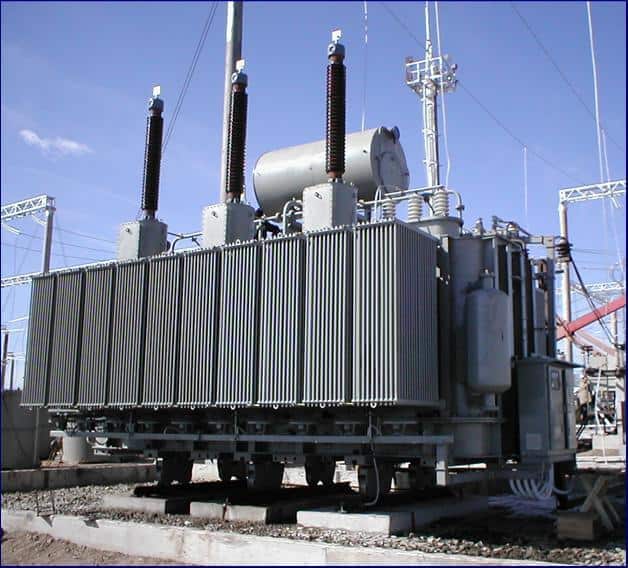
- A transformer is a passive electrical device that transfers electrical energy from one circuit to another through electromagnetic induction. It can be classified into three types based on voltage change:
- Step-up: Increases voltage and decreases current.
- Step-down: Decreases voltage and increases current.
- Isolation: Provides electrical isolation without changing the voltage.
- Distribution vs. Power Transformers:
- Power Transformers: These are used in high-voltage transmission networks for both stepping up and stepping down applications (e.g., 400 kV, 220 kV). They are generally rated above ~100–200 MVA (not a strict boundary) and are designed for maximum efficiency at or near full load.
- Distribution Transformers: These are used in lower-voltage distribution networks to connect to end-users (e.g., 11 kV → 400/230 V). They are generally rated below ~100 MVA (typically much smaller in practice) and are designed for maximum efficiency at partial load (~50–70%), as they operate continuously with variable demand. They perform the final voltage transformation for household and commercial use.
- Specialized Transformers:
- Traction Transformers: These are special transformers used in railway systems to step down high-voltage AC power from the overhead catenary to the required voltage for the train’s traction system. They are typically standard grid-frequency transformers (50/60 Hz).
- HVDC Converter Transformers: Used in HVDC stations. These transformers adapt AC voltage levels and provide galvanic isolation and phase shifting before conversion to DC (rectification) or after inversion back to AC.
- Solid State Transformers (SSTs): Also known as power electronic transformers (PETs) or intelligent universal transformers (IUTs). These are power-electronic-based conversion systems (not purely AC-AC transformers) that include AC/DC/AC conversion stages with a high-frequency transformer, enabling reduced size, advanced control, and bidirectional power flow.
- Rectifier Transformers: These transformers supply AC power to rectifier systems, which convert it into DC. Their design minimizes harmonics and ensures stable DC output. They are used in industrial processes requiring large DC power (e.g., electrolysis, traction, HVDC).
- A transformer is a passive electrical device that transfers electrical energy from one circuit to another through electromagnetic induction. It can be classified into three types based on voltage change:

- Shunt Reactor:
- Shunt reactors are used in high-voltage transmission systems to control voltage during load variations.
- A shunt reactor is a device that absorbs reactive power (inductive compensation), thereby stabilizing voltage and improving system efficiency, especially in long transmission lines and cable systems.
- A shunt reactor can be directly connected to the power line or to a tertiary winding of a three-winding transformer. It can be permanently connected or switched via a circuit breaker.
- Unlike a power transformer, a shunt reactor typically has a single winding per phase and is designed to consume reactive power rather than transfer active power.
- Transformer Insulation Kits and Components:
- Transformer insulation kits are pre-packaged sets of custom-cut solid dielectric materials and molded parts used to electrically separate, support, and cool internal transformer components. They prevent dangerous short circuits and manage intense thermal and mechanical stresses.
- Kits typically contain a mix of specialized cellulose, pressboard, and synthetic materials tailored to the exact geometry of the transformer’s core and coils.
- Supply Chain:
- A supply chain is the end-to-end network of individuals, organizations, resources, activities, data, and technologies involved in the creation and delivery of a product or service—from raw materials to the final customer.
- A supply chain includes not only physical flows (goods), but also information flows and financial flows across all participants.
- At the most fundamental level, Supply Chain Management (SCM) is the integrated planning, coordination, and optimization of the flow of:
- goods
- information
- and finances
- from raw material sourcing to final delivery.
- At its core, SCM is not just “management of flows” but the optimization of those flows across cost, service level, speed, and risk.
- Supply Chain vs Logistics:
- Supply Chain: entire ecosystem (end-to-end)
- Logistics: subset focused on movement and storage of goods
- Grid, Microgrids, DERs and DERM’s:
- Grid / Power Grid:
- The power grid is a network for delivering electricity to consumers. The power grid includes generator stations, transmission lines and towers, and distribution networks.
- The grid constantly balances the supply and demand for the energy that powers everything from industry to household appliances.
- Electric grids perform three major functions: generation, transmission, and distribution
- Microgrid:
- Small-scale power grid that can operate independently or collaboratively with other grids. The practice of using microgrids is known as distributed, dispersed, decentralized, district or embedded energy production.
- Group of interconnected loads and DERs (Distributed Energy Resources) within clearly defined electrical and geographical boundaries which acts as a single controllable entity with respect to the main grid.
- A microgrid can operate in both grid-connected mode and islanded (off-grid) mode.
- Smart Grid:
- An electrical grid enhanced with digital communication, automation, and IT systems across generation, transmission, distribution, and consumption levels.
- Enables real-time monitoring, control, demand response, and integration of DERs.
- Distributed Energy Resources (DERs):
- Small-scale electricity supply and demand-side resources (typically in the range of a few kW up to tens of MW, depending on definition) that are interconnected to the electric grid. They are power generation resources and are usually located close to load centers, and can be used individually or in aggregate to provide value to the grid.
- Common examples of DERs include rooftop solar PV units, natural gas turbines, microturbines, wind turbines, biomass generators, fuel cells, tri-generation units, battery storage, electric vehicles (EV) and EV chargers, and demand response resources (load flexibility).
- Distributed Energy Resources Management Systems (DERMS):
- Platforms which help mostly distribution system operators (DSO) manage their grids that are mainly based on distributed energy resources (DER).
- DERMS are used by utilities and other energy companies to aggregate and orchestrate distributed energy resources for participation in the demand response market and grid services (e.g., flexibility, voltage control, congestion management).
- Grid / Power Grid:
- OEM vs. MRO vs. Integrated Supply:
- OEM (Original Equipment Manufacturer):
- An Original Equipment Manufacturer (OEM) is a company that designs and/or manufactures products or components that are used in another company’s end product, which may be marketed under that company’s brand name. An OEM can produce complete systems or individual components.
- The term OEM usually refers to original, specification-compliant parts used in the initial production of equipment, whereas aftermarket refers to third-party products used as replacements or upgrades after the original sale.
- OEM (Original Equipment Manufacturer):
- MRO (Maintenance, Repair and Operations):
- MRO refers to all the activities and supplies needed to keep a company’s operations, facilities, and equipment running efficiently and safely.
- These are supplies used to support production but that do not become part of the final product.
- Examples of MRO items include:
- Maintenance tools
- Replacement/spare parts
- Personal protective equipment (PPE)
- Cleaning and facility supplies
- Office and operational consumables
- Integrated Supply:
- Integrated Supply is a service-based, end-to-end supply chain solution for managing MRO procurement and inventory in a more efficient and digitally connected way.
- The goal is to:
- reduce total cost of ownership (TCO)
- improve response time and availability
- optimize inventory levels (often vendor-managed inventory, VMI)
- increase operational efficiency
- It typically involves:
- on-site or embedded supplier presence
- digital integration between supplier and customer systems (ERP, inventory)
- real-time data sharing (inventory levels, consumption, orders)
- For example, a supplier’s system may be integrated with a buyer’s system to provide real-time visibility and automated replenishment of MRO items.
- => OEM vs. MRO vs. Integrated Supply:
- OEM: Builds/designs the product (or core components)
- MRO: Keeps operations running (non-production supplies)
- Integrated Supply: Optimizes how MRO is sourced, managed, and delivered
- Bushings:
- General / Mechanical Context:
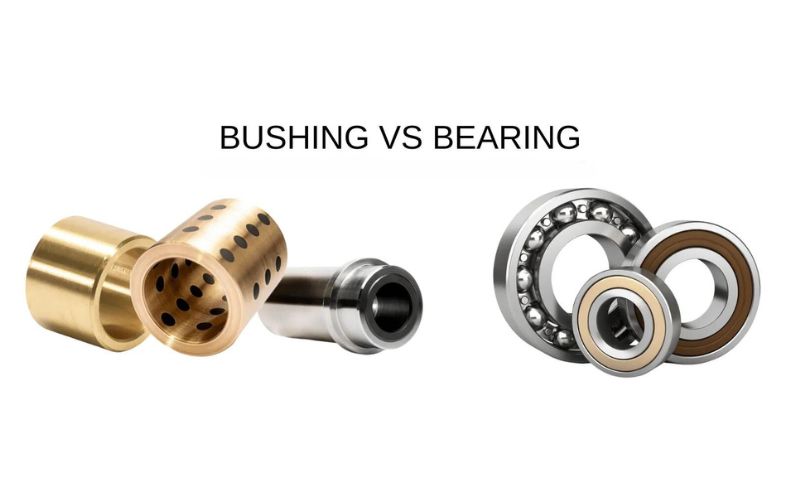
- A bushing is a type of bearing, specifically a plain bearing (also called a sleeve bearing), while a bearing is a broader term encompassing various types that allow relative motion between components.
- Bushings are typically simpler, single-piece or lined components (metal, polymer, or composite) that reduce friction by sliding against a shaft, whereas bearings may include rolling elements like balls or rollers to facilitate movement (rolling bearings).
- Bushings are commonly used where:
- loads are moderate
- speeds are relatively low
- simplicity, cost, and durability are preferred over high precision
- Electrical / Power Systems Context:
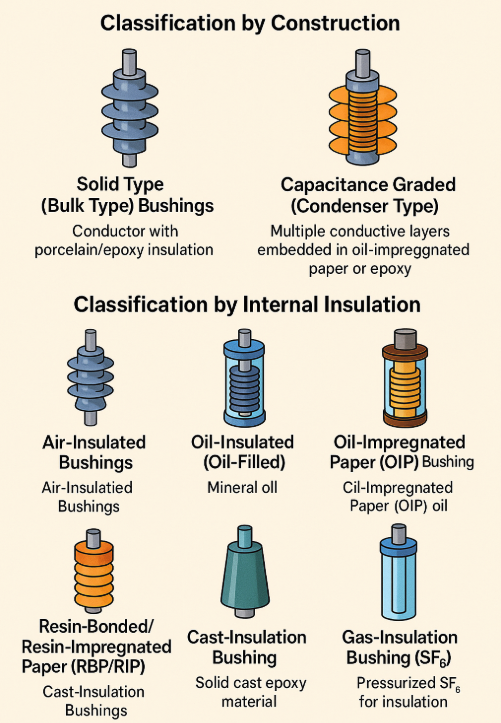
- In transformers, bushings are insulated electrical feedthrough devices that facilitate the safe passage of high-voltage conductors through the grounded transformer tank.
- They act as a protective barrier, preventing electrical current from leaking to the transformer’s grounded parts and ensuring safe operation by providing both electrical insulation and mechanical support for the conductor.
- Transformer bushings typically include:
- a central conductor
- insulating material (e.g., oil-impregnated paper, resin, or gas insulation)
- external insulation profile (to prevent flashover in air)
- They are critical components in:
- power transformers
- switchgear
- high-voltage equipment
- General / Mechanical Context:
- Tap-Changer:
- A tap changer is a mechanical switching mechanism used in electrical transformers to regulate the output voltage. It achieves this by connecting to distinct access points—called taps—along the transformer’s primary or secondary coils, which alters the winding turns ratio. Adjusting this ratio alters the voltage output, allowing grid operators and utilities to keep electrical voltage stable despite fluctuating demands or changing input levels.