
Belden – Belden to acquire RUCKUS Networks from Vistance Networks, accelerating its transformation into a full-stack networking solutions provider

- Acquires RUCKUS Networks from Vistance Networks for approximately $1.85 billion
- Adds industry-leading Wi-Fi and enterprise switching to serve as a significant growth catalyst
- Establishes Belden as a leading provider of complete, end-to-end IT/OT networking solutions
- Immediately accretive to Adjusted EPS; expands Adjusted Gross Margin and Adjusted EBITDA Margin in the first full year following close
- Clear path to rapid de-levering, with net leverage of ~1.5x by 2029
- Investor conference call scheduled for 8:30 am ET
ST. LOUIS–(BUSINESS WIRE)– Belden Inc. (NYSE: BDC) (“Belden” or the “Company”), a leading global supplier of specialty networking solutions, today announced it has entered into a definitive agreement to acquire RUCKUS Networks (“RUCKUS”), a global provider of intelligent network solutions, from Vistance Networks (Nasdaq: VISN) (“Vistance”) for approximately $1.85 billion. The acquisition establishes Belden as a leading provider of complete, end-to-end IT/OT networking solutions.
RUCKUS is a leading provider of enterprise networking solutions delivering purpose-built connectivity for high-density, mission-critical environments, serving more than 48,000 customers globally. RUCKUS offers an integrated portfolio of Wi-Fi, enterprise switching and an AI-driven cloud networking platform that enables organizations to optimize performance, simplify operations and securely connect users and devices. RUCKUS is known for its differentiated technology, strong channel ecosystem and focus on reliability and user experience at scale.
“The addition of RUCKUS brings a leading provider of purpose-driven enterprise networks to Belden and accelerates our transformation into a full-stack networking solutions provider,” said Ashish Chand, President and CEO of Belden. “RUCKUS offers proven, differentiated Wi-Fi and enterprise switching technology that our customers in hospitality, education and healthcare are actively demanding, allowing us to deliver a more complete, end-to-end networking solution. Equally important, these same capabilities create a powerful opportunity to bring high-performance wireless and switching to our industrial customers, who are increasingly looking to converge their IT and OT environments. Together, Belden and RUCKUS will deliver a broader, higher-value networking solution for customers across enterprise and industrial environments, while strengthening our financial profile, generating strong free cash flow that supports rapid de-levering, and creating meaningful long-term value for stockholders.”
Compelling Strategic and Financial Opportunities:
- Significant Growth Catalyst: Adds industry-leading Wi-Fi and enterprise switching capabilities that directly strengthen the Company’s solutions offering across core enterprise growth verticals, including hospitality, education and healthcare.
- Expands Total Addressable Market: RUCKUS adds Wi-Fi and enterprise switching technology, product categories Belden does not currently offer, to markets where Belden already operates, meaningfully expanding the combined organization’s addressable opportunity. The combination positions Belden to deliver a more complete, higher-value active networking solution spanning enterprise campuses, high-density public venues and industrial facilities.
- Capitalizes on Industrial Opportunity: RUCKUS’ proven high-performance networking platform creates a compelling opportunity to extend best-in-class wireless and switching into Belden’s industrial customer base, where demand for converged IT and OT connectivity is accelerating.
- Delivers Compelling Financial Profile: RUCKUS’ high-margin profile is expected to drive accretion to Belden’s gross margins, Adjusted EBITDA margins, and Adjusted Earnings Per Share, representing a meaningful enhancement in Belden’s financial profile.
- Clear Path to Rapid De-levering: Combined with Belden’s strong free cash flow generation and RUCKUS’ high cash conversion, the Company expects to reduce net leverage to below 3.0x within the first full year following close, and to reach its long-term target of approximately 1.5x by 2029. Belden will prioritize debt paydown while maintaining its commitment to disciplined capital allocation.
At approximately 13x projected 2026 Adjusted EBITDA, the transaction reflects a disciplined and attractive entry point for a high-margin, high-growth asset. RUCKUS brings a high-quality financial profile to the combined company, with high-single-digit revenue growth, gross margins above 60%, and Adjusted EBITDA margins above 20% in the first full year of ownership, each meaningfully above Belden’s current profile. As a result, the transaction is expected to be immediately accretive to Adjusted Earnings Per Share. The acquisition is also expected to serve as a growth accelerator, further advancing Belden’s long-term financial framework.
Transaction Details
The acquisition was approved by both companies’ Boards of Directors and is expected to close in the second half of 2026, subject to customary closing conditions, and the receipt of certain regulatory approvals.
Belden has obtained fully committed debt financing from J.P. Morgan that provides the Company flexibility to optimize its permanent capital structure between signing and closing based on market conditions.
Belden’s disciplined capital allocation and strong free cash flow generation support a clear path to de-levering post-close. With a combined Adjusted EBITDA base of approximately $650 million and RUCKUS’ high free cash flow conversion, Belden expects net leverage (a non-GAAP measure) to decline below 3.0x within the first full year after close, and to reach its long-term target of approximately 1.5x by 2029. Consistent with this priority, Belden intends to temporarily pause share repurchases until leverage returns closer to our long-term target.
First Quarter 2026 Financial Results
In a separate press release issued today, Belden announced its first quarter 2026 financial results. The press release is available via Belden’s investor relations website.
Conference Call
Management will host a conference call today at 8:30 am ET to discuss the acquisition as well as the Company’s first quarter 2026 financial results. The listen-only audio of the conference call will be broadcast live online at https://investor.belden.com. The dial-in number for participants is 1-800-330-6710 with confirmation code 5588336. A replay of this conference call will remain accessible in the investor relations section of the Company’s website for a limited time.
Advisors
Lewis Rice is serving as lead legal advisor and Joele Frank, Wilkinson Brimmer Katcher is serving as strategic communications advisor to Belden.
Non-GAAP Financial Measures
This release includes certain non-GAAP financial measures, including adjusted gross margin, adjusted EBITDA, adjusted EBITDA margin and net leverage. Non-GAAP financial measures are adjusted for certain items, including: asset impairments; accelerated depreciation expense due to plant consolidation activities; purchase accounting effects related to acquisitions, such as the adjustment of acquired inventory to fair value, and transaction costs; severance, restructuring, and acquisition integration costs; gains (losses) recognized on the disposal of businesses and assets; amortization of intangible assets; gains (losses) on debt extinguishment; certain gains (losses) from patent settlements; discontinued operations; and other costs. We adjust for the items listed above unless the impact is clearly immaterial to our financial statements. When we calculate the tax effect of the adjustments, we include all current and deferred income tax expense commensurate with the adjusted measure of pre-tax profitability. We utilize the adjusted measures to review our ongoing operations without the effect of these adjustments and for comparison to budgeted operating results. We believe the adjusted measures are useful to investors because they help them compare our results to previous periods and provide important insights into underlying trends in the business and how management oversees our business operations on a day-to-day basis. As an example, we adjust for acquisition-related expenses, such as amortization of intangibles and impacts of fair value adjustments because they generally are not related to the acquired business’ core business performance. As an additional example, we exclude the costs of restructuring programs, which can occur from time to time for our current businesses and/or recently acquired businesses. We exclude the costs in calculating adjusted measures to allow us and investors to evaluate the performance of the business based upon its expected ongoing operating structure. We believe the adjusted measures, accompanied by the disclosure of the costs of these programs, provide valuable insight. Non-GAAP financial measures should be considered only in conjunction with results reported according to accounting principles generally accepted in the United States. Belden does not provide quantitative reconciliation of forward-looking, non-GAAP financial measures to the most directly comparable GAAP financial measure because it is difficult to reliably predict or estimate the relevant components without unreasonable effort due to future uncertainties that may potentially have significant impact on such calculations, and providing them may imply a degree of precision that would be confusing or potentially misleading.
Forward Looking Statements
This release contains, and any statements made by us concerning the subject matter of this release may contain, forward-looking statements, including anticipated benefits from, and the expected timing for completion of, the RUCKUS acquisition, expected strengthening of Belden’s product offering, future market, growth and synergy opportunities, and the level of RUCKUS’s expected growth and financial contributions, including adjusted earnings per share, adjusted gross margin, adjusted EBITDA and adjusted EBITDA margin, and our outlook for net leverage, the remainder of 2026 and beyond. Forward-looking statements also include any statements regarding future financial performance (including revenues, growth, expenses, earnings, margins, cash flows, dividends, capital expenditures and financial condition), plans and objectives, and related assumptions. In some cases these statements are identifiable through the use of words such as “anticipate,” “believe,” “estimate,” “forecast,” “guide,” “expect,” “intend,” “plan,” “project,” “target,” “can,” “could,” “may,” “should,” “will,” “would” and similar expressions. Forward-looking statements reflect management’s current beliefs and expectations and are not guarantees of future performance. Pro forma, projected and estimated numbers are used for illustrative purposes only, are not forecasts, and may not reflect actual results. Actual results may differ materially from those suggested by any forward-looking statements for a number of reasons, including, without limitation: the risk that the proposed transaction may not be completed in a timely manner or at all; the inability to integrate and/or realize the benefits of the RUCKUS acquisition, including expected synergies; the occurrence of any fact, event, change, development or circumstance that could give rise to the termination of the definitive acquisition agreement; the failure to satisfy any of the conditions to the consummation of the transaction, including the receipt of certain governmental or regulatory approvals; the risk that the financing necessary to consummate the transaction may not be obtained, may be delayed, or may be available only on less favorable terms than anticipated; that the announcement of the proposed acquisition could disrupt Belden’s or RUCKUS’ relationships with customers, employees or other business partners; disruptions in the Company’s information systems including due to cyber-attacks; the impact of volatility in global trade policies and tariffs; the impact of disruptions in the global supply chain, including the inability to timely obtain raw materials and components in sufficient quantities on commercially reasonable terms; foreign and domestic political, economic and other uncertainties, including changes in currency exchange rates; the impact of a challenging global economy, including the impact of inflation, or a downturn in served markets; inflation and changes in the price and availability of raw materials leading to higher input and labor costs; the competitiveness of the global markets in which we operate; the inability of the Company to develop and introduce new products; competitive responses to our products; the inability to successfully implement artificial intelligence into our product offerings and back office processes; our reliance on legacy information technology systems and the challenges associated with their maintenance and upgrade; difficulty in forecasting revenues due to the unpredictable timing of orders related to customer projects as well as the impacts of channel inventory; the inability to execute and realize the expected benefits from strategic initiatives (including revenue growth, cost control, and productivity improvement programs); the inability to achieve our strategic priorities in emerging markets; the presence of substitute products in the marketplace; the impacts of extreme weather events and other climate-related catastrophes; the possibility of future epidemics or pandemics; volatility in credit and foreign exchange markets; changes in tax laws and variability in the Company’s quarterly and annual effective tax rates; the inability to successfully complete and integrate acquisitions, in furtherance of the Company’s strategic plan, as well as the inability to accurately forecast the financial impacts of acquisitions; the inability to retain key employees; disruption of, or changes in, the Company’s key distribution channels; the presence of activists proposing certain actions by the Company; perceived or actual product failures; the impact of regulatory requirements and other legal compliance issues; inability to satisfy the increasing expectations with respect to sustainability matters; assertions that the Company violates the intellectual property of others and the ownership of intellectual property by competitors and others that prevents the use of that intellectual property by the Company; risks related to the use of open source software; the impairment of goodwill and other intangible assets and the resulting impact on financial performance; disruptions and increased costs attendant to collective bargaining groups and other labor matters; and other factors.
For a more complete discussion of risk factors, please see our Annual Report on Form 10-K for the period ended December 31, 2025, filed with the SEC on February 17, 2026. Although the content of this release represents our best judgment as of the date of this report based on information currently available and reasonable assumptions, we give no assurances that the expectations will prove to be accurate. Deviations from the expectations may be material. For these reasons, Belden cautions readers to not place undue reliance on these forward-looking statements, which speak only as of the date made. Belden disclaims any duty to update any forward-looking statements as a result of new information, future developments, or otherwise, except as required by law.
SourceBelden
EMR Analysis
More information on Belden: See the full profile on EMR Executive services
More information on Dr. Ashish Chand (President and Chief Executive Officer, Belden): See the full profile on EMR Executive services
More information on Jeremy Parks (Executive Vice President, Chief Financial Officer, Belden): See the full profile on EMR Executive Services
More information on RUCKUS Networks by Belden: https://www.ruckusnetworks.com/ + At RUCKUS Networks, we build connectivity that powers possibility. From the earliest days of Wi-Fi innovation to today’s most demanding enterprise environments, we’ve never settled for average—and neither should you.
Born from a rebellious spirit and a relentless drive to redefine wireless, RUCKUS emerged as the antidote to slow, unreliable networks. We pioneered technologies that shattered expectations—like adaptive antenna arrays and beamflex—and we’ve been pushing boundaries ever since.
RUCKUS Networks builds and delivers purpose-driven networks that perform in the tough environments of the industries we serve. RUCKUS delivers high-performance wireless LAN, wired LAN, IoT, assurance and security solutions that enable exceptional connection experiences for guests, students, residents, citizens and employees. Best-in-class hardware and AI-driven software reduce complexity and improve business outcomes for the world’s most demanding industries.
More information on Bart Giordano (President, RUCKUS Networks, Belden): https://www.ruckusnetworks.com/blog/author/bart%20giordano/ + https://www.linkedin.com/in/bartgiordano/
More information on Vistance Networks: https://www.vistancenetworks.com/ + Vistance Networks (NASDAQ: VISN) shapes the future of communications technology, pushing past what is possible. We deliver solutions that bring reliability and performance to a world always in motion. Our global team of innovators and employees are trusted advisors who listen to customers first, then deliver value.
More information on Charles L. Treadway (President and Chief Executive Officer, Vistance Networks): https://www.vistancenetworks.com/about-us/management-team/ + https://www.linkedin.com/in/charles-treadway-092a29140/
More information on J.P. Morgan Chase & Co.: https://www.jpmorgan.com/global + We aim to be the most respected financial services firm in the world, serving corporations and individuals in more than 100 countries.
JPMorgan Chase & Co. (NYSE: JPM) is a leading financial services firm based in the United States of America (“U.S.”), with operations worldwide. JPMorganChase had $4.2 trillion in assets and $346 billion in stockholders’ equity as of September 30, 2024. The Firm is a leader in investment banking, financial services for consumers and small businesses, commercial banking, financial transaction processing and asset management. Under the J.P. Morgan and Chase brands, the Firm serves millions of customers in the U.S., and many of the world’s most prominent corporate, institutional and government clients globally.
More information on Jamie Dimon (Chairman and Chief Executive Officer, J.P. Morgan Chase & Co.): https://www.jpmorganchase.com/about/our-leadership/jamie-dimon + https://www.linkedin.com/in/jamiedimon/
EMR Additional Notes:
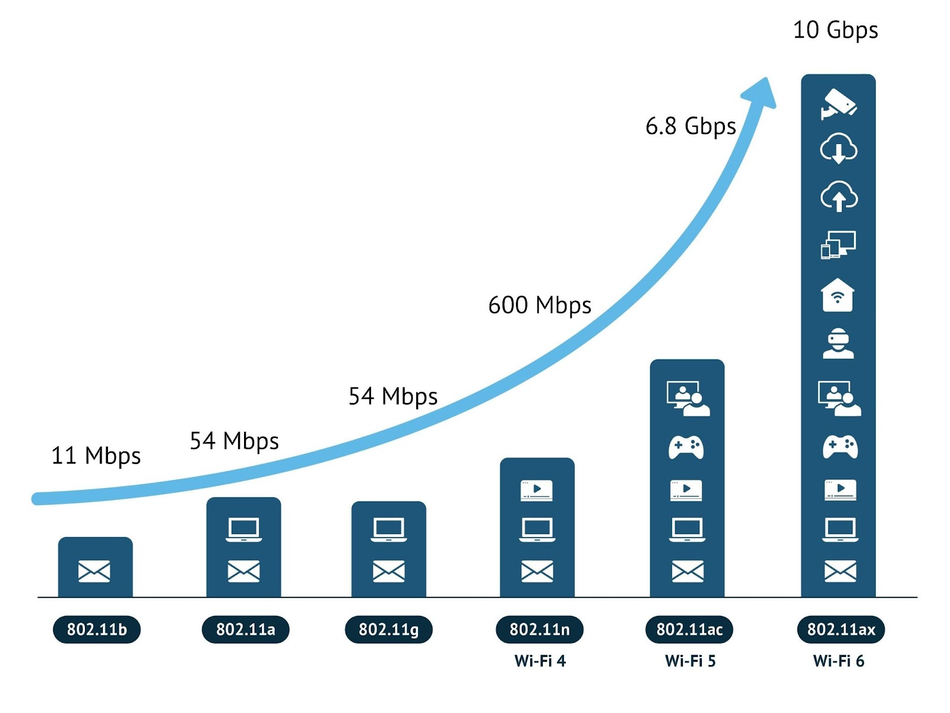
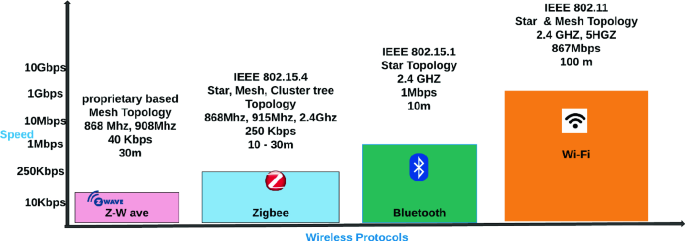
- Wi-Fi and Z-Wave:
- A Wi-Fi network is simply an internet connection that’s shared with multiple devices in a home or business via a wireless router. The router is connected directly to your internet modem and acts as a hub to broadcast the internet signal to all your Wi-Fi enabled devices.
- Wi-Fi, which most of us are familiar with, operates on either 2.4 GHz or 5 GHz frequencies, providing wireless internet to any connected devices. Z-Wave operates on a much lower frequency — between 800 and 900 MHz — and is primarily for home automation.
- On 8 January 2024, the Wi-Fi Alliance introduced its Wi-Fi Certified 7 (IEEE 802.11be) program to certify Wi-Fi 7 devices. While final ratification is not expected until the end of 2024, the technical requirements are essentially complete, and as of February 2024 there are already products labeled as Wi‑Fi 7. WiFi 7 will be much faster than WiFi 6. For the same WiFi radio configuration, the speeds will be 2.4x faster. So, maximum speeds with a typical mobile phone with WiFi 7 can reach up to 5Gbps.
- If you want better range, use 2.4 GHz. If you need higher performance or speed, use the 5GHz band.
- Z-Wave operates on a completely different wireless frequency that will not conflict with your Wi-Fi network signal. Z-Wave is a mesh technology that strengthens the network with several connected devices. Z-wave is popular as smart-property technology, powering locks, lights, sensors, thermostats, etc.
- Z-wave uses much less power than WiFi. That means that it’s possible to use battery-powered Z-wave devices without worrying about having to change the batteries frequently. Z-wave is also more secure since it’s more of a closed system and can offer some additional layers of protection.
- Information Technology (IT) & Operational Technology (OT):
- Information Technology (IT):
- Refers to anything related to computer technology, including hardware and software. Your email, for example, falls under the IT umbrella. IT forms the technological backbone of most organizations and companies by managing data, communications, and business processes. These devices and programs have little autonomy and are updated frequently.
- Operational Technology (OT):
- Refers to the hardware and software used to change, monitor, or control physical devices, processes, and events within a company or organization. This form of technology is most commonly used in industrial settings, where these systems are engineered for safety, reliability, and precision control. An example of OT includes SCADA (Supervisory Control and Data Acquisition).
- => The main difference between OT and IT devices: OT devices control the physical world, while IT systems manage data.
- Information Technology (IT):
- Earning Per Share (EPS):
- Company’s net income subtracted by preferred dividends and then divided by the average number of common shares outstanding. The resulting number serves as an indicator of a company’s profitability. It is common for a company to report EPS that is adjusted for extraordinary items and potential share dilution.
- The higher a company’s EPS, the more profitable it is considered to be.
- Earnings per share value is calculated as net income (also known as profits or earnings) divided by available shares. A more refined calculation adjusts the numerator and denominator for shares that could be created through options, convertible debt, or warrants. The numerator of the equation is also more relevant if it is adjusted for continuing operations.
- EBIT:
- Earnings Before Interest and Taxes (EBIT) is a measure of a company’s operating profitability before accounting for interest expenses and income taxes. It is also known as operating profit and shows how effectively a company’s core business is generating profit from its operations.
- EBITA:
- Earnings before interest, taxes, and amortization (EBITA) is a measure of company profitability used by investors. It is helpful for comparing one company to another in the same line of business.
- EBITA = Net income + Interest + Taxes + Amortization
- EBITDA:
- Earnings before interest, taxes, depreciation, and amortization (EBITDA) is an alternate measure of profitability to net income. By including depreciation and amortization as well as taxes and debt payment costs, EBITDA attempts to represent the cash profit generated by the company’s operations.
- EBITDA and EBITA are both measures of profitability. The difference is that EBITDA also excludes depreciation.
- EBITDA is the more commonly used measure because it adds depreciation—the accounting practice of recording the reduced value of a company’s tangible assets over time—to the list of factors.
- EV/EBITDA (Enterprise Multiple):
- Enterprise multiple, also known as the EV-to-EBITDA multiple, is a ratio used to determine the value of a company.
- It is computed by dividing enterprise value by EBITDA.
- The enterprise multiple takes into account a company’s debt and cash levels in addition to its stock price and relates that value to the firm’s cash profitability.
- Enterprise multiples can vary depending on the industry.
- Higher enterprise multiples are expected in high-growth industries and lower multiples in industries with slow growth.
- Cash Flow (CF):
- Cash flow (CF) is the net amount of money (cash and cash equivalents) moving into and out of a business over a given period. It is a critical indicator of a company’s financial health and liquidity, revealing its ability to pay expenses, service debt, and fund growth, independent of non-cash accounting items like depreciation.
- Free Cash Flow (FCF):
- Free cash flow (FCF) is a company’s available cash repaid to creditors and as dividends and interest to investors. Management and investors use free cash flow as a measure of a company’s financial health. FCF reconciles net income by adjusting for non-cash expenses, changes in working capital, and capital expenditures. Free cash flow can reveal problems in the financial fundamentals before they become apparent on a company’s income statement. A positive free cash flow doesn’t always indicate a strong stock trend. FCF is money that is on hand and free to use to settle liabilities or obligations.
- Leveraging and De-leveraging:
- Leveraging is the use of borrowed capital to amplify potential investment returns, boosting gains in good times but magnifying losses during downturns. Deleveraging is the opposite process, where individuals or companies reduce their total debt levels—often by selling assets or restructuring—to lower financial risk and restore stability after excessive borrowing.
- AI – Artificial Intelligence:
- Artificial intelligence is the simulation of human intelligence processes by machines, especially computer systems.
- As the hype around AI has accelerated, vendors have been scrambling to promote how their products and services use AI. Often what they refer to as AI is simply one component of AI, such as machine learning. AI requires a foundation of specialized hardware and software for writing and training machine learning algorithms. No one programming language is synonymous with AI, but several, including Python, R and Java, are popular.
- In general, AI systems work by ingesting large amounts of labeled training data, analyzing the data for correlations and patterns, and using these patterns to make predictions about future states. In this way, a chatbot that is fed examples of text chats can learn to produce lifelike exchanges with people, or an image recognition tool can learn to identify and describe objects in images by reviewing millions of examples.
- AI programming focuses on three cognitive skills: learning, reasoning and self-correction.
- The 4 types of artificial intelligence?
- Type 1: Reactive machines. These AI systems have no memory and are task specific. An example is Deep Blue, the IBM chess program that beat Garry Kasparov in the 1990s. Deep Blue can identify pieces on the chessboard and make predictions, but because it has no memory, it cannot use past experiences to inform future ones.
- Type 2: Limited memory. These AI systems have memory, so they can use past experiences to inform future decisions. Some of the decision-making functions in self-driving cars are designed this way.
- Type 3: Theory of mind. Theory of mind is a psychology term. When applied to AI, it means that the system would have the social intelligence to understand emotions. This type of AI will be able to infer human intentions and predict behavior, a necessary skill for AI systems to become integral members of human teams.
- Type 4: Self-awareness. In this category, AI systems have a sense of self, which gives them consciousness. Machines with self-awareness understand their own current state. This type of AI does not yet exist.
- Machine Learning (ML):
- Developed to mimic human intelligence, it lets the machines learn independently by ingesting vast amounts of data, statistics formulas and detecting patterns.
- ML allows software applications to become more accurate at predicting outcomes without being explicitly programmed to do so.
- ML algorithms use historical data as input to predict new output values.
- Recommendation engines are a common use case for ML. Other uses include fraud detection, spam filtering, business process automation (BPA) and predictive maintenance.
- Classical ML is often categorized by how an algorithm learns to become more accurate in its predictions. There are four basic approaches: supervised learning, unsupervised learning, semi-supervised learning and reinforcement learning.
- Deep Learning (DL):
- Subset of machine learning, Deep Learning enabled much smarter results than were originally possible with ML. Face recognition is a good example.
- DL makes use of layers of information processing, each gradually learning more and more complex representations of data. The early layers may learn about colors, the next ones about shapes, the following about combinations of those shapes, and finally actual objects. DL demonstrated a breakthrough in object recognition.
- DL is currently the most sophisticated AI architecture we have developed.
- Generative AI (GenAI):
- Generative AI technology generates outputs based on some kind of input – often a prompt supplied by a person. Some GenAI tools work in one medium, such as turning text inputs into text outputs, for example. With the public release of ChatGPT in late November 2022, the world at large was introduced to an AI app capable of creating text that sounded more authentic and less artificial than any previous generation of computer-crafted text.
- Small Language Models (SLM) and Large Language Models (LLM):
- Small Language Models (SLMs) are artificial intelligence (AI) models capable of processing, understanding and generating natural language content. As their name implies, SLMs are smaller in scale and scope than large language models (LLMs).
- LLM means Large Language Models — a type of machine learning/deep learning model that can perform a variety of natural language processing (NLP) and analysis tasks, including translating, classifying, and generating text; answering questions in a conversational manner; and identifying data patterns.
- For example, virtual assistants like Siri, Alexa, or Google Assistant use LLMs to process natural language queries and provide useful information or execute tasks such as setting reminders or controlling smart home devices.
- Computer Vision (CV) / Vision AI & Machine Vision (MV):
- Field of AI that enables computers to interpret and act on visual data (images, videos). It works by using deep learning models trained on large datasets to recognize patterns, objects, and context.
- The most well-known case of this today is Google’s Translate, which can take an image of anything — from menus to signboards — and convert it into text that the program then translates into the user’s native language.
- Machine Vision (MV) :
- Specific application for industrial settings, relying on cameras to analyze tasks in manufacturing, quality control, and worker safety. The key difference is that CV is a broader field for extracting information from various visual inputs, while MV is more focused on specific industrial tasks.
- Machine Vision is the ability of a computer to see; it employs one or more video cameras, analog-to-digital conversion and digital signal processing. The resulting data goes to a computer or robot controller. Machine Vision is similar in complexity to Voice Recognition.
- MV uses the latest AI technologies to give industrial equipment the ability to see and analyze tasks in smart manufacturing, quality control, and worker safety.
- Multimodal Intelligence and Agents:
- Subset of artificial intelligence that integrates information from various modalities, such as text, images, audio, and video, to build more accurate and comprehensive AI models.
- Multimodal capabilities allows AI to interact with users in a more natural and intuitive way. It can see, hear and speak, which means that users can provide input and receive responses in a variety of ways.
- An AI agent is a computational entity designed to act independently. It performs specific tasks autonomously by making decisions based on its environment, inputs, and a predefined goal. What separates an AI agent from an AI model is the ability to act. There are many different kinds of agents such as reactive agents and proactive agents. Agents can also act in fixed and dynamic environments. Additionally, more sophisticated applications of agents involve utilizing agents to handle data in various formats, known as multimodal agents and deploying multiple agents to tackle complex problems.
- Agentic AI:
- Agentic AI is an artificial intelligence system that can accomplish a specific goal with limited supervision. It consists of AI agents—machine learning models that mimic human decision-making to solve problems in real time. In a multiagent system, each agent performs a specific subtask required to reach the goal and their efforts are coordinated through AI orchestration.
- Unlike traditional AI models, which operate within predefined constraints and require human intervention, agentic AI exhibits autonomy, goal-driven behavior and adaptability. The term “agentic” refers to these models’ agency, or, their capacity to act independently and purposefully.
- Agentic AI builds on generative AI (gen AI) techniques by using large language models (LLMs) to function in dynamic environments. While generative models focus on creating content based on learned patterns, agentic AI extends this capability by applying generative outputs toward specific goals.
- Edge AI Technology:
- Edge artificial intelligence refers to the deployment of AI algorithms and AI models directly on local edge devices such as sensors or Internet of Things (IoT) devices, which enables real-time data processing and analysis without constant reliance on cloud infrastructure.
- Simply stated, edge AI, or “AI on the edge“, refers to the combination of edge computing and artificial intelligence to execute machine learning tasks directly on interconnected edge devices. Edge computing allows for data to be stored close to the device location, and AI algorithms enable the data to be processed right on the network edge, with or without an internet connection. This facilitates the processing of data within milliseconds, providing real-time feedback.
- Self-driving cars, wearable devices, security cameras, and smart home appliances are among the technologies that leverage edge AI capabilities to promptly deliver users with real-time information when it is most essential.
- High-Density AI:
- High-density AI refers to the concentration of AI computing power and storage within a compact physical space, often found in specialized data centers. This approach allows for increased computational capacity, faster training times, and the ability to handle complex simulations that would be impossible with traditional infrastructure.
- Explainable AI (XAI) and Human-Centered Explainable AI (HCXAI):
- Explainable AI (XAI) refers to methods for making AI model decisions understandable to humans, focusing on how the AI works, whereas Human-Centered Explainable AI (HCXAI) goes further by contextualizing those explanations to a user’s specific task and understanding needs. While XAI aims for technical transparency of the model, HCXAI emphasizes the human context, emphasizing user relevance, and the broader implications of explanations, including fairness, trust, and ethical considerations.
- Physical AI & Embodied AI:
- Physical AI refers to a branch of artificial intelligence that enables machines to perceive, understand, and interact with the physical world by directly processing data from a variety of sensors and actuators.
- Physical AI provides the overarching framework for creating autonomous systems that act intelligently in real-world settings. Embodied AI, as a subset, focuses on the sensory, decision-making, and interaction capabilities that enable these systems to function effectively in dynamic and unpredictable environments.
- Federated Learning and Reinforcement Learning:
- Federated Learning is a machine-learning technique where data stays where it is, and only the learned model updates are shared. “Training AI without sharing your data”.
- Reinforcement Learning is a type of AI where an agent learns by interacting with an environment and receiving rewards or penalties. “Learning by trial and error”
- Federated Learning (FL) and Reinforcement Learning (RL) can be combined into a field called Federated Reinforcement Learning (FRL), where multiple agents learn collaboratively without sharing their raw data. In this approach, each agent trains its own RL policy locally and shares model updates, like parameters or gradients, with a central server. The server aggregates these updates to create a more robust, global model. FRL is used in applications like optimizing resource management in communication networks and enhancing the performance of autonomous systems by learning from diverse, distributed experiences while protecting privacy.
- AI Factories:
- AI Factories are specialized, high-performance computing centers designed to train, tune, and deploy artificial intelligence models at scale.
- Companies and organizations involved in AI factory infrastructure and development include Nvidia, AWS, Microsoft, OpenAI, CoreWeave, Lambda, Nebius, Supermicro, and HPE. The European Union is also establishing AI Factories through its EuroHPC Joint Undertaking to foster regional innovation.
- Cloud Computing:
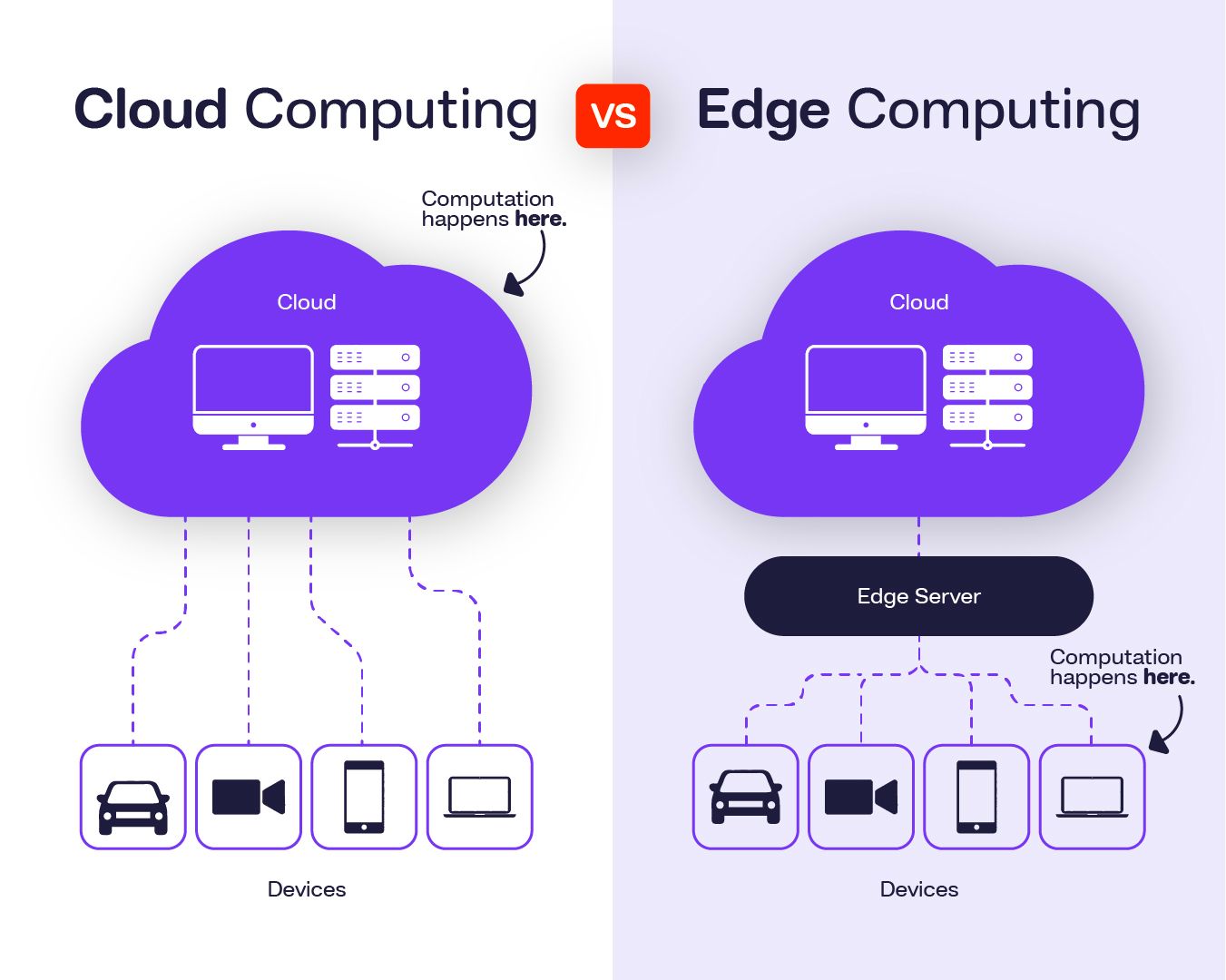
- Cloud computing is a general term for anything that involves delivering hosted services over the internet. It is the on-demand availability of computer system resources, especially data storage and computing power, without direct active management by the user. Large clouds often have functions distributed over multiple locations, each location being a data center.
- Edge Computing:
- Edge computing is a form of computing that is done on site or near a particular data source, minimizing the need for data to be processed in a remote data center.
- Edge computing can enable more effective city traffic management. Examples of this include optimising bus frequency given fluctuations in demand, managing the opening and closing of extra lanes, and, in future, managing autonomous car flows.
- An edge device is any piece of hardware that controls data flow at the boundary between two networks. Edge devices fulfill a variety of roles, depending on what type of device they are, but they essentially serve as network entry — or exit — points.
- There are five main types of edge computing devices: IoT sensors, smart cameras, uCPE equipment, servers and processors. IoT sensors, smart cameras and uCPE equipment will reside on the customer premises, whereas servers and processors will reside in an edge computing data centre.
- In service-based industries such as the finance and e-commerce sector, edge computing devices also have roles to play. In this case, a smart phone, laptop, or tablet becomes the edge computing device.
- Edge Devices:
- Edge devices encompass a broad range of device types, including sensors, actuators and other endpoints, as well as IoT gateways. Within a local area network (LAN), switches in the access layer — that is, those connecting end-user devices to the aggregation layer — are sometimes called edge switches.
- Hybrid Computing:
- A hybrid cloud integrates private, on-premises infrastructure with public cloud services, offering flexibility to distribute workloads between these environments. Hybrid models often incorporate edge computing, allowing organizations to run critical workloads locally at the edge while using the cloud for other tasks, thereby optimizing performance, cost, and data management for various business needs.
- HPC (Hight-Performance Computing):
- Practice of aggregating computing resources to gain performance greater than that of a single workstation, server, or computer. HPC can take the form of custom-built supercomputers or groups of individual computers called clusters.
- Data Centers:
- A data center is a facility that centralizes an organization’s shared IT operations and equipment for the purposes of storing, processing, and disseminating data and applications. Because they house an organization’s most critical and proprietary assets, data centers are vital to the continuity of daily operations.
- Hyperscale Data Centers:
- The clue is in the name: hyperscale data centers are massive facilities built by companies with vast data processing and storage needs. These firms may derive their income directly from the applications or websites the equipment supports, or sell technology management services to third parties.
- White Space and Grey Space in Data Centers:
- White space in a data center refers to the area where IT equipment is placed. It typically houses servers, storage, network gear, and racks.
- Gray space, on the other hand, is the area where the back-end infrastructure is located. This space is essential for supporting the IT equipment and includes areas for switchgear, UPS, transformers, chillers, and generators.
- Edge & Cloud Services:
- Edge services perform data processing on local devices and servers near the data source, reducing latency for time-sensitive operations, while cloud services centralize large computations and storage in remote datacenters, offering massive scalability and flexibility for general workloads.
- Most organizations use both, creating an “edge-to-cloud” architecture where edge devices handle immediate tasks, and the cloud manages large-scale data processing and complex applications, providing a seamless and efficient experience.
- Edge Devices:
- An edge device is a hardware component that provides an entry point into enterprise or service provider core networks, acting as the interface between the physical world and a digital network.
- Enterprise Switching:
- Enterprise switching involves high-performance, managed network devices designed to connect computers, printers, and phones within large corporate offices, campuses, or branch locations.
- Full-stack:
- Full stack development is the process of developing both the frontend and backend of applications. Any application has a frontend (user-facing) component and a backend (database and logic) component.
- Enterprise switching refers to the use of high-performance network switches designed to handle the complex, heavy-traffic demands of large organizations like corporate offices, schools, and hospitals.
- Generally Accepted Accounting Principles (GAAP):
- GAAP is the set of accounting rules set forth by the Financial Accounting Standards Board (FASB) that U.S. companies are expected to follow when putting together their financial statements.
- The goal of GAAP is to ensure that a company’s financial statements are complete, consistent, and comparable.
- GAAP may be contrasted with pro forma accounting, which is a non-GAAP financial reporting method.
- GAAP is used mainly in the U.S., while most other countries follow the International Financial Reporting Standards (IFRS). IFRS is currently used in 168 jurisdictions around the world.
- GAAP is also used by states and other government entities in the U.S. in preparing their financial statements.
- International Financial Reporting Standards (IFRS):
- Alternative to GAAP that is currently used in 168 jurisdictions around the world, including those in the European Union.
- Set of accounting rules for the financial statements of public companies that are intended to make them consistent, transparent, and easily comparable around the world.
- They were issued by the London-based Accounting Standards Board (IASB) and address record keeping, account reporting, and other aspects of financial reporting.
- The IFRS system replaced the International Accounting Standards (IAS) in 2001.
- IFRS fosters greater corporate transparency.
- Chinese companies do not use IFRS or GAAP. They use Chinese Accounting Standards for Business Enterprises (ASBEs).
- There are differences between IFRS and GAAP reporting.
- For example, IFRS is not as strict in defining revenue and allows companies to report revenue sooner. A balance sheet using this system might show a higher stream of revenue than a GAAP version of the same balance sheet.
- One major issue is the treatment of inventory. IFRS rules ban the use of last-in, first-out (LIFO) inventory accounting methods, while GAAP rules allow for LIFO. Both systems allow for the first-in, first-out method (FIFO) and the weighted average-cost method.
- Share Buyback:
- A buyback, also known as a share repurchase, occurs when a company purchases its own outstanding stock shares to reduce their number on the open market. This strategic move aims to enhance the value of remaining shares by decreasing supply. Companies often undertake buybacks to signal confidence in their financial stability and to counter the risk of a major shareholder gaining a controlling interest, which could lead to an unwanted takeover.