Assemblin Caverion Group – Caverion Finland strengthens its position in the data centre market and will deliver a EUR 15 million substation for AI cloud company Nebius
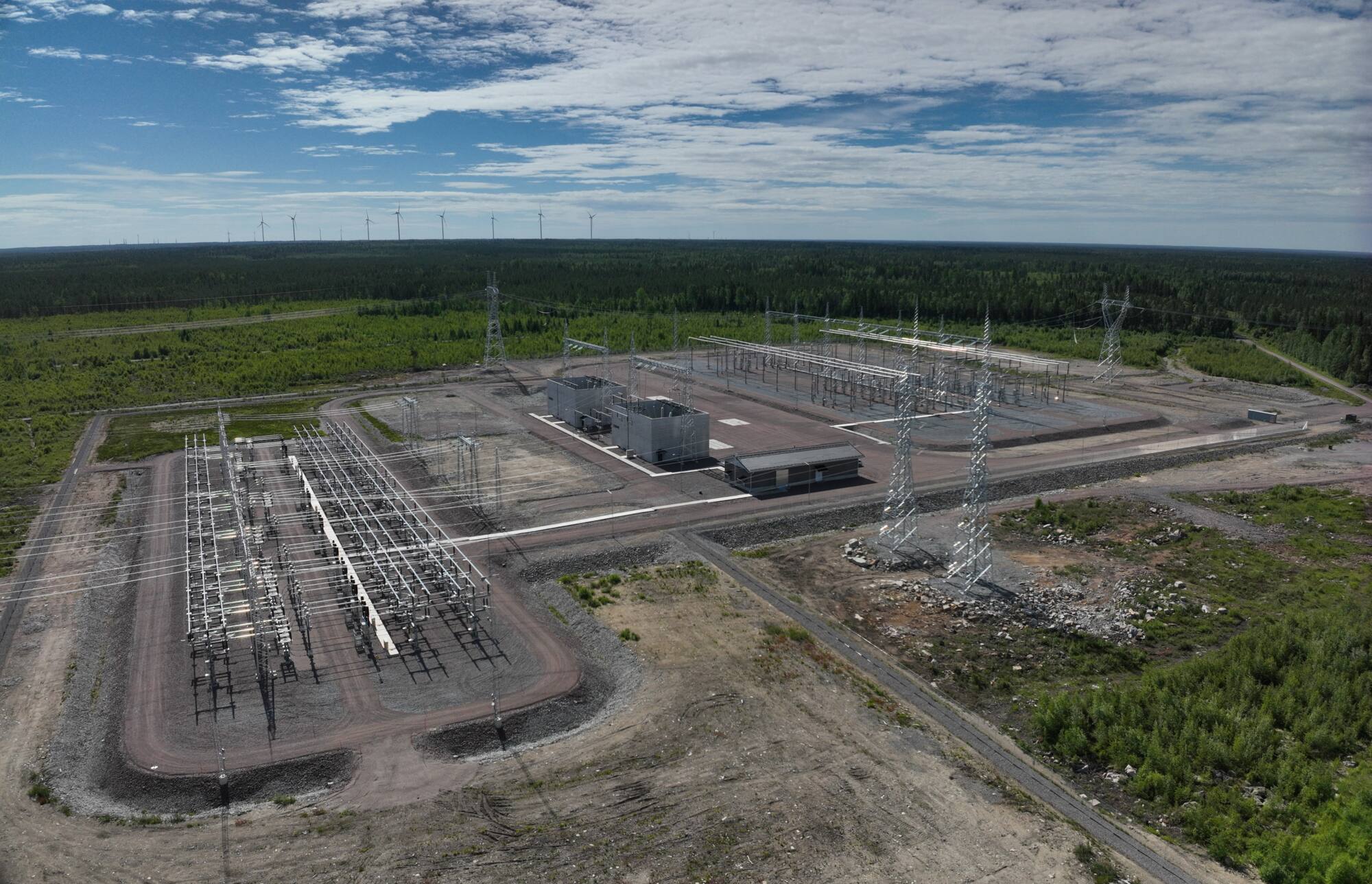
The growth of digital infrastructure is accelerating new substation projects in Finland.
Caverion Finland has signed an agreement with AI cloud company Nebius for the design and delivery of a substation serving Nebius’s new data centre in Mäntsälä, Finland. The contract is worth approximately EUR 15 million. The substation will serve Nebius’s second data centre in Mäntsälä, a new 70-megawatt building alongside its existing 75-megawatt site.
The substation is the data centre’s critical connection to the electricity grid
The substation serves as the data centre’s gateway to the electricity grid. It enables electricity supplied at high voltage to be transferred safely, reliably and without interruption for the data centre’s use. This makes the substation one of the most important infrastructure components of the entire data centre.
“We will deliver the substation in Mäntsälä on an exceptionally fast schedule, as is typical for data centre construction: the substation will be completed in autumn 2027. We thank Nebius once again for its trust,” says Kari Aalto, Head of Industrial Projects and Infrastructure at Caverion Finland.
“Our capacity expansion in Mäntsälä with the new data center is a key part of developing Nebius’s global AI infrastructure footprint. We value Caverion’s experience, delivery reliability, and high-quality and safe implementation approach,” sais Andrey Blokhin, SVP of Global Infrastructure at Nebius.
“Above all, the fast lead time is made possible by our own professionals, who have extensive experience in demanding energy and infrastructure projects. Other significant factors include precise phasing of the implementation, a local partner company network, and our company’s proactive procurement and supply chain management. We leverage the lessons learned from our successful substation projects to the fullest, drawing on experience that has been thoroughly documented and analysed in detail,” Aalto continues.
Caverion and its parent company Assemblin Caverion Group have a strong position as trusted partners for demanding industrial and infrastructure projects, including data centre, high-voltage and power-grid projects. In addition to Nebius’ Mäntsälä data centre and the related substation construction in Finland, public data centre references include Hyperco Kouvola project in Finland, the MCF Group Estonia data centre expansion in Estonia, a data centre expansion in Denmark, and the Coromatic Stockholm project in Sweden.
SourceAssemblin Caverion Group
EMR Analysis
More information on Assemblin Caverion Group: See the full profile on EMR Executive Services
More information on Jacob Götzsche (Group Chief Executive Officer, Assemblin Caverion Group + Member of the Executive Committee (EC) and Member of the Executive Management Team (EMT), Assemblin Caverion Group): See the full profile on EMR Executive Services
More information on Philip G. Carlsson (Chief Financial Officer, Assemblin Caverion Group + Deputy Group Chief Executive Officer, Assemblin Caverion Group + Member of the Executive Committee (EC) and Member of the Executive Management Team (EMT), Assemblin Caverion Group): See the full profile on EMR Executive Services
More information on Ville Tamminen (Member of the Executive Committee (EC) and Member of the Executive Management Team (EMT), Executive Vice President, Chief Executive Officer, Caverion Finland, Assemblin Caverion Group): See the full profile on EMR Executive Services
More information on Kari Aalto (Head of Infrastructure and Industrial Projects, Caverion Industry, Caverion Finland, Assemblin Caverion Group): See the full profile on EMR Executive Services
More information on Nebius: https://nebius.com/ + The AI cloud company. Based in Amsterdam. Listed on Nasdaq. Operating worldwide. Nebius, the AI cloud company, is building the full-stack platform for developers and companies to take charge of their AI future — from data and model training to production deployment. Founded on deep in-house technological expertise and operating at scale with a rapidly expanding global footprint, Nebius serves startups and enterprises building AI products, agents and services worldwide.
Nebius is listed on Nasdaq (NASDAQ: NBIS) and headquartered in Amsterdam
More information on Arkady Volozh (Founder and Chief Executive Officer, Nebius): https://group.nebius.com/governance/board-of-directors + https://www.linkedin.com/in/arkady-volozh/
More information on Andrey Blokhin (Senior Vice President, Global Infrastructure, Nebius): https://nebius.com/events/tour-to-data-center-by-nebius-and-nvidia + https://www.linkedin.com/in/aablokhin/
More information on Hyperco Fin HoldCo 1 Oy: https://hyperco.com/ + Hyperco is a Finland-based next-generation digital infrastructure company built by local industry pioneers specialising in the development, ownership and operation of secure, energy-efficient data centers. Headquartered in Helsinki, we work closely with hyperscalers and enterprises to deliver critical infrastructure that powers digital transformation. Secure and efficient data centers are necessary for the functioning of our society that is increasingly relying on digital services.
As demand for secure and reliable digital capacity grows, we are committed to setting new standards in operational and environmental responsibility. Our ambition is to lead the industry in terms of sustainability in design, development and operation.
Hyperco is part of DAMAC Digital, the data center arm of the Dubai-based DAMAC Group, which provides us with global scale, capital strength, and world-class expertise we need to support our long-term growth.
More information on Aleksi Taipale (Co-founder and Chief Executive Officer, Hyperco Fin HoldCo 1): https://hyperco.com/#about + https://www.linkedin.com/in/aleksitaipale/
More on information on MCF Group Estonia (publicly branded Greenergy Data Centers): https://www.greenergydatacenters.com/ + Greenergy Data Centers was founded in Estonia – the most advanced digital society in the world – in 2020.
Although by that time Estonia had built an efficient, secure and transparent digital ecosystem where 99% of governmental services are online, grown multiple technology unicorns (start-ups valued over 1 billion), it still lacked a proper purpose-built data center. To be more precise the Eastern and Central Europe as a whole lacked sustainable and reliable data centers. To the founders of Greenergy, this fact was unacceptable.
With the support of the Three Seas Initiative Investment Fund Greenergy Data Centers acquired MCF Group Estonia which had come across the same problem and was already building a world-class data center in Tallinn. By joining forces, they merged the best knowledge in technology, management skills, highly qualified workforce, and resources to raise the largest and most power-efficient data center in the Baltic region.
The first data center is meant to strengthen the success story of e-Estonia and its digitally savvy neighbours. It also opens the door to colocation export on an international scale.
Moreover, the Greenergy Data Centers will not stop there. The long-term vision of the company is to enable digital growth by building a network of sustainable data centers in the Central and Eastern Europe.
More information on Kert Evert (Chief Executive Officer, MCF Group Estonia): https://www.linkedin.com/in/kert-evert-a92102220/
More information on Coromatic AB: https://coromatic.com/ + Coromatic keeps your business operations running without disruptions. Coromatic secure availability of power and data communications for mission- critical functions. We are here 24/7 for our customers to ensure high availability and productivity in facilities, to save lives by securing operations without disruptions and to protect the environment by optimizing energy consumption.
Coromatic provide advisory, operations and maintenance services. We design, build and operate energy efficient technical infrastructure. Coromatic has 800 employees in the Nordics and has delivered solutions and services to more than 5000 companies in the Nordics. Coromatic is part of the E.ON Group.
More information on Peter Neuberg (Group Chief Executive Officer and Managing Director Sweden, Coromatic AB): https://coromatic.com/management/ + https://www.linkedin.com/in/peter-neuberg/
EMR Additional Notes:
- Cloud Computing:
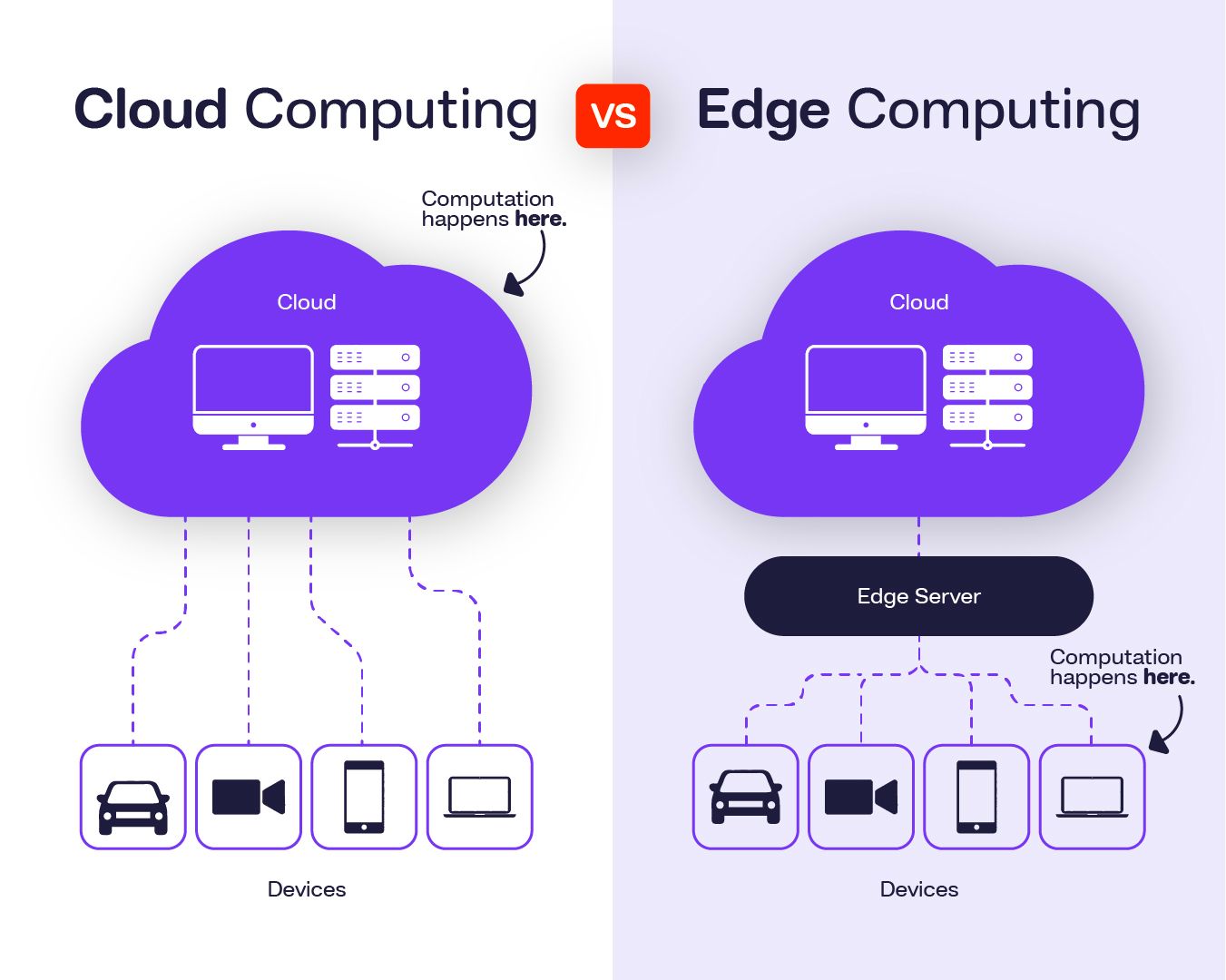
- Cloud computing is a general term for anything that involves delivering hosted services over the internet. It is the on-demand availability of computer system resources, especially data storage and computing power, without direct active management by the user. Large clouds often have functions distributed over multiple locations, each location being a data center. Cloud services typically include IaaS, PaaS, and SaaS service models.
- Edge Computing:
- Edge computing is a form of computing that is done on site or near a particular data source, minimizing the need for data to be processed in a remote data center.
- Edge computing can enable more effective city traffic management. Examples of this include optimising bus frequency given fluctuations in demand, managing the opening and closing of extra lanes, and, in future, managing autonomous car flows.
- An edge device is any piece of hardware that controls data flow at the boundary between two networks. Edge devices fulfill a variety of roles, depending on what type of device they are, but they essentially serve as network entry — or exit — points.
- There are five main types of edge computing devices: IoT sensors, smart cameras, uCPE equipment, servers and processors. IoT sensors, smart cameras and uCPE equipment will reside on the customer premises, whereas servers and processors will reside in an edge computing data centre.
- In service-based industries such as the finance and e-commerce sector, edge computing devices also have roles to play. In this case, a smart phone, laptop, or tablet becomes the edge computing device.
- Edge Devices:
- Edge devices encompass a broad range of device types, including sensors, actuators and other endpoints, as well as IoT gateways. Within a local area network (LAN), switches in the access layer — that is, those connecting end-user devices to the aggregation layer — are sometimes called edge switches.
- Edge devices act as the interface between the physical world (data generation) and digital networks.
- Hybrid Computing:
- A hybrid cloud integrates private, on-premises infrastructure with public cloud services, offering flexibility to distribute workloads between these environments. Hybrid models often incorporate edge computing, allowing organizations to run critical workloads locally at the edge while using the cloud for other tasks, thereby optimizing performance, cost, and data management for various business needs.
- HPC (Hight-Performance Computing):
- Practice of aggregating computing resources to gain performance greater than that of a single workstation, server, or computer. HPC can take the form of custom-built supercomputers or groups of individual computers called clusters.
- HPC is typically used for simulation, scientific computing, AI training, and complex modeling.
- Data Centers – Physical Infrastructure:
- A data center is a facility that centralizes an organization’s shared IT operations and equipment for the purposes of storing, processing, and disseminating data and applications. Because they house an organization’s most critical and proprietary assets, data centers are vital to the continuity of daily operations.
- Hyperscale Data Centers – Physical Infrastructure:
- The clue is in the name: hyperscale data centers are massive facilities built by companies with vast data processing and storage needs. These firms may derive their income directly from the applications or websites the equipment supports, or sell technology management services to third parties.
- Hyperscale Data Centers are typically operated by large cloud providers (e.g., hyperscalers) and designed for horizontal scalability.
- White Space and Grey Space in Data Centers – Physical Infrastructure:
- White space in a data center refers to the area where IT equipment is placed. It typically houses servers, storage, network gear, and racks.
- Gray space, on the other hand, is the area where the back-end infrastructure is located. This space is essential for supporting the IT equipment and includes areas for switchgear, UPS, transformers, chillers, and generators.
- Colocation in Data Centers – Physical Infrastructure:
- A colocation data center is a facility where businesses rent space, power, and cooling to house their own servers and networking hardware, rather than maintaining them in-house. It offers a cost-effective way to access high-level security, internet connectivity, and 24/7 technical support while retaining control of the equipment.
- Edge & Cloud Services – Integrated Architecture (Edge-to-Cloud):
- Edge services perform data processing on local devices and servers near the data source, reducing latency for time-sensitive operations, while cloud services centralize large computations and storage in remote datacenters, offering massive scalability and flexibility for general workloads.
- Most organizations use both, creating an “edge-to-cloud” architecture where edge devices handle immediate tasks, and the cloud manages large-scale data processing and complex applications, providing a seamless and efficient experience.
- AI – Artificial Intelligence:
- Artificial Intelligence (AI) is the broad field of computer science focused on developing systems that can perform tasks that typically require capabilities associated with human or other forms of intelligent behavior, such as learning, reasoning, perception, language understanding, planning, and decision-making.
- AI systems may:
- Process data or information from various sources;
- Identify patterns, relationships, or relevant features;
- Make predictions, classifications, decisions, or recommendations;
- Reason, plan, generate content, or take actions toward defined goals.
- AI is an umbrella term that includes machine learning, deep learning, generative AI, and other approaches such as rule-based systems, search, planning, knowledge representation, probabilistic methods, and optimization. Not all AI systems learn from data.
- A popular but non-standard conceptual taxonomy describes AI as reactive machines, limited-memory systems, theory-of-mind AI, and self-aware AI. This taxonomy is useful for explaining different hypothetical levels of capability, but it is not a formal scientific classification of AI systems.
- Main types of AI:
- Type 1: Reactive machines. These AI systems do not use persistent memory of previous experiences to inform their decisions and generally respond only to the current input or state. An example is Deep Blue, the IBM chess-playing system that defeated Garry Kasparov in the 1990s. Deep Blue used chess-specific search and evaluation techniques to select moves rather than learning from previous games in the manner of modern machine-learning systems.
- Type 2: Limited memory. These AI systems can use information from previous observations, stored data, or recent states when making decisions. Many modern AI systems use forms of memory or contextual information, although the term “limited memory” is a broad conceptual category rather than a precise technical classification.
- Type 3: Theory of mind. A hypothetical form of AI capable of modeling aspects of other people’s beliefs, intentions, knowledge, emotions, or perspectives and using this understanding in interaction. Such capabilities remain an active area of research rather than an established category of deployed AI.
- Type 4: Self-awareness. A hypothetical form of AI possessing a subjective sense of self or consciousness. No generally accepted evidence demonstrates the existence of genuinely self-aware or conscious AI systems.
- AI programming therefore does not have a universally accepted set of “three cognitive skills”; learning, reasoning, perception, planning, language processing, and decision-making are among the capabilities commonly associated with AI.
- Machine Learning (ML):
- Machine Learning (ML) is a subset of AI in which algorithms learn patterns or relationships from data to perform tasks such as prediction, classification, generation, or decision-making, rather than relying solely on manually specified rules for every case.
- ML uses historical or newly collected data to learn statistical patterns and improve performance on a defined task or objective.
- ML is the dominant approach underlying many modern AI systems, but rule-based, optimization-based, search-based, and other non-ML approaches remain important in many applications.
- ML allows software applications to learn from data and improve their performance on a defined task without requiring every decision rule to be explicitly programmed.
- Recommendation engines are a common use case for ML. Other uses include fraud detection, spam filtering, image and speech recognition, forecasting, business process automation (BPA), and predictive maintenance.
- Classical ML is often categorized according to how an algorithm learns from data. Common approaches include:
- Supervised learning,
- Unsupervised learning,
- Semi-supervised learning,
- Self-supervised learning, and
- Reinforcement learning.
- Deep Learning (DL):
- Deep Learning (DL) is a subset of ML that uses neural networks with multiple computational layers to learn complex representations and relationships from data.
- DL can be particularly effective for high-dimensional and unstructured or complex data such as images, audio, video, and natural language, although classical ML methods can outperform deep learning on some structured or tabular datasets.
- DL uses multiple layers of information processing that can learn increasingly complex representations of input data. In some image-recognition systems, for example, earlier layers may learn lower-level visual features while later layers combine these features into more complex representations.
- DL has enabled major advances in computer vision, speech recognition, natural language processing, generative AI, and other fields, but it is not inherently the “most sophisticated” AI architecture; different architectures and approaches are better suited to different tasks.
- Generative AI (GenAI):
- Generative AI (GenAI) refers to AI systems that generate new content or other outputs, such as text, images, code, audio, video, or structured data, based on patterns learned during training and on subsequent inputs or instructions.
- GenAI is typically powered by machine-learning and deep-learning models, including large language models and other foundation models, rather than constituting a completely separate AI paradigm.
- Generative AI can generate outputs based on prompts, structured inputs, multimodal inputs, tool calls, or instructions provided by people or software systems.
- The public release of ChatGPT in November 2022 significantly increased public awareness and adoption of generative AI capable of producing natural-language responses and other forms of content.
- Small Language Models (SLM) and Large Language Models (LLM):
- Small Language Models (SLMs) are relatively compact language models designed to process and generate natural-language content, often with lower computational, memory, or deployment requirements than larger models.
- Large Language Models (LLMs) are machine-learning models trained on large amounts of data to process and generate natural language and perform tasks such as text generation, summarization, translation, classification, question answering, reasoning, and information extraction.
- “Small” and “large” are relative terms rather than universally defined categories based on a fixed number of parameters.
- Modern LLMs are commonly based on transformer or related neural-network architectures.
- Virtual assistants such as Siri, Alexa, and Google Assistant can incorporate language models, speech-recognition systems, search, rules, APIs, and other technologies; whether and to what extent they use LLMs depends on the specific version and implementation.
- Computer Vision (CV) / Vision AI & Machine Vision (MV):
- Computer Vision (CV) is a broad field of AI and computer science concerned with enabling computers to acquire, process, analyze, and interpret visual information from images, video, and other visual sensors.
- CV can use deep learning, classical image-processing techniques, geometric methods, machine learning, and other computational approaches to recognize objects, detect patterns, estimate properties, understand scenes, or extract information from visual data.
- Applications include object detection, image classification, optical character recognition (OCR), facial recognition, medical imaging, autonomous systems, visual search, and image-based measurement and inspection.
- Machine Vision (MV) is an application of computer vision focused particularly on automated visual inspection, measurement, identification, guidance, and control, especially in industrial and manufacturing environments.
- Machine Vision commonly uses cameras, lighting, image-processing software, AI or other vision algorithms, and interfaces to industrial control systems, robots, or other equipment.
- The key difference is that CV is the broader technical field, while MV generally refers to application-oriented vision systems used to perform defined automated tasks.
- Multimodal Intelligence and Agents:
- Multimodal AI refers to AI systems that can process and/or generate information across multiple modalities, such as text, images, audio, video, and other sensor or structured data.
- Multimodal capabilities allow AI systems to combine information from different types of input and output, enabling applications such as visual question answering, speech interaction, document understanding, and systems that can see, hear, speak, and generate visual or textual content.
- An AI agent is a software system that perceives information from an environment, maintains or uses relevant state or context, and selects and takes actions toward a defined goal. An agent may incorporate one or more AI models, tools, memory, planning mechanisms, and orchestration components.
- What distinguishes an AI agent from a conventional AI model is not simply decision-making, but the ability to take actions in an environment toward a goal, often through tools or external systems.
- Agents can be classified or implemented in different ways, including reactive or planning-oriented agents, single-agent or multi-agent systems, and agents operating in static or dynamic environments. Multimodal agents can process multiple forms of information.
- Agentic AI:
- Agentic AI is an emerging term for AI systems designed to pursue defined goals by planning, making decisions, using tools, interacting with their environment, and taking actions with a degree of autonomy and limited human intervention.
- Agentic AI systems may use large language models, other machine-learning models, planning mechanisms, memory or state, tools, external data sources, and orchestration components.
- Unlike conventional AI models that primarily produce an output in response to an input, agentic systems extend model capabilities into action-oriented workflows, potentially executing multiple steps and adapting their actions based on intermediate results or changes in the environment.
- Multi-agent systems are one implementation approach in which multiple specialized agents coordinate their activities to achieve a broader goal.
- Agentic AI can build on generative AI, particularly LLMs, but agentic AI is not synonymous with generative AI or LLMs.
- Agentic Enterprise:
- An agentic enterprise is an emerging business operating model in which people, AI agents, enterprise applications, data, and automation systems work together to execute or coordinate business processes and workflows.
- Compared with conventional automation, agentic systems can interpret information, make decisions within defined boundaries, use enterprise tools, and take actions across multiple workflow steps, while appropriate governance, security, permissions, monitoring, and human oversight can constrain or supervise those actions.
- The term is increasingly used by technology companies and analysts to describe an evolution toward more autonomous AI-enabled enterprise operations, but it is not a standardized technical or organizational category.
- Edge AI Technology:
- Edge AI refers to the deployment and execution of AI models or inference workloads on or close to the devices and systems where data is generated, such as cameras, sensors, industrial controllers, vehicles, smartphones, and other IoT devices, rather than relying entirely on centralized cloud infrastructure.
- Edge AI combines edge computing with AI/ML to process data locally or near its source, potentially reducing latency, bandwidth requirements, cloud dependence, or exposure of sensitive data.
- Edge AI can operate with intermittent or no internet connectivity for some functions, although many systems continue to communicate with cloud or other centralized systems.
- Applications include autonomous vehicles, industrial inspection, wearable devices, security cameras, robotics, and smart-home equipment.
- High-Density AI:
- High-density AI refers to the concentration of AI computing capacity—particularly GPUs or other accelerators, memory, networking, power delivery, and cooling—in a relatively small physical or data-center footprint.
- It is an AI infrastructure and data-center design trend, not a distinct category of AI. High-density infrastructure can provide greater computing capacity per rack, room, or unit of floor space, but also creates significant requirements for power distribution, thermal management, networking, and physical infrastructure.
- Explainable AI (XAI) and Human-Centered Explainable AI (HCXAI):
- Explainable AI (XAI) refers to methods, techniques, and system designs intended to make AI model behavior, predictions, decisions, or outputs understandable to people.
- Human-Centered Explainable AI (HCXAI) goes further by designing explanations around the needs, context, goals, knowledge, and capabilities of the people who use or are affected by the AI system.
- While XAI focuses on understanding and communicating aspects of model behavior, HCXAI emphasizes whether explanations are relevant, comprehensible, useful, and appropriate for their human context. Related considerations can include fairness, accountability, trust, safety, and ethical use, although these are not themselves defining features of explainability.
- Physical AI & Embodied AI:
- Physical AI refers to AI systems designed to perceive, reason about, predict, and/or act in the physical world, often using data from sensors and controlling physical devices or actuators.
- Embodied AI refers to AI systems whose intelligence is situated within or coupled to a physical or simulated body or agent, emphasizing the interaction between perception, decision-making, action, and the environment.
- Physical AI and Embodied AI overlap substantially, and the terms are not universally defined as a strict hierarchy. They are commonly associated with robotics, autonomous vehicles, industrial systems, and other applications in which AI interacts with a physical environment.
- Federated Learning and Reinforcement Learning:
- Federated Learning (FL) is a machine-learning technique in which models are trained across multiple decentralized devices or organizations while the raw training data generally remains at its original location; model parameters, gradients, or other training information are communicated to an aggregation or coordination system. In simple terms: “Train AI without centrally collecting the raw data.”
- Federated learning can improve data governance and reduce the need to centralize sensitive data, but it does not by itself guarantee privacy or security. Additional techniques such as secure aggregation or differential privacy may be used.
- Reinforcement Learning (RL) is a type of machine learning in which an agent learns to select actions by interacting with an environment and receiving rewards or penalties, with the objective of improving its policy or long-term expected reward. In simple terms: “Learning through interaction and feedback.”
- Federated Learning and Reinforcement Learning can be combined as Federated Reinforcement Learning (FRL), in which multiple agents or devices learn policies locally and share selected model information or updates to improve a common or coordinated policy without centrally sharing their raw experience data.
- FRL is an active research area with applications being investigated in areas such as distributed resource management, communications networks, robotics, and autonomous systems.
- AI Factories:
- AI Factories are industrial-scale computing and operational infrastructures designed to transform data and computing resources into AI models, inference services, and other AI outputs at scale.
- AI factories can encompass data preparation, model training, fine-tuning, inference, serving, storage, high-speed networking, accelerated computing, power, cooling, and associated software and operational systems.
- “AI factory” is a conceptual and industry term rather than a standardized technical category. It can refer to a dedicated AI data center or, more broadly, an integrated infrastructure and operating model for producing and deploying AI capabilities at scale.
- Companies and organizations use the term in different ways, including in connection with hyperscale and specialized data-center infrastructure, accelerated computing, and public-sector AI infrastructure initiatives.
- Substation:
- A power station is where the power is generated. A substation is a critical part of an electrical transmission and distribution system (not generation itself), where power is transformed, switched, controlled, and distributed further into the grid.
- Substations contain specialized equipment that allows the voltage of electricity to be transformed and controlled. The voltage is stepped up or down through transformers located within the substation.
- Substations also perform protection, monitoring, and grid control functions—not just voltage transformation.
- Substations typically include:
- Transformers: The core components for voltage transformation.
- Circuit Breakers: To isolate and protect equipment.
- Switchgear: For controlling and protecting the flow of electricity.
- Shunt Reactors (sometimes): Used to improve system stability.
- Other equipment: Measuring instruments, control panels, etc.
- Transformers (Power Transformers, Distribution Transformers, Traction Transformers, HVDC Converters, Solid State Transformers (SST), Rectifier Transformers):
- A transformer is a passive electrical device that transfers electrical energy from one circuit to another through electromagnetic induction. It can be classified into three types based on voltage change:
- Step-up: Increases voltage and decreases current.
- Step-down: Decreases voltage and increases current.
- Isolation: Provides electrical isolation without changing the voltage.
- Distribution vs. Power Transformers:
- Power Transformers: These are used in high-voltage transmission networks for both stepping up and stepping down applications (e.g., 400 kV, 220 kV). They are generally rated above ~100–200 MVA (not a strict boundary) and are designed for maximum efficiency at or near full load.
- Distribution Transformers: These are used in lower-voltage distribution networks to connect to end-users (e.g., 11 kV → 400/230 V). They are generally rated below ~100 MVA (typically much smaller in practice) and are designed for maximum efficiency at partial load (~50–70%), as they operate continuously with variable demand. They perform the final voltage transformation for household and commercial use.
- Specialized Transformers:
- Traction Transformers: These are special transformers used in railway systems to step down high-voltage AC power from the overhead catenary to the required voltage for the train’s traction system. They are typically standard grid-frequency transformers (50/60 Hz).
- HVDC Converter Transformers: Used in HVDC stations. These transformers adapt AC voltage levels and provide galvanic isolation and phase shifting before conversion to DC (rectification) or after inversion back to AC.
- Solid State Transformers (SSTs): Also known as power electronic transformers (PETs) or intelligent universal transformers (IUTs). These are power-electronic-based conversion systems (not purely AC-AC transformers) that include AC/DC/AC conversion stages with a high-frequency transformer, enabling reduced size, advanced control, and bidirectional power flow.
- Rectifier Transformers: These transformers supply AC power to rectifier systems, which convert it into DC. Their design minimizes harmonics and ensures stable DC output. They are used in industrial processes requiring large DC power (e.g., electrolysis, traction, HVDC).
- A transformer is a passive electrical device that transfers electrical energy from one circuit to another through electromagnetic induction. It can be classified into three types based on voltage change:

- Shunt Reactor:
- Shunt reactors are used in high-voltage transmission systems to control voltage during load variations.
- A shunt reactor is a device that absorbs reactive power (inductive compensation), thereby stabilizing voltage and improving system efficiency, especially in long transmission lines and cable systems.
- A shunt reactor can be directly connected to the power line or to a tertiary winding of a three-winding transformer. It can be permanently connected or switched via a circuit breaker.
- Unlike a power transformer, a shunt reactor typically has a single winding per phase and is designed to consume reactive power rather than transfer active power.
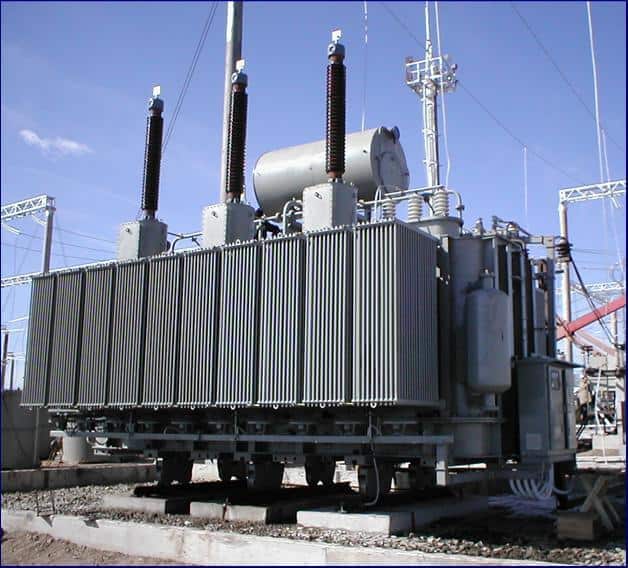
- Fundamental Electrical Quantities and Units:
- Electric Current:
- Ampere – Amp (A):
- Amperes measure the flow of electrical current (electric charge) through a circuit. The ampere is the SI base unit of electric current. The current in a conductor may be carried by electrons or other charge carriers, depending on the medium.
- One ampere corresponds to one coulomb of electric charge passing a point per second (1 A = 1 C/s). In the current SI, the ampere is formally defined by fixing the elementary charge at exactly 1.602 176 634 × 10⁻¹⁹ coulomb. The ampere is named after the French physicist André-Marie Ampère, who made significant contributions to the study of electromagnetism.
- Milliampere (mA):
- Milliampere (mA) is a unit of electric current equal to one-thousandth of an ampere (1 mA = 0.001 A = 10⁻³ A). The prefix “milli-” signifies 10⁻³ in the SI system. This unit is commonly used to measure small electrical currents, particularly in electronic circuits, sensors and low-power devices.
- Ampere – Amp (A):
- Electrical Potential (Voltage):
- Volt (V):
- Volts (V) measure electric potential difference between two points. Voltage represents the difference in electric potential energy per unit of electric charge and can drive current when a conductive path exists. Voltage is sometimes described as “electrical pressure” as an analogy, but it is more precisely a difference in electric potential.
- Kilovolt (kV):
- Kilovolt (kV) is a unit of electric potential difference equal to 1,000 volts (1 kV = 1,000 V).
- Volt (V):
- Electrical Power vs. Electrical Energy:
- Watts (W) measure the rate of energy transfer or conversion, known as electrical power.
A useful analogy is:- Power = the rate at which electrical energy is used, transferred or generated
- Energy = the total amount of energy transferred, consumed, generated or stored over a period of time
- Power vs. Energy: Power describes how quickly energy is transferred, while energy describes the accumulated amount over time. Electricity consumption is normally billed based on electrical energy, such as kWh, rather than power alone.
- Power (measured in W, kW, MW, GW, TW): Rate at which energy is transferred or converted at a given instant or over a specified period.
- Energy (measured in J, Wh, kWh, MWh, GWh, TWh): Amount of energy transferred or converted over a period of time. For constant power, Energy = Power × Time; for variable power, energy is obtained by integrating power over time.
- Watts (W) measure the rate of energy transfer or conversion, known as electrical power.
- Real Power Units:
- Real power (also called active power) measures the rate of net energy transfer that results in useful energy conversion, such as mechanical work, heat, light or stored energy.
- Kilowatt (kW):
- A kilowatt is a unit of power equal to 1,000 watts.
- You can quickly convert watts (W) to kilowatts (kW) by dividing your wattage by 1,000:
- 1,000 W = 1 kW
- Megawatt (MW):
- One megawatt equals one million watts or 1,000 kilowatts. It is commonly used to express the power rating or output of generators, large electrical loads, industrial facilities and other power systems.
- Gigawatt (GW):
- A gigawatt (GW) is a unit of power equal to one billion watts or 1,000 megawatts.
- The number of solar panels, wind turbines or other generating units corresponding to 1 GW depends on the rated power of the individual units and therefore is not a fixed conversion.
- Terawatt (TW):
- One terawatt is equal to one trillion watts (1,000,000,000,000 watts) or 1,000 gigawatts. It is used to describe very large power levels, such as aggregated national, regional or global electricity-generation or consumption capacity.
- Large-scale electricity consumption over a period of time should be expressed as energy, typically in terawatt-hours (TWh), rather than power in terawatts (TW).
- Apparent Power Units:
- Apparent power (S) measures the magnitude of electrical power in an AC system, combining the effects of active and reactive power. It is expressed in volt-amperes (VA) rather than watts (W).
- Kilovolt-Amperes (kVA):
- Kilovolt-amperes (kVA) is a unit of apparent power equal to 1,000 volt-amperes (VA). It is commonly used for rating transformers, generators, UPS systems and other AC electrical equipment.
- The difference between real power (kW) and apparent power (kVA) is crucial.
- Real power (kW) is the active power associated with net energy transfer, while apparent power (kVA) represents the magnitude of the total AC power associated with both active and reactive components.
- Reactive power is measured in volt-amperes reactive (var or kVAr) and is associated with the periodic exchange of energy with inductive and capacitive elements.
- The relationship between them is defined by the power factor.
- kW = kVA × Power Factor
- Since the power factor is normally less than or equal to 1, the kVA value will normally be greater than or equal to the kW value, with equality at unity power factor.
- Megavolt-Amperes (MVA):
- Megavolt-Amperes (MVA) is a unit used to measure apparent power, primarily for large electrical systems such as power plants, substations, transformers and transmission networks.
- 1 MVA is equivalent to:
- 1,000 kVA
- 1,000,000 VA
- Specialized Renewable Energy Unit:
- Kilowatt-peak (kWp):
- kWp stands for kilowatt-peak and denotes the rated peak power of a photovoltaic (PV) system or module under specified reference test conditions. It is most commonly applied to solar photovoltaic (PV) systems.
- For example, a solar panel system with a peak power of 3 kWp has a nominal peak output of 3 kW under the applicable reference test conditions. If it were to produce exactly 3 kW continuously for one hour, the corresponding energy would be 3 kWh.
- kWp (kilowatt peak) is the peak-power rating of the PV system under specified reference conditions; for conventional crystalline-silicon PV modules, Standard Test Conditions (STC) use 1,000 W/m² irradiance and 25°C cell temperature with a reference solar spectrum.
- Example: If the system has four 270-watt panels: 4 × 0.27 kW = 1.08 kWp.
- kWp does not universally correspond to 1,000 kWh/year; actual production depends strongly on solar irradiation, location, orientation, tilt, shading, temperature, system losses, degradation and other operating conditions. A fixed annual kWh-per-kWp figure therefore should not be treated as universal.
- Kilowatt-peak (kWp):
- Electric Current:
- Grid, Microgrids, DERs and DERM’s:
- Grid / Power Grid:
- The power grid is a network for delivering electricity to consumers. The power grid includes power generation facilities, substations, transmission lines and towers, distribution networks, protection and control equipment, and associated communication and monitoring infrastructure.
- The grid continuously balances electricity generation and consumption while maintaining system stability and power quality, supplying electricity for applications ranging from industry to household appliances.
- Electric grids perform three major functions or stages of electricity supply: power generation, transmission, and distribution. Grid operation also includes functions such as system balancing, protection, control, monitoring, and, increasingly, energy storage and demand-side management.
- The power grid is a network for delivering electricity to consumers. The power grid includes power generation facilities, substations, transmission lines and towers, distribution networks, protection and control equipment, and associated communication and monitoring infrastructure.
- Microgrid:
- A microgrid is a group of interconnected loads and distributed energy resources (DERs) within clearly defined electrical boundaries that acts as a single controllable entity with respect to the main grid and can operate either connected to the main grid or, when appropriately designed, intentionally and controllably in an islanded mode.
- Microgrids can integrate local generation, energy storage, controllable loads, and other DERs to improve resilience, flexibility, efficiency, or local energy management.
- A microgrid is a group of interconnected loads and distributed energy resources (DERs) within clearly defined electrical boundaries that acts as a single controllable entity with respect to the main grid and can operate either connected to the main grid or, when appropriately designed, intentionally and controllably in an islanded mode.
- Smart Grid:
- A smart grid is an electrical grid enhanced with digital communications, sensing, automation, control, and data/analytics technologies across generation, transmission, distribution, and/or customer-side systems to improve the monitoring, operation, efficiency, reliability, resilience, and flexibility of the power system.
- Distributed Energy Resources (DERs):
- Distributed energy resources (DERs) are relatively small-scale electricity generation, storage, and flexible demand resources, located at or near the distribution system or customer premises, that can supply, store, or modify electricity consumption and are interconnected to the electric grid. They are often located close to load centers and can be used individually or in aggregate to provide value to the grid.
- Common examples of DERs include rooftop solar PV units, small wind turbines, small gas-fired generators or engines/turbines, microturbines, biomass generators, fuel cells, combined heat and power (CHP) or tri-generation systems with electrical generation, battery storage, electric vehicles and controllable EV charging or discharging where they can provide grid flexibility, and demand response applications.
- Distributed energy resources (DERs) are relatively small-scale electricity generation, storage, and flexible demand resources, located at or near the distribution system or customer premises, that can supply, store, or modify electricity consumption and are interconnected to the electric grid. They are often located close to load centers and can be used individually or in aggregate to provide value to the grid.
- Distributed Energy Resources Management Systems (DERMS):
- Distributed Energy Resources Management Systems (DERMS) are software platforms that help utilities, distribution system operators (DSOs), aggregators, and other energy-sector organizations monitor, provide visibility into, forecast, coordinate, optimize, and, where supported, control distributed energy resources (DERs).
- DERMS can be used to aggregate and coordinate large numbers of DERs and flexible loads for grid services, including voltage and power-flow management, congestion and constraint management, balancing, flexibility services, resilience, and participation in demand-response or other electricity markets. DERMS can be defined in many ways, depending on the use case, the types of DERs being managed, the responsibilities of the organization using the system, and the architecture of the power system.
- Distributed Energy Resources Management Systems (DERMS) are software platforms that help utilities, distribution system operators (DSOs), aggregators, and other energy-sector organizations monitor, provide visibility into, forecast, coordinate, optimize, and, where supported, control distributed energy resources (DERs).
- Grid / Power Grid:
- Extra Low-Voltage (ELV):
- Extra-Low Voltage (ELV) is defined as a voltage of ≤ 50 V AC (RMS) or ≤ 120 V DC (ripple-free).
- ELV systems are typically used where electrical safety is critical (e.g., building automation, control circuits, lighting, telecom).
- Low-Voltage (LV):
- The International Electrotechnical Commission (IEC) defines Low Voltage (LV) for supply systems as voltage in the range > 50–1000 V AC or > 120–1500 V DC.
- Medium-Voltage (MV):
- Medium Voltage (MV) is a voltage class that typically falls between low voltage and high voltage, with a common range being from > 1 kV up to ~30–36 kV (typical IEC practice).
- Some regions (e.g., North America) extend MV up to ~69 kV, depending on utility definitions.
- High-Voltage (HV):
- The International Electrotechnical Commission defines high voltage as above 1000 V AC and above 1500 V DC.
- In practice, HV is often considered from ~36 kV up to ~230 kV in transmission systems.
- Super High-Voltage or Extra High-Voltage (EHV):
- Extra High-Voltage (EHV) is the voltage class used for long-distance bulk power transmission. The range for EHV systems is typically from ~220 kV to ~765–800 kV. “Super High Voltage” is not a standard IEC term.
- Ultra High-Voltage (UHV):
- Ultra High-Voltage (UHV) is the highest voltage class used in electrical transmission, defined as a voltage of ≥ 800 kV (AC) and ≥ 800–1000 kV (DC, depending on classification).
- Procurement: Sourcing and Purchasing:
- Sourcing is the strategic procurement process of identifying, evaluating, selecting, and developing relationships with suppliers to obtain the best long-term value for an organization. It focuses on supplier capability, cost optimization, quality, risk management, and supply continuity.
- Typical sourcing activities include:
- Supplier identification and qualification
- RFIs, RFPs, and RFQs
- Supplier evaluation and audits
- Price and contract negotiations
- Supplier relationship management (SRM)
- Risk assessment and supply chain diversification
- Typical sourcing activities include:
- Purchasing is the operational process of procuring goods and services from approved suppliers. It focuses on executing transactions efficiently and ensuring that materials are delivered at the right price, quantity, quality, and time.
- Typical purchasing activities include:
- Creating purchase requisitions
- Issuing purchase orders (POs)
- Order confirmations
- Expediting deliveries
- Receiving goods
- Invoice matching and payment coordination
- Typical purchasing activities include:
- Procurement is the broader function that encompasses both sourcing and purchasing.
- Procurement = Sourcing + Purchasing + Contract Management + Supplier Management + Procurement Operations
- Sourcing decides who the company should buy from.
- Purchasing executes what, when, and how much to buy from those approved suppliers.
- This distinction is especially important in manufacturing, industrial automation, EPC projects, and large enterprises, where sourcing teams negotiate strategic supplier agreements while purchasing teams handle the day-to-day procurement of materials and services.
- Sourcing is the strategic procurement process of identifying, evaluating, selecting, and developing relationships with suppliers to obtain the best long-term value for an organization. It focuses on supplier capability, cost optimization, quality, risk management, and supply continuity.
- Supply Chain:
- A supply chain is the end-to-end network of individuals, organizations, resources, activities, data, and technologies involved in the creation and delivery of a product or service—from raw materials to the final customer.
- A supply chain includes not only physical flows (goods), but also information flows and financial flows across all participants.
- At the most fundamental level, Supply Chain Management (SCM) is the integrated planning, coordination, and optimization of the flow of:
- goods
- information
- and finances
- from raw material sourcing to final delivery.
- At its core, SCM is not just “management of flows” but the optimization of those flows across cost, service level, speed, and risk.
- Supply Chain vs Logistics:
- Supply Chain: entire ecosystem (end-to-end)
- Logistics: subset focused on movement and storage of goods