Acuity – Acuity Inc. names Ruth Gratzke President of Acuity Brands Lighting
Proven industrial technology executive to lead the industry’s leading lighting business
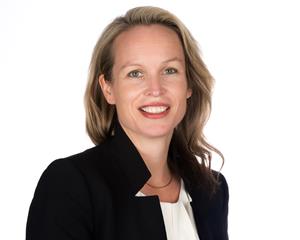
ATLANTA, Aug. 18, 2026 (GLOBE NEWSWIRE) — Acuity Inc. (NYSE: AYI) appoints Ruth Gratzke as President of Acuity Brands Lighting (ABL) effective September 1, 2026. She will report to Neil Ashe, Acuity CEO.
Gratzke brings more than 25 years of leadership in industrial technology, smart infrastructure and electrical products. She joins Acuity from Siemens, where she served as President of Siemens Smart Infrastructure in the United States and Chief Executive Officer of Siemens Industry, Inc., leading businesses across smart buildings, grid-edge technology and energy infrastructure. At Siemens, she helped scale a complex technology portfolio while advancing work in digital infrastructure, energy efficiency and data center environments. She also held senior leadership roles at General Electric and Hubbell. Known for building high-performing teams, Gratzke brings a leadership approach grounded in empowerment, accountability and customer impact.
“Lighting and controls are essential technology in every built space, and Acuity Brands Lighting is the best in the industry,” said Neil Ashe, CEO of Acuity Inc. “Ruth is the right leader for this business. Her track record leading complex technology and infrastructure businesses, developing high-performing teams and driving growth positions ABL to build on its leadership and capture the opportunities ahead.”
“Acuity Brands Lighting is a market leader with an outstanding portfolio, talented team and loyal customers,” said Ruth Gratzke. “Lighting and controls are fundamental to how buildings operate, and advances in building management, energy efficiency and digital technology are expanding what is possible. I am excited to join Acuity and work with the ABL team to build on its strong foundation and advance the next era of lighting and controls.”
Gratzke earned a Master of Science degree in Electrical Engineering from the University of Erlangen-Nuremberg in Germany and served on the Board of Directors of the Siemens Foundation, reflecting both her technical foundation and commitment to advancing opportunity in technology and engineering.
This transition builds on the progress ABL has made under Sach Sankpal’s leadership to become a more connected organization with stronger end-to-end alignment across the business. Sach will remain with Acuity for a transition period, working closely with Ruth and Neil to support continuity for our associates, customers and channel partners. We thank Sach for his many contributions as ABL enters its next season from a position of strength.
SourceAcuity
EMR Analysis
More information on Acuity Inc.: See the full profile on EMR Executive Services
More information on Neil Ashe (Chairman, President and Chief Executive Officer, Acuity Inc.): See the full profile on EMR Executive Services
More information on Karen J. Holcom (Senior Vice President and Chief Financial Officer, Acuity Inc.): See the full profile on EMR Executive Services
More information on Ruth Gratzke (President, Siemens Smart Infrastructure U.S., Siemens Smart Infrastructure (SI), Siemens AG + President and Chief Executive Officer, Siemens Industry, Inc., Siemens AG + President, Acuity Brands Lighting (ABL), Acuity Inc. as from September 1, 2026): See the full profile on EMR Executive Services
More information on Sach Sankpal (President, Acuity Brands Lighting (ABL), Acuity Inc. On Transition): See the full profile on EMR Executive Services
More information on Siemens AG: See full profile on EMR Executive Services
More information on Dr. Roland Busch (President and Chief Executive Officer, Siemens AG): See full profile on EMR Executive Services
More information on Siemens Smart Infrastructure (SI) by Siemens AG: See the full profile on EMR Executive Services
More information on Dr. Peter Körte (Member of the Managing Board and Chief Technology and Chief Strategy Officer with responsibility for Siemens Xcelerator and Siemens Advanta, Siemens AG + Member of the Managing Board and Chief Executive Officer, Siemens Smart Infrastructure (SI), Siemens AG): See the full profile on EMR Executive Services
More information on The Siemens Foundation by Siemens AG: https://www.siemens.com/en-us/company/about/usa-foundations/ + The Siemens Foundation advances workforce development and health equity jobs in the United States. The Foundation is committed to expanding skill development, economic opportunity, and upward mobility for all people.
Established in 1998 the Siemens Foundation has invested $174 million in the United States to support the development of U.S. workers by scaling best-practices and investing in workforce training and education. Our goal is a more just and equitable society. Through partnerships with national organizations, we work to improve individual lives and local communities.
Our approach leverages Siemens subject matter expertise with foundation assets to address societal needs. By investing in best-in-class programs of nationally recognized organizations, the Siemens Foundation maximizes its reach.
More information on David D. Etzwiler (Chief Executive Officer, Siemens Foundation, Siemens AG): See the full profile on EMR Executive Services
More information on GE: https://www.ge.com + General Electric Company (General Electric, GE or the Company) was a high-tech industrial company that today operates worldwide through three segments: Aerospace, Renewable Energy, and Power. Our products included commercial and military aircraft engines and systems; wind and other renewable energy generation equipment and grid solutions; and gas, steam, nuclear and other power generation equipment. We had significant global installed bases of equipment across these sectors, and services to support these products are also an important part of our business alongside new equipment sales.
In November 2021, we announced a strategic plan to form three industry-leading, global, investment-grade public companies from (i) our Aerospace business, (ii) our Renewable Energy, Power, Digital and Energy Financial Services businesses, which we plan to combine and refer to as GE Vernova, and (iii) our former HealthCare business. In July 2022, we announced the new brand names for our three planned future companies: GE Aerospace, GE HealthCare and GE Vernova.
More information on H. Lawrence (Larry) Culp, Jr. (Chairman and Chief Executive Officer, GE + Chief Executive Officer, GE Aerospace): https://www.ge.com/about-us/leadership/profiles/lawrence-culp + https://www.linkedin.com/in/larry-culp/
More information on Hubbell Inc.: See the full profile on EMR Executive Services
More information on Gerben W. Bakker (Chairman, President and Chief Executive Officer, HUBBELL): See the full profile on EMR Executive Services
EMR Additional Notes:
- Grid, Microgrids, DERs and DERM’s:
- Grid / Power Grid:
- The power grid is a network for delivering electricity to consumers. The power grid includes generator stations, transmission lines and towers, and distribution networks.
- The grid constantly balances the supply and demand for the energy that powers everything from industry to household appliances.
- Electric grids perform three major functions: generation, transmission, and distribution
- Microgrid:
- Small-scale power grid that can operate independently or collaboratively with other grids. The practice of using microgrids is known as distributed, dispersed, decentralized, district or embedded energy production.
- Group of interconnected loads and DERs (Distributed Energy Resources) within clearly defined electrical and geographical boundaries which acts as a single controllable entity with respect to the main grid.
- A microgrid can operate in both grid-connected mode and islanded (off-grid) mode.
- Smart Grid:
- An electrical grid enhanced with digital communication, automation, and IT systems across generation, transmission, distribution, and consumption levels.
- Enables real-time monitoring, control, demand response, and integration of DERs.
- Distributed Energy Resources (DERs):
- Small-scale electricity supply and demand-side resources (typically in the range of a few kW up to tens of MW, depending on definition) that are interconnected to the electric grid. They are power generation resources and are usually located close to load centers, and can be used individually or in aggregate to provide value to the grid.
- Common examples of DERs include rooftop solar PV units, natural gas turbines, microturbines, wind turbines, biomass generators, fuel cells, tri-generation units, battery storage, electric vehicles (EV) and EV chargers, and demand response resources (load flexibility).
- Distributed Energy Resources Management Systems (DERMS):
- Platforms which help mostly distribution system operators (DSO) manage their grids that are mainly based on distributed energy resources (DER).
- DERMS are used by utilities and other energy companies to aggregate and orchestrate distributed energy resources for participation in the demand response market and grid services (e.g., flexibility, voltage control, congestion management).
- Grid / Power Grid:
- Grid-Edge Technology:
- Grid-edge technology refers to the hardware, software, and localized systems operating at the boundary between the electrical utility and the end-user. It shifts power grids from a one-way, centralized model to a decentralized, interactive network by using smart meters, distributed energy resources (DERs), and local edge computing.
- Main Academic Degrees and Professional Credentials:
- Undergraduate Degrees & Certificates:
- Vocational and Technical Certificates (typically 6 Months to 2 Years): Career-focused credentials providing practical, hands-on training for specific occupations or technical fields. They can prepare individuals for specialized roles such as welding, automotive repair, electrical work, healthcare support, or information technology. Duration varies considerably depending on the program and country.
- Associate Degrees (AA / AS / AAS – typically 2 Years): Undergraduate degrees generally offered by community colleges, junior colleges, and technical institutions. They can provide preparation for direct entry into technical or professional occupations or serve as the first stage toward a bachelor’s degree.
- AA: Associate of Arts
- AS: Associate of Science
- AAS: Associate of Applied Science
- BA (Bachelor of Arts): An undergraduate academic degree typically emphasizing humanities, social sciences, languages, arts, and related disciplines. BA programs generally develop communication, critical thinking, research, and analytical skills. The structure and requirements vary by institution and country.
- BS (Bachelor of Science): An undergraduate academic degree typically focused on scientific, technical, quantitative, and analytical disciplines, including STEM fields. Programs may include laboratory work, mathematics, computing, and practical applications. The distinction between a BA and BS/BSc is not universal and depends on the institution and country.
- Postgraduate & Professional Degrees:
- MA (Master of Arts): A postgraduate academic degree typically awarded in humanities, social sciences, languages, communication, history, literature, and related disciplines. MA programs build on bachelor’s-level education and generally emphasize advanced knowledge, research, critical thinking, and analysis. They commonly take one to two years, depending on the country and program.
- MS / MSc (Master of Science): A postgraduate degree typically focused on scientific, technical, quantitative, and analytical disciplines. Programs may include advanced coursework, laboratory or applied research, a thesis, dissertation, or capstone project. Common fields include engineering, computer science, data science, biology, mathematics, finance, and healthcare.
- MBA (Master of Business Administration): A postgraduate professional degree focused on business management, leadership, and organizational decision-making. Typical subjects include strategy, finance, marketing, accounting, operations, entrepreneurship, and leadership. An MBA is generally designed to develop broad management capabilities and is commonly pursued by professionals seeking management roles, career transitions, or entrepreneurial opportunities.
- PhD (Doctor of Philosophy): A doctoral research degree representing the highest level of academic qualification commonly awarded by universities. Despite its name, a PhD is not limited to philosophy and can be awarded in almost any academic discipline. It normally involves advanced study, original research, and the preparation and defense of a doctoral thesis or dissertation. A PhD can prepare graduates for academic, research, and highly specialized professional careers, but holding a PhD does not automatically qualify someone to teach at a university; requirements vary by country, institution, and position.
- Professional Certifications & Designations:
- CFA® (Chartered Financial Analyst®): A globally recognized professional designation awarded by the CFA Institute to investment professionals who meet its examination, professional-experience, and membership requirements.
- The CFA Program consists of three levels of examinations and covers areas including investment analysis, portfolio management, financial reporting, economics, valuation, and professional ethics.
- The CFA charter is particularly relevant to careers in investment management, portfolio management, equity research, and financial analysis.
- CFA® (Chartered Financial Analyst®): A globally recognized professional designation awarded by the CFA Institute to investment professionals who meet its examination, professional-experience, and membership requirements.
- Undergraduate Degrees & Certificates: