ACOME – How the ACOME Group’s CSR strategy integrates SBTi-validated decarbonization targets for 2030
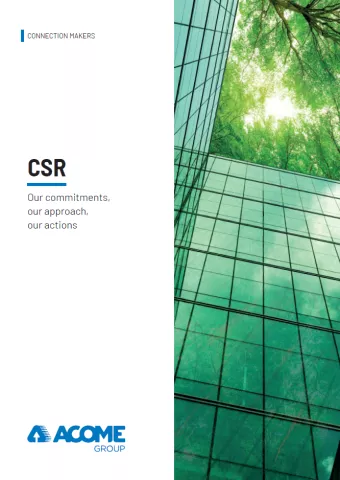
In the face of climate challenges and the need to build resilient digital infrastructures, the ACOME Group is taking a major new step forward.
With the publication of its new CSR brochure, the company highlights its strategy for 2030, driven by a rigorous carbon trajectory validated by the SBTi.
With the publication of this CSR brochure, ACOME demonstrates how France’s leading industrial cooperative (SCOP) successfully combines technical performance with reducing environmental impact.
From integrating 20% recycled copper into production to breakthrough innovations such as nanomodule technology — which enables up to a 30% reduction in the carbon footprint of cables — ACOME is sustainably transforming its entire value chain.
We invite you to discover all of our commitments, performance indicators (notably our EcoVadis score of 79/100), and action plans by downloading the 2026 CSR Brochure.
SourceACOME
EMR Analysis
More information on ACOME: See the full profile on EMR Executive Services
More information on Frédéric Briand (Chairman & Chief Executive Officer, ACOME Group): See the full profile on EMR Executive Services
More information on Pierre-Yves Ogier (Director, Finance & Legal, ACOME Group + Member of the Board of Directors, ACOME Group): See the full profile on EMR Executive Services
More information on the Responsible Company Plan & Execution (Performance Management, CSR Management and Global Compact) and Strategy 2030 by ACOME: See the full profile on EMR Executive Services
More information on Jean-Marc Paret (CSR Group Director, ACOME Group + Member of the Management Committee and Executive Committee, ACOME Group): See the full profile on EMR Executive Services
More information on Nanomodule by ACOME: https://www.acome.com/en/publications/446-expert-opinions/3038-nanomodule-uk-breakthrough-technology-fighting-back-against + New and patented technology that allows ACOME to increase the capacity of underground low voltage (ULW) cables. This is significant because traditionally, increasing the capacity of a cable would also require increasing the diameter of the cable. The ACOME patented nanomodule not only increases the cable density between 80 and 100 %, when compared with convention micromodule and loose tube designs, but it reduces the cable carbon footprint, reduces installation times, and reduces the TCO.
More information on The Science Based Targets initiative (SBTi): https://sciencebasedtargets.org/ + The Science Based Targets initiative (SBTi) is a global body enabling businesses to set ambitious emissions reductions targets in line with the latest climate science. It is focused on accelerating companies across the world to halve emissions before 2030 and achieve net-zero emissions before 2050.
There are two main types of science-based targets: near-term and net-zero. Near-term targets aim to address emissions reductions over the next 5-10 years, whereas net-zero targets include reductions of 90% or more no later than 2050.
The initiative is a collaboration between CDP, the United Nations Global Compact, World Resources Institute (WRI) and the World Wide Fund for Nature (WWF) and one of the We Mean Business Coalition commitments. The SBTi defines and promotes best practice in science-based target setting, offers resources and guidance to reduce barriers to adoption, and independently assesses and approves companies’ targets.
- Defines and promotes best practices in emissions reductions and net-zero targets in line with climate science.
- Provides target setting methods and guidance to companies to set science-based targets in line with the latest climate science.
- Includes a team of experts to provide companies with independent assessment and validation of targets.
- Serves as the lead partner of the Business Ambition for 1.5°C campaign, an urgent call to action from a global coalition of UN agencies, business and industry leaders that mobilizes companies to set net-zero science-based targets in line with a 1.5 degrees C future.
More information on David Kennedy (Chief Executive Officer, SBTi): https://sciencebasedtargets.org/about-us/the-team + https://www.linkedin.com/in/david-kennedy-1000a3262/
More information on EcoVadis: https://ecovadis.com + The World’s Most Trusted Business Sustainability Ratings.
Since its founding in 2007, EcoVadis has grown to become the world’s largest and most trusted provider of business sustainability ratings, creating a global network of more than 150,000+ rated companies.
Our team is composed of over 1900 highly-talented professionals from 80 nationalities.
The EcoVadis sustainability assessment methodology is at the heart of our Ratings and Scorecards and is an evaluation of how well a company has integrated the principles of Sustainability/CSR into their business and management system.
The EcoVadis sustainability assessment methodology is at the heart of our Ratings and Scorecards and is an evaluation of how well a company has integrated the principles of Sustainability/CSR into their business and management system.
Our methodology is built on international sustainability standards, including the Global Reporting Initiative, the United Nations Global Compact, and the ISO 26000, covering 250+ spend categories and 185+ countries. The Sustainability Scorecard illustrates performance across 21 indicators in four themes: Environment, Labor & Human Rights, Ethics and Sustainable Procurement.
EcoVadis medals are awarded to the top 35% of companies assessed by EcoVadis:
Medals are awarded based on the percentile rank of a company which is calculated at the time of scorecard publication. It compares a company’s performance with all rated companies in our database over the previous 12 months. The percentile rank is calculated across all companies in all industries, not per industry.
- Platinum – Top 1% (99+ percentile)
- Gold – Top 5% (95+ percentile)
- Silver – Top 15% (85+ percentile)
- Bronze – Top 35% (65+ percentile)
To be eligible for a medal, a company must achieve a minimum score of 30 in each of the four themes:
- Environment
- Ethics
- Labor & Human Rights
- Sustainable Procurement
More information on Pierre-François Thaler (Co-Founder & Co-Chief Executive Officer, EcoVadis + Co-Founder & Co-Chief Executive Officer, CyberVadis): https://ecovadis.com/leadership/ + https://www.linkedin.com/in/pfthaler/
More information on Frédéric Trinel (Co-Founder & Co-Chief Executive Officer, EcoVadis): https://ecovadis.com/leadership/
EMR Additional Notes:
- CSR (Corporate Social Responsibility):
- Corporate Social Responsibility (CSR) is a voluntary framework or business model that helps a company be socially accountable to itself, its stakeholders, and the public.
- The purpose of CSR is to give back to the community, take part in philanthropic causes, and provide positive social value. Businesses are increasingly turning to CSR to make a difference and build a positive brand around their company.
- CSR encompasses a company’s policies and initiatives relating to environmental stewardship, ethical business practices, employee well-being, community engagement, and corporate governance.
- CSR tends to target opinion formers – politicians, pressure groups, media. It is generally driven internally by the company as part of its corporate values and long-term business strategy.
- ESG (Environmental, Social and Governance):
- ESG (Environmental, Social and Governance) refers to the three key factors used to measure and evaluate the sustainability, ethical practices, risk profile, and long-term resilience of a business or company. ESG is widely used by investors, lenders, regulators, and other stakeholders when assessing a company’s non-financial performance.
- Most socially responsible investors check companies out using ESG criteria to screen investments.
- ESG metrics are not commonly part of mandatory financial reporting, although disclosure requirements are becoming increasingly mandatory in many jurisdictions (e.g., the EU Corporate Sustainability Reporting Directive (CSRD)).
- There is not yet a standardized approach to the calculation or presentation of different ESG metrics, although several reporting frameworks and standards exist (such as GRI, SASB, TCFD, and ISSB).
- Environmental
- Conservation of the natural world
- Climate change and carbon emissions
- Air and water pollution
- Biodiversity
- Deforestation
- Energy efficiency
- Waste management
- Water scarcity
- …
- Social
- Consideration of people & relationships
- Customer satisfaction
- Data protection and privacy
- Gender and diversity
- Employee engagement
- Community relations
- Human rights
- Labor standards
- …
- Governance
- Standards for running a company
- Board composition
- Audit committee structure
- Bribery and corruption
- Executive compensation
- Lobbying
- Political contributions
- Whistleblower schemes
- …
- Criteria are of increasing interest to companies, their investors and other stakeholders. With growing concern about the ethical status of quoted companies, these standards are the central factors that measure the ethical impact and sustainability of investment in a company.
- Consequently, ESG analysis considers how companies serve society while managing environmental, social, and governance risks, and how this impacts their current and future performance.
- CSR vs. ESG:
- CSR is a company’s internal strategy and business philosophy for sustainability and responsible corporate behavior, whereas ESG is the external framework of measurable criteria and performance indicators used to assess a company’s sustainability performance.
- The major difference between them is that CSR is a business model used by individual companies, while ESG is an evaluation framework that investors, lenders, regulators, and rating agencies use to assess a company and determine its sustainability performance, risk exposure, and long-term investment attractiveness.
- CSR = what a company chooses to do.
- ESG = how outsiders measure how well the company is doing it.
- Carbon Dioxide (CO2):
- The primary greenhouse gas emitted through human activities. Carbon dioxide enters the atmosphere through the burning of fossil fuels (coal, natural gas, and oil), solid waste, biomass (e.g. wood), and also as a result of certain industrial chemical reactions (e.g. cement production).
- Carbon dioxide is removed from the atmosphere (or “sequestered”) when it is absorbed by plants as part of the biological carbon cycle and through ocean absorption and geological processes.
- CO₂ is naturally part of the carbon cycle, but human activities have significantly increased its concentration in the atmosphere.
- Biogenic Carbon Dioxide (CO2):
- Biogenic CO₂ and fossil-derived CO₂ are chemically identical molecules.
- The distinction is not chemical, but source-based:
- Biogenic carbon: CO₂ released from organic materials such as plants, wood, soil, and biomass that were recently part of the natural carbon cycle.
- Fossil carbon: CO₂ released from fossil fuels (coal, oil, gas), which were stored underground for millions of years.
- CO2e (Carbon Dioxide Equivalent):
- CO₂e means “carbon dioxide equivalent”.
- It is a standardized climate metric used to express the total climate impact of multiple greenhouse gases in a single standardized unit.
- CO₂e converts all greenhouse gases (such as methane and nitrous oxide) into the amount of CO₂ that would have the same global warming effect over a defined time period.
- Formula: CO₂e = mass of gas × Global Warming Potential (GWP)
- Carbon dioxide equivalents are commonly expressed as million metric tonnes of carbon dioxide equivalents, abbreviated as MMTCDE.
- The carbon dioxide equivalent for a gas is derived by multiplying the tonnes of the gas by the associated GWP: MMTCDE = (million metric tonnes of a gas) * (GWP of the gas).
- For example, the GWP for methane is 25 and for nitrous oxide 298. This means that emissions of 1 million metric tonnes of methane and nitrous oxide respectively is equivalent to emissions of 25 and 298 million metric tonnes of carbon dioxide.
- Carbon Footprint:
- There is no universally agreed definition of what a carbon footprint is.
- The most widely used definition (GHG Protocol) describes it as: “The total set of greenhouse gas (GHG) emissions caused directly and indirectly through an organization’s operations and value chain.”
- A carbon footprint is the total amount of greenhouse gas (GHG) emissions caused directly and indirectly by an individual, organization, product, or activity.
- It is typically measured in CO₂e.
- Decarbonization:
- Reduction of carbon dioxide emissions through the use of low-carbon energy sources and improved efficiency, with the goal of reducing overall greenhouse gas emissions.
- Decarbonization typically refers to system-wide transition, not only emission reduction at a single source.
- Carbon Credits or Carbon Offsets:
- Carbon credits are tradable certificates representing the right to emit one metric ton of CO₂e.
- They are part of cap-and-trade systems, where:
- A cap limits total emissions
- Companies receive or buy allowances
- Excess credits can be traded
- Offsets are often linked to external projects that reduce or remove emissions (e.g. reforestation, renewable energy).
- Carbon Capture and Storage (CCS) – Carbon Capture, Utilisation and Storage (CCUS):
- CCS involves capturing CO₂ emissions from industrial processes and storing them permanently in geological formations (e.g. underground reservoirs).
- CCUS adds a utilization step, where captured CO₂ is reused as a feedstock (e.g. fuels, chemicals, building materials).
- CCS = storage only, CCUS = storage + reuse.
- Carbon Dioxide Removal (CDR) or Durable Carbon Removal:
- CDR refers to methods that actively remove CO₂ from the atmosphere and store it for long periods in geological, biological, or mineral form.
- Examples include:
- Direct Air Capture (DAC)
- Bioenergy with Carbon Capture (BECCS)
- Enhanced Rock Weathering (ERW)
- CDR creates net negative emissions when removal exceeds emissions.
- Direct Air Capture (DAC):
- Technologies that extract CO2 directly from the atmosphere at any location, unlike carbon capture which is generally carried out at the point of emissions, such as a steel plant.
- Constraints like costs and energy requirements as well as the potential for pollution make DAC a less desirable option for CO2 reduction. Its larger land footprint when compared to other mitigation strategies like carbon capture and storage systems (CCS) also put it at a disadvantage.
- Direct Air Capture and Storage (DACCS):
- Climate technology that removes carbon dioxide (CO2) directly from the ambient atmosphere using large fans and chemical processes to bind with the CO2.
- Bioenergy with Carbon Capture and Storage (BECCS):
- Technology that generates energy from biomass while capturing and storing the resulting CO₂.
- Because biomass absorbs CO₂ while growing, BECCS can result in net negative emissions.
- Enhanced Rock Weathering (ERW):
- Carbon dioxide removal (CDR) technique that accelerates the natural process of rock weathering by grinding silicate rocks into dust and spreading it on land, typically agricultural fields. This process uses rainwater to convert atmospheric carbon dioxide into mineral carbonates, which are then stored long-term in soils, groundwater, and oceans.
- Limits of Carbon Dioxide Storage:
- Carbon storage is not endless; the Earth’s capacity for permanently storing vast amounts of captured carbon, particularly in geological formations, is limited, potentially reaching a critical limit of 1,460 gigatonnes at around 2200, though storage durations vary significantly depending on the method, from decades for some biological methods to potentially millions of years for others like mineralization. While some methods offer very long-term storage, the sheer volume needed to meet climate targets requires scaling up storage significantly beyond current capacity, raising concerns about the available volume over time.
- Carbon Impregnation:
- Carbon impregnation is the process of treating activated carbon with chemical agents (such as metals, acids, or bases) to enhance its ability to adsorb specific, hard-to-remove pollutants. By loading substances like silver, sulfur, or potassium hydroxide into its pores, this material combines physical adsorption with chemical reaction for improved, targeted filtration in water and air. This is a materials engineering process, not a climate accounting concept.
- Global Warming:
- Global warming is the long-term heating of Earth’s climate system observed since the pre-industrial period (between 1850 and 1900) due to human activities, primarily fossil fuel burning, which increases heat-trapping greenhouse gas levels in Earth’s atmosphere.
- Global Warming Potential (GWP):
- A measure of how much heat a greenhouse gas traps in the atmosphere compared to CO₂ over a specific time period (commonly 100 years).
- CO₂ has a GWP of 1.
- GWP is the scientific basis for converting gases into CO₂e.
- GWP was developed to allow comparisons of the global warming impacts of different gases.
- Greenhouse Gas (GHG):
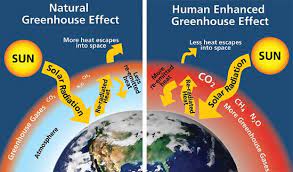
- Any gas that absorbs and traps infrared radiation in the atmosphere, contributing to the greenhouse effect.
- Main GHGs include:
- CO₂
- Methane (CH₄)
- Nitrous oxide (N₂O)
- Fluorinated gases
- Water vapor is a GHG but is not directly controlled by human emissions at scale.
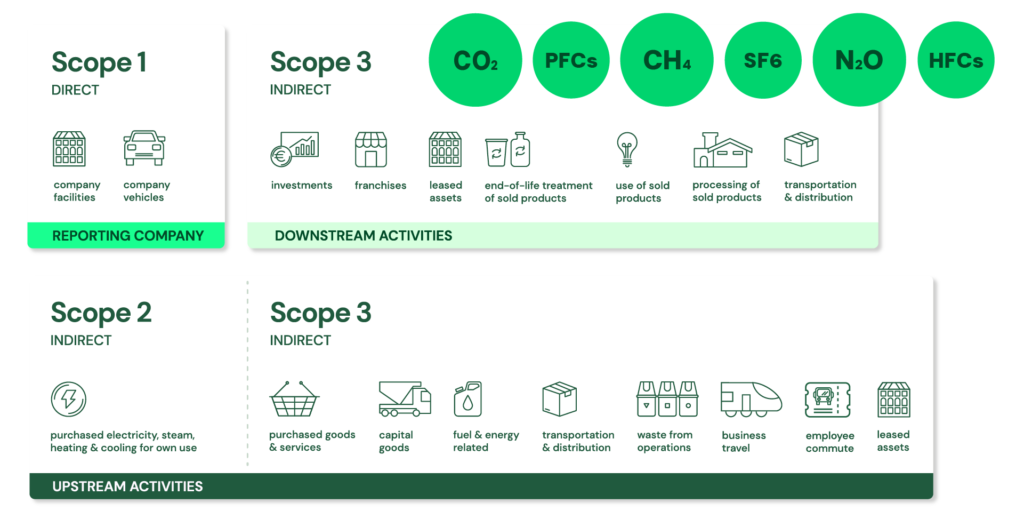
- GHG Protocol Corporate Standard Scope 1, 2 and 3: https://ghgprotocol.org/ + The GHG Protocol Corporate Accounting and Reporting Standard provides requirements and guidance for companies and other organizations preparing a corporate-level GHG emissions inventory. Scope 1 and 2 are typically mandatory for companies that are required to report their emissions by national or regional regulations. The GHG Protocol itself is a voluntary standard.
- Scope 1: Direct emissions:
- Direct emissions from company-owned and controlled resources. In other words, emissions are released into the atmosphere as a direct result of a set of activities, at a firm level. It is divided into four categories:
- Stationary combustion (e.g from fuels, heating sources). All fuels that produce GHG emissions must be included in scope 1.
- Mobile combustion is all vehicles owned or controlled by a firm, burning fuel (e.g. cars, vans, trucks). The increasing use of “electric” vehicles (EVs), means that some of the organisation’s fleets could fall into Scope 2 emissions.
- Fugitive emissions are leaks from greenhouse gases (e.g. refrigeration, air conditioning units). It is important to note that refrigerant gases are a thousand times more dangerous than CO2 emissions. Companies are encouraged to report these emissions.
- Process emissions are released during industrial processes, and on-site manufacturing (e.g. production of CO2 during cement manufacturing, factory fumes, chemicals).
- Direct emissions from company-owned and controlled resources. In other words, emissions are released into the atmosphere as a direct result of a set of activities, at a firm level. It is divided into four categories:
- Scope 2: Indirect emissions – owned:
- Indirect emissions from the generation of purchased energy, from a utility provider. In other words, all GHG emissions released in the atmosphere, from the consumption of purchased electricity, steam, heat and cooling. For most organisations, electricity will be the unique source of scope 2 emissions. Simply stated, the energy consumed falls into two scopes: Scope 2 covers the electricity consumed by the end-user. Scope 3 covers the energy used by the utilities during transmission and distribution (T&D losses).
- Scope 3: Indirect emissions – not owned:
- Indirect emissions – not included in scope 2 – that occur in the value chain of the reporting company, including both upstream and downstream emissions. In other words, emissions are linked to the company’s operations. According to the GHG protocol, scope 3 emissions are separated into 15 categories.
- Scope 1: Direct emissions:
- SCOP (Société Coopérative et Participative):
- A SCOP (Société Coopérative et Participative) in France is a business model where the employees are the majority shareholders. Workers own at least 51% of the company’s share capital and hold at least 65% of the voting rights.