ABB – ABB’s high-power rectifier secures international Environmental Product Declaration certification

- MCR1000 is first rectifier type in ABB’s HPR portfolio to complete a Life Cycle Assessment and receive an Environmental Product Declaration
- Certification establishes a benchmark for environmental transparency and life cycle carbon footprint management
- EPD provides verified environmental data to support customers’ sustainability journeys, reporting and procurement requirements
ABB has announced that its MCR1000 High-Power Rectifier (HPR) has achieved an Environmental Product Declaration (EPD), following the completion of a comprehensive Life Cycle Assessment (LCA), further enabling customers to make informed choices towards a low-carbon transition.
As sustainability requirements become increasingly embedded in industrial procurement and international trade, manufacturers are under growing pressure to provide transparent and verifiable environmental data. Regulatory developments such as the European Union’s Carbon Border Adjustment Mechanism (CBAM), alongside rising customer expectations around supply chain emissions, are accelerating demand for independently verified environmental performance information.
The EPD-certified MCR1000, developed under the guidance of the global research and development (R&D) team and manufactured at ABB’s Shanghai HPR factory in China, provides customers with credible life cycle environmental data that can support sustainability reporting, procurement decisions and decarbonization initiatives. The certification provides independently verified environmental data and supports customers across industries such as steel, non-ferrous metals, green hydrogen and chemicals as they advance their sustainability goals.
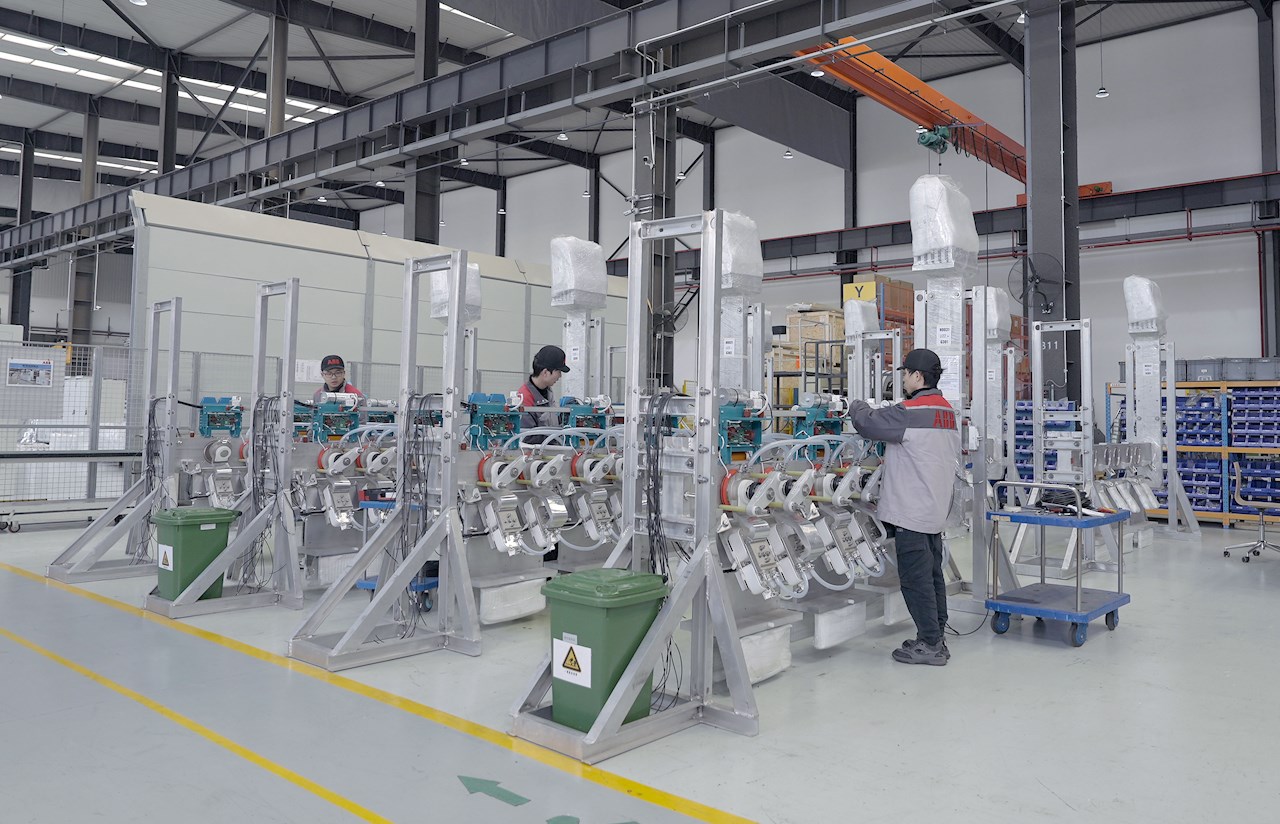
ABB team members in the Shanghai factory were involved in the EPD process. Image ABB
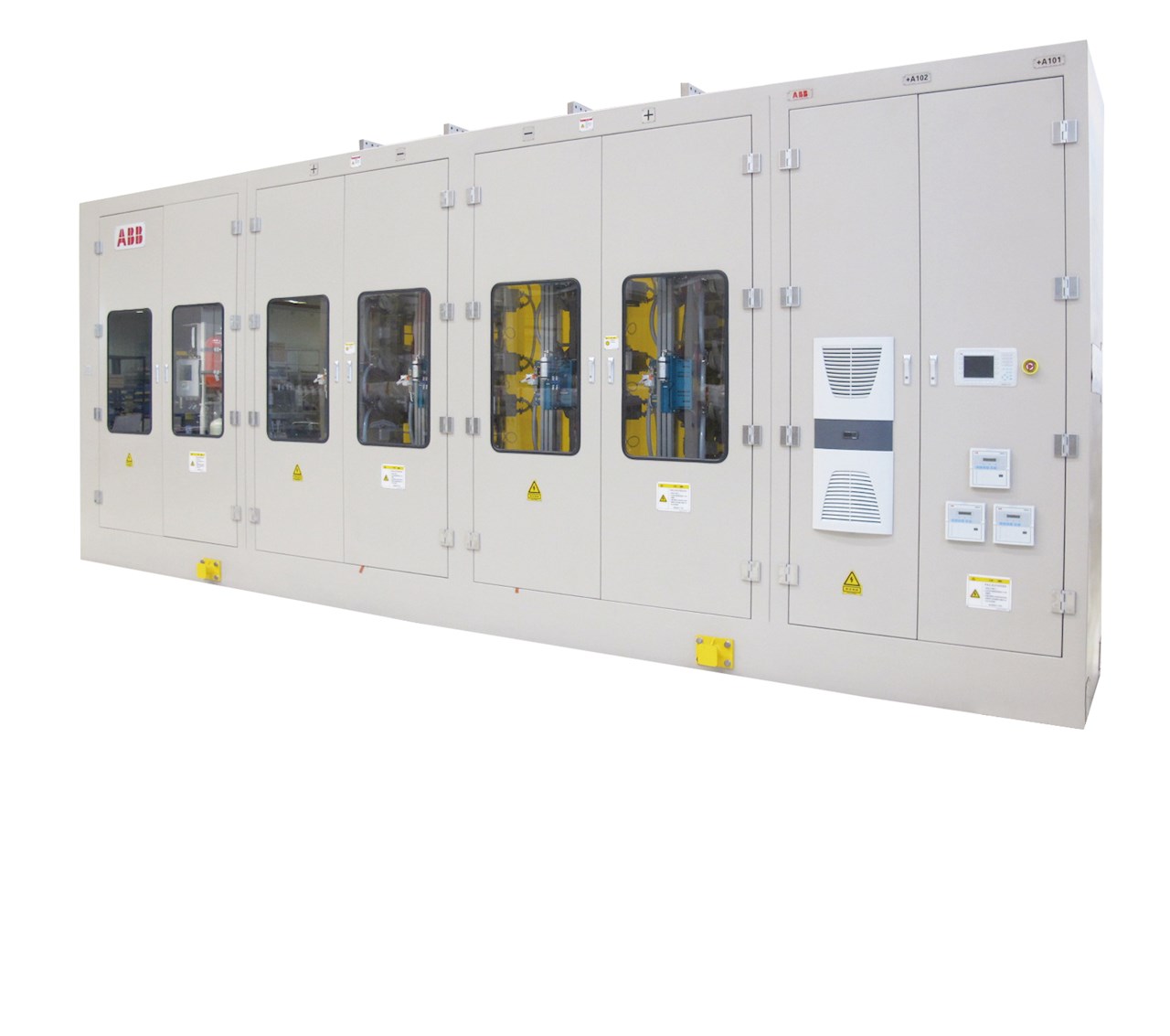
MCR1000 has been deployed in more than 300 installations globally, supporting customers to reach their power and reliability requirements. Image ABB
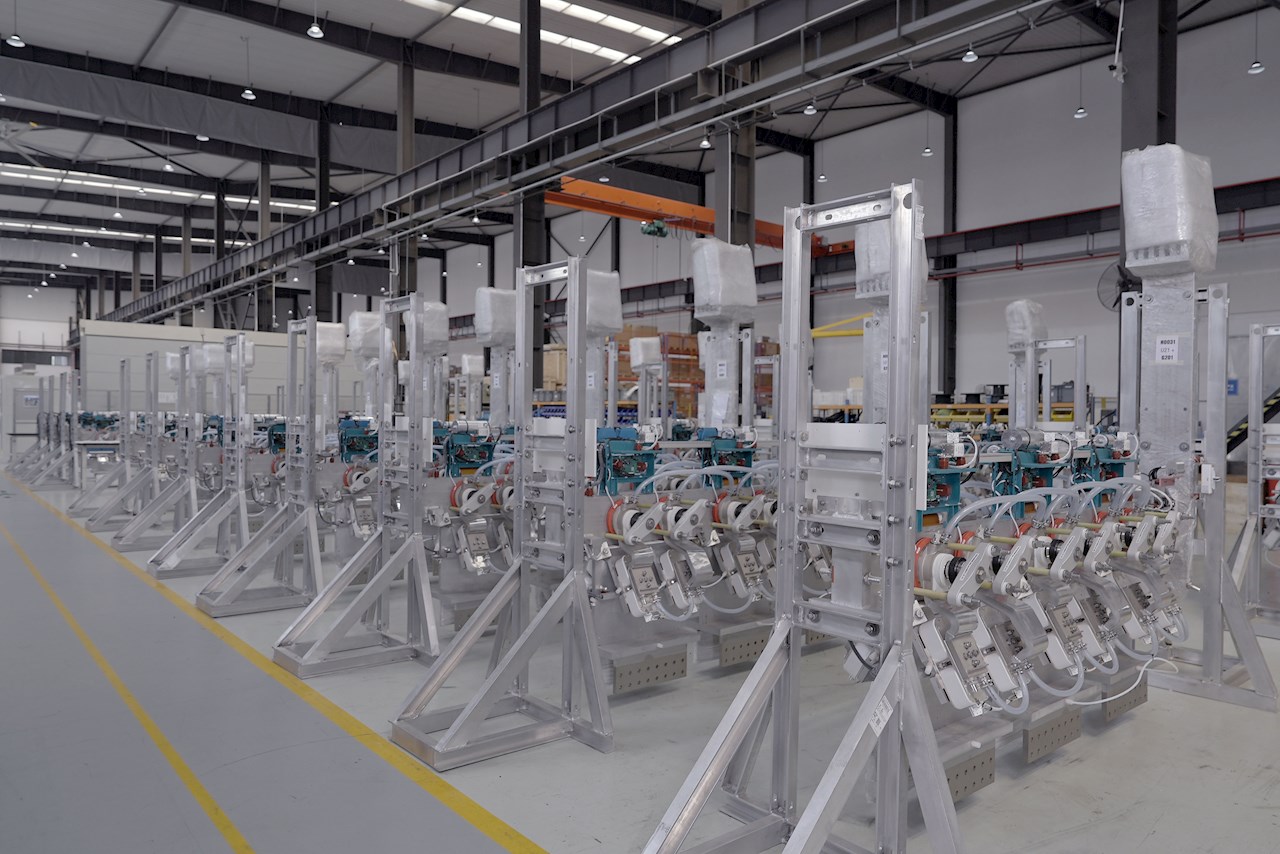
ABB customers can be assured of the MCR technology’s life cycle credentials with the EPD acheivement. Technology shown on the assembly line in ABB’s Shanghai factory. Image ABB
The certification also marks an important milestone for ABB, with the MCR1000 becoming the first product within ABB’s global HPR portfolio to achieve both LCA and EPD certification, highlighting ABB’s commitment to life cycle carbon footprint management and environmental transparency.
“As sustainability becomes an increasingly important consideration in industrial investment and procurement, customers need greater transparency into the environmental impact of the technologies they deploy,” said Ralph Burgener, Global Business Unit Manager for High-Power Rectifier in ABB’s Process Industries division. “Achieving EPD certification for MCR1000 is an important milestone, demonstrating how we are embedding life cycle thinking into product development while providing independently verified environmental data our customers can use to support their own sustainability and decarbonization objectives. This is another step in ABB’s commitment to helping industries become more resource efficient through innovative power conversion technologies.”
The EPD certification was completed in accordance with internationally recognized ISO standards and is based on a detailed assessment of the product’s environmental impact throughout its life cycle. Using SimaPro software and the Ecoinvent database, the assessment evaluated every stage of the product life cycle, from raw material extraction and component manufacturing through to assembly, transportation, operation and end-of-life recycling.
For ABB, the LCA provides valuable insights into environmental impacts across the product life cycle, enabling more informed decisions on material selection, manufacturing processes and future product development.
Building on ABB’s proven Swiss-developed MCR platform, the MCR1000 is one of the company’s flagship solutions for high‑power conversion applications. Since its localization and continued development in China in 2012, the product has been deployed across a range of energy-intensive industries. Since 1999, more than 300 MCR systems have been installed worldwide.
SourceABB
EMR Analysis
More information on ABB: See full profile on EMR Executive Services
More information on Morten Wierod (Chief Executive Officer and Member of the Group Executive Committee, ABB): See full profile on EMR Executive Services
More information on Christian Nilsson (Chief Financial Officer and Member of the Executive Committee, ABB): See full profile on EMR Executive Services
More information on the ABB Way: See full profile on EMR Executive Services
More information on Automation Business Area by ABB: See the full profile on EMR Executive Services
More information on Peter Terwiesch (President, Automation Business Area and Member of the Executive Committee, ABB): See full profile on EMR Executive Services
More information on Ralph Burgener (Global Business Unit Manager, High-Power Rectifier, Process Industries Division, Automation Business Area, ABB): See full profile on EMR Executive Services
More information on High Power Rectifiers by ABB: https://new.abb.com/power-electronics/high-power-rectifiers + ABB’s high power rectifiers and converters provide maximum availability and highest productivity. As a leading worldwide supplier of DC rectifiers or AC converters for any industrial application, ABB has the experience and technological expertise to fulfill your demanding requirements with high priority on personnel safety. Medium current (MCR) and high current rectifiers (HCR) provide DC current in the range of 5,000 to 550,000 A as single or multiple units.
More information on The European Union: https://european-union.europa.eu/index_en + The European Union’s institutional set-up is unique and its decision-making system is constantly evolving. The 7 European institutions, 7 EU bodies and over 30 decentralized agencies are spread across the EU. They work together to address the common interests of the EU and European people.
In terms of administration, there are a further 20 EU agencies and organisations which carry out specific legal functions and 4 interinstitutional services which support the institutions.
All of these establishments have specific roles – from developing EU laws and policy-making to implementing policies and working on specialist areas, such as health, medicine, transport and the environment.
There are 4 main decision-making institutions which lead the EU’s administration. These institutions collectively provide the EU with policy direction and play different roles in the law-making process:
- The European Parliament (Brussels/Strasbourg/Luxembourg)
- The European Council (Brussels)
- The Council of the European Union (Brussels/Luxembourg)
- The European Commission (Brussels/Luxembourg/Representations across the EU)
Their work is complemented by other institutions and bodies, which include:
- The Court of Justice of the European Union (Luxembourg)
- The European Central Bank (Frankfurt)
- The European Court of Auditors (Luxembourg)
The EU institutions and bodies cooperate extensively with the network of EU agencies and organisations across the European Union. The primary function of these bodies and agencies is to translate policies into realities on the ground.
Around 60,000 EU civil servants and other staff serve the 450 million Europeans (and countless others around the world).
Currently, 27 countries are part of the EU: https://european-union.europa.eu/principles-countries-history/country-profiles_en
More information on The European Commission by The European Union: https://ec.europa.eu/info/index_en + The Commission helps to shape the EU’s overall strategy, proposes new EU laws and policies, monitors their implementation and manages the EU budget. It also plays a significant role in supporting international development and delivering aid.
The Commission is steered by a group of 27 Commissioners, known as ‘the college’. Together they take decisions on the Commission’s political and strategic direction.
A new college of Commissioners is appointed every 5 years.
The Commission is organised into policy departments, known as Directorates-General (DGs), which are responsible for different policy areas. DGs develop, implement and manage EU policy, law, and funding programmes. In addition, service departments deal with particular administrative issues. Executive agencies manage programmes set up by the Commission.
Principal roles in law: The Commission proposes and implements laws which are in keeping with the objectives of the EU treaties. It encourages input from business and citizens in the law-making process and ensures laws are correctly implemented, evaluated and updated when needed.
More information on Ursula von der Leyen (President, The European Commission, The European Union): https://ec.europa.eu/commission/commissioners/2019-2024/president_en + https://www.linkedin.com/in/ursula-von-der-leyen/
More information on the Carbon Border Adjustment Mechanism (CBAM) by The European Commission by The European Union: https://taxation-customs.ec.europa.eu/carbon-border-adjustment-mechanism_en + The Carbon Border Adjustment Mechanism (CBAM) is the EU’s tool to put a fair price on carbon emitted during the production of carbon-intensive goods that are entering the EU, and to encourage cleaner industrial production in non-EU countries.
CBAM will apply in its definitive regime from 2026, with a transitional phase of 2023 to 2025. This gradual introduction is aligned with the phase-out of free allowances under the EU Emissions Trading System (ETS) to support the decarbonisation of EU industry.
More information on ISO: http://www.iso.org/ + ISO (International Organization for Standardization) is the world’s largest developer of International Standards. Through our members and their stakeholders, we bring people together to create International Standards that respond to global challenges. ISO standards support global trade, drive inclusive and equitable economic growth, advance innovation and promote health and safety to achieve a sustainable future. Follow us to learn more about standards and how you can participate to making lives easier, safer, and better.
More information on Khaled Soufi (President, ISO): https://www.iso.org/structure.html + https://www.linkedin.com/in/khaled-soufi-phd-79449423a/
More information on SimaPro: https://simapro.com/ + SimaPro is life cycle assessment software that helps organizations measure and analyze environmental impacts across product life cycles. Built on scientific methods and extensive datasets, it delivers transparent insights trusted by industry and academia worldwide.
With over 35 years of development, SimaPro is a cornerstone of the global LCA community and has been part of the One Click LCA group since 2025. While SimaPro focuses on software innovation, PRé Sustainability remains the dedicated brand for our expert consulting services.
More information on Eric Mieras (Managing Director, SimaPro): https://www.linkedin.com/in/ericmieras/
More information on ecoinvent: https://ecoinvent.org/ + Trusted data for sustainability decisions. ecoinvent is a global resource for transparent environmental data.
ecoinvent is an independent non-profit association founded and governed by leading Swiss research institutions and universities. Our mission is to enable people and organizations to make science-based, data-driven sustainability decisions. We do this by maintaining the world’s most widely used and transparent environmental database, which spans every major sector and geography. We reinvest all license revenue into improving the quality and completeness of our database, and innovating to meet evolving user needs.
Global industry leaders, researchers, policymakers, and software providers partner with ecoinvent to support more sustainable decisions. From life cycle assessment (LCA) and ecodesign to product carbon footprinting, supply chain optimization, corporate carbon accounting, and Scope 3 reporting, ecoinvent underpins the tools, frameworks, and standards that the sustainability era is being built on. We have been doing this for over two decades.
More information on Jonas Dennler (Chief Operating Officer, ecoinvent): https://ecoinvent.org/the-ecoinvent-team/ + https://www.linkedin.com/in/jonasdennler/
EMR Additional Notes:
- Rectifier and High-Power Rectifier:
- A rectifier is an electrical component or circuit that converts alternating current (AC) into direct current (DC). It works like a one-way valve, allowing electrical current to flow in only one direction. Rectifiers typically use semiconductor devices such as diodes, thyristors (SCRs), or other power semiconductor devices and can be either uncontrolled or controlled, depending on whether the DC output can be regulated.
- A high-power rectifier is a specialized, industrial-grade version of this technology designed to handle high levels of electrical current and voltage and convert large amounts of electrical power, typically from hundreds of kilowatts to megawatts or more, for heavy industries. High-power rectifier systems are used in applications such as electrolysis, electroplating, industrial DC drives, battery charging, metal processing, and HVDC transmission. They often incorporate power semiconductor modules, transformers, cooling systems, protection equipment, and control systems.
- The International Environmental Product Declarations (EPD) System: https://www.environdec.com/home
- The International EPD System (IES) is a global program for Environmental Product Declarations (EPDs), a Type III environmental declaration based on Life Cycle Assessment (LCA) following the principles of ISO 14025. The International EPD System is operated by EPD International AB, a subsidiary fully owned by IVL Swedish Environmental Research Institute.
- The International EPD System is one of the leading global EPD programmes operating in accordance with ISO 14025, ISO 14040/44 (LCA standards), and applicable Product Category Rules (PCRs), which are developed according to ISO 14027. For the building and construction sector, manufacturers’ EPDs also comply with EN 15804 and may additionally reference ISO 21930 where applicable.
- Environmental Product Declarations (EPD):
- An Environmental Product Declaration (EPD) is a standardized, verified, and transparent document that communicates quantified environmental impacts of a product for defined life-cycle stages, based on Life Cycle Assessment (LCA).
- A verified EPD can contribute to green building certifications such as LEED by providing the documented environmental information required for certain credits or assessment criteria.
- An EPD provides, for a specific product, information about environmental impacts such as:
- Greenhouse gas emissions (CO₂e)
- Energy consumption
- Resource use (materials, water)
- Waste generation and other impact indicators defined by the applicable PCR and programme rules
- Product Environmental Profiles (PEPs):
- A Product Environmental Profile (PEP) is a sector-specific implementation of an EPD for electrical, electronic, and HVAC products, based on Life Cycle Assessment (LCA). PEPs are developed and verified according to the specific rules of the PEP ecopassport® programme.
- A PEP includes:
- Description of the product and its functional unit
- Technical performance
- Standardized environmental impact indicators (aligned with the applicable PCR and programme rules)
- A Product Environmental Profile (PEP) is therefore a specialized environmental declaration within a sector-specific programme, while an EPD is a broader, cross-industry Type III environmental declaration framework based on ISO 14025 and applicable PCRs.
- EPD System vs. EPD Vs, PEP:
- EPD System: A programme and framework for developing, verifying, registering, and publishing EPDs according to defined standards and PCRs
- EPD: A standardized, independently verified, LCA-based environmental declaration for a specific product
- PEP: A sector-specific environmental declaration programme for electrical, electronic, and HVAC products, following its own PCR and verification rules
- Life Cycle Assessment (LCA):
- A Life Cycle Assessment (LCA) is a systematic, science-based methodology used to evaluate the potential environmental impacts and resource use of a product, service, or process across defined stages of its life cycle, from raw material extraction through manufacturing, use, and final disposal when a cradle-to-grave system boundary is applied.
- LCA can assess multiple environmental impact categories, including climate change, energy and resource use, water consumption, acidification, eutrophication, and other impacts, depending on the methodology, system boundary, and impact-assessment method used.
- The principles and framework for LCA are established primarily by ISO 14040 and ISO 14044.
- Carbon Dioxide (CO2):
- The primary greenhouse gas emitted through human activities. Carbon dioxide enters the atmosphere through the burning of fossil fuels (coal, natural gas, and oil), solid waste, biomass (e.g. wood), and also as a result of certain industrial chemical reactions (e.g. cement production).
- Carbon dioxide is removed from the atmosphere (or “sequestered”) when it is absorbed by plants as part of the biological carbon cycle and through ocean absorption and geological processes. In climate accounting, however, “carbon sequestration” generally refers to the removal and storage of carbon in a reservoir; natural uptake through the carbon cycle is not necessarily classified as anthropogenic carbon dioxide removal (CDR).
- CO₂ is naturally part of the carbon cycle, but human activities have significantly increased its concentration in the atmosphere.
- Biogenic Carbon Dioxide (CO2):
- Biogenic CO₂ and fossil-derived CO₂ are chemically identical molecules.
- The distinction is not chemical, but source-based:
- Biogenic carbon: CO₂ released from organic materials such as plants, wood, soil, and biomass that were recently part of the natural carbon cycle. Its accounting treatment depends on the applicable carbon-accounting methodology and whether the carbon is considered part of the contemporary biogenic carbon cycle.
- Fossil carbon: CO₂ released from fossil fuels (coal, oil, gas), which were stored underground for millions of years. This introduces additional carbon into the active atmospheric carbon cycle and is therefore generally treated as fossil CO₂ emissions.
- CO2e (Carbon Dioxide Equivalent):
- CO₂e means “carbon dioxide equivalent”.
- It is a standardized climate metric used to express the total climate impact of multiple greenhouse gases in a single standardized unit.
- CO₂e converts all greenhouse gases (such as methane and nitrous oxide) into the amount of CO₂ that would have the same integrated radiative forcing / climate impact over a defined time period using a specified Global Warming Potential (GWP) value.
- Formula: CO₂e = mass of gas × Global Warming Potential (GWP)
- Carbon dioxide equivalents are commonly expressed as million metric tonnes of carbon dioxide equivalents, abbreviated as MtCO₂e or Mt CO₂-eq; “MMTCDE” is used in some datasets but is not the preferred general notation.
- The carbon dioxide equivalent for a gas is derived by multiplying the tonnes of the gas by the associated GWP: CO₂e = mass of gas × GWP.
- For example, the GWP for methane is approximately 27–30 under IPCC AR6 depending on the methane source and accounting convention, while the 100-year GWP for nitrous oxide is 273. This means that emissions of 1 million metric tonnes of methane and nitrous oxide respectively would correspond to approximately 27–30 and 273 million metric tonnes of CO₂e under those GWP assumptions.
- Carbon Footprint:
- There is no universally agreed definition of what a carbon footprint is.
- The most widely used definition (GHG Protocol) describes it as: “The total set of greenhouse gas (GHG) emissions caused directly and indirectly through an organization’s operations and value chain.” The GHG Protocol generally refers to corporate GHG inventories and Scope 1, 2 and 3 emissions rather than prescribing one universal definition of “carbon footprint.”
- A carbon footprint is the total amount of greenhouse gas (GHG) emissions caused directly and indirectly by an individual, organization, product, or activity.
- It is typically measured in CO₂e.
- Decarbonization:
- Reduction of carbon dioxide emissions through the use of low-carbon energy sources and improved efficiency, with the goal of reducing overall greenhouse gas emissions. More broadly, decarbonization refers to reducing the carbon intensity and/or absolute greenhouse-gas emissions of an economy, sector, organization, product, or process, potentially including CO₂ removal for residual emissions.
- Decarbonization typically refers to system-wide transition, not only emission reduction at a single source.
- Carbon Credits or Carbon Offsets:
- Carbon credits are tradable certificates representing the verified reduction or removal of one metric tonne of CO₂e, generally generated by a specific project or activity; terminology and quality criteria vary between carbon markets.
- They are part of cap-and-trade systems, where:
- A cap limits total emissions
- Companies receive or buy emission allowances
- Excess allowances can be traded
- Offsets are often linked to external projects that reduce or remove emissions (e.g. reforestation, renewable energy). A carbon offset is generally a credit representing a reduction or removal outside the entity’s own emissions boundary that may be used to compensate for emissions, subject to the applicable programme or claim rules.
- Carbon credits and emission allowances should not be treated as synonymous: an allowance is a regulated authorization to emit under a cap-and-trade system, whereas a credit/offset generally represents a quantified emission reduction or removal.
- Carbon Capture and Storage (CCS) – Carbon Capture, Utilisation and Storage (CCUS):
- CCS involves capturing CO₂ emissions from industrial processes or other concentrated sources and storing them permanently in geological formations (e.g. underground reservoirs).
- CCUS adds a utilization step, where captured CO₂ is reused as a feedstock (e.g. fuels, chemicals, building materials). More precisely, CCUS refers to carbon capture followed by utilization and/or storage; utilization does not necessarily result in permanent carbon storage.
- CCS = capture + geological storage; CCUS = capture + utilization and/or storage.
- Carbon Dioxide Removal (CDR) or Durable Carbon Removal:
- CDR refers to methods that actively remove CO₂ from the atmosphere and store it for long periods in geological, biological, or mineral form. CDR specifically requires an anthropogenic activity that removes atmospheric CO₂ and durably stores it in geological, terrestrial, ocean, or product reservoirs.
- Examples include:
- Direct Air Capture (DAC)
- Bioenergy with Carbon Capture (BECCS)
- Enhanced Rock Weathering (ERW)
- CDR creates net negative emissions when removal exceeds emissions. A CDR activity itself can provide a net removal only when the total emissions associated with the removal process are lower than the amount of CO₂ durably removed and stored.
- Direct Air Capture (DAC):
- Technologies that extract CO2 directly from the atmosphere at any location, unlike carbon capture which is generally carried out at the point of emissions, such as a steel plant. DAC can capture CO₂ from ambient air regardless of where the original emissions occurred; it is distinct from point-source carbon capture.
- Constraints like costs and energy requirements as well as the potential for pollution make DAC a less desirable option for CO2 reduction. Its larger land footprint when compared to other mitigation strategies like carbon capture and storage systems (CCS) also put it at a disadvantage. However, DAC is a potential carbon-removal technology rather than simply a CO₂-reduction technology, and its climate benefit depends strongly on the energy source, capture efficiency, permanence of storage, and lifecycle emissions.
- Direct Air Capture and Storage (DACCS):
- Climate technology that removes carbon dioxide (CO2) directly from the ambient atmosphere using large fans and chemical processes to bind with the CO2. The captured CO₂ is then transported and durably stored, typically in geological formations.
- DACCS is therefore a specific form of CDR: DAC + durable CO₂ storage.
- Bioenergy with Carbon Capture and Storage (BECCS):
- Technology that generates energy from biomass while capturing and storing the resulting CO₂.
- Because biomass absorbs CO₂ while growing, BECCS can result in net negative emissions. It can result in net negative emissions when the full lifecycle emissions—including biomass production, harvesting, transport, processing, energy use, and capture/storage—are sufficiently lower than the amount of biogenic CO₂ durably removed from the atmosphere.
- Enhanced Rock Weathering (ERW):
- Carbon dioxide removal (CDR) technique that accelerates the natural process of rock weathering by grinding silicate rocks into dust and spreading it on land, typically agricultural fields. This process enhances reactions with water and atmospheric CO₂, converting dissolved carbon into bicarbonate and, ultimately, carbonate minerals or transporting dissolved inorganic carbon to aquatic systems, where it can be stored over long timescales.
- Its effectiveness and permanence depend on rock type, particle size, weathering rates, transport pathways, soil and water chemistry, and the emissions associated with mining, grinding, and transporting the rock.
- Limits of Carbon Dioxide Storage:
- Carbon storage is not endless; the Earth’s capacity for permanently storing vast amounts of captured carbon, particularly in geological formations, is limited, potentially reaching a critical limit of 1,460 gigatonnes at around 2200, though storage durations vary significantly depending on the method, from decades for some biological methods to potentially millions of years for others like mineralization. Estimates of geological storage capacity vary widely and depend on geology, reservoir characteristics, storage efficiency, infrastructure, economics, regulation, monitoring, and permanence.
- While some methods offer very long-term storage, the sheer volume needed to meet climate targets requires scaling up storage significantly beyond current capacity, raising concerns about the available volume over time. The practical constraint is therefore better described as the need to develop sufficient safe, permanent, economically and technically accessible storage capacity rather than a single known global physical limit.
- Carbon Impregnation:
- Carbon impregnation is the process of treating activated carbon with chemical agents (such as metals, acids, or bases) to enhance its ability to adsorb specific, hard-to-remove pollutants. By loading substances like silver, sulfur, or potassium hydroxide into its pores, this material combines physical adsorption with chemical reaction for improved, targeted filtration in water and air. This is a materials engineering process, not a climate accounting concept.
- Global Warming:
- Global warming is the long-term heating of Earth’s climate system observed since the pre-industrial period (between 1850 and 1900) due to human activities, primarily fossil fuel burning, which increases heat-trapping greenhouse gas levels in Earth’s atmosphere. Global warming refers specifically to the long-term increase in Earth’s average surface temperature; climate change is the broader term encompassing associated changes in climate systems, including precipitation, extremes, sea level, and ecosystems.
- Global Warming Potential (GWP):
- A measure of how much heat a greenhouse gas contributes to climate warming relative to CO₂ over a specific time period (commonly 100 years).
- CO₂ has a GWP of 1.
- GWP is the scientific basis for converting gases into CO₂e.
- GWP was developed to allow comparisons of the global warming impacts of different gases. The numerical GWP depends on the selected IPCC assessment, time horizon, and, for some gases such as methane, the emission source and accounting convention.
- Greenhouse Gas (GHG):
- Any gas that absorbs and emits infrared radiation in the atmosphere, contributing to the greenhouse effect.
- Main GHGs include:
- CO₂
- Methane (CH₄)
- Nitrous oxide (N₂O)
- Fluorinated gases such as HFCs, PFCs, SF₆ and NF₃
- Water vapor is a GHG but is not directly controlled by human emissions at scale. It is primarily a feedback in the climate system rather than a direct target of conventional anthropogenic GHG inventories.
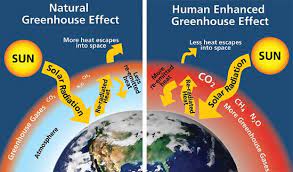
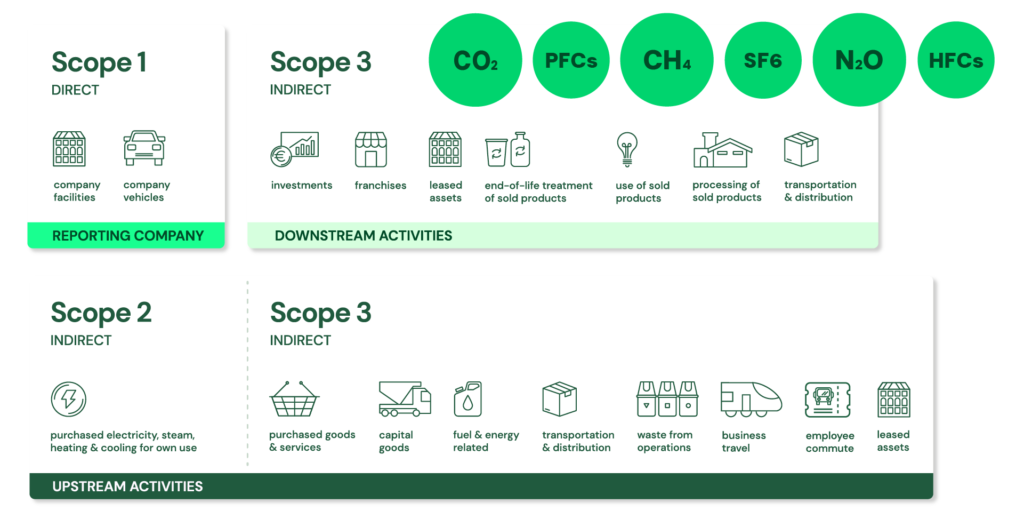
- GHG Protocol Corporate Standard Scope 1, 2 and 3: https://ghgprotocol.org/ + The GHG Protocol Corporate Accounting and Reporting Standard provides requirements and guidance for companies and other organizations preparing a corporate-level GHG emissions inventory. The Corporate Standard itself is voluntary, although companies may be required by applicable legislation or regulation to report using the GHG Protocol or equivalent requirements.
- Scope 1: Direct emissions:
- Direct emissions from company-owned and controlled resources. In other words, emissions are released into the atmosphere as a direct result of a set of activities, at a firm level. More precisely, Scope 1 covers direct GHG emissions from sources that are owned or controlled by the reporting organization.
- It is divided into four categories:
- Stationary combustion (e.g from fuels, heating sources). All fuels that produce GHG emissions must be included in scope 1. This applies when the combustion source is owned or controlled by the reporting organization.
- Mobile combustion is all vehicles owned or controlled by a firm, burning fuel (e.g. cars, vans, trucks). The increasing use of “electric” vehicles (EVs), means that some of the organisation’s fleets could fall into Scope 2 emissions. For example, fuel combustion in an owned/controlled vehicle is Scope 1, whereas electricity purchased to charge an EV is generally Scope 2; an EV itself does not create Scope 2 emissions—the purchased electricity does.
- Fugitive emissions are leaks from greenhouse gases (e.g. refrigeration, air conditioning units). It is important to note that refrigerant gases are not uniformly “a thousand times more dangerous” than CO₂; some refrigerants have GWPs of hundreds or thousands of times that of CO₂, while others have much lower values. Companies are encouraged to report these emissions.
- Process emissions are released during industrial processes, and on-site manufacturing (e.g. production of CO2 during cement manufacturing, factory fumes, chemicals). These are direct emissions resulting from physical or chemical processes other than fuel combustion, such as calcination in cement production..
- Scope 2: Indirect emissions – owned:
- Indirect emissions from the generation of purchased energy, from a utility provider. In other words, all GHG emissions released in the atmosphere, from the consumption of purchased electricity, steam, heat and cooling. Scope 2 covers indirect GHG emissions associated with the generation of purchased or acquired electricity, steam, heat, and cooling consumed by the reporting organization; “owned” is therefore misleading because the emissions source is owned or controlled by another entity.
- For most organisations, electricity will be the unique source of scope 2 emissions. Simply stated, the energy consumed falls into two scopes: Scope 2 covers the electricity consumed by the end-user. Scope 3 covers the energy used by the utilities during transmission and distribution (T&D) losses. More precisely, Scope 2 covers the generation-related emissions associated with purchased electricity, not the physical electricity itself. T&D losses are generally accounted for in Scope 3 Category 3 for an energy consumer that does not own the T&D system, although the treatment can vary depending on ownership and accounting circumstances.
- Scope 3: Indirect emissions – not owned:
- Indirect emissions – not included in scope 2 – that occur in the value chain of the reporting company, including both upstream and downstream emissions. In other words, emissions are linked to the company’s operations. According to the GHG protocol, scope 3 emissions are separated into 15 categories. Scope 3 therefore captures other indirect value-chain emissions, upstream and downstream, across the 15 defined categories of the Scope 3 Standard.
- Scope 1: Direct emissions:
- Supply Chain:
- A supply chain is the end-to-end network of individuals, organizations, resources, activities, data, and technologies involved in the creation and delivery of a product or service—from raw materials to the final customer.
- A supply chain includes not only physical flows (goods), but also information flows and financial flows across all participants.
- At the most fundamental level, Supply Chain Management (SCM) is the integrated planning, coordination, and optimization of the flow of:
- goods
- information
- and finances
- from raw material sourcing to final delivery.
- At its core, SCM is not just “management of flows” but the optimization of those flows across cost, service level, speed, and risk.
- Supply Chain vs Logistics:
- Supply Chain: entire ecosystem (end-to-end)
- Logistics: subset focused on movement and storage of goods
- Hydrogen:
- The atom of hydrogen is the first element in the periodic table, with chemical symbol H and hydrogen was one of the first elements formed in the early universe after the Big Bang. It is the most common element in the universe and the primary fuel for stars like the Sun (via nuclear fusion). It consists of one proton (positive charge) and one electron (negative charge) in its neutral atomic form.
- Hydrogen rarely exists in its pure form (H₂) on Earth. Molecular hydrogen (H₂) is relatively scarce naturally, because it readily forms covalent bonds, and most hydrogen is found in compounds such as:
- Water (H₂O)
- Hydrocarbons (e.g., methane CH₄, oil, and coal)
- Biomass (plants, organic matter)
- Hydrogen can be produced in numerous ways:
- Steam Methane Reforming (SMR) → produces a hydrogen-rich gas mixture and CO₂ as a by-product
- Electrolysis (using electricity) → can have very low lifecycle emissions if powered by low-carbon electricity, including renewable electricity
- Other methods (biomass, thermochemical, etc.)
- Hydrogen is a versatile energy carrier (not a primary energy source) that can be used for:
- Transportation (fuel cells, synthetic fuels)
- Industrial processes (e.g., ammonia, steel)
- Power generation and storage
- Heating (in specific applications)
- Hydrogen is a low-emission energy carrier at the point of use in a fuel cell, producing electricity, heat, and water rather than CO₂ when pure hydrogen is used as the fuel. It is particularly useful in sectors where electrification is difficult (heavy industry, long-distance transport). Its overall climate impact depends on how the hydrogen is produced, transported, stored, and used.
- Grey, Blue or Green Hydrogen:
- Where hydrogen comes from is critical:
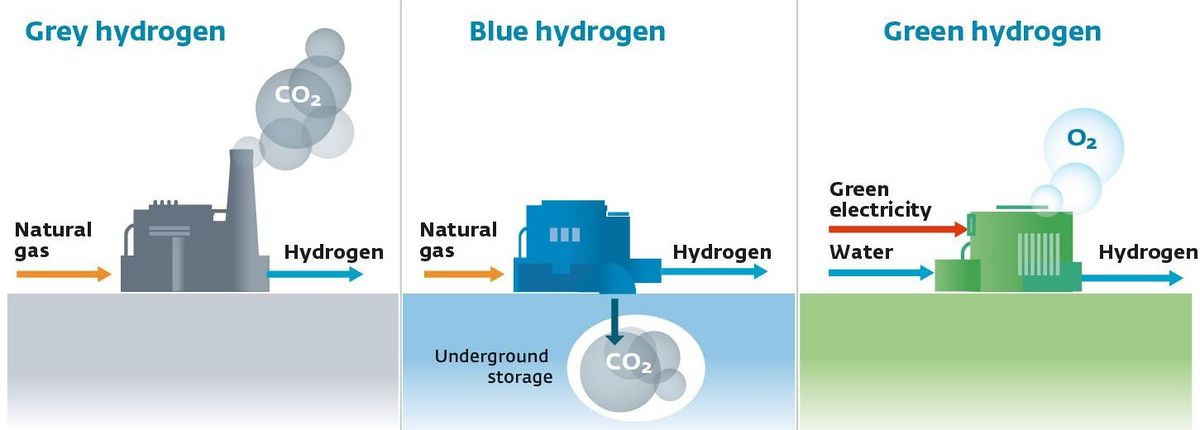
- Grey Hydrogen: Produced from fossil fuels (mainly natural gas via SMR) → high CO₂ emissions
- Blue Hydrogen: Same as grey, but with Carbon Capture and Storage (CCS) to capture and permanently store a substantial portion of the CO₂ generated during production; residual and upstream emissions can remain
- Green Hydrogen: Produced via electrolysis using renewable electricity → potentially very low lifecycle greenhouse-gas emissions, depending on the electricity source and the full production system
- There is a growing consensus that hydrogen can play a key role in the energy transition, particularly for:
- Decarbonizing heavy industry
- Long-duration energy storage
- Heavy transport (shipping, aviation fuels, trucking) and other applications where direct electrification is technically difficult or inefficient
- Important: Grey, blue and green are commonly used industry colour classifications rather than universally standardized scientific categories. Other classifications include turquoise hydrogen (methane pyrolysis), pink hydrogen (nuclear-powered electrolysis), yellow hydrogen (electrolysis using grid electricity), and white hydrogen (naturally occurring geological hydrogen).
- Where hydrogen comes from is critical:
- Hydrogen Electrolyzer:
- An electrolyzer is a system that uses electricity to split water into hydrogen and oxygen in a process called electrolysis.
- At the cathode: water gains electrons → hydrogen gas (H₂) is produced
At the anode: water releases electrons → oxygen gas (O₂) is produced
- At the cathode: water gains electrons → hydrogen gas (H₂) is produced
- The cathode is the site of reduction and the anode is the site of oxidation. The exact electrode reactions depend on the electrolyzer technology, such as alkaline or proton-exchange membrane (PEM) electrolysis.
The overall reaction is: 2H₂O → 2H₂ + O₂. - The electrolyzer is therefore essentially the reverse electrochemical process of a fuel cell.
- An electrolyzer is a system that uses electricity to split water into hydrogen and oxygen in a process called electrolysis.
- Fuel Cell Plant:
- A fuel cell plant is a facility that generates electricity through an electrochemical reaction (not combustion).
- It works by combining:
- Hydrogen (fuel)
- Oxygen (from air)
- to produce:
- Electricity
- Heat
- Water
- Fuel cell systems:
- Produce very low emissions (no direct CO₂ emissions when pure hydrogen is used as the fuel; lifecycle emissions depend on hydrogen production and other upstream activities)
- Operate continuously as long as fuel is supplied
- Are used in power generation, backup systems, and mobility
- A fuel cell converts the chemical energy of hydrogen and an oxidant directly into electrical energy through electrochemical reactions, rather than first converting the fuel into heat through combustion.