
ABB – ABB invests $200 million across Europe to accelerate grid transformation
- Investments across Europe will expand production capacity of medium-voltage technologies for electrical distribution
- Major projects include a $100 million investment in Italy, as well as others in Bulgaria, Finland, Germany, Norway and Poland
- Program will increase availability of key technologies including SF₆-free medium-voltage switchgear and grid automation products for global markets
ABB announced today that it is investing around $200 million in its medium-voltage manufacturing capabilities across Europe over the next three years to expand production capacity, accelerate the transition to next-generation technologies for power distribution and strengthen supply for customers that are modernizing their power infrastructure. This includes utilities, industry, and rapidly growing data center markets.
According to the International Energy Agency, electricity’s share of final energy consumption is expected to rise from around 20 percent today to nearly 30 percent by 2030, highlighting the urgency and scale of grid expansion.
“This $200 million investment will strengthen ABB’s medium-voltage manufacturing and technology capabilities in Europe and support customers as electricity demand increases and the grid evolves,” said Morten Wierod, ABB’s Chief Executive Officer. “Demand is being driven by major structural trends, from grid modernization and the integration of renewables to data center growth and the transition to more sustainable technologies. These investments will help us expand capacity, improve availability and shorten lead times for customers in Europe and beyond, empowering them to adapt to the changing energy landscape.”
Investing in European manufacturing capabilities
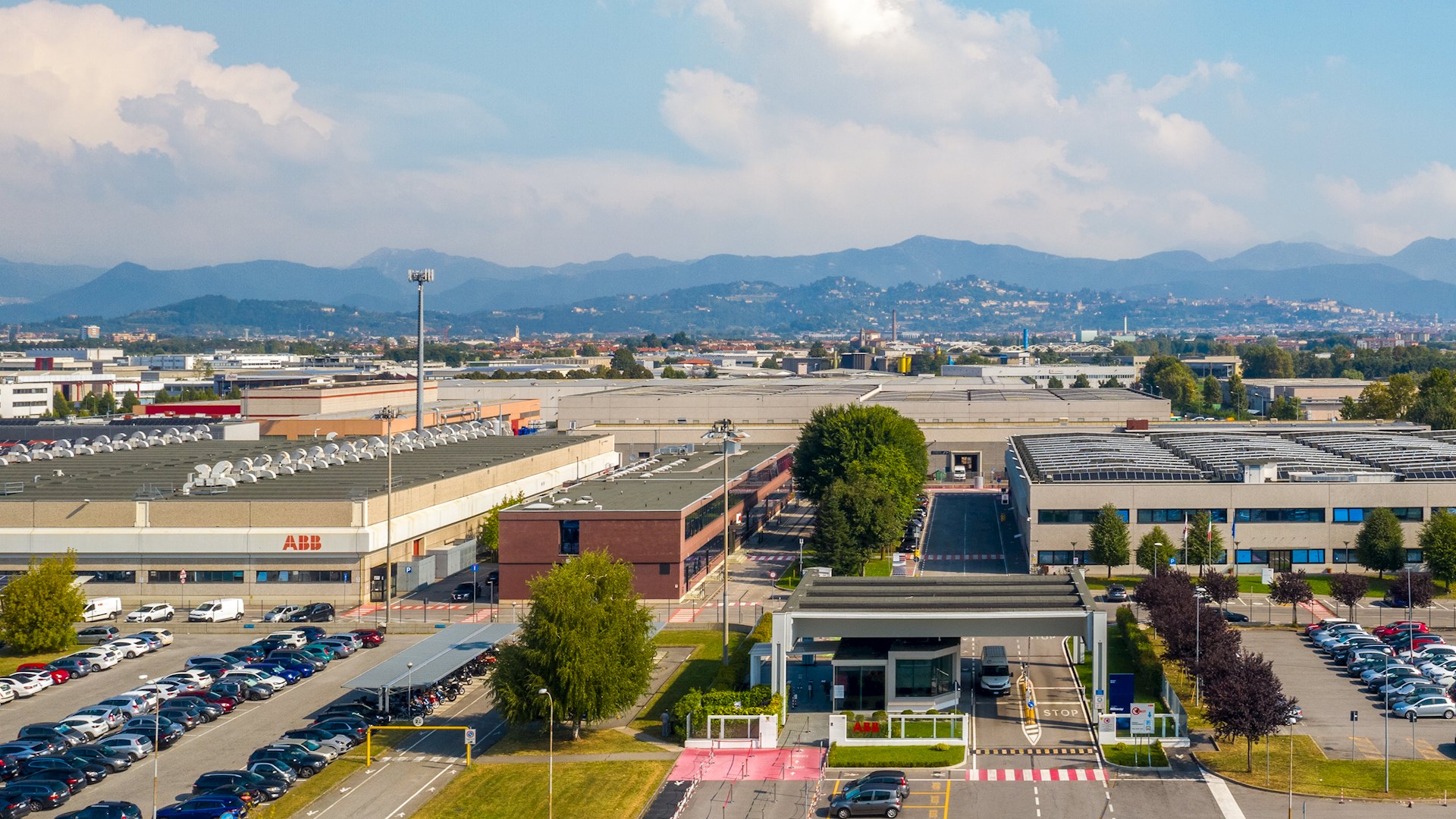
The investment strengthens the company’s ability to deliver critical medium-voltage switchgear and grid automation technologies. It includes a new $100 million facility in Dalmine, Italy, to support growing demand for air-insulated and SF₆-free switchgear and breakers. A further $100 million investment is for capacity expansion projects across factories in Bulgaria (Rakovski), Finland (Vaasa), Germany (Ratingen), Norway (Skien), and Poland (Przasnysz), scaling production of technologies such as gas-insulated switchgear (GIS), vacuum interrupters, and relays, enabling more reliable and resilient power distribution.
This program builds on recent investments in ABB’s UK and Hungary operations. In Kecskemét, Hungary, the investment of approximately $15 million adds R&D and production capabilities for connector technologies, enhancing medium-voltage network reliability and further expanding ABB’s portfolio of grid resilience solutions for utility and renewable customers.
In Nottingham, UK, ABB invested around $35 million to expand production of earthing and lightning protection technologies to protect critical infrastructure and buildings, data centers, and communications and transportation networks from lightning strikes and electrical surges.
Together, these actions reflect ABB’s focus on building resilient manufacturing capabilities for technologies that connect and protect the evolving grid.
SourceABB
EMR Analysis
More information on ABB: See full profile on EMR Executive Services
More information on Morten Wierod (Chief Executive Officer and Member of the Group Executive Committee, ABB): See full profile on EMR Executive Services
More information on Christian Nilsson (Chief Financial Officer and Member of the Executive Committee, ABB): See full profile on EMR Executive Services
More information on the ABB Way: See full profile on EMR Executive Services
More information on IEA (International Energy Agency): https://www.iea.org + The IEA is at the heart of global dialogue on energy, providing authoritative analysis, data, policy recommendations, and real-world solutions to help countries provide secure and sustainable energy for all.
The IEA was created in 1974 to help co-ordinate a collective response to major disruptions in the supply of oil. While oil security this remains a key aspect of our work, the IEA has evolved and expanded significantly since its foundation.
Taking an all-fuels, all-technology approach, the IEA recommends policies that enhance the reliability, affordability and sustainability of energy. It examines the full spectrum issues including renewables, oil, gas and coal supply and demand, energy efficiency, clean energy technologies, electricity systems and markets, access to energy, demand-side management, and much more.
Since 2015, the IEA has opened its doors to major emerging countries to expand its global impact, and deepen cooperation in energy security, data and statistics, energy policy analysis, energy efficiency, and the growing use of clean energy technologies.
More information on Dr. Fatih Birol (Executive Director, International Energy Agency): https://www.iea.org/contributors/dr-fatih-birol + https://www.linkedin.com/in/fatih-birol/
EMR Additional Notes:
- Grid, Microgrids, DERs and DERM’s:
- Grid / Power Grid:
- The power grid is a network for delivering electricity to consumers. The power grid includes generator stations, transmission lines and towers, and individual consumer distribution lines.
- The grid constantly balances the supply and demand for the energy that powers everything from industry to household appliances.
- Electric grids perform three major functions: power generation, transmission, and distribution.
- The power grid is a network for delivering electricity to consumers. The power grid includes generator stations, transmission lines and towers, and individual consumer distribution lines.
- Microgrid:
- Small-scale power grid that can operate independently or collaboratively with other small power grids. The practice of using microgrids is known as distributed, dispersed, decentralized, district or embedded energy production.
- Smart Grid:
- Any electrical grid + IT at all levels.
- Micro Grid:
- Group of interconnected loads and DERs (Distributed Energy Resources) within a clearly defined electrical and geographical boundaries witch acts as a single controllable entity with respect to the main grid.
- Distributed Energy Resources (DERs):
- Small-scale electricity supply (typically in the range of 3 kW to 50 MW) or demand resources that are interconnected to the electric grid. They are power generation resources and are usually located close to load centers, and can be used individually or in aggregate to provide value to the grid.
- Common examples of DERs include rooftop solar PV units, natural gas turbines, microturbines, wind turbines, biomass generators, fuel cells, tri-generation units, battery storage, electric vehicles (EV) and EV chargers, and demand response applications.
- Small-scale electricity supply (typically in the range of 3 kW to 50 MW) or demand resources that are interconnected to the electric grid. They are power generation resources and are usually located close to load centers, and can be used individually or in aggregate to provide value to the grid.
- Distributed Energy Resources Management Systems (DERMS):
- Platforms which helps mostly distribution system operators (DSO) manage their grids that are mainly based on distributed energy resources (DER).
- DERMS are used by utilities and other energy companies to aggregate a large energy load for participation in the demand response market. DERMS can be defined in many ways, depending on the use case and underlying energy asset.
- Platforms which helps mostly distribution system operators (DSO) manage their grids that are mainly based on distributed energy resources (DER).
- Grid / Power Grid:
- Extra Low-Voltage (ELV):
- Extra-Low Voltage (ELV) is defined as a voltage of 50V or less (AC RMS), or 120V or less (ripple-free DC).
- Low-Voltage (LV):
- The International Electrotechnical Commission (IEC) defines Low Voltage (LV) for supply systems as voltage in the range 50–1000 V AC or 120–1500 V DC.
- Medium-Voltage (MV):
- Medium Voltage (MV) is a voltage class that typically falls between low voltage and high voltage, with a common range being from 1 kV to 35 kV. In some contexts, this range can extend higher, up to 69 kV.
- High-Voltage (HV):
- The International Electrotechnical Commission define high voltage as above 1000 V for alternating current, and at least 1500 V for direct current.
- Super High-Voltage or Extra High-Voltage (EHV):
- Super High-Voltage or Extra High-Voltage (EHV) is the voltage class used for long-distance bulk power transmission. The range for EHV systems is typically from 230 kV to 800 kV.
- Ultra High-Voltage (UHV):
- Ultra High-Voltage (UHV) is the highest voltage class used in electrical transmission, defined as a voltage of 1000 kV or greater.
- F-Gases:
- F stands for fluorinated, and F-Gas is the term used to describe a particular family of fluorinated gases which are widely used as refrigerants in air conditioning and commercial refrigeration systems (as well as in many essential appliances such as fire extinguishers and medical inhalers)
- Fluorinated greenhouse gases (F-gases) are a family of gases containing fluorine. They are powerful greenhouse gases that trap heat in the atmosphere and contribute to global warming. They are stronger than naturally occurring greenhouse gases and their use is regulated.
- SF6:
- Sulfur hexafluoride (SF6) is a synthetic fluorinated compound with an extremely stable molecular structure. Because of its unique dielectric properties, electric utilities rely heavily on SF6 in electric power systems for voltage electrical insulation, current interruption, and arc quenching in the transmission and distribution of electricity. Yet, it is also the most potent greenhouse gas known to-date. Over a 100-year period, SF6 is 23,500 times more effective at trapping infrared radiation than an equivalent amount of carbon dioxide (CO2). SF6 is also a very stable chemical, with an atmospheric lifetime of 3,200 years. As the gas is emitted, it accumulates in the atmosphere in an essentially un-degraded state for many centuries. Thus, a relatively small amount of SF6 can have a significant impact on global climate change.
- Global annual emissions are 8,100 tonnes, equivalent to the CO2 emissions of 100m cars.
- It is expected to grow by 75% by 2030. 80% of all SF6 is used in gas insulated switchgear, a vital component of the grid (isolating and protecting different sections), so it’s an energy sector issue.
- Switchgears:
- Broad term that describes a wide variety of switching devices that all fulfill a common need: controlling, protecting, and isolating power systems. This definition can be extended to include devices to regulate and meter a power system, circuit breakers, and similar technology.
- Switchgear contains fuses, switches, and other power conductors. However, circuit breakers are the most common component found in switchgear.
- It performs the function of controlling and metering the flow of electrical power in addiction to acting as an interrupting and switching device that protects the equipment from damage arising out of electrical fluctuations.
- There are three types of switchgear, namely LV (Low voltage), MV (Medium voltage) and HV (High voltage) Switchgear.
- Fuses:
- A fuse is a single time mechanical circuit interruption in an over-current situation through the fusion of a graded electrical conductor. It is employed in the 30KV to 100KV range.
- It is an electrical safety device that operates to provide overcurrent protection of an electrical circuit. Its essential component is a metal wire or strip that melts when too much current flows through it, thereby stopping or interrupting the current.
- Fuse Switch-Disconnectors:
- A fuse switch-disconnector combines the functions of a fuse and a switch disconnector; it provides overcurrent protection like a fuse, and it also allows for manual disconnection of the circuit for isolation purposes.
- Reducer Fuses:
- A reducer fuse is not a fuse itself, but rather an adapter that allows a physically smaller fuse to be installed into a fuse holder designed for a larger fuse size. A fuse reducer typically consists of a non-conductive, insulating body that encases the smaller fuse. This body is then designed with metal contacts or blades that match the dimensions of the larger fuse holder, allowing it to snap or bolt into place.
- Electrified Vehicle (EV) Fuses:
- EV fuses are specialized safety devices designed to protect the high-voltage DC systems in electric vehicles, featuring much higher voltage ratings (500-1000Vdc), specialized materials to withstand extreme temperatures and vibrations, and fast-acting clearing mechanisms for high-power DC fault currents, unlike normal electrical fuses found in household circuits. Normal electrical fuses are for lower-voltage AC systems and have lower voltage ratings, standard materials, and designs suited for less extreme, more controlled environments.
- Circuit Breakers:
- A circuit breaker is a mechanical electrical switch designed to protect an electrical circuit from damage caused by overcurrent/overload or short circuit. Its basic function is to interrupt current flow after protective relays detect a fault.
- By definition, a circuit breaker is an electrical safety device, a switch that automatically interrupts the current of an overloaded electric circuit, ground faults, or short circuits.
- Disconnectors:
- It is an Automatic switching device that offers specific isolating distance on the basis of specific requirements.
- Disconnectors (also known as Isolators) are devices which are generally operated off-load to provide isolation of main plant items for maintenance, or to isolate faulted equipment from other live equipment.
- Contactors:
- It works like a high-current switching system but at higher voltage rates. Contactors can however not be utilized as disconnecting switches. They are employed in the 30KV to 100KV range.
- A Contactor is a special type of relay used for switching an electrical circuit on or off.
- It is an electrical device that is widely used for switching circuits on and off. As such, electrical contactors form a subcategory of electromagnetic switches known as relays. A relay is an electrically operated switching device that uses an electromagnetic coil to open and close a set of contacts.
- MCB (Miniature Circuit Breakers):
- They are employed in domestic households to safeguard against overload. Rated current is max. 100 A.
- It is an electrical switch that automatically switches off the electrical circuit during an abnormal condition of the network such as an overload condition as well as a faulty condition. Nowadays we use an MCB in a low-voltage electrical network instead of a fuse.
- Circuit breakers have a tripping relay mechanism, while an MCB has a tripping release mechanism. Circuit breakers have a high rupturing capacity, but the MCB has a low rupturing capacity. Circuit breakers are used in High Voltage systems, while MCBs are used in Low Voltage systems.
- MCCB (Molded Case Circuit Breakers):
- Ii incorporates an insulating material in the form of molded casing within the circuit breaker. Rated current is up to 2,500 A.
- An MCCB has a higher interrupting capacity, meaning it can handle larger loads than a conventional breaker. Generally, a standard breaker is used for residential and light commercial applications, while an MCCB is suitable for industrial and heavy commercial applications.
- PTCB eFuse Circuit Breaker:
- An Electronic eFuse Circuit Breaker (PTCB) is an electronic micro fuse for DIN rail protecting electronically nominal currents below 1A to facilitate the clear detection of faults and supports precise fault localization and fast recovery. Response times are shorter compared to conventional fuse protection and the exact current value can be adjusted at any time
- RCCB (Residual Current Circuit Breakers):
- To safeguard against electrical shock arising out of indirect contact and includes the detection of residual current such as earth leakage.
- It is a current sensing device, which can automatically measure and disconnect the circuit whenever a fault occurs in the connected circuit or the current exceeds the rated sensitivity.
- RCD (Residual Current Devices):
- It is a sensitive safety device that switches off the electricity within 10 to 50 milliseconds if there is an electrical fault. An RCD is is designed to protect against the risks of electrocution and fire caused by earth faults.
- The difference between a circuit breaker and an RCD switch is the purpose of a circuit breaker is to protect the electrical systems and wiring in a home while the purpose of an RCD switch is to protect people from electrocution.
- RCBO (Residual Current Breakers with Over-Current):
- An RCBO can protect against electric shocks, residual currents, and earth faults. On the other hand, an RCBO can do what an RCD can do and protect a circuit from short circuits and overload. RCBOs are essentially a combination of MCB and RCCB.
- An RCBO protects electrical equipment from two types of faults; residual current and over current. Residual current, or Earth leakage as it can sometimes be referred to, is when there is a break in the circuit that could be caused by faulty electrical wiring or if the wire is accidentally cut.
- Solid-State Circuit Breakers:
- Solid-state device, electronic device in which electricity flows through solid semiconductor crystals (silicon, gallium arsenide, germanium) rather than through vacuum tubes.
- The solid-state breaker concept replaces the traditional moving parts of an electromechanical circuit breaker with semiconductors and advanced software algorithms that control the power and can interrupt extreme currents faster than ever before.
- ACB (Air Circuit Breakers):
- An Air Circuit Breaker (ACB) uses air as the insulating medium.
- An Air Circuit Breaker (ACB) is a circuit breaker for the purpose of protecting low voltage circuit, mainly for energizing and cutting off high current
- VCB (Vacuum Circuit Breakers):
- Vacuum is used as the means to protect circuit breakers.
- A Circuit breaker where the arc quenching takes place in a vacuum medium. The operation of switching on and closing of current carrying contacts and the interrelated arc interruption takes place in a vacuum chamber in the breaker which is called a vacuum interrupter.
- OCB (Oil Circuit Breakers):
- It uses a portion of oil to blast a jet of oil through the arc.
- A Circuit breaker which uses insulating oil as an arc quenching medium
- Hybrid Circuit Breakers:
- Combines Air-insulated and SF6 Gas-insulated technologies.
- AIS (Air Insulated Switchgears):
- Air is used for insulation in a metal-clad system
- It is a secondary power distribution device and medium voltage switchgear that helps redistribute the power of a primary power distributor powered by a high voltage distribution transformer. AIS controls, protects and isolates electrical equipment in power transmission and distribution systems.
- GIS (Gas Insulated Switchgears):
- All working components assembled under SF6 (Sulfur Hexafluoride High-Voltage Switchgears) gas-tight casing.
- It is a compact metal encapsulated switchgear consisting of high-voltage components such as circuit-breakers and disconnectors, which can be safely operated in confined spaces.
- Pad-mount Switchgears:
- The pad-mount switchgear is made from the same modular switch and interrupter components as the vault switchgear. This means all components are sealed, submersible and protected, so you don’t have to worry about tracking, animal infestation, corrosion or the effects of condensation inside the enclosure.
- Ring Main Unit (RMU):
- A ring Main Unit (RMU) is a Medium-Voltage, gas-insulated, fully sealed cabinet used to measure, connect, and integrate transformer protection functions with a fixed type breaker. Ring Main Units are safe, reliable, low-maintenance, and easy to replace switchgear.
- A Ring Main Unit (RMU) is a factory assembled, metal enclosed set of switchgear used at the load connection points of a ring-type distribution network.
- Dead Tank circuit Breaker (DTB):
- A Dead Tank Circuit Breaker (DTB) is a high-voltage, air-insulated switchgear where the interrupter units are housed in a grounded, metallic tank filled with insulating gas (typically SF6 or eco-friendly alternatives). It provides superior safety, seismic resistance, and allows for direct integration of current transformers, making it ideal for substation applications up to 800 kV.
- Load Center – Panel Board – Switch Board – Distribution Cabinet – Distribution Box – Distribution Enclosure:
- A Load Center is used in residential and light commercial applications to distribute electricity supplied by the utility company throughout the home or building to feed all the branch circuits. Each branch circuit is protected by the circuit breaker housed in the load center. In the event of a short circuit or an overload on a branch circuit, the circuit breaker will cut the power before any potential property damage or personal injury can occur.
- A Load Center provides similar functionality in a power distribution system as a Switchboard and a Panelboard. As far as UL and the NEC standards are concerned, there is no difference between a Panelboard and a Load Center. The term Panel Board is more used in commercial and industrial applications.
- However, Panelboards are typically deeper than Load Centers and can accommodate both bolt-on circuit breakers as well as plug-in breakers, whereas a load center is limited to plug-in breakers.
- Switchboards are often the typical choice for large commercial and industrial establishments. These Panelboards generally house circuit breakers that can manage and supply electricity for machines with high-voltage demands.
- Panelboards are only accessible from the front (as mentioned above), but Switchboards allow rear access as well.
- Distribution Cabinet is used as a general term for an enclosure that houses electrical distribution components. It can refer to enclosures containing Panelboards, Switchboards, or other distribution equipment.
- In terms of use, distribution boxes are generally used for households (smaller enclosures), and distribution cabinets are mostly used for centralized power supply. Distribution boxes and cabinets are complete sets of equipment. Distribution boxes are low-voltage complete sets of equipment. Cabinets have both high and low voltages.
- An enclosure or distribution enclosure in a general term for any type of protective housing for electrical distribution components. It’s essentially a cabinet or box designed to safeguard components from environmental factors, prevent electrical shock, and potentially shield against electromagnetic interference.

- Main Distribution Boards (MDB):
- An MDB is a panel or enclosure that houses the fuses, circuit breakers and ground leakage protection units where the electrical energy, which is used to distribute electrical power to numerous individual circuits or consumer points, is taken in from the transformer or an upstream panel.
- MDBs receive power from the utility source or generator and distribute it to various sub-circuits within the establishment.
- The MDB is the primary source of power distribution in an electrical system.
- Sub-Distribution Boards (SDB):
- Subsidiary from Main Distribution Board that distribute electricity to a selected section of a building.
- A sub-distribution board or sub-board is usually a smaller breaker panel acting as a subsidiary to a larger Distribution Panel. This enables greater control and isolation of a subset of smaller circuits and breakers.
- Final Distribution Boards (FDB):
- Distribution Boards that received from the Sub-Distribution Boards and supply to the final switches that connect electrical devices and appliances.
- Power Utility – Utilities:
- Also known as an electric utility or power company, is a company or entity responsible for generating, transmitting, and distributing electricity to consumers. They often operate in regulated markets and are major providers of energy in most countries.
- Relays:
- Relays are electric switches that use electromagnetism to convert small electrical signals into the switching of larger currents or voltages. These conversions occur when electrical inputs activate electromagnets to either form or break existing circuits.
- A simple electromagnetic relay is made up of a solenoid, which is wire coiled around a soft iron core, an iron yoke that provides a low reluctance path for magnetic flux, a movable iron frame (armature), and one or more sets of contacts. The three main types of relays are electromechanical, solid-state, and reed.
- Protection Relays:
- Protection relays are electronic devices used in power systems to detect abnormal conditions—such as faults, overloads, or surges—by monitoring parameters like current, voltage, and frequency. When dangerous conditions are detected, they trigger circuit breakers to isolate the faulty equipment, protecting infrastructure and enhancing safety.
- Impulse Relays:
- An impulse relay (also known as a bistable or latching relay) is a specialized electrical switch that changes its contact state (on/off) each time it receives a momentary voltage pulse. Unlike standard relays that require continuous power to remain active, an impulse relay uses an internal mechanical or magnetic latch to stay in its last position even after power is removed
- Grounding and Bonding, Surge, Transient, Earth and Lightning Protection / Arresters Devices:
- Grounding and Bonding:
- Grounding (earthing in British English) is connecting an electrical system or equipment to the earth, creating a safe path for electricity to dissipate into the ground.
- Bonding is the electrical connection of multiple exposed metal surfaces to each other and to the grounded system, ensuring they are all at the same electrical potential to prevent shock hazards.
- Together, grounding and bonding create a stable, unified, and safe electrical environment by providing a clear fault path and preventing dangerous voltage differences.
- Equipotential Bonding is a specific type of bonding that connects separate metallic parts (like pipes, metal enclosures, or structural steel) so they are at the same electrical potential. The purpose of equipotential bonding is to prevent potential differences and the risk of electric shock or fire that could occur if a person touched two different conductive objects at significantly different voltages, especially during a fault.
- Surge:
- Sudden increase in voltage that lasts for three nanoseconds or more is called a voltage surge.
- Surge protectors are also known as Transient Voltage Surge Suppressor (TVSS), Surge Protection Devices (SPD) or Surge Suppression Equipment (SSE). These are pieces of equipments designed to protect electrical and electronic equipment from power surges and voltage spikes.
- A surge protector limits the voltage supplied to the electrical devices to a certain threshold, by short-circuiting current to ground or absorbing the spike when a transient occurs, thus avoiding damage to the devices connected to it.
- A surge protector does not interrupt the flow of power. It simply diverts it until the voltage returns to normal. While surge arresters also do this, they often come equipped with a crowbar circuit that acts as a failsafe. If there is a malfunction, the crowbar will interrupt the current.
- Sudden increase in voltage that lasts for three nanoseconds or more is called a voltage surge.
- Transient:
- A temporary unwanted voltage in an electrical circuit that range from a few volts to several thousand volts and lasts from micro seconds up to a few milliseconds.
- => Surge vs. Transient:
- Surges are generally of longer duration but have lower peak voltage and/or current amplitude, while transients are of shorter duration and, usually, higher peak amplitude.
- Earthing and Lighting:
- Earthing ensures that any electrical faults are safely directed to the ground, minimizing the risk of damage or injury usually done by driving ground rods or a horizontal grid of near surface bare conductors under the ground.
- Lightning protection is a system of devices and components designed to protect a building and its occupants from the damaging effects of lightning strikes.
- Grounding and Bonding: