
Signify – Signify proposes changes to its Supervisory Board
- Proposal to appoint Barbara Holzapfel and Jeroen Hoencamp as Supervisory Board members
- Proposal to re-appoint Bram Schot as Supervisory Board member
- Jeroen Drost to assume the position of Chair of the Supervisory Board
- Rita Lane to step down from the Supervisory Board after a 10-year tenure
Eindhoven, The Netherlands – Signify (Euronext: LIGHT), the world leader in lighting, proposes the following appointments and re-appointment, and announces the following changes to its Supervisory Board.
The Supervisory Board proposes to appoint Barbara Holzapfel and Jeroen Hoencamp as Supervisory Board members. Both candidates will attend Signify Supervisory Board meetings observers from March 1, 2026, until their appointment by the general meeting of shareholders.
Barbara Holzapfel (German/American, 57) is a US-based technology executive with extensive experience in enterprise software, digital transformation across B2B and B2C environments, and marketing and supply chain solutions. She began her career at The Coca-Cola Company and subsequently held consulting and leadership roles at New Solutions and Towers Perrin. From 2001 to 2013, she held executive positions with SAP across supply chain solutions, marketing and innovation, playing a key role in the acceleration of innovation strategies and the company’s transition to cloud and SaaS models. From 2017 to 2022, Barbara Holzapfel was Vice President Education at Microsoft, responsible for global strategy, growth and marketing across its software and hardware portfolio. Most recently, she served as Chief Marketing Officer at Genesys, where she drove transformational growth through marketing and go-to-market strategies.
Barbara Holzapfel is currently a non-executive board member and the Chair of the Compensation Committee of hardware-enabled SaaS company Blackline Safety Corp, where she also serves on the Nominations & Governance Committee. She chairs the Board of Directors of Paris-based HR tech company Welcome to the Jungle. Barbara Holzapfel holds a degree in Business and Economics from Saarland University and a joint MBA from the University of Michigan and Saarland University. She has worked in Germany, US, UK, Switzerland and France.
Jeroen Hoencamp (Dutch, 59) is a Dutch-based telecom executive with a career in sales, marketing and general management. He spent over 25 years at telecommunication company Vodafone and Liberty Global, holding various executive positions. Most recently, he served as the CEO of VodafoneZiggo, where he led the integration of Vodafone Netherlands and Ziggo (Liberty Global) into the integrated communications company VodafoneZiggo, serving both consumer and enterprise segments. In his prior roles, he designed and implemented turn-around strategies, led business and IT transformations, and delivered sustainable business value.
Jeroen Hoencamp is currently member of the Supervisory Board of the Dutch postal company PostNL and acts as an advisor to Singaporean investor GIC. He holds a General Management and Marketing degree from the Nyenrode University (the Netherlands) and an MBA from the University of Georgia (US). Jeroen Hoencamp has worked in the Netherlands, the UK, Ireland, the Dutch Antilles and the US.
The Supervisory Board proposes the re-appointment of Supervisory Board member Bram Schot. Bram Schot has been a member of the Supervisory Board since May 2022. His extensive international executive experience and strong track record in strategy and transformation continue to contribute to the company’s long-term objectives.
The Supervisory Board has appointed Jeroen Drost as its chair, effective March 1, 2026. Jeroen Drost has been a member of the Supervisory Board since 2024. In this role, he will succeed Gerard van de Aast. Gerard van de Aast has been a member of the Supervisory Board since 2017 and will remain on the Supervisory Board until the end of his term in 2027.
Rita Lane has been a member of the Supervisory Board since the company’s IPO in 2016. After a 10- year tenure, she will step down from the Supervisory Board at the end of her current term in April 2026.
“We are pleased that Barbara Holzapfel and Jeroen Hoencamp are available to join our Board”, said Gerard van de Aast, Chair of the Supervisory Board of Signify. “Barbara Holzapfel’s experience in technology growth, innovation and marketing strategy, business transformation, and strong connection to the US market, as well as Jeroen Hoencamp’s deep understanding in technology applications and experience in business and IT transformations, will bring important experiences and perspectives to our Board. We value the continued availability of Bram Schot to serve on our Board. The Supervisory Board thanks Rita Lane for her highly valuable contributions and long-term commitment, and for the experience and insights in general management and supply chain she has brought to our Board.”
The above proposals for appointments and re-appointment will be made to the Annual General Meeting of Shareholders to be held on April 24, 2026, and will each be for a period of four years.
SourceSignify
EMR Analysis
More information on Signify: See the full profile on EMR Executive Services
More information on Gerard van de Aast (Chairman of the Supervisory Board, Signify till March 1, 2026 + Member of the Supervisory Board, Signify till 2027 + Chair of the Nomination & Governance Committee + Member of the Remuneration Committee, Signify): See the full profile on EMR Executive Services
More information on Jeroen Drost (Member of the Supervisory Board, Signify till March 1, 2026 + Chairman of the Supervisory Board, Signify as from March 1, 2026): See the full profile on EMR Executive Services
More information on Bram Schot (Vice Chair of the Supervisory Board + Chair of the Remuneration Committee + Member of the Digital Committee, Signify): See the full profile on EMR Executive Services
More information on Rita Lane (Member of the Supervisory Board, Member of the Nomination & Governance Committee, Member of the Digital Committee, Signify till February 24, 2026): See the full profile on EMR Executive Services
More information on Barbara Holzapfel (Proposed Member of the Supervisory Board, Signify on April 24, 2026 + Observer of the Supervisory Board, Signify as from March 1, 2026 and till April 24, 2026): See the full profile on EMR Executive Services
More information on Jeroen Hoencamp (Proposed Member of the Supervisory Board, Signify on April 24, 2026 + Observer of the Supervisory Board, Signify as from March 1, 2026 and till April 24, 2026): See the full profile on EMR Executive Services
More information on As Tempelman (Member of the Board + Chief Executive Officer, Signify): See the full profile on EMR Executive Services
More information on Željko Kosanović (Member of the Board + Chief Financial Officer + Senior Vice President, Group Controller, Signify): See the full profile on EMR Executive Services
More information on The Coca-Cola Company: https://www.coca-colacompany.com/ + The Coca-Cola Company (NYSE: KO) is a total beverage company with products sold in more than 200 countries and territories. Our company’s purpose is to refresh the world and make a difference. We sell multiple billion-dollar brands across several beverage categories worldwide. Our portfolio of sparkling soft drink brands includes Coca-Cola, Sprite and Fanta. Our water, sports, coffee and tea brands include Dasani, smartwater, vitaminwater, Topo Chico, BODYARMOR, Powerade, Costa, Georgia, Fuze Tea, Gold Peak and Ayataka. Our juice, value-added dairy and plant-based beverage brands include Minute Maid, Simply, innocent, Del Valle, fairlife and AdeS. We’re constantly transforming our portfolio, from reducing sugar in our drinks to bringing innovative new products to market. We seek to positively impact people’s lives, communities and the planet through water replenishment, packaging recycling, sustainable sourcing practices and carbon emissions reductions across our value chain. Together with our bottling partners, we employ more than 700,000 people, helping bring economic opportunity to local communities worldwide.
More information on James Quincey (Chairman and Chief Executive Officer, The Coca-Cola Company till March 31, 2026 + Executive Chairman, The Coca-Cola Company till March 31, 2026): https://www.coca-colacompany.com/about-us/leadership
More information on Henrique Braun (Executive Vice President, Chief Operating Officer, The Coca-Cola Company till March 31, 2026 + Chief Executive Officer, The Coca-Cola Company as from March 31, 2026): https://www.coca-colacompany.com/about-us/leadership + https://www.linkedin.com/in/henrique-braun/
More information on New Solutions: http://www.newsolutions.co.uk/ + We help you develop and position new or exisiting branded products or services by bringing together marketing and ideas people with experienced research professionals; we blend their expertise right from the start and build strategic options and ideas, through co-creation with customers, clients and experts. Ultimately, we help define new commercial, brand-focussed opportunities for our clients.
More information on Towers Perrin by Watson Wyatt Worldwide by WTW (Willis Towers Watson): https://www.wtwco.com/en-us + At WTW (NASDAQ: WTW), we provide data-driven, insight-led solutions in the areas of people, risk and capital. Leveraging the global view and local expertise of our colleagues serving 140 countries and markets, we help organizations sharpen their strategy, enhance organizational resilience, motivate their workforce and maximize performance.
Working shoulder to shoulder with our clients, we uncover opportunities for sustainable success—and provide perspective that moves you.
More information on Carl Hess (Chief Executive Officer, WTW): https://www.wtwco.com/en-us/about-us/our-leadership + https://www.linkedin.com/in/carl-hess-55950411/
More information on SAP: https://www.sap.com/germany/about/company.html + As a global leader in enterprise applications and business AI, SAP (NYSE: SAP) stands at the nexus of business and technology. For over 50 years, organizations have trusted SAP to bring out their best by uniting business-critical operations spanning finance, procurement, HR, supply chain, and customer experience.
- 110,000+ employees from 157+ countries.
- €36.8 billion total revenue (non-IFRS) in FY2025.
- 300m+ subscribers in our cloud user base.
- 100+ development locations worldwide.
More information on Christian Klein (Chief Executive Officer, SAP): https://www.sap.com/about/company/leadership.html + https://www.linkedin.com/in/christian-klein/
More information on Microsoft: https://www.microsoft.com + Microsoft (Nasdaq “MSFT” @microsoft) enables digital transformation for the era of an intelligent cloud and an intelligent edge. Its mission is to empower every person and every organization on the planet to achieve more. Microsoft refers to Microsoft Corp. and its affiliates, including Microsoft Mobile Oy, a subsidiary of Microsoft. Microsoft Mobile Oy develops, manufactures and distributes Nokia X mobile phones and other devices.
More information on Satya Nadella (Chairman & Chief Executive Officer, Microsoft): https://news.microsoft.com/exec/satya-nadella/ + https://www.linkedin.com/in/satyanadella/
More information on Genesys: https://www.genesys.com/ + Genesys® empowers more than 8,000 organizations worldwide to create the best customer and employee experiences. With agentic AI at its core, Genesys Cloud™ is the AI-Powered Experience Orchestration platform that connects people, systems, data and AI across the enterprise. As a result, organizations can drive customer loyalty, growth and retention while increasing operational efficiency and teamwork across human and AI workforces.
More information on Anthony J. Bates (Chairman & Chief Executive Officer, Genesys): https://www.genesys.com/company/leadership + https://www.linkedin.com/in/tony-bates-679227a5/
More information on Blackline Safety Corp: https://www.blacklinesafety.com/ + Blackline Safety is a technology leader driving innovation in the industrial workforce through IoT (Internet of Things). With connected safety devices and predictive analytics, Blackline enables companies to drive towards zero safety incidents and improved operational performance. Blackline provides wearable devices, personal and area gas monitoring, cloud-connected software and data analytics to meet demanding safety challenges and enhance overall productivity for organizations with customers in more than 75 countries. Armed with cellular and satellite connectivity, Blackline provides a lifeline to tens of thousands of people, having reported over 310 billion data-points and initiated over eight million emergency alerts.
More information on Cody Slater (Chairman & Chief Executive Officer, Blackline Safety Corp): https://www.blacklinesafety.com/about/our-team + https://www.linkedin.com/in/codyslater/
More information on Welcome to the Jungle: https://www.welcometothejungle.com/fr + At Welcome to the Jungle, we believe that working is good. But thriving with the right people is better. We offer a suite of tools, content, and experiences that make recruitment more transparent, authentic, and human.
We help companies build their recruitment strategy by telling their story through their employer brand, in order to attract, engage and retain talent who share their values.
We guide candidates towards their future team through immersive job offers, and we support them at every stage of their search with a candidate space that reflects their personality.
More information on Jeremy Clédat (Co-founder and Chief Executive Officer, Welcome to the Jungle): https://www.welcometothejungle.com/en/authors/jeremy-cledat + https://www.linkedin.com/in/jeremycledat/
More information on Vodafone: https://www.vodafone.com/ + Vodafone is a leading European and African telecoms company.
We serve over 360 million mobile and broadband customers, operating networks in 15 countries with investments in a further five and partners in over 40 more. We have capacity on more than 70 subsea cable systems – the backbone of the internet – and we are developing a new direct-to-mobile satellite communications service to connect areas without coverage. Vodafone runs one of the world’s largest IoT platforms, with over 230 million connections globally, and we provide financial services to around 94 million customers across seven African countries – managing more transactions than any other provider.
From the seabed to the stars, Vodafone’s purpose is to keep everyone connected.
More information on Margherita Della Valle (Group Chief Executive Officer, Vodafone): https://www.vodafone.com/about-vodafone/who-we-are/leadership/executive-committee + https://www.linkedin.com/in/margherita-della-valle/
More information on Liberty Global: https://www.libertyglobal.com/ + Liberty Global Ltd. (Nasdaq: LBTYA, LBTYB, LBTYK) delivers long-term shareholder value through the strategic management of three complementary platforms: Liberty Telecom, Liberty Growth and Liberty Services.
Liberty Telecom is a world leader in converged broadband, video and mobile communications, providing approximately 80 million fixed and mobile connections across Europe through advanced fiber and 5G networks that empower customers and strengthen national economies. The business generates aggregate revenue of $21.6 billion, including approximately $18 billion from nonconsolidated joint ventures and $3.7 billion from consolidated operations.
More information on Mike Fries (Chairman and Chief Executive Officer, Liberty Global): https://www.libertyglobal.com/about/leadership/ + https://www.linkedin.com/in/mike-fries-138331195/
More information on VodafoneZiggo by Liberty Global: https://www.vodafoneziggo.nl/en/ + VodafoneZiggo is a merger of two strong Dutch companies. Together, we have formed a powerful alliance in the Netherlands since January 2017. As a communications provider, we offer our customers the best in entertainment, mobile telephony, fixed-line telephony, and internet. With our products and services, we inspire people, businesses, and society to connect, whether on the go, at home, or at work. We achieve this with the support of two successful international companies: Liberty Global, the world’s leading cable company, and Vodafone Group, one of the largest telecommunications companies. With approximately 6,500 employees, we are energetic, ambitious, and socially engaged. We are proud of what we achieve and the people we work with. We offer everyone ample opportunity to develop and seize opportunities.
More information on Stephen van Rooyen (Chief Executive Officer, VodafoneZiggo, Liberty Global): https://www.vodafoneziggo.nl/en/about-us/meet-board/ + https://www.linkedin.com/in/stephen-van-rooyen/
More information on PostNL: https://www.postnl.nl/en/ + At PostNL, we believe in a future where new ways of connecting help people, businesses and the world move forward. We grow our company, create sustainable value, lead through innovation and make impact that truly matters. For more than 225 years, PostNL has been your favourite deliverer. With 31,500 employees, we are the deliverer for everyone, every day.
More information on Pim Berendsen (Chairman and Chief Executive Officer, PostNL): https://www.postnl.nl/en/about-postnl/governance/executive-committee/ + https://www.linkedin.com/in/pim-berendsen-b250738/
More information on GIC: https://www.gic.com.sg/ + Established in 1981 to manage Singapore’s foreign reserves, we strive to achieve good long-term real returns on assets under our management to preserve and enhance the value of Singapore’s reserves. We have investments in over 40 countries and are headquartered in Singapore, with 11 offices in key financial cities worldwide.
More information on Lim Chow Kiat (Chief Executive Officer, GIC): https://www.gic.com.sg/who-we-are/ + https://www.linkedin.com/in/limchowkiat/
EMR Additional Notes:
- Supply Chain:
- Network of all the individuals, organizations, resources, activities and technology involved in the creation and sale of a product. A supply chain encompasses everything from the delivery of source materials from the supplier to the manufacturer through to its eventual delivery to the end user.
- At the most fundamental level, Supply Chain Management (SCM) is management of the flow of goods, data, and finances related to a product or service, from the procurement of raw materials to the delivery of the product at its final destination.
- Cloud Computing:
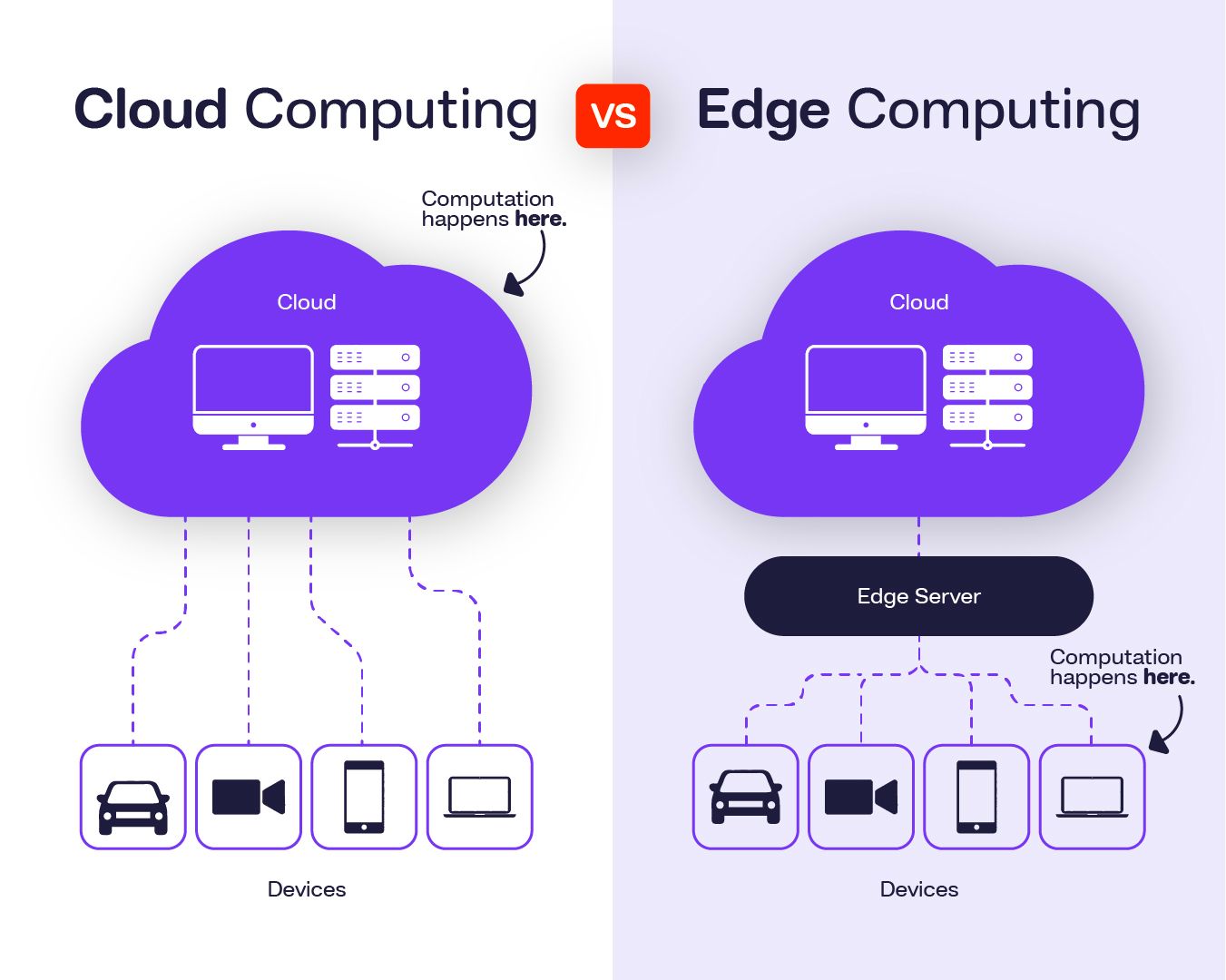
- Cloud computing is a general term for anything that involves delivering hosted services over the internet. It is the on-demand availability of computer system resources, especially data storage and computing power, without direct active management by the user. Large clouds often have functions distributed over multiple locations, each location being a data center.
- Edge Computing:
- Edge computing is a form of computing that is done on site or near a particular data source, minimizing the need for data to be processed in a remote data center.
- Edge computing can enable more effective city traffic management. Examples of this include optimising bus frequency given fluctuations in demand, managing the opening and closing of extra lanes, and, in future, managing autonomous car flows.
- An edge device is any piece of hardware that controls data flow at the boundary between two networks. Edge devices fulfill a variety of roles, depending on what type of device they are, but they essentially serve as network entry — or exit — points.
- There are five main types of edge computing devices: IoT sensors, smart cameras, uCPE equipment, servers and processors. IoT sensors, smart cameras and uCPE equipment will reside on the customer premises, whereas servers and processors will reside in an edge computing data centre.
- In service-based industries such as the finance and e-commerce sector, edge computing devices also have roles to play. In this case, a smart phone, laptop, or tablet becomes the edge computing device.
- Edge Devices:
- Edge devices encompass a broad range of device types, including sensors, actuators and other endpoints, as well as IoT gateways. Within a local area network (LAN), switches in the access layer — that is, those connecting end-user devices to the aggregation layer — are sometimes called edge switches.
- Hybrid Computing:
- A hybrid cloud integrates private, on-premises infrastructure with public cloud services, offering flexibility to distribute workloads between these environments. Hybrid models often incorporate edge computing, allowing organizations to run critical workloads locally at the edge while using the cloud for other tasks, thereby optimizing performance, cost, and data management for various business needs.
- HPC (Hight-Performance Computing):
- Practice of aggregating computing resources to gain performance greater than that of a single workstation, server, or computer. HPC can take the form of custom-built supercomputers or groups of individual computers called clusters.
- Data Centers:
- A data center is a facility that centralizes an organization’s shared IT operations and equipment for the purposes of storing, processing, and disseminating data and applications. Because they house an organization’s most critical and proprietary assets, data centers are vital to the continuity of daily operations.
- Hyperscale Data Centers:
- The clue is in the name: hyperscale data centers are massive facilities built by companies with vast data processing and storage needs. These firms may derive their income directly from the applications or websites the equipment supports, or sell technology management services to third parties.
- White Space and Grey Space in Data Centers:
- White space in a data center refers to the area where IT equipment is placed. It typically houses servers, storage, network gear, and racks.
- Gray space, on the other hand, is the area where the back-end infrastructure is located. This space is essential for supporting the IT equipment and includes areas for switchgear, UPS, transformers, chillers, and generators.
- Edge & Cloud Services:
- Edge services perform data processing on local devices and servers near the data source, reducing latency for time-sensitive operations, while cloud services centralize large computations and storage in remote datacenters, offering massive scalability and flexibility for general workloads.
- Most organizations use both, creating an “edge-to-cloud” architecture where edge devices handle immediate tasks, and the cloud manages large-scale data processing and complex applications, providing a seamless and efficient experience.
- SaaS (Software as a Service):
- Cloud-based service where instead of downloading software your desktop PC or business network to run and update, you instead access an application via an internet browser. The software application could be anything from office software to unified communications among a wide range of other business apps that are available.
- This offers a variety of advantages and disadvantages. Key advantages of SaaS includes accessibility, compatibility, and operational management. Additionally, SaaS models offer lower upfront costs than traditional software download and installation, making them more available to a wider range of businesses, making it easier for smaller companies to disrupt existing markets while empowering suppliers.
- The major disadvantage of SaaS applications is that they ordinarily require an internet connection to function. However, the increasing wide availability of broadband deals and high-speed phone networks such as 5G makes this less of an issue. Additionally, some SaaS applications have an offline mode that allows basic functionality.
- Hardware vs. Software vs. Firmware:
- Hardware is physical: It’s “real,” sometimes breaks, and eventually wears out.
- Since hardware is part of the “real” world, it all eventually wears out. Being a physical thing, it’s also possible to break it, drown it, overheat it, and otherwise expose it to the elements.
- Here are some examples of hardware:
- Smartphone
- Tablet
- Laptop
- Desktop computer
- Printer
- Flash drive
- Router
- Software is virtual: It can be copied, changed, and destroyed.
- Software is everything about your computer that isn’t hardware.
- Here are some examples of software:
- Operating systems like Windows 11 or iOS
- Web browsers
- Antivirus tools
- Adobe Photoshop
- Mobile apps
- Firmware is virtual: It’s software specifically designed for a piece of hardware
- While not as common a term as hardware or software, firmware is everywhere—on your smartphone, your PC’s motherboard, your camera, your headphones, and even your TV remote control.
- Firmware is just a special kind of software that serves a very narrow purpose for a piece of hardware. While you might install and uninstall software on your computer or smartphone on a regular basis, you might only rarely, if ever, update the firmware on a device, and you’d probably only do so if asked by the manufacturer, probably to fix a problem.
- Hardware is physical: It’s “real,” sometimes breaks, and eventually wears out.
- Information Technology (IT) & Operational Technology (OT):
- Information Technology (IT):
- Refers to anything related to computer technology, including hardware and software. Your email, for example, falls under the IT umbrella. IT forms the technological backbone of most organizations and companies by managing data, communications, and business processes. These devices and programs have little autonomy and are updated frequently.
- Operational Technology (OT):
- Refers to the hardware and software used to change, monitor, or control physical devices, processes, and events within a company or organization. This form of technology is most commonly used in industrial settings, where these systems are engineered for safety, reliability, and precision control. An example of OT includes SCADA (Supervisory Control and Data Acquisition).
- => The main difference between OT and IT devices: OT devices control the physical world, while IT systems manage data.
- Information Technology (IT):