
RS Group – RS Group completes acquisition of automation and control specialist, BPX Group
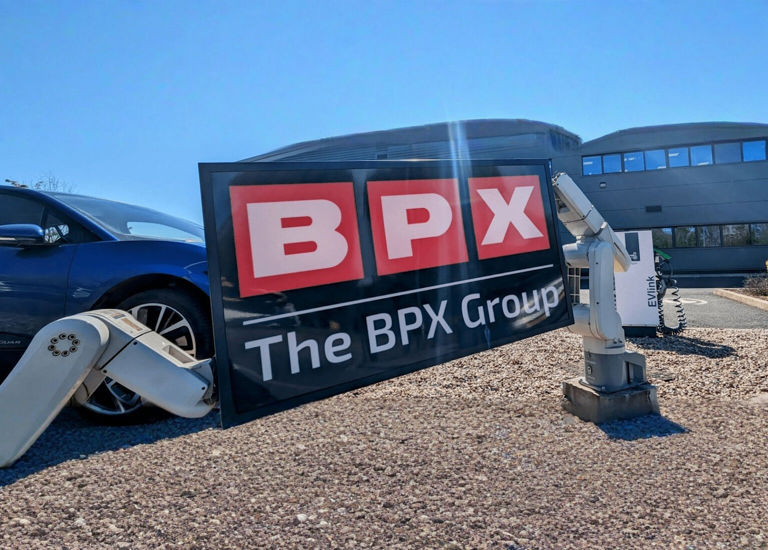
RS Group has today announced its acquisition of BPX Group, a specialist distributor of industrial automation and control products.
The deal will see BPX become part of the RS Group, supporting its strategy to deepen its technical capabilities.
BPX brings specialist automation and control knowledge, serving industrial customers, high service intensity, combined with strong supplier relationships.
Raj Patel, Managing Director, RS UK & Ireland, said: “We are delighted to welcome BPX Group into the RS family. This acquisition will strengthen our product technical capabilities in the automation and control category and help to accelerate our growth plans within the UK & Ireland markets.
“Through the technical expertise and specialist knowledge of BPX, combined with the scale, knowledge and reach of RS Group, we will find new opportunities to win in the markets in which we operate, and continue to grow our businesses together.
“The BPX heritage is what makes it such a special business, so we want to celebrate that alongside our own RS story – and look ahead to a brighter future together.”
Guy Collins, Director from BPX Group, said: “This is an exciting step for BPX Group which will take the business to the next level. BPX is a complementary business to RS in the UK & Ireland, both are high-service level distributors of automation and control products with an overlap of product range and a customer-centric focus, but each serving the market in different ways.
“BPX will operate as a standalone business within RS Group, and we will look to draw upon our common culture, values and customer-first approach, to create a dynamic and innovative partnership that works for our customers, suppliers and for the BPX team.”
SourceRS Group
EMR Analysis
More information on RS Group plc: See the full profile on EMR Executive Services
More information on Simon Pryce (Chief Executive Officer, RS Group plc): See the full profile on EMR Executive Services
More information on Kate Ringrose (Chief Financial Officer, RS Group plc): See the full profile on EMR Executive Services
More information on Raj Patel (Managing Director, RS UK & Ireland, RS Group plc): See the full profile on EMR Executive Services
More information on BPX Group by RS Group plc: https://www.bpx.co.uk/page/bpx-group + Eight complementary businesses with one shared aim to deliver excellence in the field of industry.
If you’re searching for industry 5, if your IT meets your OT, or if your challenge is IOT, the BPX Group has a unique combination of business to business solutions and propositions that work neatly together to form a complete offer, whatever your industry. Our specialisation is Industrial Automation and Control and our offer is offline, online and always on hand. We are built from origins in bricks and mortar but today the BPX Group is both digital and physical.
We are BPX, 200 amazing, caring and knowledgeable people, based in 15 branches throughout the UK and Ireland and supplying customers worldwide with automation and control products.
For over 60 years, we have been proudly stocking, selling, supporting, and servicing automation and control components, devices, and solutions, operating as distributors for many of the world’s leading electrical, electronic, and pneumatic manufacturers, including Schneider Electric, Phoenix Contact, Weidmuller, Omron, and Mitsubishi Electric.
More information on Guy Collins (Director, BPX Group, RS Group plc): See the full profile on EMR Executive Services
EMR Additional Notes:
- Industrial Automation:
- Industrial Automation (umbrella term) is the use of technologies such as computer software and robotics to control machinery and processes which replace human beings in performing specific functions. The functions are primarily centered on manufacturing, quality control and material handling processes.
- Process Automation / Manufacturing:
- Process automation (based on the nature of the raw materials and final product) is defined as the use of software and technologies to automate business processes and functions in order to accomplish defined organizational goals, such as producing a product, hiring and onboarding an employee, or providing customer service.
- Process manufacturing utilizes chemical, physical and compositional changes to convert raw material or feedstock into a product. Process manufacturing includes industries such as cement and glass, chemicals, electric power generation, food and beverage, life sciences, metals and mining, oil and gas, pulp and paper, refining, and water and wastewater. Process manufacturing includes both continuous and batch processes.
- Discrete Automation / Manufacturing:
- Discrete automation (focusing on individual, quantifiable parts and products) is the production of parts that are of a quantifiable nature. That may include cell phones, soda bottles, automobiles, airplanes, toys, etc. As you know, an automobile contains many, many parts. The parts required for an automobile are also quantifiable in nature.
- Discrete manufacturing processes include the production of individual parts as well as their assembly into a final product. Discrete manufacturing examples include automobiles, appliances, and consumer electronics.
- Process Automation / Manufacturing:
- Types of Automation Systems (by flexibility):
- Fixed Automation:
- Most basic, least flexible type of automation, ideal for high-volume, unchanging production.
- Fixed automation systems are utilized in high volume production settings that have dedicated equipment. The equipment has fixed operation sets and is designed to perform efficiently with the operation sets. This type of automation is mainly used in discrete mass production and continuous flow systems like paint shops, distillation processes, transfer lines and conveyors. All these processes rely on mechanized machinery to perform their fixed and repetitive operations to achieve high production volumes.
- Programmable Automation:
- Next level of flexibility, where the system can be reprogrammed, but with a significant effort.
- Programmable automation systems facilitate changeable operation sequences and machine configuration using electronic controls. With programmable automation, non-trivial programming efforts are required to reprogram sequence and machine operations. Since production processes are not changed often, programmable automation systems tend to be less expensive in the long run. This type of system is mainly used in low job variety and medium-to-high product volume settings. It may also be used in mass production settings like paper mills and steel rolling mills.
- Flexible Automation:
- Most advanced type of automation based on flexibility, allowing for easy, high-level changes without major reprogramming.
- Flexible automation systems are utilized in computer-controlled flexible manufacturing systems. Human operators enter high-level commands in the form of computer codes that identify products and their location in the system’s sequence to trigger automatic lower-level changes. Every production machine receives instructions from a human-operated computer. The instructions trigger the loading and unloading of necessary tools before carrying out their computer-instructed processes. Once processing is completed, the end products are transferred to the next machine automatically. Flexible industrial automation is used in batch processes and job shops with high product varieties and low-to-medium job volumes.
- Fixed Automation:
- Advanced and Integrated Concepts (most complex):
- Integrated Automation:
- Takes flexible automation to the next level by explaining how an entire plant’s processes, from manufacturing to business operations, are linked under a single computer-controlled system.
- Integrated industrial automation involves the total automation of manufacturing plants where all processes function under digital information processing coordination and computer control. It comprises technologies like:
- Computer-aided process planning
- Computer-supported design and manufacturing
- Flexible machine systems
- Computer numerical control machine tools
- Automated material handling systems, like robots
- Automatic storage and retrieval systems
- Computerized production and scheduling control
- Automated conveyors and cranes
- Additionally, an integrated automation system can integrate a business system via a common database. That is, it supports the full integration of management operations and processes using communication and information technologies. Such technologies are utilized in computer integrated manufacturing and advanced process automation systems.
- Smart Manufacturing (SM):
- Modern evolution of automation, driven by data and connectivity.
- Technology-driven approach that utilizes Internet-connected machinery to monitor the production process. The goal of SM is to identify opportunities for automating operations and use data analytics to improve manufacturing performance.
- An example of what the cloud can do for smart manufacturing is the Volkswagen Industrial Cloud, which combines all data from 122 Volkswagen Group facilities and processes it in real time to make improvements.
- Hybrid Automation / Manufacturing:
- Combines different approaches, showing how both additive and subtractive manufacturing can be integrated into one process. It also introduces the “hybrid” method for implementing automation projects.
- The Hybrid Automation Method follows two guiding principles: Implementing robust automation solutions that are easy and affordable for organisations to maintain. Realising process efficiency rapidly by reducing project overheads and time-to-value.
- Hybrid manufacturing is a combination of additive manufacturing (AM) and subtractive manufacturing within the same machine.
- Additive Manufacturing (AM):
- Key technology of one of the core components of the “hybrid” approach.
- Additive manufacturing is the process of creating an object by building it one layer at a time. It is the opposite of subtractive manufacturing, in which an object is created by cutting away at a solid block of material until the final product is complete.
- Operators across a variety of different manufacturing industries utilize additive manufacturing in various ways. For instance: Medical device manufacturers use 3D printing to develop high variance products such as dental implants.
- The term “additive manufacturing” refers to the creation of objects by “adding” material. Therefore, 3D printing is a form of additive manufacturing. When an object is created by adding material — as opposed to removing material — it’s considered additive manufacturing.
- Integrated Automation:
- Industrial Automation (umbrella term) is the use of technologies such as computer software and robotics to control machinery and processes which replace human beings in performing specific functions. The functions are primarily centered on manufacturing, quality control and material handling processes.