
Prysmian – Prysmian led joint venture with Fincantieri to acquire Xtera, a leader in turnkey submarine telecom projects

- Xtera to be acquired by a joint venture between Prysmian (80% stake) and Fincantieri (20% stake)
- Prysmian becomes a global player in submarine telecom thanks to the acquisition, building on its leadership in submarine energy solutions
- Fincantieri confirms its role as a leader for the development of integrated solutions in the underwater domain, focusing on unmanned and security solutions
- Customers will benefit from a one-stop shop for comprehensive submarine telecom solutions, including leadership in cable security
- Business positioned for long-term growth thanks to data centers and hyperscalers and from incumbent telecom players
Milan/Trieste, December 29, 2025 – A Prysmian led joint venture with Fincantieri has signed an agreement to acquire Xtera Topco Limited (“Xtera”), a UK and US-based leader in turnkey submarine telecom systems, enabling Prysmian to become a competitive global player in submarine telecom solutions.
The acquisition of Xtera from an affiliate of H.I.G. Capital, LLC (“H.I.G.”), a leading global alternative investment firm with $72 billion of capital under management, will be carried out through the aforementioned joint venture between Prysmian (80% stake) and Fincantieri (20% stake).
Prysmian and Fincantieri have also established a partnership which includes the development of innovative installation and security services to become a one-stop shop for comprehensive submarine telecom solutions. Fincantieri’s position as a leading integrator of advanced subsea systems is strengthened thanks to the partnership and joint venture.
Submarine telecom cables are major strategic assets and have long-term growth prospects as telecom operators look for new solutions as the adoption of AI is fueling the expansion of data centers and hyperscalers that will require regional and long-haul submarine connections.
Security will be central to Prysmian’s offer, as its established assets in monitoring and know-how in installation and cable production will be combined with Fincantieri which confirms its role as a leader for the development of integrated solutions in the underwater domain, focusing on unmanned and security solutions.
Raul Gil, EVP Transmission at Prysmian, said: “Thanks to the acquisition of Xtera we have made a significant leap forward in submarine telecoms, where growth is accelerating driven by the adoption of AI. As the market leader in submarine energy cables, we will now be competitive in delivering regional and long-haul telecom connections globally. Security is a differentiator for our customers, and also thanks to the partnership with Fincantieri, we will offer unique and technologically advanced solutions to the market in a one-stop shop.”
Pierroberto Folgiero, CEO and Managing Director at Fincantieri, commented: “This operation marks a significant step forward in implementing our industrial vision, which positions the underwater sector as one of the Group’s strategic pillars, both now and in the future. By covering every area of this field—including through partnerships with leading companies such as Prysmian—we are strengthening our ability to anticipate global challenges and drive innovation across the entire value chain. In a world where subsea infrastructures are increasingly vital, Fincantieri aims to be a leader and a benchmark for the development of integrated and sustainable solutions.”
Keith Henderson, CEO at Xtera, added: “This investment marks a significant milestone in Xtera’s journey to further strengthen our competitive position in subsea telecom systems. We look forward to partnering with Prysmian and Fincantieri to deliver even greater breadth across the value chain to telecom operators and private subsea system owners.”
Xtera
Headquartered in London, UK, Xtera is one of just five companies able to deliver subsea telecom networks on a global scale. Their long-standing management team, focus on innovation and track record of project delivery positions Xtera as one of the fastest growing providers in the growing submarine telecom market. A specialist in regional and long-haul submarine telecom projects thanks to their proprietary technology, Xtera has industry-leading revenues per FTE with approximately €130 million in revenues and around 60 employees. Xtera also has state-of-the-art R&D facilities in the UK and Texas, USA.
The transaction implies an enterprise value of $65 million. The acquisition of Xtera remains subject to regulatory approvals. Completion of the transaction is expected to occur in the first quarter of 2026.
One-stop shop for submarine cable solutions
The acquisition of Xtera will complement Prysmian’s leadership in submarine telecom production from its Nordenham (Germany) plant, its in-house acoustic and temperature monitoring solutions, and its world leading fleet of cable installation vessels and know-how. The partnership with Fincantieri will build on the already established relationship in cable installation vessels and will expand to new security-focused underwater services including guard vessels and drones. Prysmian’s one-stop shop for submarine telecom solutions will be deeply embedded in both Europe and the US, benefiting from a shared culture and supply chain across the two continents. Prysmian and Fincantieri are also exploring extending the partnership to submarine energy cables.
SourcePrysmian
EMR Analysis
More information on Prysmian: See the full profile on EMR Executive Services
More information on Massimo Battaini (Group Chief Executive Officer and General Manager, Prysmian Group): See the full profile on EMR Executive Services
More information on Pier Francesco Facchini (Chief Financial Officer and Executive Director, Finance, Administration, Control and IT, Prysmian): See the full profile on EMR Executive Services
More information on Transmission Business by Prysmian: See the full profile on EMR Executive Services
More information on Raul Gil (Executive Vice President, Transmission Business, Prysmian Group): See the full profile on EMR Executive Services
More information on Xtera Topco Limited by JV Prysmian (80%) and Fincantieri (20%): https://xtera.com/ + Xtera is an innovative provider of sub-sea telecoms solutions and carries an extensive portfolio of intellectual property. The company supplies both un-repeatered and repeatered systems, using its high performance optical amplifiers to deliver traffic directly inland to cities. Xtera creates novel solutions that are suited for each individual customer whether that be provision of a full turnkey system, an open architecture design or supply of a particular product or service. We aim to challenge the norm and to provide more reliable and higher quality products over new and existing routes. Xtera is a flexible supplier who works with a variety of partners to create the best solution for each project and every customer.
Headquartered in London, UK, Xtera is one of just five companies able to deliver subsea telecom networks on a global scale. Their long-standing management team, focus on innovation and track record of project delivery positions Xtera as one of the fastest growing providers in the growing submarine telecom market. A specialist in regional and long-haul submarine telecom projects thanks to their proprietary technology, Xtera has industry-leading revenues per FTE with approximately €130 million in revenues and around 60 employees. Xtera also has state-of-the-art R&D facilities in the UK and Texas, USA.
More information on Keith Henderson (Founder and Chief Executive Officer, Xtera, JV Prysmian (80%) and Fincantieri (20%)): See the full profile on EMR Executive Services
More information on Fincantieri: https://www.fincantieri.com/en + We are one of the world’s leading shipbuilding groups, operating across all segments of high value-added naval engineering. We are the global leader in cruise ship construction and an internationally recognized player in the defense and offshore specialized vessel sectors.
- 3 Continents
- 18 Shipyards
- +7,000Ships built
- +23,000People, including approximately 12,000 in Italy and over 10,500 abroad
- 8.1 BN €Revenues
- 57.7 BN €Total order backlog
More information on Pierroberto Folgiero (Chief Executive Officer and Managing Director, Fincantieri): https://www.fincantieri.com/it/governance/management/pierroberto-folgiero/ + https://www.linkedin.com/in/pierroberto-folgiero/
More information on H.I.G. Capital, LLC: https://hig.com/ + H.I.G. Capital is a leading global alternative investment firm with $72 billion of equity capital under management*, with a focus on the mid cap segment of the market.
The H.I.G. family of funds includes private equity, growth equity, real estate, direct lending, infrastructure, special situations debt, and growth-stage healthcare. We partner with committed management teams and entrepreneurs and help build businesses of significant value. Our team of over 500 investment professionals has substantial operating, consulting, technology and financial management experience, enabling us to drive value creation in our portfolio companies. Since 1993, we have invested in more than 400 companies with combined revenues in excess of $53 billion. We invest in companies throughout the U.S., Europe, and Latin America and have offices in Miami, New York, Boston, Chicago, Los Angeles, San Francisco, Stamford, and Atlanta and affiliate offices in London, Hamburg, Luxembourg, Madrid, Milan, and Paris in Europe, as well as Bogotá, Rio de Janeiro, and São Paulo in Latin America, Dubai in the Middle East, and Hong Kong in Asia.
More information on Sami Mnaymneh (Founder, Executive Chairman and Chief Executive Officer, H.I.G. Capital, LLC): https://hig.com/team/
EMR Additional Notes:
- Cloud Computing:
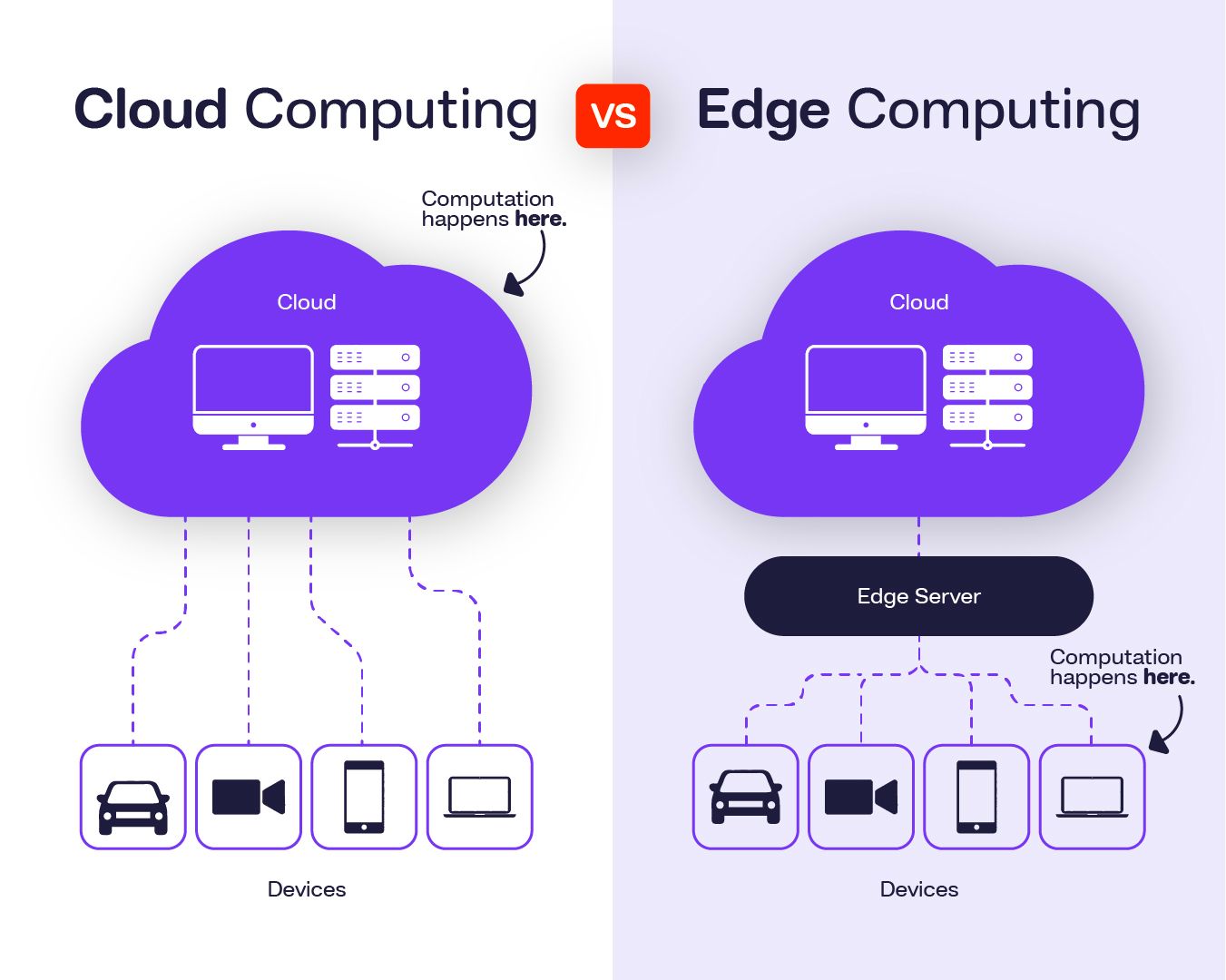
- Cloud computing is a general term for anything that involves delivering hosted services over the internet. It is the on-demand availability of computer system resources, especially data storage and computing power, without direct active management by the user. Large clouds often have functions distributed over multiple locations, each location being a data center.
- Edge Computing:
- Edge computing is a form of computing that is done on site or near a particular data source, minimizing the need for data to be processed in a remote data center.
- Edge computing can enable more effective city traffic management. Examples of this include optimising bus frequency given fluctuations in demand, managing the opening and closing of extra lanes, and, in future, managing autonomous car flows.
- An edge device is any piece of hardware that controls data flow at the boundary between two networks. Edge devices fulfill a variety of roles, depending on what type of device they are, but they essentially serve as network entry — or exit — points.
- There are five main types of edge computing devices: IoT sensors, smart cameras, uCPE equipment, servers and processors. IoT sensors, smart cameras and uCPE equipment will reside on the customer premises, whereas servers and processors will reside in an edge computing data centre.
- In service-based industries such as the finance and e-commerce sector, edge computing devices also have roles to play. In this case, a smart phone, laptop, or tablet becomes the edge computing device.
- Edge Devices:
- Edge devices encompass a broad range of device types, including sensors, actuators and other endpoints, as well as IoT gateways. Within a local area network (LAN), switches in the access layer — that is, those connecting end-user devices to the aggregation layer — are sometimes called edge switches.
- Hybrid Computing:
- A hybrid cloud integrates private, on-premises infrastructure with public cloud services, offering flexibility to distribute workloads between these environments. Hybrid models often incorporate edge computing, allowing organizations to run critical workloads locally at the edge while using the cloud for other tasks, thereby optimizing performance, cost, and data management for various business needs.
- HPC (Hight-Performance Computing):
- Practice of aggregating computing resources to gain performance greater than that of a single workstation, server, or computer. HPC can take the form of custom-built supercomputers or groups of individual computers called clusters.
- Data Centers:
- A data center is a facility that centralizes an organization’s shared IT operations and equipment for the purposes of storing, processing, and disseminating data and applications. Because they house an organization’s most critical and proprietary assets, data centers are vital to the continuity of daily operations.
- Hyperscale Data Centers:
- The clue is in the name: hyperscale data centers are massive facilities built by companies with vast data processing and storage needs. These firms may derive their income directly from the applications or websites the equipment supports, or sell technology management services to third parties.
- White Space and Grey Space in Data Centers:
- White space in a data center refers to the area where IT equipment is placed. It typically houses servers, storage, network gear, and racks.
- Gray space, on the other hand, is the area where the back-end infrastructure is located. This space is essential for supporting the IT equipment and includes areas for switchgear, UPS, transformers, chillers, and generators.
- Edge & Cloud Services:
- Edge services perform data processing on local devices and servers near the data source, reducing latency for time-sensitive operations, while cloud services centralize large computations and storage in remote datacenters, offering massive scalability and flexibility for general workloads.
- Most organizations use both, creating an “edge-to-cloud” architecture where edge devices handle immediate tasks, and the cloud manages large-scale data processing and complex applications, providing a seamless and efficient experience.
- AI – Artificial Intelligence:
- Artificial intelligence is the simulation of human intelligence processes by machines, especially computer systems.
- As the hype around AI has accelerated, vendors have been scrambling to promote how their products and services use AI. Often what they refer to as AI is simply one component of AI, such as machine learning. AI requires a foundation of specialized hardware and software for writing and training machine learning algorithms. No one programming language is synonymous with AI, but several, including Python, R and Java, are popular.
- In general, AI systems work by ingesting large amounts of labeled training data, analyzing the data for correlations and patterns, and using these patterns to make predictions about future states. In this way, a chatbot that is fed examples of text chats can learn to produce lifelike exchanges with people, or an image recognition tool can learn to identify and describe objects in images by reviewing millions of examples.
- AI programming focuses on three cognitive skills: learning, reasoning and self-correction.
- The 4 types of artificial intelligence?
- Type 1: Reactive machines. These AI systems have no memory and are task specific. An example is Deep Blue, the IBM chess program that beat Garry Kasparov in the 1990s. Deep Blue can identify pieces on the chessboard and make predictions, but because it has no memory, it cannot use past experiences to inform future ones.
- Type 2: Limited memory. These AI systems have memory, so they can use past experiences to inform future decisions. Some of the decision-making functions in self-driving cars are designed this way.
- Type 3: Theory of mind. Theory of mind is a psychology term. When applied to AI, it means that the system would have the social intelligence to understand emotions. This type of AI will be able to infer human intentions and predict behavior, a necessary skill for AI systems to become integral members of human teams.
- Type 4: Self-awareness. In this category, AI systems have a sense of self, which gives them consciousness. Machines with self-awareness understand their own current state. This type of AI does not yet exist.
- Machine Learning (ML):
- Developed to mimic human intelligence, it lets the machines learn independently by ingesting vast amounts of data, statistics formulas and detecting patterns.
- ML allows software applications to become more accurate at predicting outcomes without being explicitly programmed to do so.
- ML algorithms use historical data as input to predict new output values.
- Recommendation engines are a common use case for ML. Other uses include fraud detection, spam filtering, business process automation (BPA) and predictive maintenance.
- Classical ML is often categorized by how an algorithm learns to become more accurate in its predictions. There are four basic approaches: supervised learning, unsupervised learning, semi-supervised learning and reinforcement learning.
- Deep Learning (DL):
- Subset of machine learning, Deep Learning enabled much smarter results than were originally possible with ML. Face recognition is a good example.
- DL makes use of layers of information processing, each gradually learning more and more complex representations of data. The early layers may learn about colors, the next ones about shapes, the following about combinations of those shapes, and finally actual objects. DL demonstrated a breakthrough in object recognition.
- DL is currently the most sophisticated AI architecture we have developed.
- Generative AI (GenAI):
- Generative AI technology generates outputs based on some kind of input – often a prompt supplied by a person. Some GenAI tools work in one medium, such as turning text inputs into text outputs, for example. With the public release of ChatGPT in late November 2022, the world at large was introduced to an AI app capable of creating text that sounded more authentic and less artificial than any previous generation of computer-crafted text.
- Small Language Models (SLM) and Large Language Models (LLM):
- Small Language Models (SLMs) are artificial intelligence (AI) models capable of processing, understanding and generating natural language content. As their name implies, SLMs are smaller in scale and scope than large language models (LLMs).
- LLM means Large Language Models — a type of machine learning/deep learning model that can perform a variety of natural language processing (NLP) and analysis tasks, including translating, classifying, and generating text; answering questions in a conversational manner; and identifying data patterns.
- For example, virtual assistants like Siri, Alexa, or Google Assistant use LLMs to process natural language queries and provide useful information or execute tasks such as setting reminders or controlling smart home devices.
- Computer Vision (CV) / Vision AI & Machine Vision (MV):
- Field of AI that enables computers to interpret and act on visual data (images, videos). It works by using deep learning models trained on large datasets to recognize patterns, objects, and context.
- The most well-known case of this today is Google’s Translate, which can take an image of anything — from menus to signboards — and convert it into text that the program then translates into the user’s native language.
- Machine Vision (MV) :
- Specific application for industrial settings, relying on cameras to analyze tasks in manufacturing, quality control, and worker safety. The key difference is that CV is a broader field for extracting information from various visual inputs, while MV is more focused on specific industrial tasks.
- Machine Vision is the ability of a computer to see; it employs one or more video cameras, analog-to-digital conversion and digital signal processing. The resulting data goes to a computer or robot controller. Machine Vision is similar in complexity to Voice Recognition.
- MV uses the latest AI technologies to give industrial equipment the ability to see and analyze tasks in smart manufacturing, quality control, and worker safety.
- Multimodal Intelligence and Agents:
- Subset of artificial intelligence that integrates information from various modalities, such as text, images, audio, and video, to build more accurate and comprehensive AI models.
- Multimodal capabilities allows AI to interact with users in a more natural and intuitive way. It can see, hear and speak, which means that users can provide input and receive responses in a variety of ways.
- An AI agent is a computational entity designed to act independently. It performs specific tasks autonomously by making decisions based on its environment, inputs, and a predefined goal. What separates an AI agent from an AI model is the ability to act. There are many different kinds of agents such as reactive agents and proactive agents. Agents can also act in fixed and dynamic environments. Additionally, more sophisticated applications of agents involve utilizing agents to handle data in various formats, known as multimodal agents and deploying multiple agents to tackle complex problems.
- Agentic AI:
- Agentic AI is an artificial intelligence system that can accomplish a specific goal with limited supervision. It consists of AI agents—machine learning models that mimic human decision-making to solve problems in real time. In a multiagent system, each agent performs a specific subtask required to reach the goal and their efforts are coordinated through AI orchestration.
- Unlike traditional AI models, which operate within predefined constraints and require human intervention, agentic AI exhibits autonomy, goal-driven behavior and adaptability. The term “agentic” refers to these models’ agency, or, their capacity to act independently and purposefully.
- Agentic AI builds on generative AI (gen AI) techniques by using large language models (LLMs) to function in dynamic environments. While generative models focus on creating content based on learned patterns, agentic AI extends this capability by applying generative outputs toward specific goals.
- Edge AI Technology:
- Edge artificial intelligence refers to the deployment of AI algorithms and AI models directly on local edge devices such as sensors or Internet of Things (IoT) devices, which enables real-time data processing and analysis without constant reliance on cloud infrastructure.
- Simply stated, edge AI, or “AI on the edge“, refers to the combination of edge computing and artificial intelligence to execute machine learning tasks directly on interconnected edge devices. Edge computing allows for data to be stored close to the device location, and AI algorithms enable the data to be processed right on the network edge, with or without an internet connection. This facilitates the processing of data within milliseconds, providing real-time feedback.
- Self-driving cars, wearable devices, security cameras, and smart home appliances are among the technologies that leverage edge AI capabilities to promptly deliver users with real-time information when it is most essential.
- High-Density AI:
- High-density AI refers to the concentration of AI computing power and storage within a compact physical space, often found in specialized data centers. This approach allows for increased computational capacity, faster training times, and the ability to handle complex simulations that would be impossible with traditional infrastructure.
- Explainable AI (XAI) and Human-Centered Explainable AI (HCXAI):
- Explainable AI (XAI) refers to methods for making AI model decisions understandable to humans, focusing on how the AI works, whereas Human-Centered Explainable AI (HCXAI) goes further by contextualizing those explanations to a user’s specific task and understanding needs. While XAI aims for technical transparency of the model, HCXAI emphasizes the human context, emphasizing user relevance, and the broader implications of explanations, including fairness, trust, and ethical considerations.
- Physical AI & Embodied AI:
- Physical AI refers to a branch of artificial intelligence that enables machines to perceive, understand, and interact with the physical world by directly processing data from a variety of sensors and actuators.
- Physical AI provides the overarching framework for creating autonomous systems that act intelligently in real-world settings. Embodied AI, as a subset, focuses on the sensory, decision-making, and interaction capabilities that enable these systems to function effectively in dynamic and unpredictable environments.
- Federated Learning and Reinforcement Learning:
- Federated Learning is a machine-learning technique where data stays where it is, and only the learned model updates are shared. “Training AI without sharing your data”.
- Reinforcement Learning is a type of AI where an agent learns by interacting with an environment and receiving rewards or penalties. “Learning by trial and error”
- Federated Learning (FL) and Reinforcement Learning (RL) can be combined into a field called Federated Reinforcement Learning (FRL), where multiple agents learn collaboratively without sharing their raw data. In this approach, each agent trains its own RL policy locally and shares model updates, like parameters or gradients, with a central server. The server aggregates these updates to create a more robust, global model. FRL is used in applications like optimizing resource management in communication networks and enhancing the performance of autonomous systems by learning from diverse, distributed experiences while protecting privacy.
- Power Cable:
- A power cable is a type of electrical cable used to transmit electrical power. It typically consists of one or more insulated conductors surrounded by a protective outer sheath.
- Types of power cables:
- Overhead cables: These are suspended from poles or towers and are commonly used for long-distance power transmission.
- Underground cables: These are installed underground and are typically used for local distribution or in areas where overhead lines are impractical or unsafe.
- Submarine cables: These are laid underwater to connect islands, countries, or offshore wind farms to the mainland power grid.
- Medium-voltage cables: These are used for the distribution of electrical power from substations to local areas.
- Low-voltage cables: These are used for the final distribution of power to individual homes and businesses.
- Superconducting Power Cable:
- A superconducting power cable is a type of electrical cable that uses superconducting materials to conduct electricity with zero resistance. This means that no energy is lost due to heat dissipation, making it significantly more efficient than traditional copper or aluminum cables. Superconducting cables can be used to transmit large amounts of power over long distances with minimal energy losses.
- High-Temperature Superconducting (HTS) Cable:
- High-temperature superconducting (HTS) cables are electrical wires that can carry large amounts of current with no resistance, or energy loss, when cooled to a specific low temperature. Unlike conventional copper cables, they don’t produce heat during operation. The “high-temperature” designation is relative, meaning they can operate at temperatures achievable with the more affordable and abundant liquid nitrogen (~-196°C), rather than the much colder liquid helium required for older, low-temperature superconductors. This makes them a more practical technology for power transmission and other applications.
- Telecommunication Cable:
- Distinct category of cable with a different primary purpose: transmitting signals rather than power.
- Telecommunication cables transmit various signals, like voice, data, and video, over distances and include types such as twisted pair cables, which use insulated copper wires for signals; coaxial cables, designed to carry both signals and ground in concentric layers; and fiber optic cables, which transmit data as pulses of light.