Ensto – Jommi Tervo appointed Managing Director of Ensto Maviko
He will begin in his new role on January 1, 2026.
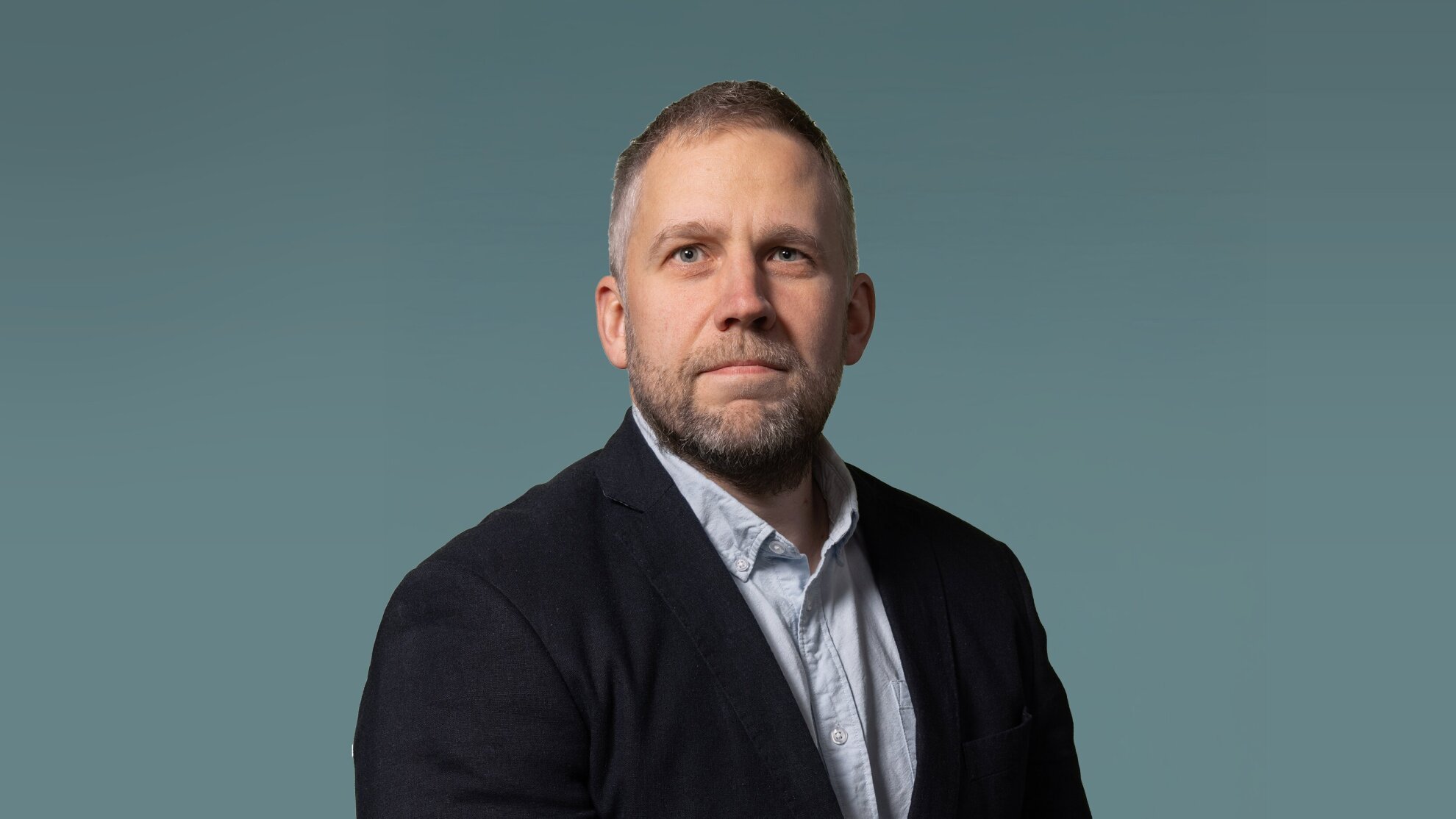
Jommi Tervo, who joined Ensto as Director in Substation business on August 1, 2025, will take the role of Managing Director at Ensto Maviko Oy starting January 1, 2026. He holds a master’s degree in engineering. At the same time, Kimmo Autio, the current Managing Director and founder of Ensto Maviko, will take the role of Senior Advisor for the Substation business.
While rejoining Ensto Maviko business in August, Jommi brought valuable experience from both electrical and renewable energy construction sectors. Before joining Ensto, Jommi served as Head of Construction, Renewable Energy, at Enersense International Oyj, a Finnish engineering and project services company operating across the Nordic and Baltic regions. He also oversaw several wind farm construction projects at OX2, e.g. the biggest wind farm construction project in Finland, and has managed major construction initiatives as a project manager at ABB Substations. Read more about Jommi’s career on his LinkedIn profile.
“We are happy to welcome Jommi as our new Managing Director of Ensto Maviko. Jommi’s extensive experience in both electrical and renewable energy sectors will be invaluable as we continue to grow our substation business. Having worked closely with Jommi before, we know firsthand how dedicated he is, and we are confident that his leadership will inspire the entire team and take our business to new heights,” says Mika Haikola, SVP, Global Sales and Substation business.
Mika continues: “I would also like to thank Kimmo Autio, whose vision and dedication have shaped the company from its very beginning. Kimmo’s commitment to innovation has built a strong foundation for our continued success. I am so happy that he continues as Senior Advisor for us.”
“I am truly honored to step into this new role. Having already been part of Ensto as Director in the Substation business, and with several memorable years spent at Maviko earlier in my career, I am excited to take on this new challenge and reconnect with colleagues both old and new. The expertise I’ve gained in previous roles has prepared me well for this opportunity, and I look forward to working together to drive growth for our business and deliver great value to our customers and partners,” says Jommi Tervo.
SourceEnsto
EMR Analysis
More information on Ensto: See the full profile on EMR Executive Services
More information on D.Sc. (Tech) Markku Moilanen (President and Chief Executive Officer, Ensto Group + President and Chief Executive Officer, Ensto DSO Business (belonging to Ensto Oy)): See the full profile on EMR Executive Services
More information on Mika J. Haikola (Senior Vice President, Global Sales and Substation Business, Ensto Group): See the full profile on EMR Executive Services
More information on Maviko Oy by Ensto: See the full profile on EMR Executive Services
More information on Kimmo Autio (Founder and Managing Director, Maviko Oy, Ensto till January 1, 2026 + Senior Advisor, Substation Business, Maviko Oy, Ensto as from January 1, 2026): See the full profile on EMR Executive Services
More information on Jommi Tervo (Director, Substation Business, Maviko Oy, Ensto till January 1, 2026 + Managing Director, Maviko Oy, Ensto as from January 1, 2026): See the full profile on EMR Executive Services +
More information on Enersense International Oyj: https://enersense.com/ + Enersense International Plc delivers the essentials of tomorrow’s society. It is a lifecycle partner for customers operating in energy transmission and production, industrial energy transition and telecommunications. The company offers projects and services across the customer asset lifecycle in Finland, Baltics and Nordics. Every day, Enersense’s 2000 experts enable energy transition and reliable connections. Enersense had a revenue of EUR 425 million in 2024 and it’s listed on Nasdaq Helsinki (ESENSE).
More information on Kari Sundbäck (President and Chief Executive Officer, Enersense International Oyj): https://enersense.com/executive-management/ + https://www.linkedin.com/in/kari-sundback/
More information on OX2: https://www.ox2.com/ + We develop and operate projects within onshore and offshore wind power, solar power, and energy storage. With our extensive experience, strong market position and efficient business model, we are powering the great shift towards a sustainable society, and we are well equipped to further strengthen our position in a growing market. We are present across Europe and in Australia.
More information on Matthias Taft (Chief Executive Officer, EOX2): https://www.ox2.com/about-ox2/reports-and-governance/management/ + https://www.linkedin.com/in/matthias-taft-8a1b09178/
More information on ABB: See full profile on EMR Executive Services
More information on Morten Wierod (Chief Executive Officer and Member of the Group Executive Committee, ABB Ltd): See full profile on EMR Executive Services
EMR Additional Notes:
- Substation:
- A power station is where the power is generated. A substation is a critical part of an electrical generation, transmission, and distribution system, where power is split apart, transformed, and distributed further into the grid.
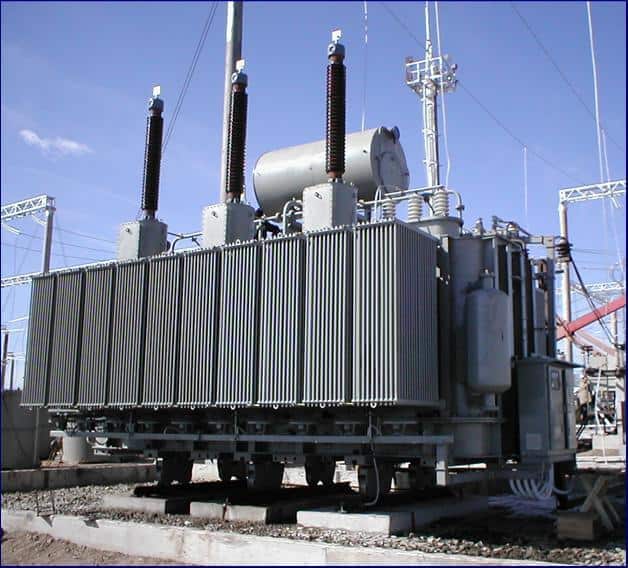
- Substations contain the specialist equipment that allows the voltage of electricity to be transformed (or ‘switched’). The voltage is stepped up or down through pieces of equipment called transformers, which sit within a substation’s site.
- Substations typically include:
- Transformers: The core components for voltage transformation.
- Circuit Breakers: To isolate and protect equipment.
- Switchgear: For controlling and protecting the flow of electricity.
- Shunt Reactors (sometimes): Used to improve system stability.
- Other equipment: Measuring instruments, control panels, etc.
- Transformers (Power Transformers, Distribution Transformers, Traction Transformers, HVDC Converters, Solid State Transformers (SST), Rectifier Transformers):
- A transformer is a passive electrical device that transfers electrical energy from one electrical circuit to another, or to multiple circuits. It can be classified into three types based on voltage change:
- Step-up: Increases voltage and decreases current.
- Step-down: Decreases voltage and increases current.
- Isolation: Provides electrical isolation without changing the voltage.
- Distribution vs. Power Transformers:
- Power Transformers: These are used in high-voltage transmission networks for both stepping up and stepping down applications (e.g., 400 kV, 200 kV). They are generally rated above 200 MVA and are designed for maximum efficiency at or near full load.
- Distribution Transformers: These are used in lower-voltage distribution networks to connect to end-users (e.g., 11 kV, 440V, 230V). They are generally rated less than 200 MVA and are designed for maximum efficiency at 60-70% of their rated load, as they operate at a load less than full load. They perform the final voltage transformation for household and commercial use.
- Specialized Transformers:
- Traction Transformers: These are special transformers used in railway systems to step down high-voltage AC power from the overhead catenary to the required voltage for the train’s traction system. They are typically medium-frequency transformers with ratings ranging from 25 kVA to 25 MVA.
- HVDC Converter Transformers: These are used in HVDC stations. The transformer steps up the generated AC voltages to the required level before it is rectified into DC for long-distance transmission.
- Solid State Transformers (SSTs): Also known as power electronic transformers (PETs) or intelligent universal transformers (IUTs), these are AC-AC converters that can replace conventional transformers. SSTs use power electronic converters in conjunction with a high-frequency transformer, which allows for smaller size and weight.
- Rectifier Transformers: These transformers provide an AC output that is then converted into DC by a rectifier. Their design helps to ensure that the resulting DC is as smooth and stable as possible. They are used in industrial processes that require large amounts of DC power.
- A transformer is a passive electrical device that transfers electrical energy from one electrical circuit to another, or to multiple circuits. It can be classified into three types based on voltage change:

- Shunt Reactor:
- Shunt reactors (SRs) are used in high-voltage energy transmission systems to control the voltage during load variations.
- A shunt reactor is a device that absorbs reactive power, thereby stabilizing the voltage and increasing the energy efficiency of the system. It is the most compact device commonly used for reactive power compensation in long high-voltage transmission lines and in cable systems.
- A shunt reactor can be directly connected to the power line or to a tertiary winding of a three-winding transformer. The shunt reactor can be permanently connected or switched via a circuit breaker. Unlike a power transformer, a shunt reactor typically has only one winding per phase.