
Acuity – Acuity announces agreement to acquire Parameter Technologies


Expanding Acuity’s Data Center Portfolio from Edge Control to Leak Detection, Sensing and Monitoring
- Parameter is a Leader in Data Center Leak Detection, a Fast-Growing Market Driven by the Shift to Liquid Cooling
- Transaction Expected to Close in the Second Quarter of Fiscal 2027 and be Accretive to Acuity Fiscal 2027 Full-Year Adjusted Diluted Earnings per Share
ATLANTA, Oct. 26, 2026 (GLOBE NEWSWIRE) — Acuity Inc. (NYSE: AYI) (the “Company” or “Acuity”) has reached a definitive agreement to acquire Parameter Technologies (“Parameter”) for a purchase price of $675 million. It is expected to be accretive to Acuity’s fiscal 2027 full-year adjusted diluted earnings per share.
Parameter provides mission-critical leak detection, environmental monitoring and battery monitoring solutions for data centers and other critical infrastructure. Its accurate, location-specific leak detection capabilities help customers identify issues earlier, reduce disruption and protect critical equipment as data centers adopt more complex liquid cooling systems. Upon closing, Parameter will become part of Distech ControlsTM within Acuity Intelligent Spaces. Parameter shares Distech’s go-to-market channels, which include system integrators and distributors, and will deepen Distech’s relationships with cooling equipment OEMs.
“Parameter has built a high-performing business that is highly complementary to Distech’s portfolio,” said Peter Han, President of Acuity Intelligent Spaces. “By combining Parameter’s sensing, detection and monitoring technology with Distech’s edge controls, we expand our capabilities in data centers and deepen relationships with channel partners. This builds on Distech’s proven ability to solve customer problems and scale adjacent technologies that support durable growth for Acuity Intelligent Spaces.”
Parameter expects to deliver sales of approximately $100 million for calendar 2027, representing growth of more than 30 percent year-over-year, and EBITDA margins of approximately 40 percent. The acquisition is expected to be accretive to Acuity Intelligent Spaces revenue growth and margins.
“We have built our business around technology that customers trust to protect critical equipment,” said Michael Blazes, Chief Executive Officer of Parameter. “Joining Acuity allows us to build on that success. Together, we can bring our technology to more applications, help customers identify issues earlier and take action to better protect their operations.”
Acquisition Financing and Close
We anticipate funding the transaction using $500 million in borrowings and the remainder with cash on the balance sheet. The transaction is expected to close in the second quarter of fiscal 2027, subject to customary closing conditions, including, among others, the expiration of the waiting period under the Hart-Scott-Rodino Antitrust Improvements Act of 1976, as amended.
PJT Partners is serving as financial advisor to Acuity and Baker McKenzie is providing external legal counsel. J.P. Morgan and Bank of America are leading the financing.
Forward-Looking Information
This press release contains “forward-looking statements” within the meaning of Section 27A of the Securities Act of 1933, as amended, and Section 21E of the Securities Exchange Act of 1934, as amended, pursuant to the safe harbor provisions of the Private Securities Litigation Reform Act of 1995 (the “Act”). Forward-looking statements include, but are not limited to, statements that describe or relate to our plans, initiatives, projections, vision, goals, targets, commitments, expectations, objectives, prospects, strategies, or financial outlook, and the assumptions underlying or relating thereto. In some cases, we may use words such as “expect,” “believe,” “intend,” “anticipate,” “estimate,” “forecast,” “indicate,” “project,” “predict,” “plan,” “may,” “will,” “could,” “should,” “would,” “potential,” and words of similar meaning, as well as other words or expressions referencing future events, conditions, or circumstances, to identify forward-looking statements. We intend these forward-looking statements to be covered by the safe harbor provisions for forward-looking statements contained in the Act. Forward-looking statements are not guarantees of future performance. Our forward-looking statements are based on our current beliefs, expectations, and assumptions, which may not prove to be accurate, and are subject to known and unknown risks and uncertainties, assumptions, and other important factors, many of which are outside of our control and any of which could cause our actual results to differ materially from those expressed or implied by the forward-looking statements. These risks and uncertainties are discussed in our filings with the U.S. Securities and Exchange Commission, including our most recent annual report on Form 10-K (including, but not limited to, the sections titled “Risk Factors” and “Management’s Discussion and Analysis of Financial Condition and Results of Operations”), quarterly reports on Form 10-Q, and current reports on Form 8-K. Any forward-looking statement speaks only as of the date on which it is made. This press release is not comprehensive, and for that reason, should be read in conjunction with such filings. You are cautioned not to place undue reliance on any forward-looking statements. Except as required by law, we undertake no obligation to publicly update or release any revisions to these forward-looking statements to reflect any events or circumstances after the date of this press release or to reflect the occurrence of unanticipated events, whether as a result of new information, future events, or otherwise.
SourceAcuity
EMR Analysis
More information on Acuity Inc.: See the full profile on EMR Executive Services
More information on Neil Ashe (Chairman, President and Chief Executive Officer, Acuity Inc.): See the full profile on EMR Executive Services
More information on Karen J. Holcom (Senior Vice President and Chief Financial Officer, Acuity Inc.): See the full profile on EMR Executive Services
More information on Acuity Brands Lighting (ABL) by Acuity Inc.: See the full profile on EMR Executive Services
More information on Ruth Gratzke (President, Acuity Brands Lighting (ABL), Acuity Inc.): See the full profile on EMR Executive Services
More information on Acuity Intelligent Spaces (AIS) by Acuity Inc.: See the full profile on EMR Executive Services
More information on Peter Han (President, Acuity Intelligent Spaces (AIS), Acuity Inc.): See the full profile on EMR Executive Services
More information on Distech Controls™ by Acuity Intelligent Spaces (AIS) by Acuity Inc.: See the full profile on EMR Executive Services
More information on Parameter Technologies by Distech Controls™ by Acuity Intelligent Spaces (AIS) by Acuity Inc.: https://parameter-tech.com/ + Our systems power mission critical infrastructure with a unified monitoring system designed to identify disasters before they happen.
Parameter delivers continuous, accurate visibility into leaks, environment, and battery health so operators can intervene before outages, damage, and compliance issues take hold.
Parameter Technologies develops monitoring and detection solutions for data centers, utilities and critical infrastructure. Through its RLE Technologies and CellWatch brands, Parameter provides leak detection, environmental monitoring and battery monitoring solutions that help facility operators protect performance and minimize costly downtime. Parameter is headquartered in Fort Collins, Colorado, with engineering and service operations in Raleigh, North Carolina, and sales and service capabilities in Milton Keynes, United Kingdom.
Parameter expects to deliver sales of approximately $100 million for calendar 2027, representing growth of more than 30 percent year-over-year, and EBITDA margins of approximately 40 percent.
More information on Michael Blazes (Chief Executive Officer, Parameter Technologies, Distech Controls™, Acuity Intelligent Spaces (AIS), Acuity Inc.): See the full profile on EMR Executive Services
More information on Donald J. Trump (45th President, USA + 47th President, USA): https://www.whitehouse.gov/administration/donald-j-trump/ + https://www.donaldjtrump.com/
More information on the U.S. Hart-Scott-Rodino Antitrust Improvements Act: https://www.ftc.gov/legal-library/browse/statutes/hart-scott-rodino-antitrust-improvements-act-1976 + This Act, amending the Clayton Act, requires companies to file premerger notifications with the Federal Trade Commission and the Antitrust Division of the Justice Department for certain acquisitions. The Act establishes waiting periods that must elapse before such acquisitions may be consummated and authorizes the enforcement agencies to stay those periods until the companies provide certain additional information about the likelihood that the proposed transaction would substantially lessen competition in violation of Section 7 of the Clayton Act. The Act also requires a filing fee. The fees are evenly divided between and credited to the appropriations of the FTC and the Antitrust Division. The amount of the fee is based on the size of the transaction, with six fee tiers that are adjusted annually to account for increases in the Gross National Product.
More information on PJT Partners: https://www.pjtpartners.com/ + We are a premier, global, advisory-focused investment bank that was built to be different.
What sets us apart is not only what we do, but how we do it. We value collaboration, diversity of thought and a relentless focus on delivering long-term impact. Every engagement is guided by a commitment to excellence and the belief that your results are our reputation.
- 16 Offices Globally
- 25+ Years Average Partner Experience
- 133 / 1,224 Partners / Employees
- $1.71bn Revenues 2025
More information on Paul J. Taubman (Founder, Chairman and Chief Executive Officer, PJT Partners): https://ir.pjtpartners.com/company-information/executive-team + https://www.linkedin.com/in/paul-taubman-56798422a/
More information on Baker McKenzie https://www.bakermckenzie.com/en/ + For over 75 years, Baker McKenzie has helped clients navigate the complexities of an ever changing world.
From the civil rights movement, to fall of the Berlin wall and the invention of the world wide web, we’ve witnessed fundamental shifts in business and society over the last eight decades. But as the original global law firm, we’ve been steadfast in solving our clients’ problems – wherever they are in the world – by providing a unique blend of local expertise and global context.
With a rich history and a commitment to the future, we look forward to seeing what we can achieve in partnership with our clients over the next 75 years.
But before there was Baker McKenzie, Russell Baker and John McKenzie shared a taxi ride home by chance – planting the seeds for what would later become the world’s leading global law firm. Hear from some of our colleagues about what it’s like working for the Firm today.
More information on Sunny Mannn (Global Chair, Baker McKenzie): https://www.bakermckenzie.com/en/aboutus + https://www.linkedin.com/in/sunny-mann-918ba5116/
More information on J.P. Morgan Chase & Co.: https://www.jpmorgan.com/global + We aim to be the most respected financial services firm in the world, serving corporations and individuals in more than 100 countries.
JPMorgan Chase & Co. (NYSE: JPM) is a leading financial services firm based in the United States of America (“U.S.”), with operations worldwide. JPMorganChase had $5.0 trillion in assets and $375 billion in stockholders’ equity as of June 30, 2026. The Firm is a leader in investment banking, financial services for consumers and small businesses, commercial banking, financial transaction processing and asset management. Under the J.P. Morgan and Chase brands, the Firm serves millions of customers in the U.S., and many of the world’s most prominent corporate, institutional and government clients globally.
More information on Jamie Dimon (Chairman and Chief Executive Officer, J.P. Morgan Chase & Co.): https://www.jpmorganchase.com/about/our-leadership/jamie-dimon + https://www.linkedin.com/in/jamiedimon/
More information on Bank of America (BofA): https://www.bankofamerica.com + Bank of America is one of the world’s leading financial institutions, serving individual consumers, small and middle-market businesses and large corporations with a full range of banking, investing, asset management and other financial and risk management products and services. The company provides unmatched convenience in the United States, serving approximately 69 million consumer and small business clients with 3,700 retail financial centers, approximately 15,000 ATMs (automated teller machines) and award-winning digital banking with approximately 58 million verified digital users. Bank of America is a global leader in wealth management, corporate and investment banking and trading across a broad range of asset classes, serving corporations, governments, institutions and individuals around the world. Bank of America offers industry-leading support to approximately 4 million small business households through a suite of innovative, easy-to-use online products and services. The company serves clients through operations across the United States, its territories and more than 35 countries. Bank of America Corporation stock is listed on the New York Stock Exchange (NYSE: BAC).
More information on Brian Moynihan (Chairman and Chief Executive Officer, Bank of America (BofA)): https://newsroom.bankofamerica.com/content/newsroom/executive-bios
EMR Additional Notes:
- Cloud Computing:
- Cloud computing is a general term for anything that involves delivering hosted services over the internet. It is the on-demand availability of computer system resources, especially data storage and computing power, without direct active management by the user. Large clouds often have functions distributed over multiple locations, each location being a data center. Cloud services typically include IaaS, PaaS, and SaaS service models.
- Edge Computing:
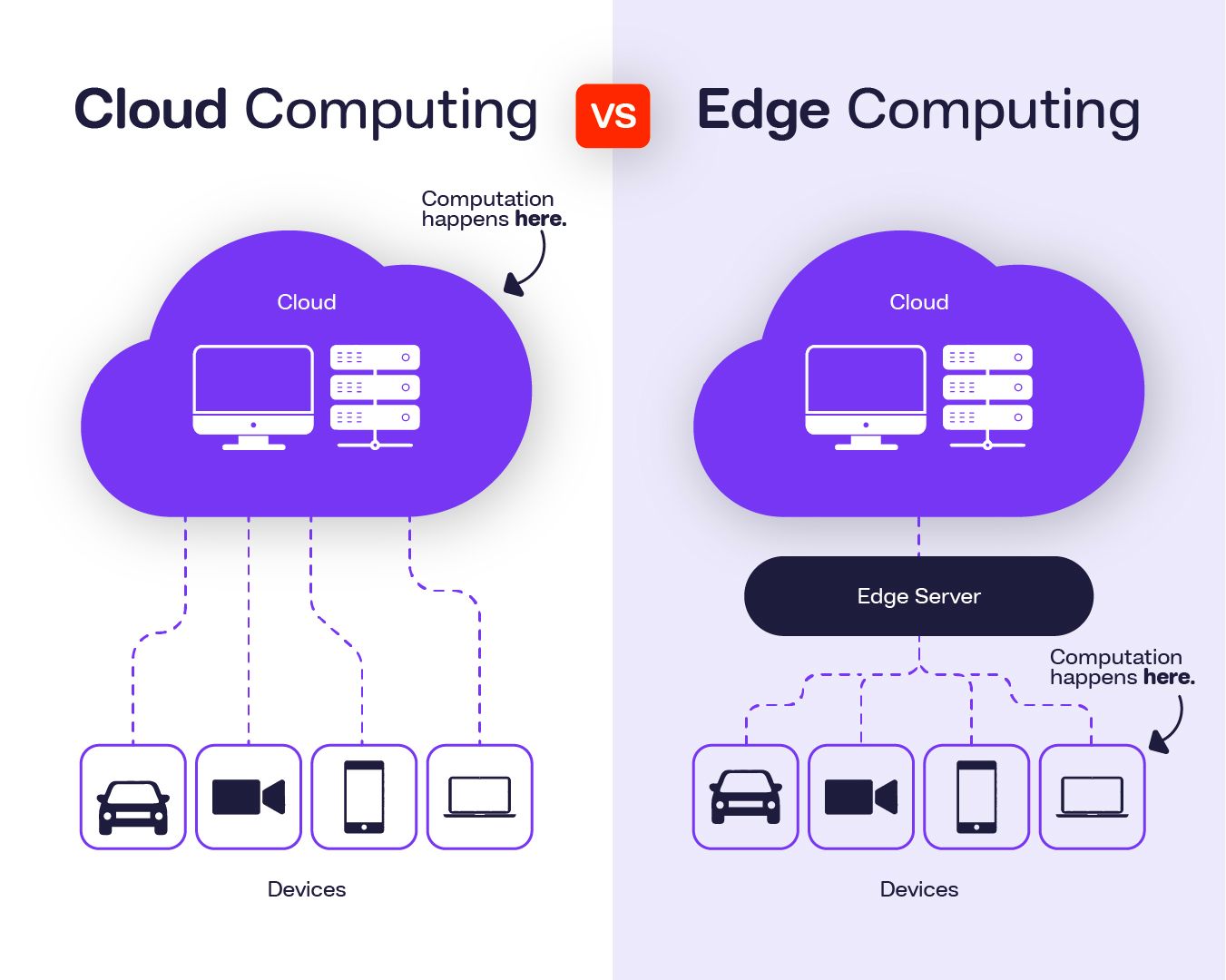
- Edge computing is a form of computing that is done on site or near a particular data source, minimizing the need for data to be processed in a remote data center.
- Edge computing can enable more effective city traffic management. Examples of this include optimizing bus frequency given fluctuations in demand, managing the opening and closing of extra lanes, and, in future, managing autonomous car flows.
- An edge device is any piece of hardware that controls data flow at the boundary between two networks. Edge devices fulfill a variety of roles, depending on what type of device they are, but they essentially serve as network entry — or exit — points.
- There are five main types of edge computing devices: IoT sensors, smart cameras, uCPE equipment, servers and processors. IoT sensors, smart cameras and uCPE equipment will reside on the customer premises, whereas servers and processors will reside in an edge computing data centre.
- In service-based industries such as the finance and e-commerce sector, edge computing devices also have roles to play. In this case, a smart phone, laptop, or tablet becomes the edge computing device.
- Edge Control:
- Edge control is an industrial automation approach in which control logic is executed locally, close to the machines, sensors and actuators being controlled. It uses devices such as programmable logic controllers (PLCs), industrial PCs or edge controllers to process local data and perform control actions with low latency and, where required, deterministic timing. By reducing dependence on remote computing systems for time-critical decisions, edge control can improve responsiveness and support the reliable operation of industrial processes. Depending on the architecture, local control may operate alongside edge analytics, supervisory systems and cloud-based services.
- Edge Devices:
- Edge devices encompass a broad range of device types, including sensors, actuators and other endpoints, as well as IoT gateways. Within a local area network (LAN), switches in the access layer — that is, those connecting end-user devices to the aggregation layer — are sometimes called edge switches.
- Edge devices act as the interface between the physical world (data generation) and digital networks.
- Hybrid Computing:
- A hybrid cloud integrates private, on-premises infrastructure with public cloud services, offering flexibility to distribute workloads between these environments. Hybrid models often incorporate edge computing, allowing organizations to run critical workloads locally at the edge while using the cloud for other tasks, thereby optimizing performance, cost, and data management for various business needs.
- HPC (Hight-Performance Computing):
- Practice of aggregating computing resources to gain performance greater than that of a single workstation, server, or computer. HPC can take the form of custom-built supercomputers or groups of individual computers called clusters.
- HPC is typically used for simulation, scientific computing, AI training, and complex modeling.
- Data Centers – Physical Infrastructure:
- A data center is a facility that centralizes an organization’s shared IT operations and equipment for the purposes of storing, processing, and disseminating data and applications. Because they house an organization’s most critical and proprietary assets, data centers are vital to the continuity of daily operations.
- Hyperscale Data Centers – Physical Infrastructure:
- The clue is in the name: hyperscale data centers are massive facilities built by companies with vast data processing and storage needs. These firms may derive their income directly from the applications or websites the equipment supports, or sell technology management services to third parties.
- Hyperscale Data Centers are typically operated by large cloud providers (e.g., hyperscalers) and designed for horizontal scalability.
- White Space and Grey Space in Data Centers – Physical Infrastructure:
- White space in a data center refers to the area where IT equipment is placed. It typically houses servers, storage, network gear, and racks.
- Gray space, on the other hand, is the area where the back-end infrastructure is located. This space is essential for supporting the IT equipment and includes areas for switchgear, UPS, transformers, chillers, and generators.
- Colocation in Data Centers – Physical Infrastructure:
- A colocation data center is a facility where businesses rent space, power, and cooling to house their own servers and networking hardware, rather than maintaining them in-house. It offers a cost-effective way to access high-level security, internet connectivity, and 24/7 technical support while retaining control of the equipment.
- Edge & Cloud Services – Integrated Architecture (Edge-to-Cloud):
- Edge services perform data processing on local devices and servers near the data source, reducing latency for time-sensitive operations, while cloud services centralize large computations and storage in remote datacenters, offering massive scalability and flexibility for general workloads.
- Most organizations use both, creating an “edge-to-cloud” architecture where edge devices handle immediate tasks, and the cloud manages large-scale data processing and complex applications, providing a seamless and efficient experience.
- Data Center Cooling Technologies:
- Air Cooling:
- Uses Computer Room Air Conditioners (CRAC) or Air Handlers (CRAH) combined with hot aisle / cold aisle containment to circulate cold air through the facility and manage airflow separation to improve cooling efficiency.
- It is widely used and cost-effective, but becomes inefficient at very high rack power densities (typically >20–30 kW per rack) due to the low heat capacity and thermal conductivity of air.
- Liquid Cooling:
- Liquid cooling uses water or dielectric fluids to remove heat more efficiently than air, enabling higher power densities required for AI and HPC workloads because liquids have significantly higher heat transfer capacity than air.
- It can be implemented at different levels: chip-level (DTC), rack-level (RDHx), or full immersion cooling.
- Direct-to-Chip (DTC) Cooling:
- A Direct-to-Chip (DTC) cooling system is a liquid-cooling technology used to cool high-performance computer chips—such as CPUs, GPUs, and accelerators—by bringing a liquid coolant directly to the chip surface through a cold plate (heat exchanger attached to the chip).
- It is one of the most efficient and fastest-growing cooling methods in modern data centers, especially in AI, HPC (High-Performance Computing), and high-density server environments because it removes heat at the source before it enters the air stream.
- RDHX (Rear Door Heat Exchanger) – Rack-level Heat Exchange:
- A Rear Door Heat Exchanger (RDHx) is a rack-mounted liquid-to-air heat exchanger installed on the rear of an IT rack.
- Chilled water flows through the door, and hot air from servers passes through it, removing heat before it enters the data center room (air-neutral or near-zero heat rejection to white space) thereby significantly reducing the load on room-level cooling systems.
- Can be passive (no fans) or active (with fans)
- Enables high-density racks without requiring full liquid cooling at the chip level (intermediate solution between air cooling and DTC).
- HDU (Heat Dissipation Unit):
- Unlike a CDU that transfers heat to the facility water loop, a Heat Dissipation Unit (HDU) rejects heat from the server rack to the data center air (white space) using a liquid-to-air heat exchanger.
- This means heat is ultimately removed by room-level cooling systems (CRAC/CRAH), making it a hybrid approach between air and liquid cooling (liquid used locally, air used for final heat rejection).
- CDU (Coolant Distribution Unit):
- A coolant distribution unit contains pumps, heat exchangers, valves, and control systems that circulate coolant through a network of pipes, distributing it to servers or racks in a secondary (IT) cooling loop.
- Coolant Distribution Units are essential in liquid-cooled data centers, providing:
- flow control
- pressure regulation
- temperature management
- hydraulic separation between facility loop and IT loop.
- They interface between facility water (building loop) and IT cooling loops, ensuring safe and controlled heat transfer and preventing contamination or pressure mismatch between loops.
- Chillers:
- Mechanical systems that remove heat from a building’s liquid coolant (typically water) and transfer it to the outside environment (via air or water loops).
- Unlike systems that cool air directly, chillers generate chilled water that circulates through cooling systems such as CDUs, CRAH/CRAC units, or heat exchangers.
- They are essential for cooling large-scale data centers and industrial facilities, especially where free cooling is not sufficient or ambient conditions are too warm.
- Condensors:
- A condenser is a heat exchanger that cools a gas or vapor, causing it to condense into a liquid, releasing latent heat.
- In cooling systems, condensers are typically part of chiller or refrigeration cycles, where they reject heat to ambient air or water (e.g., cooling towers or dry coolers) and represent the final heat rejection stage of the refrigeration cycle.
- Technology Cooling System (TCS):
- Non-standard / umbrella term that refers to an integrated cooling architecture used to manage heat in technology environments (e.g., data centers, industrial systems).
- A TCS may include:
- Chillers
- CDUs
- Pumps and piping
- Heat exchangers
- Control systems
- It effectively represents the complete thermal management system from IT equipment to final heat rejection.
- Cooling Skids:
- Cooling skids are self-contained, pre-engineered industrial systems mounted on a structural steel frame (skid) used to manage temperature by circulating chilled fluids.
- They integrate all necessary components—including heat exchangers, pumps, piping, valves, and controls—into a single mobile or modular unit to enable rapid deployment and standardized installation.
- Main Types of Cooling Skids
- Chiller Skids: Include active refrigeration compressors to drop temperatures below ambient levels.
- Fluid Cooler Skids: Use ambient air or tower water to cool process fluids without active refrigeration (often used for free cooling).
- Heat Exchanger Skids: Separate two fluid loops to transfer heat safely between closed and open systems (similar function to CDU at system scale).
- Air Cooling:
- Earning Per Share (EPS):
- Company’s net income attributable to common shareholders (net income minus preferred dividends) divided by the weighted average number of common shares outstanding.
- The resulting number serves as an indicator of a company’s profitability on a per-share basis. It is common for a company to report adjusted EPS (e.g., excluding extraordinary or non-recurring items) and diluted EPS (including potential shares from options, convertible debt, or warrants).
- The higher a company’s EPS, the more profitable it is considered to be (although EPS should always be analyzed in context—e.g., growth, industry, and capital structure).
- Earnings per share value is calculated as net income divided by available shares. A more refined calculation adjusts the numerator and denominator for potential dilution (stock options, convertible securities, warrants).
- The numerator of the equation is also more relevant if it is adjusted for continuing operations (excluding one-off or discontinued activities).
- Dividend Per Share (DPS):
- DPS is the actual portion of those earnings distributed to shareholders as dividends (cash or sometimes stock dividends).
- The actual cash paid out by the company to an investor for each share owned, calculated as:
Total dividends paid to common shareholders / Number of common shares outstanding (or weighted average shares). - High-growth companies often have a high EPS but a DPS of $0 because they reinvest all profits. Established, mature companies tend to pay out a portion of their earnings (payout ratio) as a DPS.
- A company’s DPS can exceed EPS in a given year (e.g., using retained earnings or debt), but this is generally not sustainable over the long term.
- => EPS vs. DPS:
- EPS measures how much profit a company generates per share, while DPS shows how much of that profit is actually distributed to shareholders. EPS reflects profitability, whereas DPS reflects distribution policy.
- System Integrator:
- A systems integrator is an individual or business that designs, assembles, and integrates complete systems for clients by combining hardware, software, networking, and storage products from multiple vendors into a unified, fully functional solution.
- Using a systems integrator, a company can align commercial off-the-shelf (COTS) components and software to meet key business goals, reducing complexity, risk, and time-to-deployment, as opposed to more expensive, fully customized implementations that may require original programming or manufacturing unique components (although integrators may still perform customization, configuration, and engineering when required).
- Hiring a systems integrator to combine various subsystems into an integrated offering can also simplify contracting and vendor management for the customer, who would otherwise need to purchase each subsystem separately and work with multiple vendors.
- Systems integration is, thus, both a procurement method and a technical activity covering system design, implementation, testing, commissioning, and often ongoing support/maintenance.
- System integrators also ensure interoperability between subsystems, manage interfaces, and take responsibility for overall system performance.
- OEM vs. MRO vs. Integrated Supply:
- OEM (Original Equipment Manufacturer):
- An Original Equipment Manufacturer (OEM) is a company that manufactures equipment, products, or components, either for sale under its own brand or for incorporation into products marketed by another company. Depending on the industry and business relationship, an OEM may design the product, manufacture it to another company’s specifications, or perform both activities.
- OEM parts are parts supplied by the original equipment manufacturer or produced under its authority or specifications, depending on the applicable industry terminology. They may be used in original equipment production or supplied as replacement parts. Aftermarket parts are replacement components supplied through the aftermarket and may be produced by the OEM itself or by independent manufacturers; therefore, OEM and aftermarket are not always mutually exclusive categories.
- MRO (Maintenance, Repair and Operations):
- MRO refers to the activities, materials, equipment, and supplies required to maintain, repair, and operate an organization’s facilities, equipment, and production processes.
- MRO supplies generally support operations rather than becoming part of the finished product. They are often classified as indirect materials or operational consumables, although classification varies by industry and procurement system.
- Examples of MRO items include:
- Maintenance tools and equipment
- Replacement and spare parts
- Personal protective equipment (PPE)
- Cleaning and facility supplies
- Lubricants, fasteners, and other maintenance consumables
- Office and operational consumables, where included in the organization’s MRO scope
- Integrated Supply:
- Integrated Supply is a supply-management model in which a service provider consolidates or coordinates the procurement, inventory management, and delivery of MRO products and related services for a customer. It aims to simplify purchasing, improve supply availability, reduce administrative effort, and optimize inventory and total cost of ownership (TCO).
- Depending on the agreement, the service may include:
- Consolidated sourcing and supplier management
- Inventory planning, replenishment, and vendor-managed inventory (VMI)
- On-site or embedded supply-management personnel
- Integration between supplier and customer systems, such as ERP and inventory-management platforms
- Data sharing on inventory levels, consumption, orders, and replenishment
- For example, an integrated supply provider may coordinate several MRO product categories and use inventory data from the customer’s systems to replenish stock according to agreed rules and service levels. The level of integration and automation depends on the service contract and implementation.
- => OEM vs. MRO vs. Integrated Supply:
- OEM: A manufacturer or supplier of original equipment, products, or components.
- MRO: The activities and supplies required to maintain and operate equipment and facilities.
- Integrated Supply: A model for coordinating and managing the sourcing, inventory, and delivery of supplies and related services.
- OEM (Original Equipment Manufacturer):
- EBIT:
- Earnings Before Interest and Taxes (EBIT) is a measure of a company’s operating profitability before accounting for interest expenses and income taxes. It is also known as operating profit and shows how effectively a company’s core business is generating profit from its operations.
- EBITA:
- Earnings before interest, taxes, and amortization (EBITA) is a measure of company profitability used by investors. It is helpful for comparing one company to another in the same line of business.
- EBITA = Net income + Interest + Taxes + Amortization
- EBITDA:
- Earnings before interest, taxes, depreciation, and amortization (EBITDA) is an alternate measure of profitability to net income. By including depreciation and amortization as well as taxes and debt payment costs, EBITDA attempts to represent the cash profit generated by the company’s operations.
- EBITDA and EBITA are both measures of profitability. The difference is that EBITDA also excludes depreciation.
- EBITDA is the more commonly used measure because it adds depreciation—the accounting practice of recording the reduced value of a company’s tangible assets over time—to the list of factors.
- EV/EBITDA (Enterprise Multiple):
- Enterprise multiple, also known as the EV-to-EBITDA multiple, is a ratio used to determine the value of a company.
- It is computed by dividing enterprise value by EBITDA.
- The enterprise multiple takes into account a company’s debt and cash levels in addition to its stock price and relates that value to the firm’s cash profitability.
- Enterprise multiples can vary depending on the industry.
- Higher enterprise multiples are expected in high-growth industries and lower multiples in industries with slow growth.