
Siemens – Siemens breaks ground on future corporate headquarters in Madrid
- Located in Las Tablas (Madrid), the new Siemens campus will offer 24,000 square meters of space, marking a major milestone in Siemens’
- The campus is designed to set new standards in digitalization, sustainability and employee well-being, while showcasing Siemens’ own technologies.
- The groundbreaking ceremony was attended by the Mayor of Madrid José Luis Martínez-Almeida; the Regional Minister of Economy Rocío Albert, as well as Siemens representatives including Veronika Bienert, CFO and Member of the Managing Board of Siemens AG, and Fernando Silva, President and CEO of Siemens Spain.
Siemens, a leading global technology company, celebrated the groundbreaking ceremony for its future corporate headquarters in Spain, located in Las Tablas, Madrid. The event marks the start of construction of a new campus that will embody Siemens’ vision of sustainable, digital and people-centered workplaces while reinforcing the company’s long-standing commitment to Spain. The ceremony was attended by public officials, including José Luis Martínez-Almeida, Mayor of Madrid, and Rocío Albert, Regional Minister of Economy, Finance and Employment, as well as Siemens representatives including Veronika Bienert, CFO and Member of the Managing Board of Siemens AG, and Fernando Silva, President and CEO of Siemens Spain.
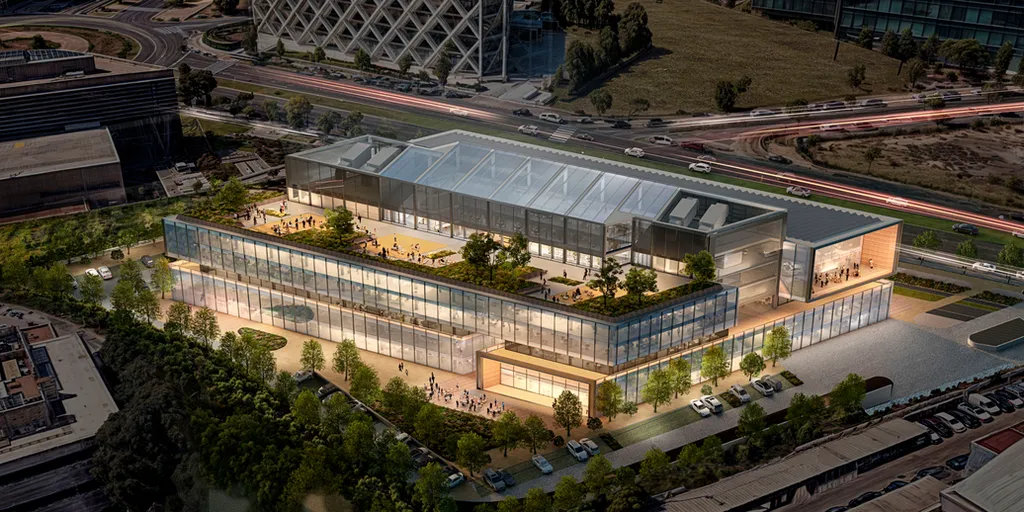
A bird’s-eye view of the new Siemens headquarters in Madrid (rendering)
During the ceremony Siemens also announced that Ferrovial, one of the world’s leading infrastructure companies, has been awarded for the construction of the new headquarters. Ferrovial will bring its experience in complex building projects and its commitment to safety, quality and sustainability to the project. The future headquarters will provide approximately 24,000 square meters of office and service space, designed by La-Hoz Arquitectura. The site is conceived as a multi-tenant campus with shared amenities that foster collaboration, innovation and well-being.The project is also envisioned as a vibrant meeting place for companies, customers, partners and the wider innovation ecosystem. With capacity for more than 3,000 people, including around 2,600 Siemens employees, the new campus is expected to be fully operational by the beginning of 2029.
”Today’s groundbreaking ceremony is much more than the start of a construction project. It is a clear demonstration of Siemens’ long-term commitment to Spain, where we have been present for over 130 years. Our new headquarters will combine the real and digital worlds in a unique way, creating a living showcase for sustainable and intelligent infrastructure,” said Veronika Bienert, CFO and Member of the Managing Board of Siemens AG.

”The new Siemens headquarters will help strengthen Madrid’s position as a leading hub for innovation, technology and talent, creating an environment that fosters collaboration and the development of new solutions. With this project, Siemens is reinforcing its commitment to Madrid and supporting the city’s continued growth as one of Europe’s leading business and technology hubs, while driving the digital and sustainable transformation from Madrid,” said Fernando Silva, President and CEO of Siemens in Spain.
Strategic location & LEED Platinum
Located in the Las Tablas neighborhood of Madrid, close to the Madrid Nuevo Norte development, the new campus will be situated in one of Madrid’s fastest-growing business districts and serve as a showcase for Siemens technologies. The building will feature integrated electrification systems, power distribution, fire safety solutions, electric vehicle charging infrastructure and advanced building automation. Powered by Siemens’ Building X platform, the campus will operate on a unified digital data layer, enabling greater transparency, intelligent decision-making and continuous optimization throughout the building’s lifecycle.
Designed by La-Hoz Arquitectura, the building is targeting LEED Platinum certification, as well as WELL, Wired Score and Smart Score certifications. It is designed to enable carbon-neutral operation and will be partially powered by on-site photovoltaic installations and high-efficiency heat pump systems. Open workplace concepts, green outdoor spaces, a restaurant, café and fitness facilities will create an environment that promotes collaboration, inclusion and employee well-being.
The campus will offer a wide range of amenities, including an employee restaurant, coworking areas and fully equipped sports facilities with a gym. A shared collaboration space in the atrium will further foster interaction, networking and the exchange of ideas. Flexible office concepts, smart campus technologies and a fully digitalized infrastructure will create a future-oriented work environment that reflects Siemens’ values while supporting innovation, collaboration and employee well-being. The new campus will also feature an integrated mobility concept, leveraging its connections to the surroundings and supporting sustainable mobility solutions. Its design will promote an inclusive working environment and provide services aimed at supporting employees’ work-life balance.
Siemens has been present in Spain for more than 130 years. During this time, the company has contributed to the country’s digitalization, sustainability, and economic development through strategic projects across industries including manufacturing, transportation, energy and infrastructure.
SourceSiemens
EMR Analysis
More information on Siemens AG: See full profile on EMR Executive Services
More information on Dr. Roland Busch (President and Chief Executive Officer, Siemens AG): See full profile on EMR Executive Services
More information on Veronika Bienert (Member of the Managing Board and Chief Financial Officer, Siemens AG): See full profile on EMR Executive Services
More information on “ONE Tech Company” Program by Siemens AG: See full profile on EMR Executive Services
More information on Fernando Silva (President and Chief Executive Officer, Siemens Spain, Siemens AG): See the full profile on EMR Executive Services
More information on Siemens Smart Infrastructure (SI) by Siemens AG: See the full profile on EMR Executive Services
More information on Dr. Peter Körte (Member of the Managing Board and Chief Technology and Chief Strategy Officer with responsibility for Siemens Xcelerator and Siemens Advanta, Siemens AG + Member of the Managing Board and Chief Executive Officer, Siemens Smart Infrastructure (SI), Siemens AG): See the full profile on EMR Executive Services
More information on the Buildings Business Unit by Siemens Smart Infrastructure (SI) by Siemens AG: https://www.siemens.com/global/en/products/buildings.html + The unit is a newly formed business unit which brings together all Siemens’ buildings-related businesses into one entity, effective October 1, 2024. With a combined portfolio of products, software and services, the Buildings Business Unit is a technology partner for digital transformation, focused on reliable and cost-efficient building operations, decarbonization and energy efficiency, as well as successful business operations for customers across wide-ranging industries.
The Buildings Business Unit works with customers and with an expanding ecosystem of partners across more than 60 countries and in key industries, including healthcare, data centers, higher education, commercial real estate, pharmaceutical and life science, and food and beverage. The business unit’s portfolio includes products for building control, fire safety and security, automation and operation, data-driven services, decarbonization programs and software, including Building X, Siemens’ scalable digital building platform to digitalize, manage and optimize building operations.
More information on Susanne Seitz (Chief Executive Officer, Buildings Business Unit, Siemens Smart Infrastructure (SI), Siemens AG + Member of the Supervisory Board, Siemens Quatar, Siemens AG + Member of the Board of Directors, Siemens Australia / New Zealand, Siemens AG): See the full profile on EMR Executive Services
More information on Building X by Siemens: https://www.siemens.com/us/en/products/buildingtechnologies/building-x.html + Building X – Cloud-Based Smart Building Connectivity Platform. A scalable digital building platform to digitalize, manage and optimize building operations, allowing for enhanced user experience, increased performance and improved sustainability.
More information on Pedro Sánchez (Prime Minister, Spain): https://www.lamoncloa.gob.es/lang/en/presidente/biografia/paginas/index.aspx + https://www.linkedin.com/in/pedrosanchezcastejon/
More information on Rocío Albert López-Ibor (Regional Minister of Economy, Spain): https://www.comunidad.madrid/transparencia/persona/rocio-albert-lopez-ibor-1 + https://www.linkedin.com/in/rocioalbert/
More information on José Luis Martínez-Almeida (Mayor, Madrid, Spain): https://www.madrid.es/portales/munimadrid/es/Inicio/El-Ayuntamiento?vgnextfmt=default&vgnextchannel=ce069e242ab26010VgnVCM100000dc0ca8c0RCRD + https://www.linkedin.com/in/jos%C3%A9-luis-mart%C3%ADnez-almeida-navasq%C3%BC%C3%A9s-0b326381/
More information on Ferrovial: https://www.ferrovial.com/en/ + Ferrovial is one of the world’s leading infrastructure operators committed to developing sustainable solutions.
Our company has more than 22,609 employees and a global presence in more than 15 markets. We are triple listed on Euronext Amsterdam, the Spanish Stock Exchanges and United States’ Nasdaq and we are members of Spain’s blue-chip IBEX 35 index. We are included in globally recognized sustainability indices such as the Dow Jones Best in Class Index (formerly the Dow Jones Sustainability Index), and apply the principles of the United Nations Global Compact—adopted by the Company in 2002—across all our operations.
Our company’s activity is carried out through these Business Lines:
- Highways: enhance mobility and relieve traffic congestion by financing, building, operating, and maintaining highway infrastructure in rapidly growing communities.
- Airports: leverage our operational expertise in the aviation industry to facilitate air transport growth and improve connectivity and the passenger experience.
- Energy: provide innovative solutions for the development, construction, financing, and operation of renewable energy generation, storage, and transmission infrastructure.
- Construction: develop infrastructure projects, supporting the company’s concession business with end-to-end technical, engineering, and production capabilities.
More information on Ignacio Madridejos (Chief Executive Officer, Ferrovial): https://www.ferrovial.com/en/company/about-us/management-committee/ + https://www.linkedin.com/in/ignacio-madridejos/
More information on RAFAEL DE LA-HOZ Arquitectos: https://www.rafaeldelahoz.com/ + RAFAEL DE LA-HOZ is a multi-disciplinary International Architecture Practice based in Madrid, Spain. Founded in 1.920, it is one of the most prestigious and longest standing architecture firms in the world. Experience and knowledge acquired over all these years have enabled the successful completion of more than 500 projects in 20 different countries. We are renowned for our outstanding architecture and our steadfast commitment to design excellence, innovation, and sustainability.
More information on Rafael de La-Hoz Castanys (Director, RAFAEL DE LA-HOZ Arquitectos): https://www.rafaeldelahoz.com/
More information on Hugo Berenguer (Partner and Chief Executive Officer, RAFAEL DE LA-HOZ Arquitectos): https://www.linkedin.com/in/hugo-berenguer-a43b8516/
More information on the U.S. Green Building Council (USGBC): https://www.usgbc.org/ + The U.S. Green Building Council is committed to transforming buildings and communities to advance human and environmental well-being.
Our vision is that buildings and communities will regenerate and sustain the health and vitality of all life within a generation. Our mission is to transform the way buildings and communities are designed, built and operated, enabling an environmentally and socially responsible, healthy, and prosperous environment that improves the quality of life.
We are a diverse group of builders and environmentalists, corporations and nonprofits, teachers and students, lawmakers and citizens. Today we are represented by thousands of member organizations and more than 200,000 LEED professionals that share the vision of a sustainable built environment for all within the next generation.
More information on Peter Templeton (President and Chief Executive Officer, USGBC): https://www.usgbc.org/people/peter-templeton/0011450953 + https://www.linkedin.com/in/peter-templeton/
More information on LEED Certification by the U.S. Green Building Council: https://www.usgbc.org/leed + LEED (Leadership in Energy and Environmental Design) is the world’s most widely used green building rating system. LEED certification provides a framework for healthy, highly efficient, and cost-saving green buildings, which offer environmental, social and governance benefits. LEED certification is a globally recognized symbol of sustainability achievement, and it is backed by an entire industry of committed organizations and individuals paving the way for market transformation.
LEED is for all project types and phases, including new construction, core and shell, interior fit-outs, operations and maintenance, neighborhoods and cities.
LEED is holistic. As a framework, it addresses everything from energy and water use to materials selection, managing waste and indoor environmental quality through a series of credit categories tailored for each rating system. To achieve LEED certification, a project must first complete all prerequisites and then earn points by selecting and satisfying credit requirements. Projects go through a verification and review process by GBCI and are awarded points that correspond to a level of LEED certification: Certified, Silver, Gold and Platinum.
- Platinum – 80+ points earned
- Gold – 60-79 points earned
- Silver – 50-59 points earned
- Certified – 40-49 points earned
LEED v5 is the newest version of LEED. It marks a transformative milestone in the built environment’s alignment with a low-carbon future and addresses critical imperatives such as equity, health, ecosystems and resilience.
LEED is a holistic system that doesn’t simply focus on one element of a building such as energy, water or health, rather it looks at the big picture factoring in all of the critical elements that work together to create the best building possible. In fact, 35% of the credits in LEED are related to climate change, 20% of the credits directly impact human health, 15% of the credits impact water resources, 10% of the credits affect biodiversity, 10% of the credits relate to the green economy, 5% of the credits impact community and 5% of the credits impact natural resources.
More information on the IWBI (International WELL Building Institute): https://www.wellcertified.com/about-iwbi/ + The International WELL Building Institute (IWBI) is a public benefit corporation and the global authority for transforming health and well-being in buildings, organizations and communities. In pursuit of its public-health mission, IWBI mobilizes its community through the development and administration of the WELL Building Standard (WELL), WELL for residential, WELL Community Standard, its WELL ratings and management of the WELL AP credential. IWBI also translates research into practice, develops educational resources and advocates for policies that promote people-first places for everyone.
We’re leading a global movement to transform health and well-being with our people-first approach to buildings, organizations and communities. We do this using our WELL Building Standard (WELL), a roadmap for creating and certifying spaces that advance human health and well-being.
Developed over 10 years and backed by the latest scientific research, WELL sets pathways for accomplishing health-first factors that help every one of us to do our best work and be our best selves by supporting our physical and mental health across 10 core concepts. Rigorous performance standards for design interventions, operational protocols and company-wide practices are verified by a third party.
WELL works at any scale, from a single interior space to an entire organization.
More information on Rachel Hodgdon (President and Chief Executive Officer, IWBI): https://www.wellcertified.com/about-iwbi/ + https://www.linkedin.com/in/rachelgutter/
More information on WELL Performance Rating™: https://www.wellcertified.com/performance/ + The WELL Performance Rating helps organizations implement best practices for continuous monitoring and performance across key IEQ metrics related to air quality, water quality, thermal comfort, acoustics, lighting and occupant experience. Comparing building performance to global benchmarks for health can help organizations shift the way they do business for the better.
The WELL Performance seal demonstrates your commitment to creating healthy and high-performing buildings.
The WELL Performance Rating can be earned as a standalone designation or a milestone toward a single-building certification or enterprise commitment.
More information on WELL Certification: https://www.wellcertified.com/certification/v2/ + The WELL Standard is a library of over 500 evidence-based, design, policy and operational strategies that, when implemented, can improve the health and well-being of your people.
- Make the air better to breathe
- Ensure the water is safe to drink
- Mitigate burnout
- Boost sleep and cognitive well-being
- Foster a culture of health
- Select healthier materials
- Advance inclusion and belonging
- Encourage daily movement
- Address the needs of hybrid, remote and in-person workforces
The WELL Building Standard™ version 2 (WELL v2™) is a vehicle for buildings and organizations to deliver more thoughtful and intentional spaces that enhance human health and well-being. WELL v2 includes a set of strategies—backed by the latest scientific research—that aim to advance human health through design interventions and operational protocols and policies and foster a culture of health and well-being. Built upon the pioneering foundation of the first version of the WELL Building Standard (WELL v1), WELL v2 draws expertise from a diverse community of WELL users, practitioners, public health professionals and building scientists around the world.
More information on WiredScore Certification: https://wiredscore.com/ + WiredScore is founded upon the idea that all buildings can, and will, be better connected.
Back in 2013, Arie Barendrecht, WiredScore’s founder, secured endorsement from Mayor Bloomberg, and support from leaders in real estate, technology and telecommunications, to launch WiredScore – and the vision then remains the same as it is today:
To make the world’s buildings better connected, enabling a more collaborative, innovative and dynamic future.
WiredScore is the leading global certification body for digital connectivity and smart building performance. We assess, improve, benchmark and promote the technology experience that underpins buildings and mixed-use neighborhoods worldwide.
At our core, we bring transparency to a building’s digital capability. Through independent certification, we evaluate the resilience, capacity and quality of its connectivity infrastructure, giving owners, developers and occupiers a clear, trusted benchmark.
We don’t just assess what exists today. We work with property teams to strengthen infrastructure, reduce operational risk and future-proof assets – ensuring buildings can support evolving technologies, rising occupier expectations and the increasing reliance on digital systems across every sector.
More information on Arie Barendrecht (Founder and Chairman, WiredScore): https://wiredscore.com/about-us/+ https://www.linkedin.com/in/abarendrecht/
More information on William Newton (Chief Executive Officer, WiredScore): https://wiredscore.com/blog/2026/03/25/wiredscore-has-joined-forces-with-meter/ + https://www.linkedin.com/in/william-newton111/
EMR Additional Notes:
- Carbon Dioxide (CO2):
- The primary greenhouse gas emitted through human activities. Carbon dioxide enters the atmosphere through the burning of fossil fuels (coal, natural gas, and oil), solid waste, biomass (e.g. wood), and also as a result of certain industrial chemical reactions (e.g. cement production).
- Carbon dioxide is removed from the atmosphere (or “sequestered”) when it is absorbed by plants as part of the biological carbon cycle and through ocean absorption and geological processes. In climate accounting, however, “carbon sequestration” generally refers to the removal and storage of carbon in a reservoir; natural uptake through the carbon cycle is not necessarily classified as anthropogenic carbon dioxide removal (CDR).
- CO₂ is naturally part of the carbon cycle, but human activities have significantly increased its concentration in the atmosphere.
- Biogenic Carbon Dioxide (CO2):
- Biogenic CO₂ and fossil-derived CO₂ are chemically identical molecules.
- The distinction is not chemical, but source-based:
- Biogenic carbon: CO₂ released from organic materials such as plants, wood, soil, and biomass that were recently part of the natural carbon cycle. Its accounting treatment depends on the applicable carbon-accounting methodology and whether the carbon is considered part of the contemporary biogenic carbon cycle.
- Fossil carbon: CO₂ released from fossil fuels (coal, oil, gas), which were stored underground for millions of years. This introduces additional carbon into the active atmospheric carbon cycle and is therefore generally treated as fossil CO₂ emissions.
- CO2e (Carbon Dioxide Equivalent):
- CO₂e means “carbon dioxide equivalent”.
- It is a standardized climate metric used to express the total climate impact of multiple greenhouse gases in a single standardized unit.
- CO₂e converts all greenhouse gases (such as methane and nitrous oxide) into the amount of CO₂ that would have the same integrated radiative forcing / climate impact over a defined time period using a specified Global Warming Potential (GWP) value.
- Formula: CO₂e = mass of gas × Global Warming Potential (GWP)
- Carbon dioxide equivalents are commonly expressed as million metric tonnes of carbon dioxide equivalents, abbreviated as MtCO₂e or Mt CO₂-eq; “MMTCDE” is used in some datasets but is not the preferred general notation.
- The carbon dioxide equivalent for a gas is derived by multiplying the tonnes of the gas by the associated GWP: CO₂e = mass of gas × GWP.
- For example, the GWP for methane is approximately 27–30 under IPCC AR6 depending on the methane source and accounting convention, while the 100-year GWP for nitrous oxide is 273. This means that emissions of 1 million metric tonnes of methane and nitrous oxide respectively would correspond to approximately 27–30 and 273 million metric tonnes of CO₂e under those GWP assumptions.
- Carbon Footprint:
- There is no universally agreed definition of what a carbon footprint is.
- The most widely used definition (GHG Protocol) describes it as: “The total set of greenhouse gas (GHG) emissions caused directly and indirectly through an organization’s operations and value chain.” The GHG Protocol generally refers to corporate GHG inventories and Scope 1, 2 and 3 emissions rather than prescribing one universal definition of “carbon footprint.”
- A carbon footprint is the total amount of greenhouse gas (GHG) emissions caused directly and indirectly by an individual, organization, product, or activity.
- It is typically measured in CO₂e.
- Decarbonization:
- Reduction of carbon dioxide emissions through the use of low-carbon energy sources and improved efficiency, with the goal of reducing overall greenhouse gas emissions. More broadly, decarbonization refers to reducing the carbon intensity and/or absolute greenhouse-gas emissions of an economy, sector, organization, product, or process, potentially including CO₂ removal for residual emissions.
- Decarbonization typically refers to system-wide transition, not only emission reduction at a single source.
- Carbon Credits or Carbon Offsets:
- Carbon credits are tradable certificates representing the verified reduction or removal of one metric tonne of CO₂e, generally generated by a specific project or activity; terminology and quality criteria vary between carbon markets.
- They are part of cap-and-trade systems, where:
- A cap limits total emissions
- Companies receive or buy emission allowances
- Excess allowances can be traded
- Offsets are often linked to external projects that reduce or remove emissions (e.g. reforestation, renewable energy). A carbon offset is generally a credit representing a reduction or removal outside the entity’s own emissions boundary that may be used to compensate for emissions, subject to the applicable programme or claim rules.
- Carbon credits and emission allowances should not be treated as synonymous: an allowance is a regulated authorization to emit under a cap-and-trade system, whereas a credit/offset generally represents a quantified emission reduction or removal.
- Carbon Capture and Storage (CCS) – Carbon Capture, Utilisation and Storage (CCUS):
- CCS involves capturing CO₂ emissions from industrial processes or other concentrated sources and storing them permanently in geological formations (e.g. underground reservoirs).
- CCUS adds a utilization step, where captured CO₂ is reused as a feedstock (e.g. fuels, chemicals, building materials). More precisely, CCUS refers to carbon capture followed by utilization and/or storage; utilization does not necessarily result in permanent carbon storage.
- CCS = capture + geological storage; CCUS = capture + utilization and/or storage.
- Carbon Dioxide Removal (CDR) or Durable Carbon Removal:
- CDR refers to methods that actively remove CO₂ from the atmosphere and store it for long periods in geological, biological, or mineral form. CDR specifically requires an anthropogenic activity that removes atmospheric CO₂ and durably stores it in geological, terrestrial, ocean, or product reservoirs.
- Examples include:
- Direct Air Capture (DAC)
- Bioenergy with Carbon Capture (BECCS)
- Enhanced Rock Weathering (ERW)
- CDR creates net negative emissions when removal exceeds emissions. A CDR activity itself can provide a net removal only when the total emissions associated with the removal process are lower than the amount of CO₂ durably removed and stored.
- Direct Air Capture (DAC):
- Technologies that extract CO2 directly from the atmosphere at any location, unlike carbon capture which is generally carried out at the point of emissions, such as a steel plant. DAC can capture CO₂ from ambient air regardless of where the original emissions occurred; it is distinct from point-source carbon capture.
- Constraints like costs and energy requirements as well as the potential for pollution make DAC a less desirable option for CO2 reduction. Its larger land footprint when compared to other mitigation strategies like carbon capture and storage systems (CCS) also put it at a disadvantage. However, DAC is a potential carbon-removal technology rather than simply a CO₂-reduction technology, and its climate benefit depends strongly on the energy source, capture efficiency, permanence of storage, and lifecycle emissions.
- Direct Air Capture and Storage (DACCS):
- Climate technology that removes carbon dioxide (CO2) directly from the ambient atmosphere using large fans and chemical processes to bind with the CO2. The captured CO₂ is then transported and durably stored, typically in geological formations.
- DACCS is therefore a specific form of CDR: DAC + durable CO₂ storage.
- Bioenergy with Carbon Capture and Storage (BECCS):
- Technology that generates energy from biomass while capturing and storing the resulting CO₂.
- Because biomass absorbs CO₂ while growing, BECCS can result in net negative emissions. It can result in net negative emissions when the full lifecycle emissions—including biomass production, harvesting, transport, processing, energy use, and capture/storage—are sufficiently lower than the amount of biogenic CO₂ durably removed from the atmosphere.
- Enhanced Rock Weathering (ERW):
- Carbon dioxide removal (CDR) technique that accelerates the natural process of rock weathering by grinding silicate rocks into dust and spreading it on land, typically agricultural fields. This process enhances reactions with water and atmospheric CO₂, converting dissolved carbon into bicarbonate and, ultimately, carbonate minerals or transporting dissolved inorganic carbon to aquatic systems, where it can be stored over long timescales.
- Its effectiveness and permanence depend on rock type, particle size, weathering rates, transport pathways, soil and water chemistry, and the emissions associated with mining, grinding, and transporting the rock.
- Limits of Carbon Dioxide Storage:
- Carbon storage is not endless; the Earth’s capacity for permanently storing vast amounts of captured carbon, particularly in geological formations, is limited, potentially reaching a critical limit of 1,460 gigatonnes at around 2200, though storage durations vary significantly depending on the method, from decades for some biological methods to potentially millions of years for others like mineralization. Estimates of geological storage capacity vary widely and depend on geology, reservoir characteristics, storage efficiency, infrastructure, economics, regulation, monitoring, and permanence.
- While some methods offer very long-term storage, the sheer volume needed to meet climate targets requires scaling up storage significantly beyond current capacity, raising concerns about the available volume over time. The practical constraint is therefore better described as the need to develop sufficient safe, permanent, economically and technically accessible storage capacity rather than a single known global physical limit.
- Carbon Impregnation:
- Carbon impregnation is the process of treating activated carbon with chemical agents (such as metals, acids, or bases) to enhance its ability to adsorb specific, hard-to-remove pollutants. By loading substances like silver, sulfur, or potassium hydroxide into its pores, this material combines physical adsorption with chemical reaction for improved, targeted filtration in water and air. This is a materials engineering process, not a climate accounting concept.
- Global Warming:
- Global warming is the long-term heating of Earth’s climate system observed since the pre-industrial period (between 1850 and 1900) due to human activities, primarily fossil fuel burning, which increases heat-trapping greenhouse gas levels in Earth’s atmosphere. Global warming refers specifically to the long-term increase in Earth’s average surface temperature; climate change is the broader term encompassing associated changes in climate systems, including precipitation, extremes, sea level, and ecosystems.
- Global Warming Potential (GWP):
- A measure of how much heat a greenhouse gas contributes to climate warming relative to CO₂ over a specific time period (commonly 100 years).
- CO₂ has a GWP of 1.
- GWP is the scientific basis for converting gases into CO₂e.
- GWP was developed to allow comparisons of the global warming impacts of different gases. The numerical GWP depends on the selected IPCC assessment, time horizon, and, for some gases such as methane, the emission source and accounting convention.
- Greenhouse Gas (GHG):
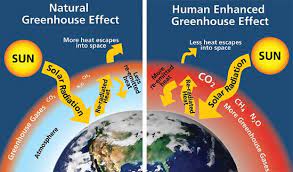
- Any gas that absorbs and emits infrared radiation in the atmosphere, contributing to the greenhouse effect.
- Main GHGs include:
- CO₂
- Methane (CH₄)
- Nitrous oxide (N₂O)
- Fluorinated gases such as HFCs, PFCs, SF₆ and NF₃
- Water vapor is a GHG but is not directly controlled by human emissions at scale. It is primarily a feedback in the climate system rather than a direct target of conventional anthropogenic GHG inventories.
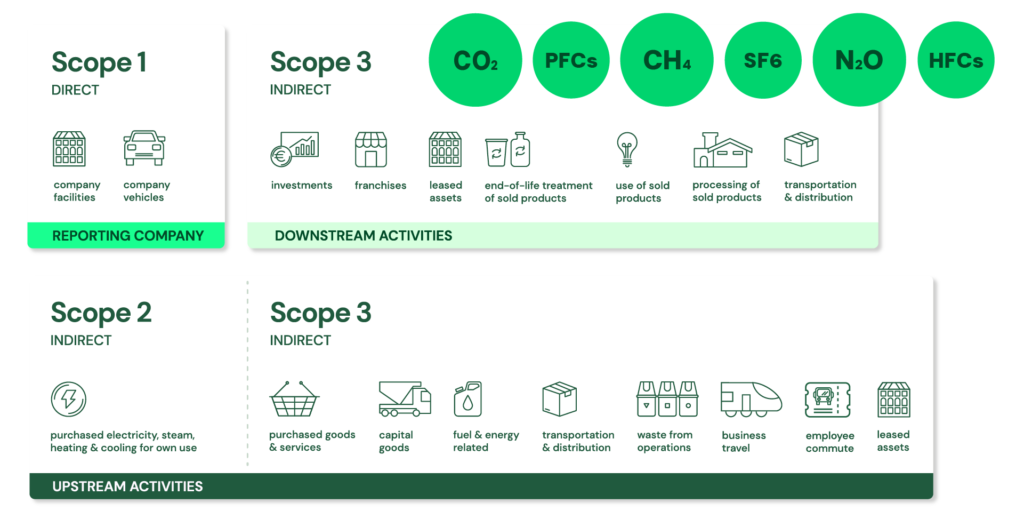
- GHG Protocol Corporate Standard Scope 1, 2 and 3: https://ghgprotocol.org/ + The GHG Protocol Corporate Accounting and Reporting Standard provides requirements and guidance for companies and other organizations preparing a corporate-level GHG emissions inventory. The Corporate Standard itself is voluntary, although companies may be required by applicable legislation or regulation to report using the GHG Protocol or equivalent requirements.
- Scope 1: Direct emissions:
- Direct emissions from company-owned and controlled resources. In other words, emissions are released into the atmosphere as a direct result of a set of activities, at a firm level. More precisely, Scope 1 covers direct GHG emissions from sources that are owned or controlled by the reporting organization.
- It is divided into four categories:
- Stationary combustion (e.g from fuels, heating sources). All fuels that produce GHG emissions must be included in scope 1. This applies when the combustion source is owned or controlled by the reporting organization.
- Mobile combustion is all vehicles owned or controlled by a firm, burning fuel (e.g. cars, vans, trucks). The increasing use of “electric” vehicles (EVs), means that some of the organisation’s fleets could fall into Scope 2 emissions. For example, fuel combustion in an owned/controlled vehicle is Scope 1, whereas electricity purchased to charge an EV is generally Scope 2; an EV itself does not create Scope 2 emissions—the purchased electricity does.
- Fugitive emissions are leaks from greenhouse gases (e.g. refrigeration, air conditioning units). It is important to note that refrigerant gases are not uniformly “a thousand times more dangerous” than CO₂; some refrigerants have GWPs of hundreds or thousands of times that of CO₂, while others have much lower values. Companies are encouraged to report these emissions.
- Process emissions are released during industrial processes, and on-site manufacturing (e.g. production of CO2 during cement manufacturing, factory fumes, chemicals). These are direct emissions resulting from physical or chemical processes other than fuel combustion, such as calcination in cement production..
- Scope 2: Indirect emissions – owned:
- Indirect emissions from the generation of purchased energy, from a utility provider. In other words, all GHG emissions released in the atmosphere, from the consumption of purchased electricity, steam, heat and cooling. Scope 2 covers indirect GHG emissions associated with the generation of purchased or acquired electricity, steam, heat, and cooling consumed by the reporting organization; “owned” is therefore misleading because the emissions source is owned or controlled by another entity.
- For most organisations, electricity will be the unique source of scope 2 emissions. Simply stated, the energy consumed falls into two scopes: Scope 2 covers the electricity consumed by the end-user. Scope 3 covers the energy used by the utilities during transmission and distribution (T&D) losses. More precisely, Scope 2 covers the generation-related emissions associated with purchased electricity, not the physical electricity itself. T&D losses are generally accounted for in Scope 3 Category 3 for an energy consumer that does not own the T&D system, although the treatment can vary depending on ownership and accounting circumstances.
- Scope 3: Indirect emissions – not owned:
- Indirect emissions – not included in scope 2 – that occur in the value chain of the reporting company, including both upstream and downstream emissions. In other words, emissions are linked to the company’s operations. According to the GHG protocol, scope 3 emissions are separated into 15 categories. Scope 3 therefore captures other indirect value-chain emissions, upstream and downstream, across the 15 defined categories of the Scope 3 Standard.
- Scope 1: Direct emissions:
- Heat Exchangers, Heat Pumps, Air Source Heat Pump (ASHP), Hydronics, Geothermal Heating – Cooling & Chillers:
- Heat Exchangers – Heat Transfer Foundation:
- Used to transfer heat from one medium to another. These media may be a gas, liquid, or a combination of both. The media may be separated by a solid wall to prevent mixing or may be in direct contact. Heat exchangers are required to provide heating and/or cooling to meet a process requirement.
- In HVAC, heat exchangers are used to transfer heat between the indoor and outdoor air streams while keeping them physically separated as a means of cooling or heating indoor air. heat exchangers are components; systems performing heating/cooling cycles are heat pumps, not the heat exchangers themselves.
- Gasketed heat exchangers are compact, highly efficient devices used to transfer heat between two fluids without mixing them. They consist of a series of corrugated metal plates fitted with elastomeric gaskets that seal the channels and direct the fluids into alternate pathways. This design creates high turbulence, maximizing heat transfer efficiency while maintaining a significantly smaller footprint than traditional shell-and-tube units.
- Heat Pumps – Thermodynamic Systems (Energy Transfer Devices):
- Use electricity to transfer heat from a cool space to a warm space, making the cool space cooler and the warm space warmer. During the heating season, heat pumps move heat from the cool outdoors into your warm house. During the cooling season, heat pumps move heat from your house into the outdoors. Because they transfer heat rather than generate heat, heat pumps can efficiently provide comfortable temperatures for your home. They operate on a vapor-compression refrigeration cycle (similar to air conditioners and chillers).
- Air Source Heat Pump (ASHP) – Thermodynamic Systems (Energy Transfer Devices):
- Heating and cooling system that extracts heat from the outside air and transfers it to a building’s interior for heating, or reverses the process to cool the building. ASHPs are a low-carbon alternative to traditional heating systems like gas boilers or oil furnaces. They are efficient because they transfer heat rather than generating it, typically providing a coefficient of performance (COP) of ~2–4 under typical conditions (can vary significantly with temperature).
- The only difference between a heat pump and a chiller is that one is designed to remove heat from a space or process stream, making it cooler and rejecting heat to the environment, while the other is designed to extract heat from the environment and use it to provide useful heat.
- Chillers – Cooling Systems (Heat Removal Focus):
- Mechanical systems that remove heat from a building’s liquid coolant, typically water, and transfer it to another location to cool the air and maintain comfort. Unlike traditional systems that might cool air directly, chillers generate chilled water that circulates through air handling units (AHUs) within the space to absorb heat, making them essential for cooling large commercial or industrial buildings.
- Chillers and heat pumps use similar thermodynamic cycles, but are designed and optimized for different applications (process/central cooling vs reversible heating/cooling).
- The only difference between a heat pump and a chiller is not strictly the function, but primarily the design intent and system integration:
- A chiller is typically designed to remove heat from a space or process (cooling-focused).
- A heat pump is designed to provide useful heating (and often reversible cooling).
- Hydronics – Distribution Systems (Energy Transport):
- Systems of heating or cooling that involves transfer of heat by a circulating fluid (such as water or vapor) in a closed system of pipes. Hydronic systems distribute thermal energy (heating or cooling) but do not generate it themselves.
- Geothermal Heating and Cooling Systems – Renewable / Ground-Based Systems:
- Take advantage of the relatively stable temperature underground using a piping system, commonly referred to as a “loop.” Water or a water-antifreeze mixture circulates in the loop to exchange heat between your home, the ground source heat pump, and the earth, providing geothermal heating, cooling, and hot water at very high efficiencies (often higher than ASHPs).
- Heat Exchangers – Heat Transfer Foundation: