
nVent – nVent to acquire Maverick Power


- Leading manufacturer of engineered power distribution and infrastructure solutions for data centers
- Broadens nVent’s exposure to the high-growth infrastructure vertical, particularly in data centers, with a power distribution platform, complementing nVent’s data center offerings
- Expands nVent’s offerings for new power architectures and system-level solutions and services for data centers
- Expect transaction to be accretive to adjusted EPS in the first year after completing the transaction
LONDON, Aug. 24, 2026 (GLOBE NEWSWIRE) — nVent Electric plc (NYSE: NVT) (“nVent”), a global leader in electrical connection and protection solutions, today announced that it has entered into a definitive agreement to acquire Maverick Power for a purchase price of $1.75 billion, subject to customary adjustments. The transaction also includes the potential additional consideration of up to $550 million in cash based on achieving certain performance metrics in 2027 and 2028. Maverick Power is a leading manufacturer of engineered power distribution and infrastructure solutions for data centers.
The acquisition of Maverick Power strengthens nVent’s position in the high-growth infrastructure vertical, particularly data centers. It will add a power distribution platform to nVent’s portfolio, complementing nVent’s data center offerings. Additionally, it will expand nVent’s offerings for new power architectures and system-level solutions and services for data centers.
“Maverick Power is a great fit for nVent and aligns with our strategy to focus on the high-growth infrastructure vertical,” said nVent Chair and CEO Beth Wozniak. “Maverick Power brings strong power distribution expertise and broadens our offerings to data center customers. We look forward to welcoming the Maverick Power team to nVent and together inventing the electrified future.”
Maverick Power President and CEO, Tom Currier added, “This is a significant milestone for our company, and we are thrilled to be joining nVent. nVent’s strategy, culture, focus on people and customer-first approach are highly complementary to ours. Together, we will deliver a broader power and cooling portfolio for data center customers.”
Maverick Power is a leading North American provider of engineered power distribution and infrastructure solutions, including low-voltage switchgear and switchboards, medium-voltage switchgear, integrated modular solutions, and services.
Headquartered in McKinney, Texas, Maverick Power has approximately 900 employees in Texas and Arizona, with estimated 2026 revenues to be approximately $700 million. The business has a strong backlog and future demand visibility.
nVent expects the acquisition to be accretive to adjusted earnings per share in the first year following completion of the transaction.
The effective enterprise value multiple based on the $1.75 billion purchase price is approximately 11.5 times anticipated 2026 adjusted EBITDA. When adjusted for the present value of expected tax benefits the 2026 adjusted EBITDA multiple is approximately 10.5 times. nVent’s financial returns on the acquisition are expected to be significantly better if the potential additional considerations are paid.
The transaction is expected to close in the fourth quarter of 2026, subject to customary closing conditions, including regulatory approval. nVent expects to fund the acquisition with a combination of available cash on hand and new debt.
Foley & Lardner LLP is providing legal counsel to nVent in connection with the transaction. Bank of America is providing nVent with committed bridge financing for the transaction.
CAUTION CONCERNING FORWARD-LOOKING STATEMENTS
This press release contains statements that we believe to be “forward-looking statements” within the meaning of the Private Securities Litigation Reform Act of 1995. All statements, other than statements of historical fact, are forward-looking statements. Without limitation, any statements preceded or followed by or that include the words “targets,” “plans,” “believes,” “expects,” “intends,” “will,” “likely,” “may,” “anticipates,” “estimates,” “projects,” “forecasts,” “should,” “would,” “could,” “positioned,” “strategy,” “future,” “are confident,” or words, phrases or terms of similar substance or the negative thereof, are forward-looking statements. All statements made about the anticipated acquisition, including the anticipated time for completing the acquisition, the expected financial results of the acquired business and the anticipated benefits of the acquisition, are forward-looking statements. These forward-looking statements are not guarantees of future performance and are subject to risks, uncertainties, assumptions and other factors, some of which are beyond our control, which could cause actual results to differ materially from those expressed or implied by such forward-looking statements. Among these factors are our ability to close the acquisition on the expected terms and schedule; our ability to integrate the acquisition successfully; our ability to retain customers and employees of the acquired business; adverse effects on our business operations or financial results, including the overall global economic and business conditions impacting our business; the ability to achieve the benefits of our restructuring plans; the ability to successfully identify, finance, complete and integrate acquisitions; competition and pricing pressures in the markets we serve, including the impacts of tariffs; volatility in currency exchange rates, interest rates and commodity prices; inability to generate savings from excellence in operations initiatives consisting of lean enterprise, supply management and cash flow practices; inability to mitigate material and other cost inflation; risks related to the availability of, and cost inflation in, supply chain inputs, including labor, raw materials, commodities, packaging and transportation; increased risks associated with operating foreign businesses, including risks associated with military conflicts; the ability to deliver backlog and win future project work; failure of markets to accept new product introductions and enhancements; the impact of changes in laws and regulations, including those that limit U.S. tax benefits; the outcome of litigation and governmental proceedings; and the ability to achieve our long-term strategic operating goals. Additional information concerning these and other factors is contained in our filings with the U.S. Securities and Exchange Commission, including our Annual Report on Form 10-K and our Quarterly Reports on Form 10-Q. All forward-looking statements speak only as of the date of this press release. nVent assumes no obligation, and disclaims any obligation, to update the information contained in this press release.
SourcenVent
EMR Analysis
More information on nVent: See full profile on EMR Executive Services
More information on Beth Wozniak (Chair & Chief Executive Officer, nVent): See full profile on EMR Executive Services
More information on Gary Corona (Executive Vice President & Chief Financial Officer, nVent): See full profile on EMR Executive Services
More information on Maverick Power by nVent: https://maverickpwr.com/ + Maverick Power designs, manufactures, and delivers integrated power distribution and critical infrastructure solutions for data centers, industrial, utility, healthcare, and commercial markets. The company’s portfolio includes low-voltage and medium-voltage switchgear, switchboards, power distribution units (PDUs), automatic transfer switches (ATS), modular systems, e-Houses, skids, and field services. By aligning engineering, manufacturing, supply chain, and execution within a unified operating model, Maverick Power helps customers deliver critical infrastructure faster, more efficiently, and at scale across North America.
In 2020, we ignited the industry as RMS Power with a burst of innovation and a commitment to customer service. Evolving into Maverick Power, we’re not just keeping pace—we’re setting the pace. Our approach is all about creating custom solutions and deploying them rapidly, ensuring we not only meet but stay ahead of industry demands.
Headquartered in McKinney, Texas, Maverick Power has approximately 900 employees in Texas and Arizona, with estimated 2026 revenues to be approximately $700 million.
More information on Tom Currier (Founder, President and Chief Executive Officer, Maverick Power, nVent): See full profile on EMR Executive Services
More information on Foley & Lardner LLP: https://www.foley.com/ + Foley & Lardner LLP is a preeminent law firm that stands at the nexus of the Energy & Infrastructure, Health Care & Life Sciences, Innovative Technology, and Manufacturing Sectors. We look beyond the law to focus on the constantly evolving demands facing our clients and act as trusted business advisors to deliver creative, practical, and effective solutions. Our 1,100 lawyers across 27 offices worldwide partner on the full range of engagements from corporate counsel to intellectual property work and litigation support, providing our clients with a one-team solution to all their needs. For nearly two centuries, Foley has maintained its commitment to the highest level of innovative legal services and to the stewardship of our people, firm, clients, and the communities we serve.
More information on Daljit S. Doogal (Chair & Chief Executive Officer, Foley & Lardner LLP): https://www.foley.com/about-us/leadership/ + https://www.linkedin.com/in/daljit-doogal/
More information on Bank of America (BofA): https://www.bankofamerica.com + Bank of America is one of the world’s leading financial institutions, serving individual consumers, small and middle-market businesses and large corporations with a full range of banking, investing, asset management and other financial and risk management products and services. The company provides unmatched convenience in the United States, serving more than 69 million clients with approximately 3,500 retail financial centers, approximately 15,000 ATMs (automated teller machines) and award-winning digital banking with approximately 60 million verified digital users. Bank of America is a global leader in wealth management, corporate and investment banking and trading across a broad range of asset classes, serving corporations, governments, institutions and individuals around the world. As the #1 small business lender in the United States (FDIC), Bank of America offers industry-leading support to approximately 4 million small business households through a suite of innovative, easy-to-use online products and services. The company serves clients through operations across the United States, its territories and more than 35 countries and/or jurisdictions. Bank of America Corporation stock (NYSE: BAC) is listed on the New York Stock Exchange.
More information on Brian Moynihan (Chairman and Chief Executive Officer, Bank of America (BofA)): https://newsroom.bankofamerica.com/content/newsroom/executive-bios
EMR Additional Notes:
- Cloud Computing:
- Cloud computing is a general term for anything that involves delivering hosted services over the internet. It is the on-demand availability of computer system resources, especially data storage and computing power, without direct active management by the user. Large clouds often have functions distributed over multiple locations, each location being a data center. Cloud services typically include IaaS, PaaS, and SaaS service models.
- Edge Computing:
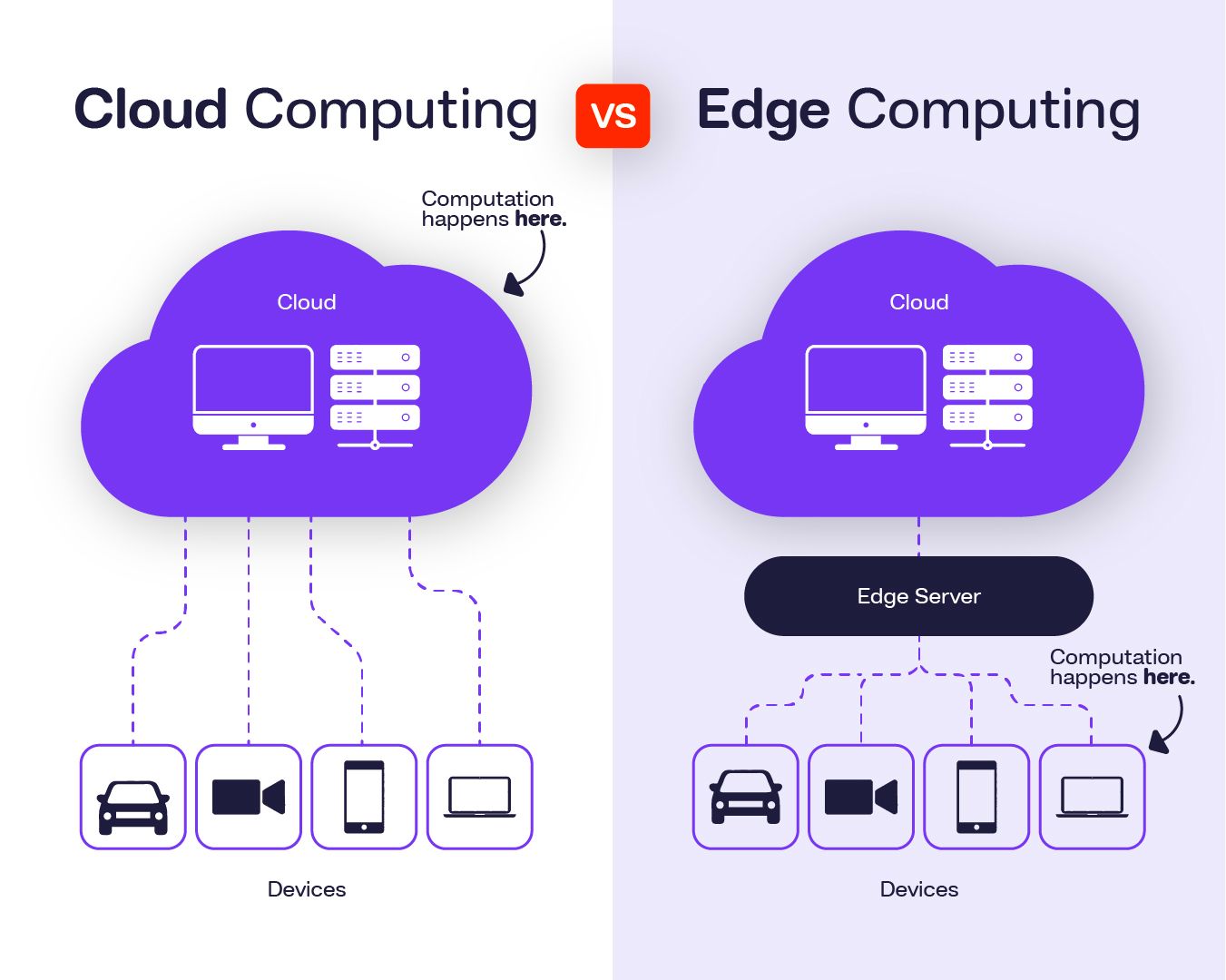
- Edge computing is a form of computing that is done on site or near a particular data source, minimizing the need for data to be processed in a remote data center.
- Edge computing can enable more effective city traffic management. Examples of this include optimising bus frequency given fluctuations in demand, managing the opening and closing of extra lanes, and, in future, managing autonomous car flows.
- An edge device is any piece of hardware that controls data flow at the boundary between two networks. Edge devices fulfill a variety of roles, depending on what type of device they are, but they essentially serve as network entry — or exit — points.
- There are five main types of edge computing devices: IoT sensors, smart cameras, uCPE equipment, servers and processors. IoT sensors, smart cameras and uCPE equipment will reside on the customer premises, whereas servers and processors will reside in an edge computing data centre.
- In service-based industries such as the finance and e-commerce sector, edge computing devices also have roles to play. In this case, a smart phone, laptop, or tablet becomes the edge computing device.
- Edge Devices:
- Edge devices encompass a broad range of device types, including sensors, actuators and other endpoints, as well as IoT gateways. Within a local area network (LAN), switches in the access layer — that is, those connecting end-user devices to the aggregation layer — are sometimes called edge switches.
- Edge devices act as the interface between the physical world (data generation) and digital networks.
- Hybrid Computing:
- A hybrid cloud integrates private, on-premises infrastructure with public cloud services, offering flexibility to distribute workloads between these environments. Hybrid models often incorporate edge computing, allowing organizations to run critical workloads locally at the edge while using the cloud for other tasks, thereby optimizing performance, cost, and data management for various business needs.
- HPC (Hight-Performance Computing):
- Practice of aggregating computing resources to gain performance greater than that of a single workstation, server, or computer. HPC can take the form of custom-built supercomputers or groups of individual computers called clusters.
- HPC is typically used for simulation, scientific computing, AI training, and complex modeling.
- Data Centers – Physical Infrastructure:
- A data center is a facility that centralizes an organization’s shared IT operations and equipment for the purposes of storing, processing, and disseminating data and applications. Because they house an organization’s most critical and proprietary assets, data centers are vital to the continuity of daily operations.
- Hyperscale Data Centers – Physical Infrastructure:
- The clue is in the name: hyperscale data centers are massive facilities built by companies with vast data processing and storage needs. These firms may derive their income directly from the applications or websites the equipment supports, or sell technology management services to third parties.
- Hyperscale Data Centers are typically operated by large cloud providers (e.g., hyperscalers) and designed for horizontal scalability.
- White Space and Grey Space in Data Centers – Physical Infrastructure:
- White space in a data center refers to the area where IT equipment is placed. It typically houses servers, storage, network gear, and racks.
- Gray space, on the other hand, is the area where the back-end infrastructure is located. This space is essential for supporting the IT equipment and includes areas for switchgear, UPS, transformers, chillers, and generators.
- Colocation in Data Centers – Physical Infrastructure:
- A colocation data center is a facility where businesses rent space, power, and cooling to house their own servers and networking hardware, rather than maintaining them in-house. It offers a cost-effective way to access high-level security, internet connectivity, and 24/7 technical support while retaining control of the equipment.
- Edge & Cloud Services – Integrated Architecture (Edge-to-Cloud):
- Edge services perform data processing on local devices and servers near the data source, reducing latency for time-sensitive operations, while cloud services centralize large computations and storage in remote datacenters, offering massive scalability and flexibility for general workloads.
- Most organizations use both, creating an “edge-to-cloud” architecture where edge devices handle immediate tasks, and the cloud manages large-scale data processing and complex applications, providing a seamless and efficient experience.
- Data Center Cooling Technologies:
- Air Cooling:
- Uses Computer Room Air Conditioners (CRAC) or Air Handlers (CRAH) combined with hot aisle / cold aisle containment to circulate cold air through the facility and manage airflow separation to improve cooling efficiency.
- It is widely used and cost-effective, but becomes inefficient at very high rack power densities (typically >20–30 kW per rack) due to the low heat capacity and thermal conductivity of air.
- Liquid Cooling:
- Liquid cooling uses water or dielectric fluids to remove heat more efficiently than air, enabling higher power densities required for AI and HPC workloads because liquids have significantly higher heat transfer capacity than air.
- It can be implemented at different levels: chip-level (DTC), rack-level (RDHx), or full immersion cooling.
- Direct-to-Chip (DTC) Cooling:
- A Direct-to-Chip (DTC) cooling system is a liquid-cooling technology used to cool high-performance computer chips—such as CPUs, GPUs, and accelerators—by bringing a liquid coolant directly to the chip surface through a cold plate (heat exchanger attached to the chip).
- It is one of the most efficient and fastest-growing cooling methods in modern data centers, especially in AI, HPC (High-Performance Computing), and high-density server environments because it removes heat at the source before it enters the air stream.
- RDHX (Rear Door Heat Exchanger) – Rack-level Heat Exchange:
- A Rear Door Heat Exchanger (RDHx) is a rack-mounted liquid-to-air heat exchanger installed on the rear of an IT rack.
- Chilled water flows through the door, and hot air from servers passes through it, removing heat before it enters the data center room (air-neutral or near-zero heat rejection to white space) thereby significantly reducing the load on room-level cooling systems.
- Can be passive (no fans) or active (with fans)
- Enables high-density racks without requiring full liquid cooling at the chip level (intermediate solution between air cooling and DTC).
- HDU (Heat Dissipation Unit):
- Unlike a CDU that transfers heat to the facility water loop, a Heat Dissipation Unit (HDU) rejects heat from the server rack to the data center air (white space) using a liquid-to-air heat exchanger.
- This means heat is ultimately removed by room-level cooling systems (CRAC/CRAH), making it a hybrid approach between air and liquid cooling (liquid used locally, air used for final heat rejection).
- CDU (Coolant Distribution Unit):
- A coolant distribution unit contains pumps, heat exchangers, valves, and control systems that circulate coolant through a network of pipes, distributing it to servers or racks in a secondary (IT) cooling loop.
- Coolant Distribution Units are essential in liquid-cooled data centers, providing:
- flow control
- pressure regulation
- temperature management
- hydraulic separation between facility loop and IT loop.
- They interface between facility water (building loop) and IT cooling loops, ensuring safe and controlled heat transfer and preventing contamination or pressure mismatch between loops.
- Chillers:
- Mechanical systems that remove heat from a building’s liquid coolant (typically water) and transfer it to the outside environment (via air or water loops).
- Unlike systems that cool air directly, chillers generate chilled water that circulates through cooling systems such as CDUs, CRAH/CRAC units, or heat exchangers.
- They are essential for cooling large-scale data centers and industrial facilities, especially where free cooling is not sufficient or ambient conditions are too warm.
- Condensors:
- A condenser is a heat exchanger that cools a gas or vapor, causing it to condense into a liquid, releasing latent heat.
- In cooling systems, condensers are typically part of chiller or refrigeration cycles, where they reject heat to ambient air or water (e.g., cooling towers or dry coolers) and represent the final heat rejection stage of the refrigeration cycle.
- Technology Cooling System (TCS):
- Non-standard / umbrella term that refers to an integrated cooling architecture used to manage heat in technology environments (e.g., data centers, industrial systems).
- A TCS may include:
- Chillers
- CDUs
- Pumps and piping
- Heat exchangers
- Control systems
- It effectively represents the complete thermal management system from IT equipment to final heat rejection.
- Cooling Skids:
- Cooling skids are self-contained, pre-engineered industrial systems mounted on a structural steel frame (skid) used to manage temperature by circulating chilled fluids.
- They integrate all necessary components—including heat exchangers, pumps, piping, valves, and controls—into a single mobile or modular unit to enable rapid deployment and standardized installation.
- Main Types of Cooling Skids
- Chiller Skids: Include active refrigeration compressors to drop temperatures below ambient levels.
- Fluid Cooler Skids: Use ambient air or tower water to cool process fluids without active refrigeration (often used for free cooling).
- Heat Exchanger Skids: Separate two fluid loops to transfer heat safely between closed and open systems (similar function to CDU at system scale).
- Air Cooling:
- Earning Per Share (EPS):
- Company’s net income attributable to common shareholders (net income minus preferred dividends) divided by the weighted average number of common shares outstanding.
- The resulting number serves as an indicator of a company’s profitability on a per-share basis. It is common for a company to report adjusted EPS (e.g., excluding extraordinary or non-recurring items) and diluted EPS (including potential shares from options, convertible debt, or warrants).
- The higher a company’s EPS, the more profitable it is considered to be (although EPS should always be analyzed in context—e.g., growth, industry, and capital structure).
- Earnings per share value is calculated as net income divided by available shares. A more refined calculation adjusts the numerator and denominator for potential dilution (stock options, convertible securities, warrants).
- The numerator of the equation is also more relevant if it is adjusted for continuing operations (excluding one-off or discontinued activities).
- Dividend Per Share (DPS):
- DPS is the actual portion of those earnings distributed to shareholders as dividends (cash or sometimes stock dividends).
- The actual cash paid out by the company to an investor for each share owned, calculated as:
Total dividends paid to common shareholders / Number of common shares outstanding (or weighted average shares). - High-growth companies often have a high EPS but a DPS of $0 because they reinvest all profits. Established, mature companies tend to pay out a portion of their earnings (payout ratio) as a DPS.
- A company’s DPS can exceed EPS in a given year (e.g., using retained earnings or debt), but this is generally not sustainable over the long term.
- => EPS vs. DPS:
- EPS measures how much profit a company generates per share, while DPS shows how much of that profit is actually distributed to shareholders. EPS reflects profitability, whereas DPS reflects distribution policy.
- Extra Low-Voltage (ELV):
- Extra-Low Voltage (ELV) is defined as a voltage of ≤ 50 V AC (RMS) or ≤ 120 V DC (ripple-free).
- ELV systems are typically used where electrical safety is critical (e.g., building automation, control circuits, lighting, telecom).
- Low-Voltage (LV):
- The International Electrotechnical Commission (IEC) defines Low Voltage (LV) for supply systems as voltage in the range > 50–1000 V AC or > 120–1500 V DC.
- Medium-Voltage (MV):
- Medium Voltage (MV) is a voltage class that typically falls between low voltage and high voltage, with a common range being from > 1 kV up to ~30–36 kV (typical IEC practice).
- Some regions (e.g., North America) extend MV up to ~69 kV, depending on utility definitions.
- High-Voltage (HV):
- The International Electrotechnical Commission defines high voltage as above 1000 V AC and above 1500 V DC.
- In practice, HV is often considered from ~36 kV up to ~230 kV in transmission systems.
- Super High-Voltage or Extra High-Voltage (EHV):
- Extra High-Voltage (EHV) is the voltage class used for long-distance bulk power transmission. The range for EHV systems is typically from ~220 kV to ~765–800 kV. “Super High Voltage” is not a standard IEC term.
- Ultra High-Voltage (UHV):
- Ultra High-Voltage (UHV) is the highest voltage class used in electrical transmission, defined as a voltage of ≥ 800 kV (AC) and ≥ 800–1000 kV (DC, depending on classification).
- Switchgear (Core Concept):
- Broad term that describes a wide variety of switching devices that all fulfill a common need: controlling, protecting, and isolating electrical power systems.
It also includes devices for protection, switching, isolation, and in some cases measurement (metering), although metering is typically handled by dedicated instruments. - Switchgear contains fuses, switches, and other conductive and protective components. However, circuit breakers are typically the primary and most critical component in modern switchgear.
- It performs the function of controlling and protecting (not “metering” as a primary function) the flow of electrical power, as well as interrupting fault currents to prevent damage to equipment and ensure safety.
- There are three types of switchgear, namely:
- LV (Low Voltage)
- MV (Medium Voltage)
- HV (High Voltage)
- Broad term that describes a wide variety of switching devices that all fulfill a common need: controlling, protecting, and isolating electrical power systems.
- Fuses (Core Protection Devices):
- A fuse is a single-use overcurrent protection device that interrupts a circuit by melting a calibrated conductor when excessive current flows.
- Fuses are widely used from low voltage (LV) up to medium voltage (MV) and, more rarely, high voltage (HV) applications.
- It is an electrical safety device whose essential component is a metal wire or strip that melts when too much current flows, thereby interrupting the current.
- Circuit Breakers (Core Protection Devices):
- A circuit breaker is a mechanical electrical switch designed to protect an electrical circuit from damage caused by overcurrent, overload, or short circuit.
- Its basic function is to interrupt current flow automatically upon fault detection (either via internal thermal/magnetic mechanisms in LV systems or external protection relays in MV/HV systems).
- Unlike fuses, circuit breakers are resettable and reusable.
- Disconnectors (Core Protection Devices):
- A disconnector (also known as Isolator) is a mechanical switching device operated manually (or motorized) and only under no-load conditions to provide safe isolation.
- They are used to isolate equipment for maintenance and ensure visible and verifiable separation from live circuits (critical for safety procedures).
- Contactors (Core Protection Devices):
- A contactor is a remotely operated electrical switch used for frequent switching of circuits, especially motors.
- It is a special type of relay designed for higher current applications.
- Contactors cannot interrupt fault currents and therefore must always be used in combination with protective devices such as fuses or circuit breakers.
- Fuse Switch-Disconnectors (Hybrid – Combined Devices):
- A fuse switch-disconnector combines both protection and safe manual isolation in one device; it provides overcurrent protection like a fuse, and it also allows for manual disconnection of the circuit for isolation purposes.
- RCCB – Residual Current Circuit Breakers (Hybrid – Combined Devices):
- Protects against earth leakage (residual current) and electric shock.
- It does not protect against overload or short circuit and must therefore be used together with an MCB or fuse.
- RCD – Residual Current Devices (Hybrid – Combined Devices):
- General term for devices that disconnect circuits upon detecting leakage current.
- Trips typically within 10–50 ms, protecting against electrocution and fire.
- RCBO – Residual Current Breakers with Over-Current (Hybrid – Combined Devices):
- An RCBO protects against overcurrent + earth leakage in one device. It is a combination of:
- MCB (overcurrent protection)
- RCD (earth leakage protection)
- An RCBO protects against overcurrent + earth leakage in one device. It is a combination of:
- Circuit Breakers (By Application / Technology):
- MCB (Miniature Circuit Breakers):
- Used in domestic and light commercial installations.
- Rated current: typically up to 100–125 A
- Protects against overload and short circuit
- Widely replacing fuses in LV installations due to reset capability and ease of use
- Used in domestic and light commercial installations.
- MCCB (Molded Case Circuit Breakers):
- Used in industrial and commercial systems.
- Rated current: up to ~2500 A
- Higher breaking capacity than MCB
- Often includes adjustable trip settings for more precise protection
- Used in industrial and commercial systems.
- ACB (Air Circuit Breakers):
- Uses air as the arc insulating / quenching medium.
- Used in low voltage but high current applications (e.g., main incomers in buildings)
- VCB (Vacuum Circuit Breakers):
- Uses vacuum for arc quenching.
- Common in medium voltage systems
- OCB (Oil Circuit Breakers):
- Uses insulating oil for arc quenching.
- Now largely obsolete / being phased out due to fire risk, maintenance complexity, and environmental concerns
- Solid-State Circuit Breakers (also known as Semiconductor Circuit Breaker):
- Electronic devices using semiconductors to interrupt current extremely fast (microseconds).
- No moving parts
- Used in DC systems, data centers, EVs
- Key advantage: ultra-fast fault interruption compared to mechanical breakers
- Electronic devices using semiconductors to interrupt current extremely fast (microseconds).
- Hybrid Circuit Breakers:
- Combine mechanical + solid-state switching for:
- fast response
- low losses
- Combine mechanical + solid-state switching for:
- PTCB eFuse Circuit Breaker:
- An Electronic eFuse Circuit Breaker (PTCB) is an electronic micro fuse for DIN rail protecting very low currents (typically below 1A in control and electronics circuits) to facilitate clear fault detection and precise fault localization.
- Response times are shorter compared to conventional fuse protection and the exact current value can be adjusted at any time
- MCB (Miniature Circuit Breakers):
- Specialized Fuses:
- Reducer Fuses:
- A reducer fuse is not a fuse itself, but rather an adapter that allows a physically smaller fuse to be installed into a larger fuse holder. A fuse reducer typically consists of a non-conductive, insulating body that encases the smaller fuse.
- Electrified Vehicle (EV) Fuses:
- EV fuses are specialized safety devices designed to protect the high-voltage DC systems in electric vehicles.
- Specialized for:
- High-voltage DC (500–1000V+)
- High fault currents
- Harsh environments (temperature, vibration)
- Also designed to safely interrupt DC arcs, which are more difficult to extinguish than AC arcs
- Reducer Fuses:
- Switchgear Technologies:
- AIS (Air Insulated Switchgears):
- Uses air as insulation.
- Common in MV and HV outdoor substations due to simplicity and lower cost
- AIS controls, protects and isolates electrical equipment in power transmission and distribution systems.
- GIS (Gas Insulated Switchgears):
- Uses SF₆ gas (or alternatives) for insulation.
- It is a compact metal encapsulated switchgear consisting of high-voltage components such as circuit-breakers and disconnectors, which can be safely operated in space-constrained environments (e.g., cities).
- Pad-Mount Switchgears:
- Outdoor, ground-mounted distribution switchgear used in utility and commercial networks
- The pad-mount switchgear is made from the same modular switch and interrupter components as the vault switchgear. This means all components are sealed, submersible and protected, so you don’t have to worry about tracking, animal infestation, corrosion or the effects of condensation inside the enclosure.
- Ring Main Unit (RMU):
- A ring Main Unit (RMU) is a Medium-Voltage, gas-insulated, fully sealed cabinet used to measure, connect, and integrate transformer protection functions with a fixed type breaker. Ring Main Units are safe, reliable, low-maintenance, and easy to replace switchgear.
- A Ring Main Unit (RMU) is a factory assembled, metal enclosed set of switchgear used at the load connection points of a ring-type distribution network.
- Dead Tank Circuit Breaker (DTB):
- A Dead Tank Circuit Breaker (DTB) is a high-voltage, air-insulated switchgear where the interrupter units are housed in a grounded, metallic tank filled with insulating gas (typically SF6 or eco-friendly alternatives). It provides superior safety, seismic resistance, and allows for direct integration of current transformers, making it ideal for substation applications up to 800 kV.
- AIS (Air Insulated Switchgears):
- Distribution Systems:
- Load Center (Residential Distribution) – Panel Board (Commercial/industrial LV Distribution) – Switch Board (Large-scale industrial/commercial systems):
- A Load Center is used in residential and light commercial applications to distribute electricity supplied by the utility company throughout the home or building to feed all the branch circuits. Each branch circuit is protected by the circuit breaker housed in the load center.
- Panelboards are typically deeper and used in commercial/industrial LV systems, supporting more configurations.
- Panelboards are only accessible from the front while Switchboards allow rear access as well.
- Switchboards are used in large commercial and industrial systems and can handle higher currents and more complex distribution architectures.
- Distribution Box – Cabinets – Enclosures:
- General term for protective housings for electrical distribution components.
- Enclosures provide mechanical protection, electrical safety, and environmental isolation (dust, moisture, etc.)
- It can refer to enclosures containing Panelboards, Switchboards, or other distribution equipment.
- In terms of use, distribution boxes are generally used for households (smaller enclosures), and distribution cabinets are mostly used for centralized power supply. Distribution boxes and cabinets are complete sets of equipment. Distribution boxes are low-voltage complete sets of equipment. Cabinets have both high and low voltages.
- An enclosure or distribution enclosure in a general term for any type of protective housing for electrical distribution components. It’s essentially a cabinet or box designed to safeguard components from environmental factors, prevent electrical shock, and potentially shield against electromagnetic interference.
- Load Center (Residential Distribution) – Panel Board (Commercial/industrial LV Distribution) – Switch Board (Large-scale industrial/commercial systems):
- Distribution Hierachy:
- Main Distribution Boards (MDB):
- Primary distribution point receiving power from:
- Utility
- Transformer
- Generator
- An MDB is a panel or enclosure that houses the fuses, circuit breakers and ground leakage protection units where the electrical energy, which is used to distribute electrical power to numerous individual circuits or consumer points, is taken in from the transformer or an upstream panel.
- Primary distribution point receiving power from:
- Sub-Distribution Boards (SDB):
- Subsidiary from Main Distribution Board that distribute electricity to specific areas/zones of a building.
- A sub-distribution board or sub-board is usually a smaller breaker panel acting as a subsidiary to a larger Distribution Panel. This enables greater control and isolation of a subset of smaller circuits and breakers.
- Final Distribution Boards (FDB):
- Distribution Boards that received from the Sub-Distribution Boards and supply to the final switches that connect electrical devices and appliances.
- Main Distribution Boards (MDB):
- Meter Cabinet (Meter Box):
- This is the entry point for utility power into a building. It houses the electricity meter that measures power consumption and the main fuses belonging to the utility company.
- Typically sealed and controlled by the utility to prevent tampering with unmetered energy
- EBIT:
- Earnings Before Interest and Taxes (EBIT) is a measure of a company’s operating profitability before accounting for interest expenses and income taxes. It is also known as operating profit and shows how effectively a company’s core business is generating profit from its operations.
- EBITA:
- Earnings before interest, taxes, and amortization (EBITA) is a measure of company profitability used by investors. It is helpful for comparing one company to another in the same line of business.
- EBITA = Net income + Interest + Taxes + Amortization
- EBITDA:
- Earnings before interest, taxes, depreciation, and amortization (EBITDA) is an alternate measure of profitability to net income. By including depreciation and amortization as well as taxes and debt payment costs, EBITDA attempts to represent the cash profit generated by the company’s operations.
- EBITDA and EBITA are both measures of profitability. The difference is that EBITDA also excludes depreciation.
- EBITDA is the more commonly used measure because it adds depreciation—the accounting practice of recording the reduced value of a company’s tangible assets over time—to the list of factors.
- EV/EBITDA (Enterprise Multiple):
- Enterprise multiple, also known as the EV-to-EBITDA multiple, is a ratio used to determine the value of a company.
- It is computed by dividing enterprise value by EBITDA.
- The enterprise multiple takes into account a company’s debt and cash levels in addition to its stock price and relates that value to the firm’s cash profitability.
- Enterprise multiples can vary depending on the industry.
- Higher enterprise multiples are expected in high-growth industries and lower multiples in industries with slow growth.