
Hitachi Energy – Hitachi Energy invests $300 million in China to bolster global manufacturing capacity for critical grid infrastructure

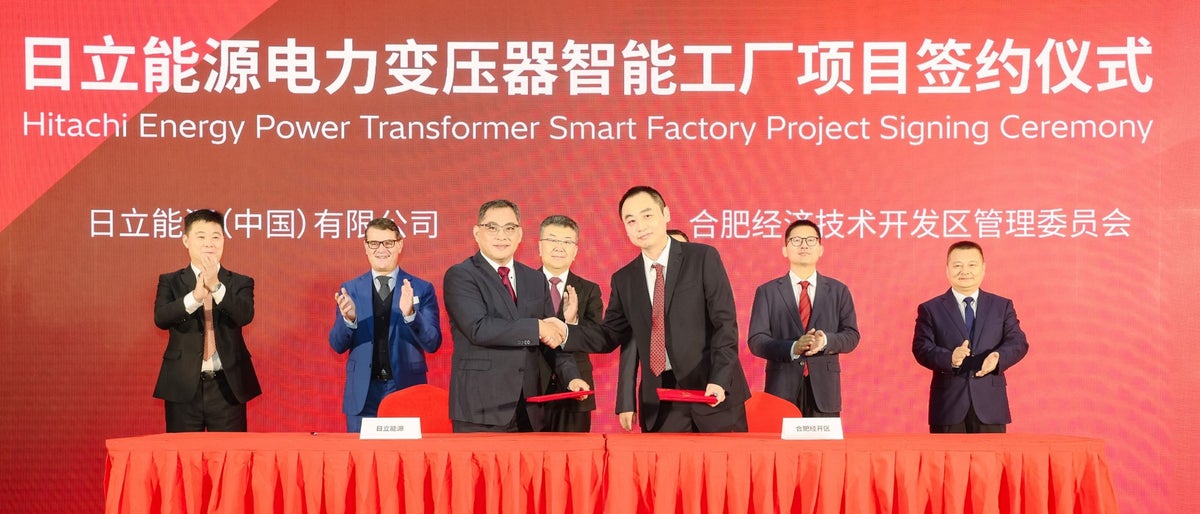
- Investment expands Hitachi Energy’s power transformer and component manufacturing capacity and expertise in China
- New capacity reinforces global transformers’ value chain and eases supply bottlenecks
- Leverages China’s manufacturing, innovation, and talent strengths to support the demand for mission-critical grid equipment
Hitachi Energy, a global leader in electrification, today announced a $300 million USD investment in China to strengthen its global manufacturing footprint and address rapidly growing demand for transformers. The investment will bolster the company’s power transformer and component manufacturing capacity in Hefei, East China’s Anhui Province, strengthening the resilience of the global transformer value chain to help ease supply chain constraints.
This investment underscores China’s strategic importance to the company’s global growth ambitions and supply chain resilience. It forms part of the company’s $9 billion global investment plan, the largest in the industry, to expand manufacturing capacity, engineering, R&D, and partnerships, as global demand for energy solutions continues to accelerate.
“As demand for electricity surges, driven by rapid growth in AI, data centers, mobility and industrialization, the need for critical grid equipment has never been greater. Building on our continued commitment in China, this expansion is an example of how we are strengthening our manufacturing capabilities and reinforcing the resilience of local and global transformer value chains to better support our customers in building more secure, affordable, and sustainable energy systems for the electricity era.”
Bruno Melles
CEO of Business Unit Transformers
Hitachi Energy
“This significant investment reflects our long-term commitment to our customers, partners, and market and demonstrates our confidence in China’s manufacturing ecosystem. The establishment of a state-of-the-art power transformer factory and the new ultra-high voltage bushing facility, as well as the launch of the digital production line of tap changers, are key milestones in the company’s presence in the country. Together, this investment will support China’s development of a new energy system while meeting growing demand from customers around the world.”
James Zhao
Executive Vice President and Region Head North Asia
Hitachi Energy
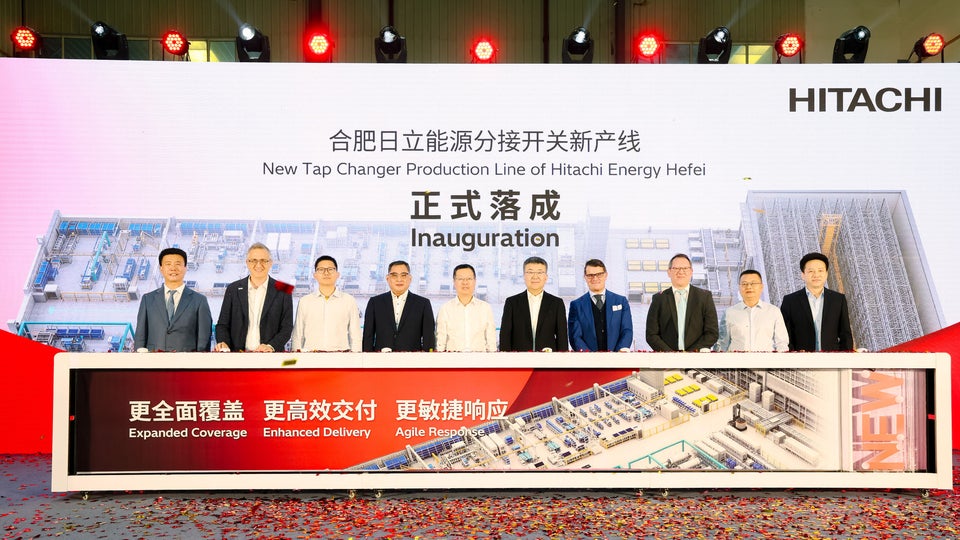
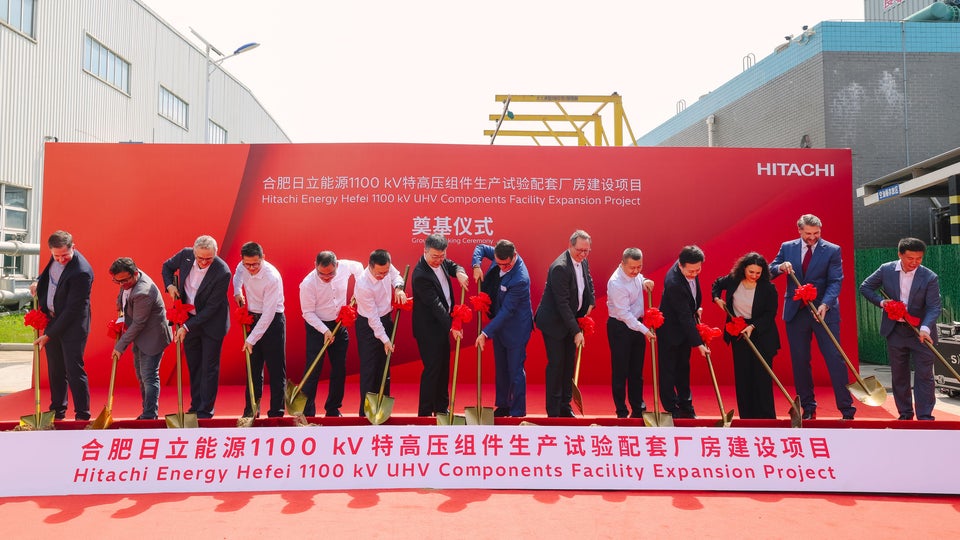
With more than four decades of operations in China, Hitachi Energy has a strong presence with 11 manufacturing sites and capabilities spanning the full value chain, from R&D, consulting, sales, engineering, manufacturing, and services.
SourceHitachi Energy
EMR Analysis
More information on Hitachi Ltd.: https://www.hitachi.com + Through its Social Innovation Business (SIB) that brings together IT, OT (Operational Technology) and products, Hitachi aims to be a global leader in continuously transforming social infrastructure through digital, contributing to a harmonized society where the environment, wellbeing, and economic growth are in balance. Hitachi operates worldwide across four sectors – Digital Systems & Services, Energy, Mobility, and Connective Industries – as well as a Strategic SIB Business Unit focused on new growth areas. With Lumada at its core, Hitachi creates value by combining data, technology and domain knowledge to solve customer and social challenges. Revenues for FY2025 (ended March 31, 2026) totaled 10,586.7 billion yen, with 606 consolidated subsidiaries and approximately 290,000 employees worldwide.
More information on Toshiaki Higashihara (Executive Chairman, Hitachi Ltd.): https://www.hitachi.com/corporate/about/officers/index.html#toshiaki-higashihara
More information on Toshiaki Tokunaga (President & Chief Executive Officer, Hitachi Ltd.): https://www.hitachi.com/New/cnews/month/2024/12/f_241216.pdf + https://www.linkedin.com/in/toshiaki-tokunaga-7113381aa/
More information on “Inspire 2027” Management Plan by Hitachi Ltd.: https://www.hitachi.com/content/dam/hitachi/global/en/press/files/2026/04/260427/f_260427pre.pdf + This strategic roadmap sets the course for our transformation into OneHitachi, with digital at its core, and highlights how we’ll transform ourselves into a digital-centric company.
The plan builds on key pillars such as evolving Lumada, leveraging AI and digital technologies, and strengthening regional strategies to capture new opportunities worldwide. It reflects our commitment to contribute to society through technology and address the challenges of a rapidly changing world with a long-term perspective.
More information on Hitachi Energy by Hitachi Ltd.: See the full profile on EMR Executive Services
More information on Andreas Schierenbeck (Senior Vice President and Executive Officer, Head of Energy Business, Hitachi, Ltd. + Chief Executive Officer, Hitachi Energy Ltd.): See the full profile on EMR Executive Services
More information on Ismo Haka (Chief Financial Officer and Executive Vice President, Hitachi Energy, Hitachi Energy Ltd.): See the full profile on EMR Executive Services
More information on Business Unit Transformers by Hitachi Energy: See the full profile on EMR Executive Services
More information on Bruno Melles (Managing Director, Business Unit Transformers, Hitachi Energy): See the full profile on EMR Executive Services
More information on James Zhao (Executive Vice President and Region Head, North Asia, Hitachi Energy): See the full profile on EMR Executive Services
EMR Additional Notes:
- Grid, Microgrids, DERs and DERM’s:
- Grid / Power Grid:
- The power grid is a network for delivering electricity to consumers. The power grid includes generator stations, transmission lines and towers, and distribution networks.
- The grid constantly balances the supply and demand for the energy that powers everything from industry to household appliances.
- Electric grids perform three major functions: generation, transmission, and distribution
- Microgrid:
- Small-scale power grid that can operate independently or collaboratively with other grids. The practice of using microgrids is known as distributed, dispersed, decentralized, district or embedded energy production.
- Group of interconnected loads and DERs (Distributed Energy Resources) within clearly defined electrical and geographical boundaries which acts as a single controllable entity with respect to the main grid.
- A microgrid can operate in both grid-connected mode and islanded (off-grid) mode.
- Smart Grid:
- An electrical grid enhanced with digital communication, automation, and IT systems across generation, transmission, distribution, and consumption levels.
- Enables real-time monitoring, control, demand response, and integration of DERs.
- Distributed Energy Resources (DERs):
- Small-scale electricity supply and demand-side resources (typically in the range of a few kW up to tens of MW, depending on definition) that are interconnected to the electric grid. They are power generation resources and are usually located close to load centers, and can be used individually or in aggregate to provide value to the grid.
- Common examples of DERs include rooftop solar PV units, natural gas turbines, microturbines, wind turbines, biomass generators, fuel cells, tri-generation units, battery storage, electric vehicles (EV) and EV chargers, and demand response resources (load flexibility).
- Distributed Energy Resources Management Systems (DERMS):
- Platforms which help mostly distribution system operators (DSO) manage their grids that are mainly based on distributed energy resources (DER).
- DERMS are used by utilities and other energy companies to aggregate and orchestrate distributed energy resources for participation in the demand response market and grid services (e.g., flexibility, voltage control, congestion management).
- Grid / Power Grid:
- Substation:
- A power station is where the power is generated. A substation is a critical part of an electrical transmission and distribution system (not generation itself), where power is transformed, switched, controlled, and distributed further into the grid.
- Substations contain specialized equipment that allows the voltage of electricity to be transformed and controlled. The voltage is stepped up or down through transformers located within the substation.
- Substations also perform protection, monitoring, and grid control functions—not just voltage transformation.
- Substations typically include:
- Transformers: The core components for voltage transformation.
- Circuit Breakers: To isolate and protect equipment.
- Switchgear: For controlling and protecting the flow of electricity.
- Shunt Reactors (sometimes): Used to improve system stability.
- Other equipment: Measuring instruments, control panels, etc.
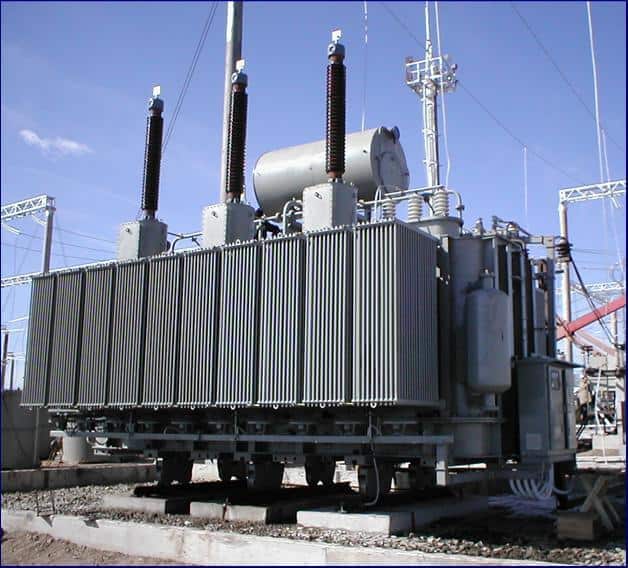
- Transformers (Power Transformers, Distribution Transformers, Traction Transformers, HVDC Converters, Solid State Transformers (SST), Rectifier Transformers):
- A transformer is a passive electrical device that transfers electrical energy from one circuit to another through electromagnetic induction. It can be classified into three types based on voltage change:
- Step-up: Increases voltage and decreases current.
- Step-down: Decreases voltage and increases current.
- Isolation: Provides electrical isolation without changing the voltage.
- Distribution vs. Power Transformers:
- Power Transformers: These are used in high-voltage transmission networks for both stepping up and stepping down applications (e.g., 400 kV, 220 kV). They are generally rated above ~100–200 MVA (not a strict boundary) and are designed for maximum efficiency at or near full load.
- Distribution Transformers: These are used in lower-voltage distribution networks to connect to end-users (e.g., 11 kV → 400/230 V). They are generally rated below ~100 MVA (typically much smaller in practice) and are designed for maximum efficiency at partial load (~50–70%), as they operate continuously with variable demand. They perform the final voltage transformation for household and commercial use.
- Specialized Transformers:
- Traction Transformers: These are special transformers used in railway systems to step down high-voltage AC power from the overhead catenary to the required voltage for the train’s traction system. They are typically standard grid-frequency transformers (50/60 Hz).
- HVDC Converter Transformers: Used in HVDC stations. These transformers adapt AC voltage levels and provide galvanic isolation and phase shifting before conversion to DC (rectification) or after inversion back to AC.
- Solid State Transformers (SSTs): Also known as power electronic transformers (PETs) or intelligent universal transformers (IUTs). These are power-electronic-based conversion systems (not purely AC-AC transformers) that include AC/DC/AC conversion stages with a high-frequency transformer, enabling reduced size, advanced control, and bidirectional power flow.
- Rectifier Transformers: These transformers supply AC power to rectifier systems, which convert it into DC. Their design minimizes harmonics and ensures stable DC output. They are used in industrial processes requiring large DC power (e.g., electrolysis, traction, HVDC).
- A transformer is a passive electrical device that transfers electrical energy from one circuit to another through electromagnetic induction. It can be classified into three types based on voltage change:

- Shunt Reactor:
- Shunt reactors are used in high-voltage transmission systems to control voltage during load variations.
- A shunt reactor is a device that absorbs reactive power (inductive compensation), thereby stabilizing voltage and improving system efficiency, especially in long transmission lines and cable systems.
- A shunt reactor can be directly connected to the power line or to a tertiary winding of a three-winding transformer. It can be permanently connected or switched via a circuit breaker.
- Unlike a power transformer, a shunt reactor typically has a single winding per phase and is designed to consume reactive power rather than transfer active power.
- AI – Artificial Intelligence:
- Artificial Intelligence (AI) is the broad field of computer science focused on building systems that perform tasks requiring human-like intelligence, such as learning, reasoning, perception, and decision-making.
- AI systems typically:
- ingest large datasets
- identify patterns
- make predictions or decisions
- AI is an umbrella term that includes machine learning, deep learning, and other approaches (rule-based systems, optimization, etc.), not just Machine Learning (ML).
- AI programming focuses on three cognitive skills: learning, reasoning and self-correction.
- The 4 types of artificial intelligence?
- Type 1: Reactive machines. These AI systems have no memory and are task specific. An example is Deep Blue, the IBM chess program that beat Garry Kasparov in the 1990s. Deep Blue can identify pieces on the chessboard and make predictions, but because it has no memory, it cannot use past experiences to inform future ones.
- Type 2: Limited memory. Most modern AI systems. These AI systems have memory, so they can use past experiences to inform future decisions. Some of the decision-making functions in self-driving cars are designed this way.
- Type 3: Theory of mind. Research stage. Theory of mind is a psychology term. When applied to AI, it means that the system would have the social intelligence to understand emotions. This type of AI will be able to infer human intentions and predict behavior, a necessary skill for AI systems to become integral members of human teams.
- Type 4: Self-awareness. Does not yet exist. In this category, AI systems have a sense of self, which gives them consciousness. Machines with self-awareness understand their own current state.
- Machine Learning (ML):
- Subset of AI that enables systems to learn from data without explicit programming.
- ML uses historical data to detect patterns and make predictions.
- ML is the dominant paradigm in modern AI, replacing most rule-based systems.
- ML allows software applications to become more accurate at predicting outcomes without being explicitly programmed to do so.
- Recommendation engines are a common use case for ML. Other uses include fraud detection, spam filtering, business process automation (BPA) and predictive maintenance.
- Classical ML is often categorized by how an algorithm learns to become more accurate in its predictions. There are four basic approaches:
- supervised learning,
- unsupervised learning,
- semi-supervised learning and
- reinforcement learning.
- Deep Learning (DL):
- Subset of ML using multi-layered neural networks to learn complex representations.
- DL is not always “more sophisticated” in all contexts—it is more powerful for unstructured data (images, text, audio), but classical ML can outperform it in structured/tabular data.
- DL makes use of layers of information processing, each gradually learning more and more complex representations of data. The early layers may learn about colors, the next ones about shapes, the following about combinations of those shapes, and finally actual objects. DL demonstrated a breakthrough in object recognition. Face recognition is a good example.
- DL is currently the most sophisticated AI architecture we have developed.
- Generative AI (GenAI):
- AI systems that generate new content (text, images, code, audio, etc.) based on learned patterns.
- GenAI is typically powered by large deep learning models (e.g., transformers), not a separate paradigm.
- Generative AI technology generates outputs based on some kind of input – often a prompt supplied by a person. Some GenAI tools work in one medium, such as turning text inputs into text outputs, for example. With the public release of ChatGPT in late November 2022, the world at large was introduced to an AI app capable of creating text that sounded more authentic and less artificial than any previous generation of computer-crafted text.
- Small Language Models (SLM) and Large Language Models (LLM):
- Small Language Models (SLMs) are artificial intelligence (AI) models capable of processing, understanding and generating natural language content. As their name implies, SLMs are smaller in scale and scope than large language models (LLMs).
- LLM means Large Language Models — a type of machine learning/deep learning model that can perform a variety of natural language processing (NLP) and analysis tasks, including translating, classifying, and generating text; answering questions in a conversational manner; and identifying data patterns.
- For example, virtual assistants like Siri, Alexa, or Google Assistant use LLMs to process natural language queries and provide useful information or execute tasks such as setting reminders or controlling smart home devices.
- Computer Vision (CV) / Vision AI & Machine Vision (MV):
- Broad AI field for interpreting visual data.
- Field of AI that enables computers to interpret and act on visual data (images, videos). It works by using deep learning models trained on large datasets to recognize patterns, objects, and context.
- The most well-known case of this today is Google’s Translate, which can take an image of anything — from menus to signboards — and convert it into text that the program then translates into the user’s native language.
- Machine Vision (MV) :
- lndustrial application of Computer Vision. MV is a subset of CV, not a parallel category.
- Specific application for industrial settings, relying on cameras to analyze tasks in manufacturing, quality control, and worker safety. The key difference is that CV is a broader field for extracting information from various visual inputs, while MV is more focused on specific industrial tasks.
- Machine Vision is the ability of a computer to see; it employs one or more video cameras, analog-to-digital conversion and digital signal processing. The resulting data goes to a computer or robot controller. Machine Vision is similar in complexity to Voice Recognition.
- Multimodal Intelligence and Agents:
- Subset of artificial intelligence that integrates multiple data types (text, image, audio, video).
- Multimodal capabilities allows AI to interact with users in a more natural and intuitive way. It can see, hear and speak, which means that users can provide input and receive responses in a variety of ways.
- An AI agent is a computational entity designed to act independently. It performs specific tasks autonomously by making decisions based on its environment, inputs, and a predefined goal. What separates an AI agent from an AI model is the ability to act. There are many different kinds of agents such as reactive agents and proactive agents. Agents can also act in fixed and dynamic environments. Additionally, more sophisticated applications of agents involve utilizing agents to handle data in various formats, known as multimodal agents and deploying multiple agents to tackle complex problems.
- The defining feature of an agent is not just decision-making, but the ability to take actions toward a goal in an environment.
- Agentic AI:
- Agentic AI is a system that can accomplish a specific goal with limited supervision. It consists of AI agents—machine learning models that mimic human decision-making to solve problems in real time. In a multi-agent system, each agent performs a specific subtask required to reach the goal and their efforts are coordinated through AI orchestration.
- Unlike traditional AI models, which operate within predefined constraints and require human intervention, agentic AI exhibits autonomy, goal-driven behavior and adaptability. The term “agentic” refers to these models’ agency, or, their capacity to act independently and purposefully.
- Agentic AI builds on generative AI (gen AI) techniques by using large language models (LLMs) to function in dynamic environments. While generative models focus on creating content based on learned patterns, agentic AI extends this capability by applying generative outputs toward specific goals.
- Edge AI Technology:
- AI executed locally on devices (IoT, sensors, cameras) instead of centralized cloud.
- Edge AI refers to the deployment of AI algorithms and AI models directly on local edge devices such as sensors or Internet of Things (IoT) devices, which enables real-time data processing and analysis without constant reliance on cloud infrastructure.
- Simply stated, edge AI, or “AI on the edge“, refers to the combination of edge computing and artificial intelligence to execute machine learning tasks directly on interconnected edge devices. Edge computing allows for data to be stored close to the device location, and AI algorithms enable the data to be processed right on the network edge, with or without an internet connection. This facilitates the processing of data within milliseconds, providing real-time feedback.
- Self-driving cars, wearable devices, security cameras, and smart home appliances are among the technologies that leverage edge AI capabilities to promptly deliver users with real-time information when it is most essential.
- High-Density AI:
- High-density AI refers to the concentration of AI computing power and storage within a compact physical space, often found in specialized data centers. It is an infrastructure trend (AI data centers / GPU clusters), not a distinct AI category. This approach allows for increased computational capacity, faster training times, and the ability to handle complex simulations that would be impossible with traditional infrastructure.
- Explainable AI (XAI) and Human-Centered Explainable AI (HCXAI):
- Explainable AI (XAI) refers to methods for making AI model decisions understandable to humans, focusing on how the AI works, whereas Human-Centered Explainable AI (HCXAI) goes further by contextualizing those explanations to a user’s specific task and understanding needs.
- While XAI aims for technical transparency of the model, HCXAI emphasizes the human context, emphasizing user relevance, and the broader implications of explanations, including fairness, trust, and ethical considerations.
- Physical AI & Embodied AI:
- Physical AI refers to a branch of AI that enables machines to perceive, understand, and interact with the physical world by directly processing data from a variety of sensors and actuators.
- Embodied AI, as a subset, focuses on the sensory, decision-making, and interaction capabilities that enable these systems to function effectively in dynamic and unpredictable environments via sensors and actuators.
- Federated Learning and Reinforcement Learning:
- Federated Learning is a machine-learning technique where data stays where it is, and only the learned model updates are shared. “Training AI without sharing your data”.
- Reinforcement Learning is a type of AI where an agent learns by interacting with an environment and receiving rewards or penalties. “Learning by trial and error”
- Federated Learning (FL) and Reinforcement Learning (RL) can be combined into a field called Federated Reinforcement Learning (FRL), where multiple agents learn collaboratively without sharing their raw data. In this approach, each agent trains its own RL policy locally and shares model updates, like parameters or gradients, with a central server. The server aggregates these updates to create a more robust, global model. FRL is used in applications like optimizing resource management in communication networks and enhancing the performance of autonomous systems by learning from diverse, distributed experiences while protecting privacy (still niche and mostly experimental.)
- AI Factories:
- AI Factories are specialized, high-performance computing centers designed to train, tune, and deploy artificial intelligence models at scale.
- Companies and organizations involved in AI factory infrastructure and development include Nvidia, AWS, Microsoft, OpenAI, CoreWeave, Lambda, Nebius, Supermicro, and HPE. The European Union is also establishing AI Factories through its EuroHPC Joint Undertaking to foster regional innovation.
- “AI factory” is a conceptual term (not standardized), referring to industrial-scale AI production systems.
- Extra Low-Voltage (ELV):
- Extra-Low Voltage (ELV) is defined as a voltage of ≤ 50 V AC (RMS) or ≤ 120 V DC (ripple-free).
- ELV systems are typically used where electrical safety is critical (e.g., building automation, control circuits, lighting, telecom).
- Low-Voltage (LV):
- The International Electrotechnical Commission (IEC) defines Low Voltage (LV) for supply systems as voltage in the range > 50–1000 V AC or > 120–1500 V DC.
- Medium-Voltage (MV):
- Medium Voltage (MV) is a voltage class that typically falls between low voltage and high voltage, with a common range being from > 1 kV up to ~30–36 kV (typical IEC practice).
- Some regions (e.g., North America) extend MV up to ~69 kV, depending on utility definitions.
- High-Voltage (HV):
- The International Electrotechnical Commission defines high voltage as above 1000 V AC and above 1500 V DC.
- In practice, HV is often considered from ~36 kV up to ~230 kV in transmission systems.
- Super High-Voltage or Extra High-Voltage (EHV):
- Extra High-Voltage (EHV) is the voltage class used for long-distance bulk power transmission. The range for EHV systems is typically from ~220 kV to ~765–800 kV. “Super High Voltage” is not a standard IEC term.
- Ultra High-Voltage (UHV):
- Ultra High-Voltage (UHV) is the highest voltage class used in electrical transmission, defined as a voltage of ≥ 800 kV (AC) and ≥ 800–1000 kV (DC, depending on classification).
- Bushings:
- General / Mechanical Context:
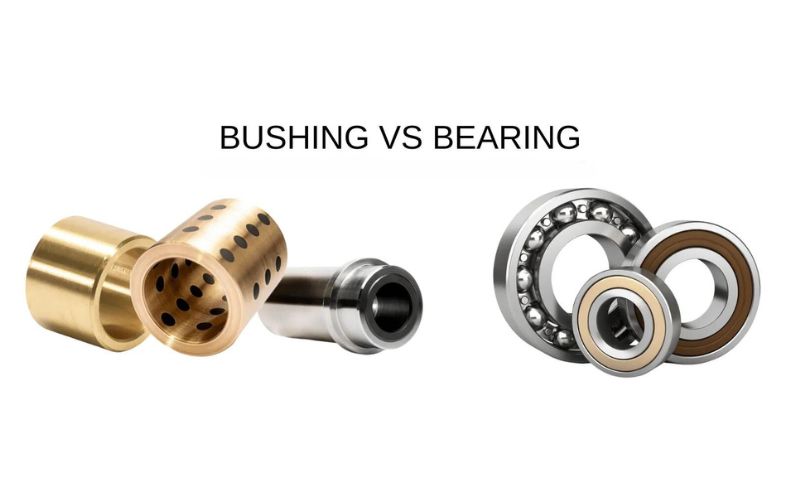
- A bushing is a type of bearing, specifically a plain bearing (also called a sleeve bearing), while a bearing is a broader term encompassing various types that allow relative motion between components.
- Bushings are typically simpler, single-piece or lined components (metal, polymer, or composite) that reduce friction by sliding against a shaft, whereas bearings may include rolling elements like balls or rollers to facilitate movement (rolling bearings).
- Bushings are commonly used where:
- loads are moderate
- speeds are relatively low
- simplicity, cost, and durability are preferred over high precision
- Electrical / Power Systems Context:
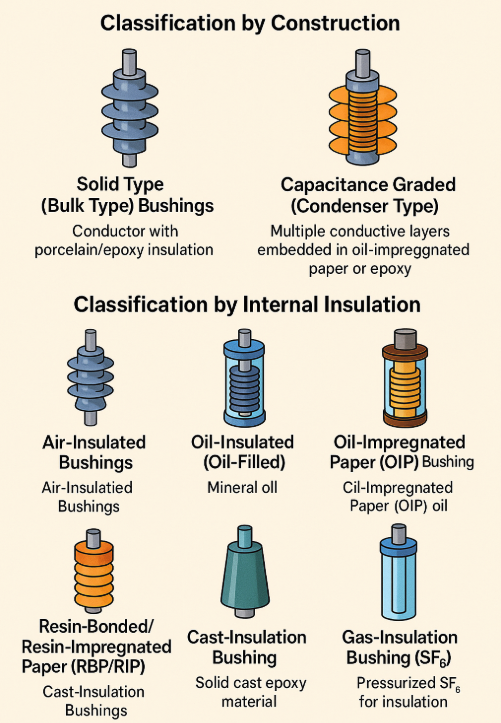
- In transformers, bushings are insulated electrical feedthrough devices that facilitate the safe passage of high-voltage conductors through the grounded transformer tank.
- They act as a protective barrier, preventing electrical current from leaking to the transformer’s grounded parts and ensuring safe operation by providing both electrical insulation and mechanical support for the conductor.
- Transformer bushings typically include:
- a central conductor
- insulating material (e.g., oil-impregnated paper, resin, or gas insulation)
- external insulation profile (to prevent flashover in air)
- They are critical components in:
- power transformers
- switchgear
- high-voltage equipment
- General / Mechanical Context:
- De-energized Tap Changers (DETCs):
- De-energized tap changers (DETCs), also known as no-load or off-circuit tap changers, are devices used to adjust transformer voltage ratios by altering the number of active turns in the primary winding. They are operated manually while the transformer is powered off and de-energized to prevent arcing.