
DEHN – Production start in Pitești – DEHN expands capacities for the European market

The world is going electric. With the expansion of renewable energies, the rapid global growth of data centers, and the increasing networking of buildings, the electrical industry is more crucial than ever.
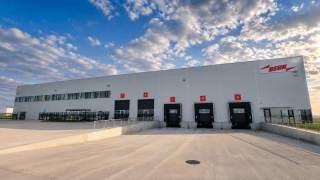
Besides Asia and the USA, the European market is essential for DEHN. In spring 2023, the Neumarkt-based family business commissioned a new production facility at its Mühlhausen site. To enable even greater prioritization there and simultaneously respond more flexibly to customer requests from across Europe, an additional European base was sought. Since July 2026, production has been running at the new multi-functional site in Pitești, Romania, northwest of Bucharest. The plant focuses on the manufacture of surge protection devices, which require a high degree of manual assembly.
The newly built plant in Pitești is an ideal complement to the existing plants in Neumarkt and Mühlhausen. While high production volumes and highly automated processes dominate at those locations, the Romanian site primarily manufactures products in lower volumes but with a high degree of manual assembly. Just under a year after the official groundbreaking ceremony, the first surge protection devices have now rolled off the production line.
Multifunctional Site:
After an intensive search across Europe, Romania ultimately combined most of the key factors for DEHN. The southeastern European country offers ideal location characteristics, such as good infrastructure and a sufficient supply of well-trained specialists. The site will employ up to 150 people in various business functions. In addition to production and logistics, employees in human resources, marketing, IT, and other shared services complete the multifunctional site.
Strengthening the global manufacturing network:
Piteşti joins the company’s global manufacturing network. Just last year, the specialist in lightning, surge, and occupational safety opened a production facility in Mooresville, North Carolina, to serve the American market. The new European location is a crucial component of the company’s international strategy and enables it to respond flexibly to increasing demand from European countries.
SourceDEHN
EMR Analysis
More information on DEHN SE: See the full profile on EMR Executive Services
More information on Dr. Philipp Dehn (Chairman of the Board & Chief Executive Officer, DEHN SE + Member of the Board and Chairman, Electrical Installation Systems and Building Platform, ZVEI): See the full profile on EMR Executive Services
EMR Additional Notes:
- Grounding and Bonding, Surge, Transient, Earth and Lightning Protection / Arresters Devices:
- Grounding and Bonding:
- Grounding (earthing in British English) is connecting an electrical system or equipment to the earth, creating a safe path for fault currents to dissipate into the ground.
- Bonding is the electrical connection of multiple exposed conductive parts to each other and to the grounded system, ensuring they are all at the same electrical potential to prevent shock hazards.
- Together, grounding and bonding create a stable, unified, and safe electrical environment by:
- providing a low-impedance fault path (critical refinement)
- preventing dangerous voltage differences
- Equipotential bonding is a specific type of bonding that connects separate metallic parts (pipes, enclosures, structural steel) so they remain at the same electrical potential, reducing the risk of electric shock during fault or lightning conditions.
- Surge:
- A surge is a temporary overvoltage lasting longer than a transient impulse (typically microseconds to milliseconds, not nanoseconds).
- Surge protection devices (SPDs), also known as:
- Transient Voltage Surge Suppressors (TVSS)
- Surge Protection Devices (SPD)
- are designed to protect electrical and electronic equipment from overvoltages.
- A surge protector limits voltage by diverting excess energy to ground and/or clamping the voltage to a safe level, thereby protecting connected equipment.
- SPDs do not “short-circuit” in normal operation; they switch to a low-impedance path only during overvoltage events
- The “crowbar” function applies only to specific protection designs, not all surge arresters
- Transient:
- A transient is a very fast, short-duration overvoltage event, typically lasting from nanoseconds to microseconds (not milliseconds in most definitions), and can reach very high peak amplitudes.
- => Surge vs. Transient:
- In practice, the terms are sometimes used interchangeably, but technically they describe different time-domain behaviors.
- Transient: very short duration, very fast rise time, often higher peak voltage
- Surge: longer duration, lower peak compared to fast transients
- Earthing and Lighting:
- Earthing ensures that fault currents are safely directed to the ground, minimizing the risk of damage or injury. This is typically achieved using ground rods, meshes, or buried conductors forming a grounding system.
- Lightning protection is a system designed to protect structures and equipment from lightning strikes. It typically includes:
- air terminals (lightning rods)
- down conductors
- grounding system
- surge protection devices (SPDs)
- Lightning protection is not only about “directing current to ground” but also about controlling voltage gradients and preventing dangerous potential differences (step and touch voltages).
- Grounding and Bonding: