Finder – Finder announced the publication of its first sustainability report

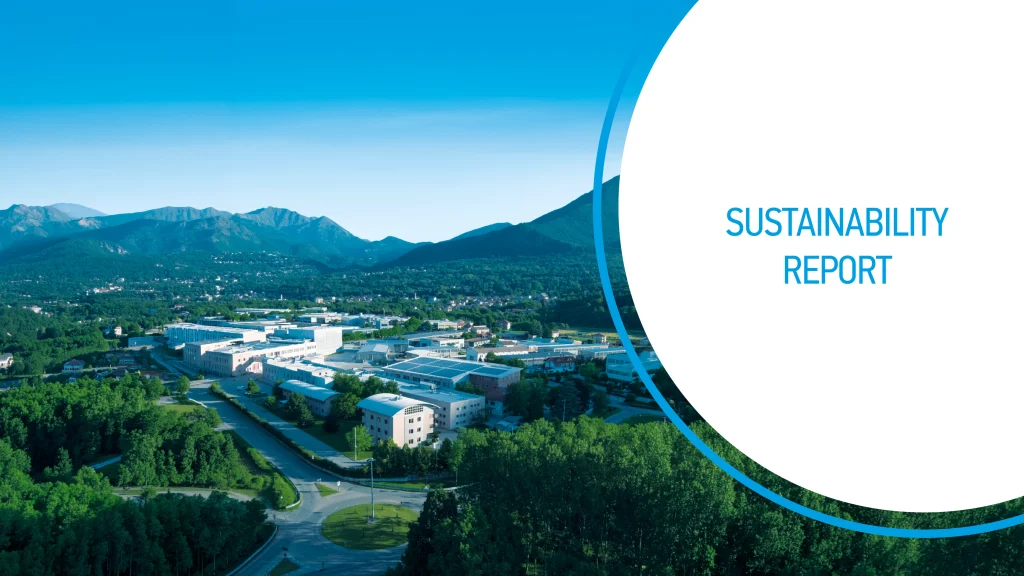
Finder has officially released its Sustainability Report for 2024.
This document marks a strategic turning point for the company. Compared to the previous report, which focused exclusively on the parent company, the new report extends its scope to all the entities of the Finder Group, voluntarily adopting the European Sustainability Reporting Standards (ESRS).
Guided by its corporate mission, “innovating with respect for people and the planet”, Finder’s strategy is built on three fundamental pillars: Commitment to the environment, development of human resources, and responsible supply chain management. These guiding principles integrate economic growth and technological innovation with a strong commitment to social responsibility, drawing on the company’s long-standing values such as putting people first, managerial autonomy, and the pursuit of innovation.
In support of this vision, the company’s business model remains a key strength. The long-standing strategy of vertical integration, and keeping its technological core in Europe allows the company to monitor the supply chain constantly, and to manage procurement carefully, ensuring high standards (with particular reference to ESG—Environmental, Social, and Governance—criteria at every stage of the product life cycle. The effectiveness of this approach is also demonstrated by the company’s numerous international certifications, which attest to its transparent business conduct, and its focus on long-term collaborations with partners and suppliers.
The document provides a comprehensive overview of the actions and best practices already implemented by the Group across its various locations. The report covers key topics for the company: From the first measurement of greenhouse gas emissions (structured according to Scope 1, 2, and 3 operational protocols), to projects for the circular economy and process efficiency—as well as ongoing investments in training, safety, and the protection of employees worldwide.
With the publication of the 2024 Sustainability Report, the Finder S.p.A. Board of Directors reaffirms its commitment of consolidating a business model capable of combining the development of consumer and industrial electronics, along with the protection of resources and local communities.
The complete document is available for viewing and download on the company’s website.
SourceFinder
EMR Analysis
More information on Finder: See the full profile on EMR Executive Services
More information on Renato Giordanino (Owner & Managing Director, Finder): See the full profile on EMR Executive Services
More information on Sustainability and the 2024 Sustainability Report by Finder: See the full profile on EMR Executive Services
More information on the European Financial Reporting Advisory Group (EFRAG): https://www.efrag.org/ + EFRAG is a private association established in 2001 with the encouragement of the European Commission to serve the public interest. EFRAG extended its mission in 2022 following the new role assigned to EFRAG in the CSRD, providing Technical Advice to the European Commission in the form of draft European Sustainability Reporting Standards and/or draft amendments to these Standards. Its Member Organisations are European Stakeholders Organisations, National Organisations and Civil Society Organisations. EFRAG’s activities are organised in two pillars:
- A Financial Reporting Pillar: influencing the development of IFRS Accounting Standards from a European perspective and how they contribute to the efficiency of capital markets and providing endorsement advice on (amendments to) IFRS Accounting Standards to the European Commission.
- Secondly, a Sustainability Reporting Pillar: developing draft European Sustainability Reporting Standards (ESRS), and related amendments for the European Commission and providing implementation support for ESRS.
More information on Saskia Slomp (Chief Executive Officer, EFRAG): https://www.efrag.org/en/about-us/governance/efrag-secretariat + https://www.linkedin.com/in/saskia-slomp-3a034729/
More information on the European Sustainability Reporting Standards (ESRS) by EFRAG: https://www.efrag.org/en/sustainability-reporting/esrs-workstreams + The European Sustainability Reporting Standards (ESRS) are the mandatory framework dictating how companies must disclose their Environmental, Social, and Governance (ESG) data under the Corporate Sustainability Reporting Directive (CSRD). Developed by EFRAG (European Financial Reporting Advisory Group), they ensure consistent, comparable, and transparent sustainability reporting across the European Union. As of 2026, the framework operates on a streamlined, revised architecture to minimize administrative burdens while supporting the European Green Deal.
EMR Additional Notes:
- Supply Chain:
- A supply chain is the end-to-end network of individuals, organizations, resources, activities, data, and technologies involved in the creation and delivery of a product or service—from raw materials to the final customer.
- A supply chain includes not only physical flows (goods), but also information flows and financial flows across all participants.
- At the most fundamental level, Supply Chain Management (SCM) is the integrated planning, coordination, and optimization of the flow of:
- goods
- information
- and finances
- from raw material sourcing to final delivery.
- At its core, SCM is not just “management of flows” but the optimization of those flows across cost, service level, speed, and risk.
- Supply Chain vs Logistics:
- Supply Chain: entire ecosystem (end-to-end)
- Logistics: subset focused on movement and storage of goods
- CSR (Corporate Social Responsibility):
- Corporate Social Responsibility (CSR) is a voluntary framework or business model that helps a company be socially accountable to itself, its stakeholders, and the public.
- The purpose of CSR is to give back to the community, take part in philanthropic causes, and provide positive social value. Businesses are increasingly turning to CSR to make a difference and build a positive brand around their company.
- CSR encompasses a company’s policies and initiatives relating to environmental stewardship, ethical business practices, employee well-being, community engagement, and corporate governance.
- CSR tends to target opinion formers – politicians, pressure groups, media. It is generally driven internally by the company as part of its corporate values and long-term business strategy.
- ESG (Environmental, Social and Governance):
- ESG (Environmental, Social and Governance) refers to the three key factors used to measure and evaluate the sustainability, ethical practices, risk profile, and long-term resilience of a business or company. ESG is widely used by investors, lenders, regulators, and other stakeholders when assessing a company’s non-financial performance.
- Most socially responsible investors check companies out using ESG criteria to screen investments.
- ESG metrics are not commonly part of mandatory financial reporting, although disclosure requirements are becoming increasingly mandatory in many jurisdictions (e.g., the EU Corporate Sustainability Reporting Directive (CSRD)).
- There is not yet a standardized approach to the calculation or presentation of different ESG metrics, although several reporting frameworks and standards exist (such as GRI, SASB, TCFD, and ISSB).
- Environmental
- Conservation of the natural world
- Climate change and carbon emissions
- Air and water pollution
- Biodiversity
- Deforestation
- Energy efficiency
- Waste management
- Water scarcity
- …
- Social
- Consideration of people & relationships
- Customer satisfaction
- Data protection and privacy
- Gender and diversity
- Employee engagement
- Community relations
- Human rights
- Labor standards
- …
- Governance
- Standards for running a company
- Board composition
- Audit committee structure
- Bribery and corruption
- Executive compensation
- Lobbying
- Political contributions
- Whistleblower schemes
- …
- Criteria are of increasing interest to companies, their investors and other stakeholders. With growing concern about the ethical status of quoted companies, these standards are the central factors that measure the ethical impact and sustainability of investment in a company.
- Consequently, ESG analysis considers how companies serve society while managing environmental, social, and governance risks, and how this impacts their current and future performance.
- CSR vs. ESG:
- CSR is a company’s internal strategy and business philosophy for sustainability and responsible corporate behavior, whereas ESG is the external framework of measurable criteria and performance indicators used to assess a company’s sustainability performance.
- The major difference between them is that CSR is a business model used by individual companies, while ESG is an evaluation framework that investors, lenders, regulators, and rating agencies use to assess a company and determine its sustainability performance, risk exposure, and long-term investment attractiveness.
- CSR = what a company chooses to do.
- ESG = how outsiders measure how well the company is doing it.
- Carbon Dioxide (CO2):
- The primary greenhouse gas emitted through human activities. Carbon dioxide enters the atmosphere through the burning of fossil fuels (coal, natural gas, and oil), solid waste, biomass (e.g. wood), and also as a result of certain industrial chemical reactions (e.g. cement production).
- Carbon dioxide is removed from the atmosphere (or “sequestered”) when it is absorbed by plants as part of the biological carbon cycle and through ocean absorption and geological processes.
- CO₂ is naturally part of the carbon cycle, but human activities have significantly increased its concentration in the atmosphere.
- Biogenic Carbon Dioxide (CO2):
- Biogenic CO₂ and fossil-derived CO₂ are chemically identical molecules.
- The distinction is not chemical, but source-based:
- Biogenic carbon: CO₂ released from organic materials such as plants, wood, soil, and biomass that were recently part of the natural carbon cycle.
- Fossil carbon: CO₂ released from fossil fuels (coal, oil, gas), which were stored underground for millions of years.
- CO2e (Carbon Dioxide Equivalent):
- CO₂e means “carbon dioxide equivalent”.
- It is a standardized climate metric used to express the total climate impact of multiple greenhouse gases in a single standardized unit.
- CO₂e converts all greenhouse gases (such as methane and nitrous oxide) into the amount of CO₂ that would have the same global warming effect over a defined time period.
- Formula: CO₂e = mass of gas × Global Warming Potential (GWP)
- Carbon dioxide equivalents are commonly expressed as million metric tonnes of carbon dioxide equivalents, abbreviated as MMTCDE.
- The carbon dioxide equivalent for a gas is derived by multiplying the tonnes of the gas by the associated GWP: MMTCDE = (million metric tonnes of a gas) * (GWP of the gas).
- For example, the GWP for methane is 25 and for nitrous oxide 298. This means that emissions of 1 million metric tonnes of methane and nitrous oxide respectively is equivalent to emissions of 25 and 298 million metric tonnes of carbon dioxide.
- Carbon Footprint:
- There is no universally agreed definition of what a carbon footprint is.
- The most widely used definition (GHG Protocol) describes it as: “The total set of greenhouse gas (GHG) emissions caused directly and indirectly through an organization’s operations and value chain.”
- A carbon footprint is the total amount of greenhouse gas (GHG) emissions caused directly and indirectly by an individual, organization, product, or activity.
- It is typically measured in CO₂e.
- Decarbonization:
- Reduction of carbon dioxide emissions through the use of low-carbon energy sources and improved efficiency, with the goal of reducing overall greenhouse gas emissions.
- Decarbonization typically refers to system-wide transition, not only emission reduction at a single source.
- Carbon Credits or Carbon Offsets:
- Carbon credits are tradable certificates representing the right to emit one metric ton of CO₂e.
- They are part of cap-and-trade systems, where:
- A cap limits total emissions
- Companies receive or buy allowances
- Excess credits can be traded
- Offsets are often linked to external projects that reduce or remove emissions (e.g. reforestation, renewable energy).
- Carbon Capture and Storage (CCS) – Carbon Capture, Utilisation and Storage (CCUS):
- CCS involves capturing CO₂ emissions from industrial processes and storing them permanently in geological formations (e.g. underground reservoirs).
- CCUS adds a utilization step, where captured CO₂ is reused as a feedstock (e.g. fuels, chemicals, building materials).
- CCS = storage only, CCUS = storage + reuse.
- Carbon Dioxide Removal (CDR) or Durable Carbon Removal:
- CDR refers to methods that actively remove CO₂ from the atmosphere and store it for long periods in geological, biological, or mineral form.
- Examples include:
- Direct Air Capture (DAC)
- Bioenergy with Carbon Capture (BECCS)
- Enhanced Rock Weathering (ERW)
- CDR creates net negative emissions when removal exceeds emissions.
- Direct Air Capture (DAC):
- Technologies that extract CO2 directly from the atmosphere at any location, unlike carbon capture which is generally carried out at the point of emissions, such as a steel plant.
- Constraints like costs and energy requirements as well as the potential for pollution make DAC a less desirable option for CO2 reduction. Its larger land footprint when compared to other mitigation strategies like carbon capture and storage systems (CCS) also put it at a disadvantage.
- Direct Air Capture and Storage (DACCS):
- Climate technology that removes carbon dioxide (CO2) directly from the ambient atmosphere using large fans and chemical processes to bind with the CO2.
- Bioenergy with Carbon Capture and Storage (BECCS):
- Technology that generates energy from biomass while capturing and storing the resulting CO₂.
- Because biomass absorbs CO₂ while growing, BECCS can result in net negative emissions.
- Enhanced Rock Weathering (ERW):
- Carbon dioxide removal (CDR) technique that accelerates the natural process of rock weathering by grinding silicate rocks into dust and spreading it on land, typically agricultural fields. This process uses rainwater to convert atmospheric carbon dioxide into mineral carbonates, which are then stored long-term in soils, groundwater, and oceans.
- Limits of Carbon Dioxide Storage:
- Carbon storage is not endless; the Earth’s capacity for permanently storing vast amounts of captured carbon, particularly in geological formations, is limited, potentially reaching a critical limit of 1,460 gigatonnes at around 2200, though storage durations vary significantly depending on the method, from decades for some biological methods to potentially millions of years for others like mineralization. While some methods offer very long-term storage, the sheer volume needed to meet climate targets requires scaling up storage significantly beyond current capacity, raising concerns about the available volume over time.
- Carbon Impregnation:
- Carbon impregnation is the process of treating activated carbon with chemical agents (such as metals, acids, or bases) to enhance its ability to adsorb specific, hard-to-remove pollutants. By loading substances like silver, sulfur, or potassium hydroxide into its pores, this material combines physical adsorption with chemical reaction for improved, targeted filtration in water and air. This is a materials engineering process, not a climate accounting concept.
- Global Warming:
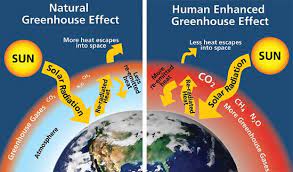
- Global warming is the long-term heating of Earth’s climate system observed since the pre-industrial period (between 1850 and 1900) due to human activities, primarily fossil fuel burning, which increases heat-trapping greenhouse gas levels in Earth’s atmosphere.
- Global Warming Potential (GWP):
- A measure of how much heat a greenhouse gas traps in the atmosphere compared to CO₂ over a specific time period (commonly 100 years).
- CO₂ has a GWP of 1.
- GWP is the scientific basis for converting gases into CO₂e.
- GWP was developed to allow comparisons of the global warming impacts of different gases.
- Greenhouse Gas (GHG):
- Any gas that absorbs and traps infrared radiation in the atmosphere, contributing to the greenhouse effect.
- Main GHGs include:
- CO₂
- Methane (CH₄)
- Nitrous oxide (N₂O)
- Fluorinated gases
- Water vapor is a GHG but is not directly controlled by human emissions at scale.
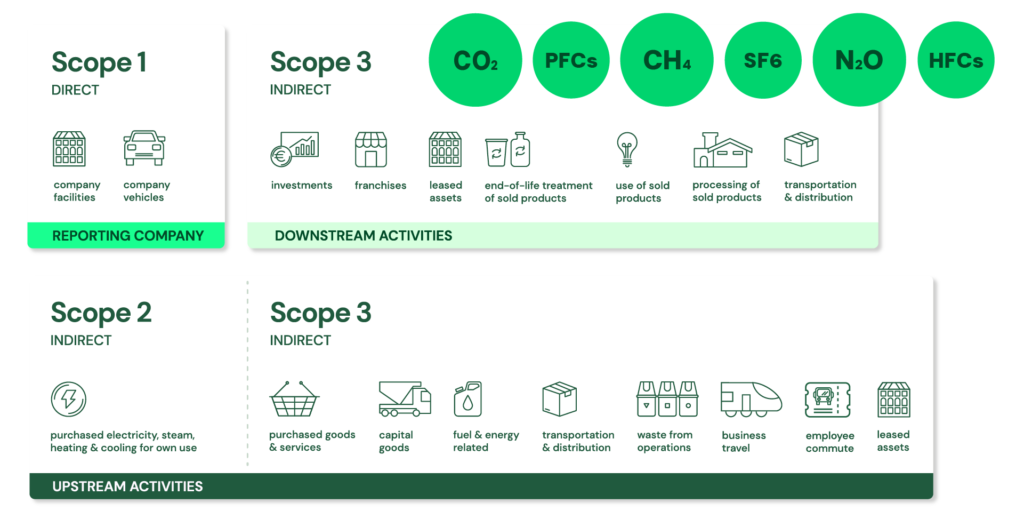
- GHG Protocol Corporate Standard Scope 1, 2 and 3: https://ghgprotocol.org/ + The GHG Protocol Corporate Accounting and Reporting Standard provides requirements and guidance for companies and other organizations preparing a corporate-level GHG emissions inventory. Scope 1 and 2 are typically mandatory for companies that are required to report their emissions by national or regional regulations. The GHG Protocol itself is a voluntary standard.
- Scope 1: Direct emissions:
- Direct emissions from company-owned and controlled resources. In other words, emissions are released into the atmosphere as a direct result of a set of activities, at a firm level. It is divided into four categories:
- Stationary combustion (e.g from fuels, heating sources). All fuels that produce GHG emissions must be included in scope 1.
- Mobile combustion is all vehicles owned or controlled by a firm, burning fuel (e.g. cars, vans, trucks). The increasing use of “electric” vehicles (EVs), means that some of the organisation’s fleets could fall into Scope 2 emissions.
- Fugitive emissions are leaks from greenhouse gases (e.g. refrigeration, air conditioning units). It is important to note that refrigerant gases are a thousand times more dangerous than CO2 emissions. Companies are encouraged to report these emissions.
- Process emissions are released during industrial processes, and on-site manufacturing (e.g. production of CO2 during cement manufacturing, factory fumes, chemicals).
- Direct emissions from company-owned and controlled resources. In other words, emissions are released into the atmosphere as a direct result of a set of activities, at a firm level. It is divided into four categories:
- Scope 2: Indirect emissions – owned:
- Indirect emissions from the generation of purchased energy, from a utility provider. In other words, all GHG emissions released in the atmosphere, from the consumption of purchased electricity, steam, heat and cooling. For most organisations, electricity will be the unique source of scope 2 emissions. Simply stated, the energy consumed falls into two scopes: Scope 2 covers the electricity consumed by the end-user. Scope 3 covers the energy used by the utilities during transmission and distribution (T&D losses).
- Scope 3: Indirect emissions – not owned:
- Indirect emissions – not included in scope 2 – that occur in the value chain of the reporting company, including both upstream and downstream emissions. In other words, emissions are linked to the company’s operations. According to the GHG protocol, scope 3 emissions are separated into 15 categories.
- Scope 1: Direct emissions:
- Circular Economy:
- A circular economy is a systemic approach to economic development designed to benefit businesses, society, and the environment.
- In contrast to the traditional linear model (“take–make–waste”), a circular economy is regenerative by design and aims to gradually decouple economic growth from the consumption of finite resources.
- In such an economy, materials and products (e.g., textiles, metals, electronics) are kept in use for as long as possible through reuse, repair, refurbishment, remanufacturing, and recycling.
- The goal is to create a closed-loop system where waste and pollution are minimized, and resources are conserved, thereby reducing the environmental impact of production and consumption.
- Sustainability Vs. Circular Economy:
- Circular economy focuses specifically on resource cycles and material flows (reduce, reuse, repair, recycle).
- Sustainability is broader and encompasses three pillars:
- environmental
- social
- economic