ABB – ABB to acquire Advantics, expanding Direct Current portfolio
- Strengthens ABB’s industry-leading technologies for Direct Current applications
- Advantics’ technology offers up to 99% efficiency for demanding power conversion applications
- Acquisition targets energy expansion and data center growth
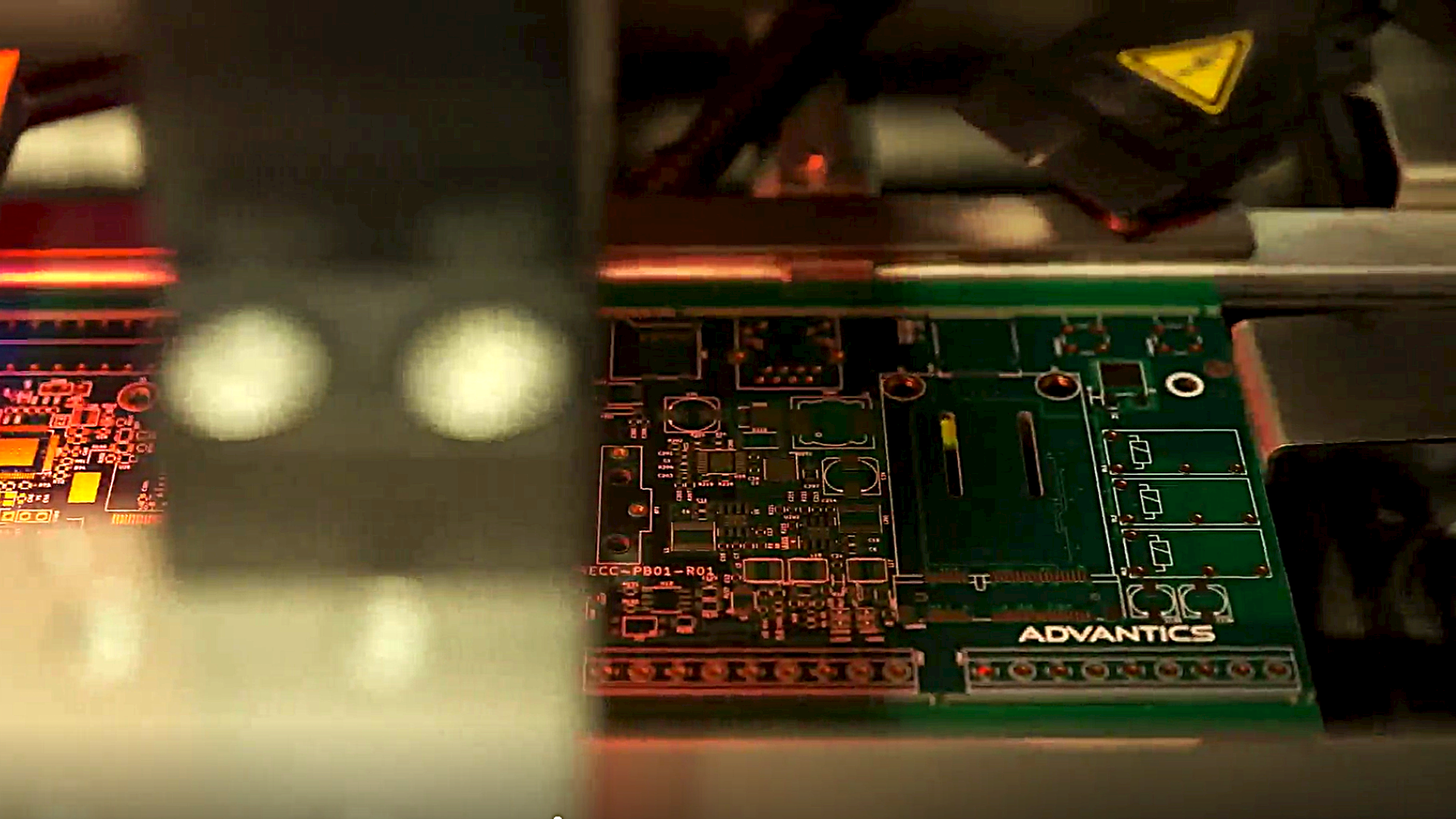
ABB is acquiring Advantics, a specialist provider of Silicon Carbide-based power conversion solutions based in France. The acquisition expands ABB’s Direct Current (DC) portfolio and positions the company to serve accelerating demand for efficient DC solutions across data centers, industrial microgrids, power generation and EV infrastructure. Financial terms were not disclosed. The transaction is expected to close by Q4 2026.
The IEA expects electricity’s share of final energy consumption to rise from 20 percent today to around 36 percent by 2035. By using advanced semiconductor technology to control more of this electrical power, ABB’s DC solutions minimize repeated AC/DC conversion and maximize efficiency.
The acquisition of Advantics adds a high-efficiency Silicon Carbide power conversion technology to ABB’s broader DC portfolio, strengthening the building blocks needed to design, protect, convert, distribute and manage power in new electrical architectures with higher power density, resilience and efficiency. Combined with ABB’s expertise in protection, distribution, digital control and system-level engineering, the acquisition supports the development of DC systems that maximize efficiency, energy storage and flexible power sources.
Massimiliano Cifalitti, President of ABB’s Smart Power division, said: “We invest continuously in technology and talent to support global energy expansion. ABB offers industry-leading Direct Current solutions, and Advantics’ power converter technology and world-class engineering talent are a perfect match, adding compact, high-efficiency capabilities that will strengthen our offering for data centers, industrial microgrids, and EV infrastructure. Together, we will accelerate the development and delivery of next-generation DC solutions.”
Michal Elias, Founder and CEO of Advantics, said: “Advantics has proven that Silicon Carbide technology can deliver breakthrough performance. As the world electrifies, the opportunities for innovation are unprecedented and demand for efficient, intelligent power conversion is accelerating faster than ever before. ABB shares our vision for the future of this technology. Together, we will shape the infrastructure that will power the energy transition and digital transformation for the next decade.”
Based in Saint-Genis-Pouilly, in eastern France, Advantics integrates hardware, firmware and software to optimize power conversion performance across demanding applications including data centers, industrial microgrids, power generation and EV infrastructure. The company’s power converter modules deliver up to 99 percent efficiency.
SourceABB
EMR Analysis
More information on ABB: See full profile on EMR Executive Services
More information on Morten Wierod (Chief Executive Officer and Member of the Group Executive Committee, ABB): See full profile on EMR Executive Services
More information on Christian Nilsson (Chief Financial Officer and Member of the Executive Committee, ABB): See full profile on EMR Executive Services
More information on the ABB Way: See full profile on EMR Executive Services
More information on Electrification Business Area by ABB: See the full profile on EMR Executive Services
More information on Giampiero Frisio (President, Electrification Business Area and Member of the Executive Committee, ABB): See full profile on EMR Executive Services
More information on Massimiliano Cifalitti (President, Smart Power Division, Electrification Business Area, ABB): See full profile on EMR Executive Services
More information on Advantics by Smart Power Division by Electrification Business Area by ABB: https://www.advantics.fr/ + ADVANTICS is a technology leader in Silicon Carbide (SiC) power electronics and advanced control systems.
We deliver compact, high-efficiency solutions for demanding applications—from EV charging and microgrids to marine and government sectors, enabling the next generation of energy infrastructure. Our vehicle and station charge controllers support all major global standards—including MCS, NACS, CCS, and CHAdeMO—and are among the first to support bi-directional power transfer (V2X).
As a proud member of the CharIN organization, we regularly test our products for interoperability. All ADVANTICS products are proudly manufactured in the EU and consistently deliver 98–99% efficiency across a wide power range.
Our headquarters and engineering design centre are located in Technoparc, Saint-Genis-Pouilly, France.
Founded in 2017 by former engineers from CERN, ADVANTICS is a privately-owned company based in France near Geneva.
With a team of specialists from 18 nationalities, we design and offer solutions in hardware, power electronics, firmware, and software to enable the next generation of energy infrastructure.
Within just a few years of our establishment, we have managed to build a strong portfolio of plug-and-play solutions, trusted by more than 150+ customers in over 40 countries.
More information on Michal Elias (Chief Executive Officer, Advantics, Smart Power Division, Electrification Business Area, ABB): See full profile on EMR Executive Services
https://www.linkedin.com/in/michal-elias-4b003a101/
More information on IEA (International Energy Agency): https://www.iea.org + The IEA is at the heart of global dialogue on energy, providing authoritative analysis, data, policy recommendations, and real-world solutions to help countries provide secure and sustainable energy for all.
The IEA was created in 1974 to help co-ordinate a collective response to major disruptions in the supply of oil. While oil security this remains a key aspect of our work, the IEA has evolved and expanded significantly since its foundation.
Taking an all-fuels, all-technology approach, the IEA recommends policies that enhance the reliability, affordability and sustainability of energy. It examines the full spectrum issues including renewables, oil, gas and coal supply and demand, energy efficiency, clean energy technologies, electricity systems and markets, access to energy, demand-side management, and much more.
Since 2015, the IEA has opened its doors to major emerging countries to expand its global impact, and deepen cooperation in energy security, data and statistics, energy policy analysis, energy efficiency, and the growing use of clean energy technologies.
More information on Dr. Fatih Birol (Executive Director, International Energy Agency): https://www.iea.org/contributors/dr-fatih-birol + https://www.linkedin.com/in/fatih-birol/
EMR Additional Notes:
- AC (Alternating Current) & DC (Direct Current) & UC (Universal Current):
- Direct Current (DC):
- Electric current that is unidirectional, meaning the flow of charge is always in the same direction. Unlike alternating current, the direction does not change. It is used in many household electronics and in all battery-powered devices.
- Direct current has many uses, from charging batteries to supplying power for electronic systems, motors, and industrial processes. Very large quantities of DC power are used in applications such as aluminum smelting and other electrochemical processes.
- DC is more efficient for long-distance transmission at very high voltages (HVDC) because it avoids reactive power losses and reduces skin effect and capacitive losses, especially over long distances and submarine cables.
- Alternating Current (AC):
- Alternating current is an electric current in which the direction of flow periodically reverses (typically 50 or 60 Hz).
- AC is used in power grids and homes because it can be easily transformed to higher or lower voltages using transformers. This allows efficient transmission at high voltage over long distances and safe distribution at low voltage for end users.
- DC can also be converted to different voltage levels, but it requires power electronics (converters), not simple transformers.
- Universal Current (UC): .
- Universal Current (UC) means a device can operate with either AC or DC input.
- For example, a 24 V UC input can accept either 24 V AC or 24 V DC.
- UC is not a type of current, but a device input specification indicating compatibility with both AC and DC supplies.
- Direct Current (DC):
- Power Electronics:
- Power electronics is a specialized branch of electrical engineering focused on the conversion, control, and conditioning of electrical energy using power semiconductor devices (such as diodes, thyristors, MOSFETs, and IGBTs) and control systems.
- It enables precise control of:
- voltage
- current
- frequency
- waveform
- to efficiently supply power across applications ranging from consumer electronics to industrial drives, renewable energy systems, electric vehicles (EVs), battery energy storage systems (BESS), and power grids.
- Typical power electronic equipment includes rectifiers, inverters, DC-DC converters, AC-AC converters, variable frequency drives (VFDs), UPS systems, battery chargers, and renewable energy inverters.
- Power Conversion:
- In electrical engineering, power conversion is the process of converting electric energy from one form to another. A power converter is an electrical device for converting electrical energy between alternating current (AC) and direct current (DC). It can also change the voltage, frequency, or level of the current or voltage.
- The four primary categories of power conversion are:
- AC to DC (Rectifier)
- DC to AC (Inverter)
- DC to DC (DC-DC Converter)
- AC to AC (Voltage or Frequency Converter)
- Power conversion is one of the core functions of power electronics and enables electrical systems with different voltage levels, current types, or frequencies to operate together efficiently.
- Semiconductor:
- Solid substance that has a conductivity between that of an insulator and that of most metals, either due to the addition of an impurity or because of temperature effects. Devices made of semiconductors, notably silicon, are essential components of most electronic circuits. Some examples of semiconductors are silicon, germanium, gallium arsenide, and elements near the so-called “metalloid staircase” on the periodic table. … Silicon is a critical element for fabricating most electronic circuits.
- Semiconductor Wafer:
- A semiconductor wafer is a thin, circular slice of a semiconductor material, most commonly silicon, that serves as the foundation for creating integrated circuits and other microelectronic devices. These wafers are made from highly pure, single-crystal material and undergo numerous processing steps to build the complex circuitry of chips.
- SiC Semi-Conductor Technology:
- Silicon carbide (SiC), a semiconductor compound consisting of silicon (Si) and carbon (C), belongs to the wide bandgap (WBG) family of materials. Its physical bond is very strong, giving the semiconductor a high mechanical, chemical and thermal stability.
- Silicon carbide, exceedingly hard, synthetically produced crystalline compound of silicon and carbon. Its chemical formula is SiC. Since the late 19th century silicon carbide has been an important material for sandpapers, grinding wheels, and cutting tools.
- Since there is less energy to dissipate, an SiC device can switch at higher frequencies and improve efficiency. The higher efficiency, smaller size and lower weight of SiC can create a higher-rated solution or a smaller design with reduced cooling requirements.
- Silicon Power Semiconductor:
- Silicon power devices are defined as semiconductor components used for controlling and managing electrical power, capable of handling various voltage and current levels across a wide range of applications, including high voltage direct current (HVDC) power distribution, automotive electronics, and industrial motor drives. These devices include power MOSFETs and IGBTs, which are preferred for their efficiency and high performance in different frequency and power settings.
- Grid, Microgrids, DERs and DERM’s:
- Grid / Power Grid:
- The power grid is a network for delivering electricity to consumers. The power grid includes generator stations, transmission lines and towers, and distribution networks.
- The grid constantly balances the supply and demand for the energy that powers everything from industry to household appliances.
- Electric grids perform three major functions: generation, transmission, and distribution
- Microgrid:
- Small-scale power grid that can operate independently or collaboratively with other grids. The practice of using microgrids is known as distributed, dispersed, decentralized, district or embedded energy production.
- Group of interconnected loads and DERs (Distributed Energy Resources) within clearly defined electrical and geographical boundaries which acts as a single controllable entity with respect to the main grid.
- A microgrid can operate in both grid-connected mode and islanded (off-grid) mode.
- Smart Grid:
- An electrical grid enhanced with digital communication, automation, and IT systems across generation, transmission, distribution, and consumption levels.
- Enables real-time monitoring, control, demand response, and integration of DERs.
- Distributed Energy Resources (DERs):
- Small-scale electricity supply and demand-side resources (typically in the range of a few kW up to tens of MW, depending on definition) that are interconnected to the electric grid. They are power generation resources and are usually located close to load centers, and can be used individually or in aggregate to provide value to the grid.
- Common examples of DERs include rooftop solar PV units, natural gas turbines, microturbines, wind turbines, biomass generators, fuel cells, tri-generation units, battery storage, electric vehicles (EV) and EV chargers, and demand response resources (load flexibility).
- Distributed Energy Resources Management Systems (DERMS):
- Platforms which help mostly distribution system operators (DSO) manage their grids that are mainly based on distributed energy resources (DER).
- DERMS are used by utilities and other energy companies to aggregate and orchestrate distributed energy resources for participation in the demand response market and grid services (e.g., flexibility, voltage control, congestion management).
- Grid / Power Grid: