ABB – ABB to acquire Høglund to expand marine automation offering
- Strengthens ABB’s automation offering for marine customers
- Expands on ABB’s core automation capabilities with scalable solution currently installed on 600+ vessels
ABB announced today it has entered into an agreement to acquire marine automation specialist Høglund AS, headquartered in Tønsberg, Norway. The acquisition will complement ABB’s existing automation offering to marine customers and support further growth in markets across a wide range of vessel segments. The transaction is expected to close in Q3 2026, subject to customary regulatory approvals, and will cover Høglund’s global operations including more than 80 employees in Norway, Poland, Romania, and China. Høglund is currently owned by Eitzen Group and will be integrated into ABB’s Marine & Ports division. Financial terms of the transaction were not disclosed.
Høglund offers an Integrated Automation System (IAS), which is based on ABB’s 800M and S800 control system hardware platform. Designed for demands of modern vessels, this modular and scalable system handles automation, monitoring, and control tasks on board. By combining data from engines, power generators, and cargo systems, it helps improve safety, energy efficiency, and overall operational performance. The solution is installed on more than 600 vessels. The company reported revenues of close to 30 million euros in 2025.
Following the acquisition, Høglund customers will benefit from the expanded geographical footprint, additional automation and service expertise, and global support provided by ABB.
“This is a significant new chapter for our people and technologies,” said Peter Morsbach, Chief Executive Officer, Høglund. “Høglund’s story is one of dedication and passion for the marine industry, and we are proud of the expertise and experience we have cultivated and the solutions we have built. Our system is based on ABB technology, and we look forward to joining ABB and continuing to advance marine automation for the benefit of customers.”
“Høglund’s marine automation portfolio will complement ABB’s existing offering with proven and scalable solutions that support our growth ambitions,” said Rune Braastad, President, ABB’s Marine & Ports division. “Combined with our global reach and service capabilities, we have a great foundation for continued success. We look forward to welcoming Høglund’s highly competent people to join us at ABB.”

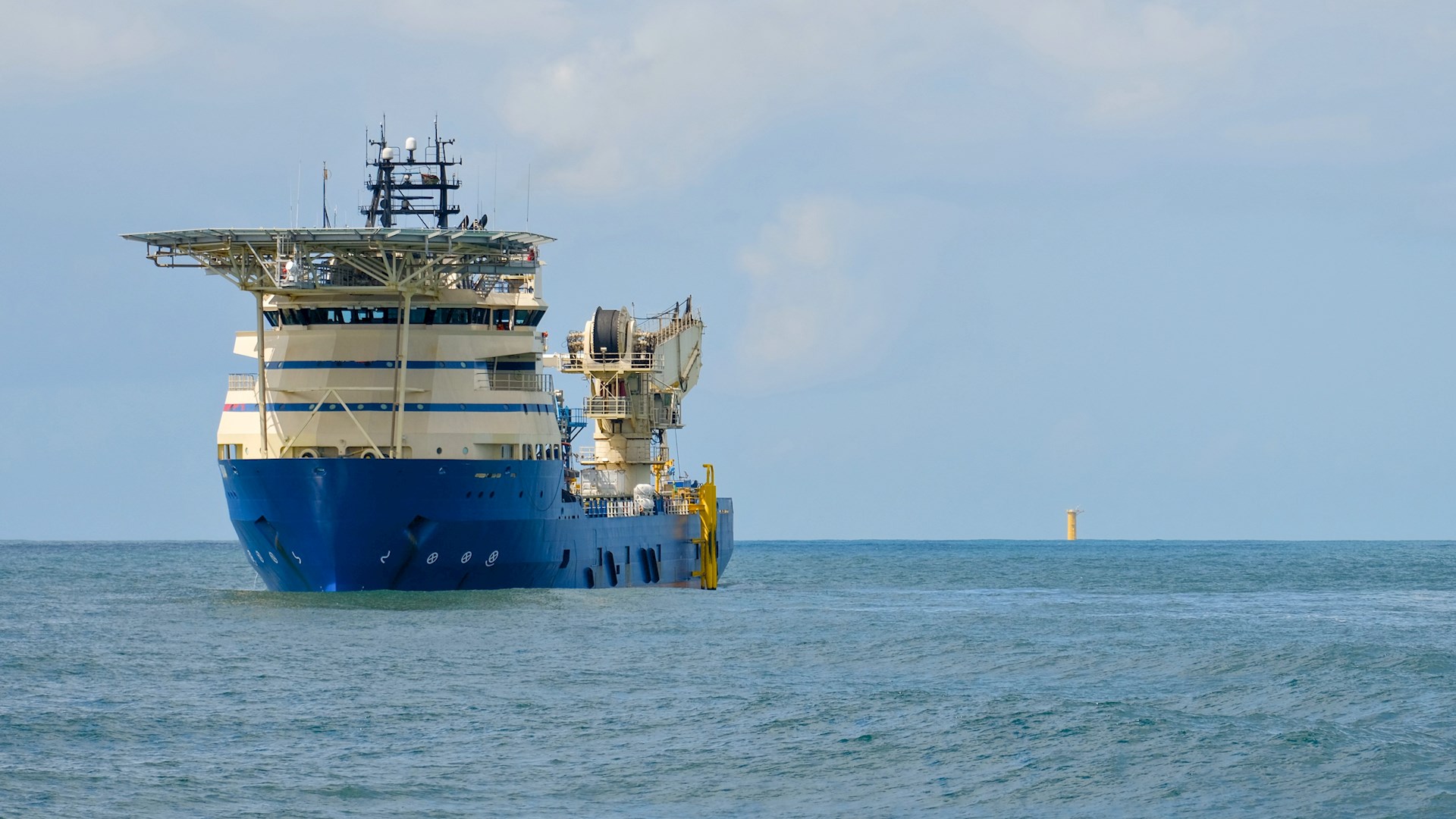
Peter Morsbach, CEO Hoglund and Rune Braastad, President ABB’s Marine and Ports division. Image credit ABB
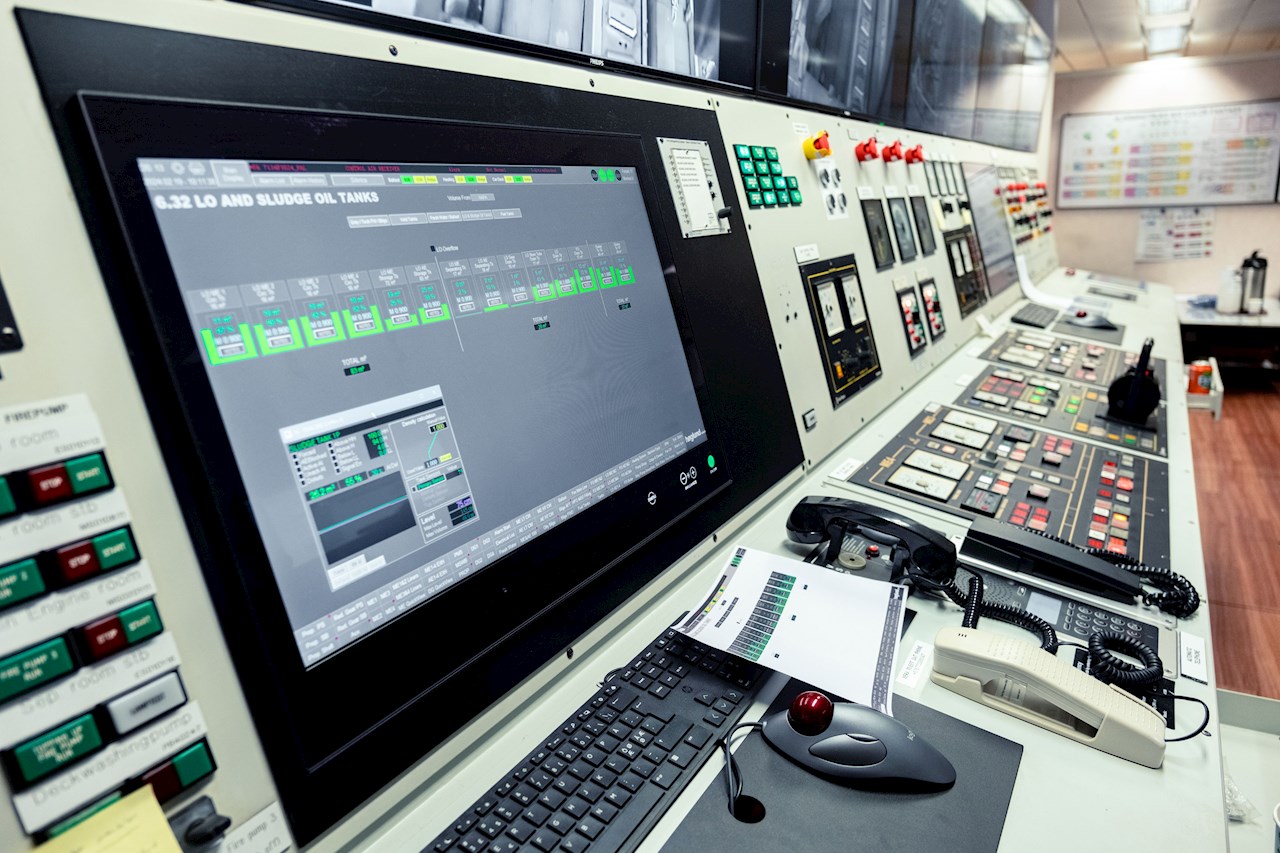
Høglund’s onboard automation system. Image credit Høglund
SourceABB
EMR Analysis
More information on ABB: See full profile on EMR Executive Services
More information on Morten Wierod (Chief Executive Officer and Member of the Group Executive Committee, ABB): See full profile on EMR Executive Services
More information on Christian Nilsson (Chief Financial Officer and Member of the Executive Committee, ABB): See full profile on EMR Executive Services
More information on the ABB Way: See full profile on EMR Executive Services
More information on Automation Business Area by ABB: See the full profile on EMR Executive Services
More information on Peter Terwiesch (President, Automation Business Area and Member of the Executive Committee, ABB): See full profile on EMR Executive Services
More information on Rune Braastad (Division President, ABB Marine & Ports Division, Automation Business Area, ABB): See full profile on EMR Executive Services
More information on Eitzen Group: https://www.eitzengroup.com/ + Eitzen Group is a family owned maritime organization headquartered in Oslo, Norway. Established in 1883 by Captain Camillo Eitzen, the group has 140 years of shipping experience.
We are here to shape the maritime industry, to push it technologically forward, and to be the preferred long-term partner for our current and future shipping customers.
We are active owners in Christiania Shipping, E-Capital, Høglund, Zen, Wavefoil and Seanode.
More information on Axel C. Eitzen (Chairman, Eitzen Group): https://christianiashipping.com/about-us/ + https://www.linkedin.com/in/axel-camillo-eitzen-5978136b/
More information on Fridtjof C. Eitzen (Chief Executive Officer, Eitzen Group): https://christianiashipping.com/about-us/ + https://www.linkedin.com/in/fridtjofcamilloeitzen/
More information on Høglund by Eitzen Group: https://hoglund.no/ + Expanding ships’ capabilities through advanced automation.
Høglund designs, engineers, and delivers advanced integrated marine power, automation, and digital solutions. We provide comprehensive support to the shipping industry using state of the art automation technology.
At Høglund, our vision is to expand ships’ capabilities through advanced automation.
Since our establishment, we have focused on designing and delivering the most reliable and user-friendly automation and control systems for the marine industry. We achieve this by combining durable off-the-shelf components, global availability of service, and solutions that last for the long haul.
With secure remote access, crews can troubleshoot quickly, minimize downtime, and keep operations running smoothly.
Our digital tools, including Høglund Live Data and automated IMO/DCS reporting, provide real-time insights and compliance-ready reports. That means better decisions, improved safety, and reduced risks.
Whether it is a complete automation system for a newbuild or upgrading an IAS on an existing vessel, we make sure everything works seamlessly from day one and continues to perform for years to come.
Behind every system is a team that cares. We bring experience, commitment, and a genuine passion to every project, because we know reliability is not optional. It is essential.
Høglund is headquartered in Tønsberg, Norway with more than 80 employees in Norway, Poland, Romania, and China.
The company reported revenues of close to 30 million euros in 2025.
Høglund is currently owned by Eitzen Group and will be integrated into ABB’s Marine & Ports division.
More information on Peter Morsbach (Chief Executive Officer, Høglund, Eitzen Group): https://hoglund.no/about/meet-the-team + https://www.linkedin.com/in/peter-morsbach-ab61b55b/
EMR Additional Notes:
- Integrated Automation System (IAS):
- An Integrated Automation System (IAS) is a modular, scalable solution that consolidates data from a vessel’s critical machinery—such as engines, generators, and cargo systems—to enhance safety, energy efficiency, and operational control.
- Hardware vs. Software vs. Firmware:
- Hardware is physical: it’s tangible electronic or mechanical components. It can break, wear out, or be damaged by environmental factors (heat, water, shock, etc.).
- Since hardware is part of the “real” world, it all eventually wears out. Being a physical thing, it’s also possible to break it, drown it, overheat it, and otherwise expose it to the elements.
- Here are some examples of hardware:
- Smartphone
- Tablet
- Laptop
- Desktop computer
- Printer
- Flash drive
- Router
- Software is virtual: it consists of programs and data that run on hardware to perform functions. It can be copied, modified, updated, or deleted.
- Software is everything about your computer that isn’t hardware.
- Here are some examples of software:
- Operating systems like Windows 11 or iOS
- Web browsers
- Antivirus tools
- Adobe Photoshop
- Mobile apps
- Firmware is virtual: is embedded software that is tightly coupled to specific hardware and controls its low-level functions.
- While not as common a term as hardware or software, firmware is everywhere—on your smartphone, your PC’s motherboard, your camera, your headphones, and even your TV remote control.
- Firmware is a specialized type of software that serves a specific control and interface role between hardware and higher-level software.
- Hardware is physical: it’s tangible electronic or mechanical components. It can break, wear out, or be damaged by environmental factors (heat, water, shock, etc.).
- Motors, Generators and Drives:
- Motor:
- Mechanical or electrical device that converts electrical energy into mechanical energy, generating rotational or linear motion used to power a machine.
- NEMA / IEC Motors:
- NEMA motors are commonly made with rolled steel or cast iron frames while IEC motors are commonly made with cast aluminum or cast iron frames.
- North American National Electrical Manufacturers Association (NEMA) and International Electrotechnical Commission (IEC) standards are crucial because they ensure that motors from different manufacturers are standardized and interchangeable in terms of dimensions, mounting, and performance, while also meeting specific criteria for efficiency, safety, and testing.
- NEMA motors are commonly made with rolled steel or cast iron frames while IEC motors are commonly made with cast aluminum or cast iron frames.
- Servo Motor:
- Self-contained electrical device that rotates parts of a machine with high precision and dynamic control.
- The output shaft of this motor can be moved to a particular position, angle, velocity, and torque, which a regular motor does not inherently control.
- It consists of a suitable motor coupled to a feedback device (e.g., encoder or resolver) for position and speed feedback, and requires a dedicated servo drive/controller to operate in a closed-loop control system.
- Shaft Grounded Motor:
- Electric motor that is equipped with a device to safely redirect shaft-induced electrical currents (e.g., caused by variable frequency drives) away from its internal bearings.
- Without this protection, these currents can cause bearing pitting, electrical erosion, and premature motor failure.
- NEMA / IEC Motors:
- Mechanical or electrical device that converts electrical energy into mechanical energy, generating rotational or linear motion used to power a machine.
- Generator:
- Does the opposite of a motor, converting mechanical energy into electrical energy.
- It does not create electricity; rather, it induces the movement of electric charges (electrons) in a conductor through electromagnetic induction, producing an electric current.
- Drive:
- (also often referred to as an electric controller) is the electronic power conversion and control system that regulates the electrical energy supplied to a motor.
- By positioning a drive between the electrical supply and the motor, power is fed into the drive, and the drive then modulates voltage, current, and frequency before supplying it to the motor.
- This allows precise control of:
- speed
- direction
- acceleration / deceleration
- torque
- and, in advanced systems, position (when combined with feedback devices)
- Drives are essential for energy efficiency, process control, and equipment protection, especially in modern industrial applications.
- Motor: