Würth – Würth Group successfully issues CHF 300 million bond
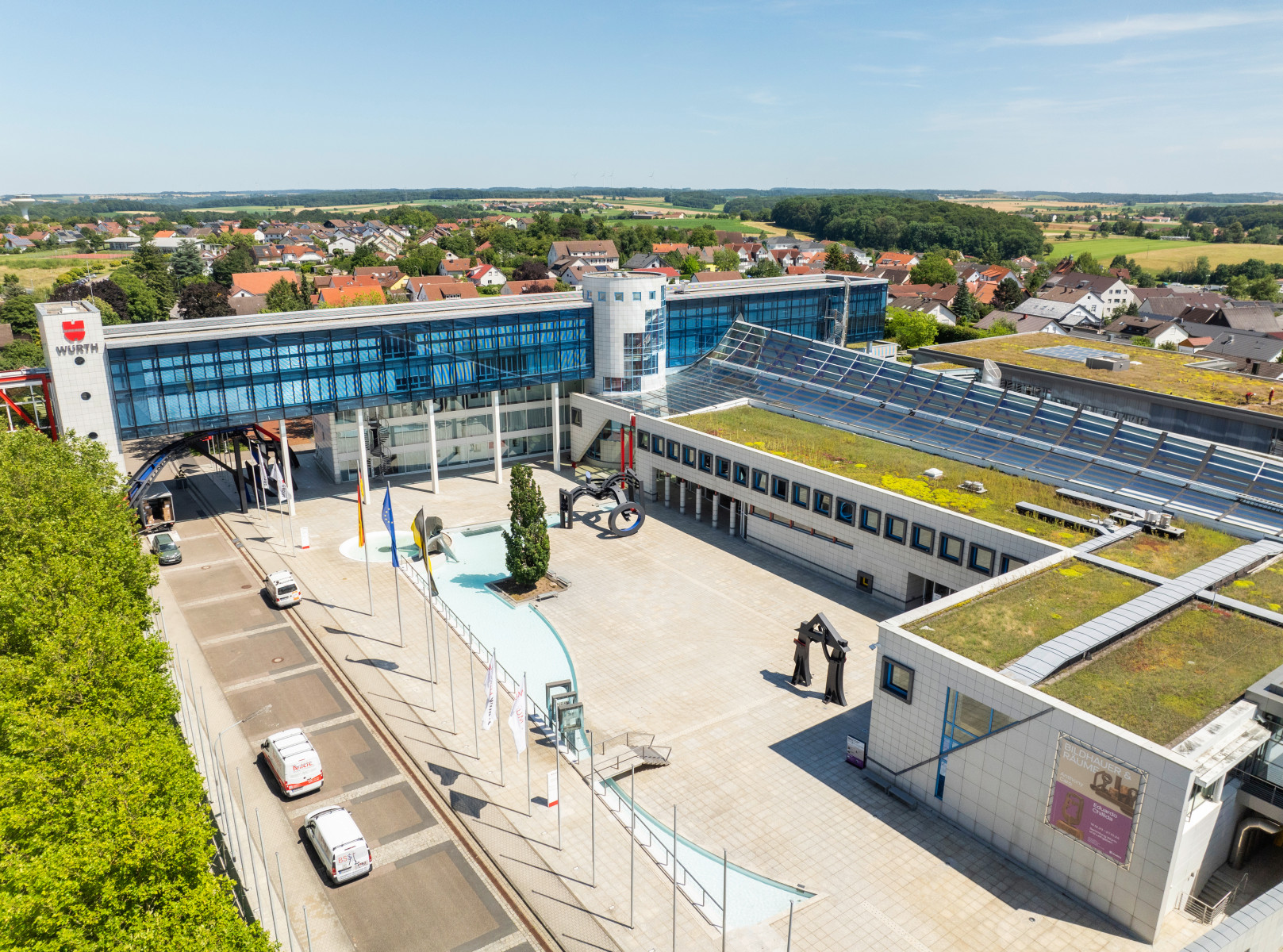
Künzelsau/’s-Hertogenbosch, As part of its capital markets-oriented financing strategy, the Würth Group successfully issued a bond of CHF 300 million with a maturity of approximately 7 years and 4 months and a fixed coupon of 1.10 percent.
The bond was rated A by S&P Global Ratings.
The issue was made via Würth Finance International B.V., the Group’s finance company, and is secured by an unconditional, irrevocable guarantee from Adolf Würth GmbH & Co. KG. Deutsche Bank, Zürcher Kantonalbank, and UBS served as joint lead managers, with Raiffeisen Switzerland acting as co-lead manager. The bond will be listed on the SIX Swiss Exchange.
The proceeds from the transaction will be used for the early refinancing of a CHF-bond maturing in November 2026 and to strengthen the Würth Group’s financing and liquidity base in the long term. Investors can expect a yield of 1.0395 percent p.a., which corresponds to a spread of 65 basis points over the CHF market rate (SARON swap). This transaction has been the first single-tranche issuance in the amount of CHF 300 million by a company on the Swiss capital market in nearly nine months.
“I am delighted that with this bond, we continue to be present on the Swiss capital market and offer investors an opportunity to invest in the Würth Group,” said Ralf Schaich, CFO and Member of the Central Management Board of the Würth Group. “The strong demand for our bond highlights investor confidence in our strategy and the financial stability of the company.”
Further details on the terms and conditions of the bond and the road show presentations are available at wuerthfinance.net.
Disclaimer
This press release does not constitute an offer to sell, or a solicitation of an offer to purchase or otherwise acquire, any securities. It does furthermore not form the basis for a contract for the purchase or subscription of securities. In particular, this press release does not constitute an offer to sell or a solicitation of an offer to purchase securities in any jurisdiction in which such offer or solicitation would be unlawful.
Securities may be offered or sold in the United States of America only after prior registration or without prior registration pursuant to an exemption from the registration requirements of the U.S. Securities Act of 1933 (“Securities Act”), as in effect at any given time. The securities referred to in this press release have not been nor will they be registered under the Securities Act. There has not been nor will there be a public offering of the securities referred to in this press release in the United States of America.
Potential investors are requested to make their investment decisions regarding the securities referred to in this press release solely based on the information provided in the prospectus as approved and published by the Commission de Surveillance du Secteur Financier, Luxemburg (“CSSF”). The prospectus is available free of charge from Würth Finance International B.V. or on the website www.wuerthfinance.net.
SourceWürth
EMR Analysis
More information on Würth Group: See the full profile on EMR Executive Services
More information on Robert Friedmann (Chairman of the Central Managing Board, Würth Group): See the full profile on EMR Executive Services
More information on Ralf Schaich (Member of the Central Managing Board, Würth Group + Executive Vice President, Chief Financial Officer and Human Resources, Würth Group): See the full profile on EMR Executive Services
More information on Rainer Bürkert (Member of the Central Managing Board, Würth Group): See the full profile on EMR Executive Services
More information on Norbert Heckmann (Member of the Central Managing Board, Würth Group + Chairman of the Management Board, Adolf Würth GmbH & Co. KG, Würth Group): See the full profile on EMR Executive Services
More information on Bernd Herrmann (Member of the Central Managing Board, Würth Group + Executive Vice President, IT, E-Business and Logistics, Würth Group): See the full profile on EMR Executive Services
More information on Thomas J. O’Neill (Member of the Central Managing Board, Würth Group): See the full profile on EMR Executive Services
More information on Dr. Reiner Specht (Member of the Central Managing Board, Würth Group): See the full profile on EMR Executive Services
More information on Würth Finance International B.V. by Würth Group: See the full profile on EMR Executive Services
More information on Adolf Würth GmbH & Co. KG by Würth Group: See the full profile on EMR Executive Services
More information on S&P Global: https://www.spglobal.com/en/ + S&P Dow Jones Indices is the largest global resource for essential index-based concepts, data and research, and home to iconic financial market indicators, such as the S&P 500® and the Dow Jones Industrial Average®. More assets are invested in products based on our indices than products based on indices from any other provider in the world. Since Charles Dow invented the first index in 1884, S&P DJI has been innovating and developing indices across the spectrum of asset classes helping to define the way investors measure and trade the markets.
S&P Dow Jones Indices is a division of S&P Global (NYSE: SPGI), which provides essential intelligence for individuals, companies, and governments to make decisions with confidence.
More information on Douglas L. Peterson (President and Chief Executive Officer, S&P Global): https://www.spglobal.com/en/who-we-are/our-people/operating-committee/douglas-peterson + https://www.linkedin.com/in/douglas-peterson-1254245/
More information on S&P Global Ratings: https://www.spglobal.com/ratings/en/ +We accelerate progress through our essential intelligence, providing data & analytics, research & commentary, credit ratings, benchmarks and ESG solutions.
Credit ratings are forward looking opinions about an issuer’s relative creditworthiness. They provide a common and transparent global language for investors to form a view on and compare the relative likelihood of whether an issuer may repay its debts on time and in full. Credit Ratings are just one of many inputs that investors and other market participants can consider as part of their decision-making processes.
Our Ratings Scale
- AAA
- Investment Grade:Extremely strong capacity to meet financial commitments
- AA
- Investment Grade:Very strong capacity to meet financial commitments
- A
- Investment Grade:Strong capacity to meet financial commitments, but somewhat susceptible to economic conditions and changes in circumstances
- BBB
- Investment Grade:Adequate capacity to meet financial commitments, but more subject to adverse economic conditions
- BB
- Speculative Grade :Less vulnerable in the near-term but faces major ongoing uncertainties to adverse business, financial and economic conditions
- B
- Speculative Grade :More vulnerable to adverse business, financial and economic conditions but currently has the capacity to meet financial commitments
- CCC
- Speculative Grade :Currently vulnerable and dependent on favorable business, financial and economic conditions to meet financial commitments
- CC
- Speculative Grade :Highly vulnerable; default has not yet occurred, but is expected to be a virtual certainty
- C
- Speculative Grade :Currently highly vulnerable to non-payment, and ultimate recovery is expected to be lower than that of higher rated obligations
- D
- Speculative Grade :Payment default on a financial commitment or breach of an imputed promise; also used when a bankruptcy petition has been filed
More information on Deutsche Bank: https://www.db.com/ + Deutsche Bank provides retail and private banking, corporate and transaction banking, lending, asset and wealth management products and services as well as focused investment banking to private individuals, small and medium-sized companies, corporations, governments and institutional investors. Deutsche Bank is the leading bank in Germany with strong European roots and a global network.
More information on Christian Sewing (Chief Executive Officer, Deutsche Bank): https://www.db.com/who-we-are/boards-and-committees/management-board?language_id=1 + https://www.linkedin.com/in/christian-sewing/
More information on Zürcher Kantonalbank: https://www.zkb.ch/en/home.html + With total assets of around CHF 200 billion and more than 6,000 employees, we are the biggest cantonal bank in Switzerland and one of the biggest Swiss banks. We are the leader in universal banking business in the Greater Zurich Area. Our clients enjoy a wide range of products and services.
Since its establishment in 1870, Zürcher Kantonalbank has been an independent institution under public law (selbständige öffentlich-rechtliche Anstalt), established and existing under the laws of Switzerland and the canton of Zurich. Our public service mandate involves providing the population of Zurich with financial services, assisting the canton in fulfilling its economic, social and environmental obligations and adopting a responsible approach to the environment and society.
We operate the densest network of branches and ATMs in the canton of Zurich. We also operate at an international level in order to meet our clients’ cross-border requirements.
More information on Urs D. Baumann (Chief Executive Officer, Zürcher Kantonalbank): https://www.zkb.ch/en/home/our-company/executive-board.html + https://www.linkedin.com/in/urs-d-baumann/
More information on UBS: https://www.ubs.com/ch/en.html + UBS is a leading and truly global wealth manager and the leading universal bank in Switzerland. It also provides diversified asset management solutions and focused investment banking capabilities. UBS manages 6.9 trillion dollars of invested assets as per the third quarter of 2025. UBS helps clients achieve their financial goals through personalized advice, solutions and products. Headquartered in Zurich, Switzerland, the firm is operating in more than 50 markets around the globe. UBS Group shares are listed on the SIX Swiss Exchange and the New York Stock Exchange (NYSE).
More information on Sergio P. Ermotti (Group Chief Executive Officer, UBS): https://www.ubs.com/global/en/our-firm/governance/ubs-group-ag/group-executive-board.html + https://www.linkedin.com/in/sergiopermotti/
More information on Raiffeisen Switzerland: https://www.raiffeisen.ch/rch/fr/societariat/societariat.html + Raiffeisen is the second-largest banking group in the Swiss banking market with a 125-year history. The group is based on a cooperative structure, holds a market leading retail banking position and is one of Switzerland’s largest mortgage lenders.
- Based on a cooperative structure, Raiffeisen Group consists of 208 legally independent Raiffeisen banks owned by more than 2 million cooperative members.
- The Group serves more than 3.5 million Swiss private customers and more than 230’000 Swiss companies.
- Raiffeisen has no holdings or affiliations with other entities named Raiffeisen outside of Switzerland, except for Raiffeisen Switzerland B.V. in Amsterdam (NL), a wholly owned subsidiary of Raiffeisen Switzerland Cooperative (Raiffeisen Schweiz), which issues structured products for Raiffeisen Group.
More information on Dr. Gabriel Brenna (Chairman of the Executive Board, Raiffeisen Switzerland): https://www.raiffeisen.ch/rch/de/ueber-uns/raiffeisen-group-for-investors/executive-board.html + https://www.linkedin.com/in/gabriel-brenna-36117116/
More information on the SIX Swiss Exchange: https://www.six-group.com/en/home.html + SIX operates the infrastructure for the financial centers in Switzerland and Spain, thus ensuring the flow of information and money between financial market players. SIX offers exchange services, financial information and banking services with the aim of increasing efficiency, quality and innovative capacity along the entire value chain. SIX is also building a digital infrastructure for the new millennium.
SIX connects financial market participants in Switzerland, Spain and throughout the world. The company is owned by around 120 national and international financial institutions. They are the main users of our services and our most important customers. Our close relationship with them guarantees stability of the financial infrastructure and processes, proximity to clients’ evolving business needs and competitive prices.
More information on Bjørn Sibbern (Chief Executive Officer, SIX Swiss Exchange): https://www.six-group.com/en/company/governance/executive-board.html + https://www.linkedin.com/in/bj%C3%B8rnsibbern/
EMR Additional Notes:
- Securities (Foundation):
- Securities are fungible, tradable financial instruments used to raise capital in public or private markets, representing either ownership (equity), debt (creditor relationships), or rights to ownership or cash flows (derivatives). Common examples include stocks, bonds, and investment funds (e.g., mutual funds, ETFs), which allow investors to own a piece of a company or loan money to entities or gain exposure to underlying assets without direct ownership (derivatives).
- The four main types of financial securities are equity, debt, derivatives, and hybrid securities. These instruments represent either ownership, debt, or a contract based on an underlying asset, designed for trading in financial markets to offer income, capital appreciation, or risk management.
- Securities form the foundation of a company’s capital structure, defining the hierarchy of claims (seniority), risk exposure, and expected returns for investors.
- Notes (Core Debt Instruments):
- Debt instrument with a maturity date typically ranging from 2 to 10 years. Notes are a type of bond, and the terms “note” and “bond” are often used interchangeably, although bonds generally have a longer maturity period (usually over 10 years). Like other bonds, notes are issued by governments and corporations to raise money, and they promise to pay back the principal plus interest to the investor.
- The distinction is primarily a market convention (maturity and naming), rather than a legal or structural difference in most jurisdictions.
- Bonds:
- Typically refer to longer-term debt, usually with a maturity of over 10 years.
- Bonds are issued by governments and corporations when they want to raise money. By buying a bond, you’re giving the issuer a loan, and they agree to pay you back the face value of the loan on a specific date, and to pay you periodic interest payments along the way, usually twice a year (fixed or floating coupon depending on structure).
- In simple terms, a bond is a loan from an investor to a borrower such as a company or government. The borrower uses the money to fund its operations, and the investor receives interest on the investment. The market value of a bond can change over time.
- Bond prices fluctuate based on interest rates, credit risk, and market conditions (inverse relationship with interest rates is a key principle).
- Senior Note Offering (Capital Structure):
- A senior notes offering refers to the issuance of senior-ranking debt securities by a company to raise capital. Typically, the announcement of a senior notes offering is accompanied by a legal disclosure of the amount the company is seeking to raise, and what the company plans to do with the money.
- A senior note is a type of bond that takes precedence over other debts in the event that the company declares bankruptcy and is forced into liquidation (but may still rank below secured debt if unsecured). Because they carry a lower degree of risk, senior notes pay lower rates of interest than junior bonds.
- Companies use Senior Notes when they want to avoid repaying debt principal each year (bullet repayment at maturity instead of amortization) and don’t mind the higher interest expense they’ll incur.
- Senior Notes are standard corporate debt instruments (not a “compromise”) positioned between secured bank debt and subordinated/mezzanine instruments in the capital structure.
- Subordinated Notes move even further into risky territory.
- Senior subordinated notes are a type of corporate debt that ranks below senior debt but above equity in a company’s capital structure, meaning they get paid after senior obligations in bankruptcy but before shareholders, offering investors higher yields to compensate for the increased risk. These notes are often unsecured, carry higher interest rates than senior debt, and provide more flexibility for companies, sometimes used in M&A or buyouts.
- Loans vs Bonds (Private vs Public Debt):
- Unsecured Term Loan Facility:
- An unsecured term loan facility is a lump-sum loan that is not backed by any collateral (like property or assets) and is provided to a borrower for a fixed period, with a specified repayment schedule. Lenders determine eligibility based primarily on the borrower’s creditworthiness, including their credit history, income, and debt levels. Because they carry higher risk for lenders, unsecured term loans typically have higher interest rates and stricter qualification criteria than secured loans.
- Unlike bonds, term loans are typically privately arranged (bank or institutional market), not publicly traded securities and often include covenants (financial and operational restrictions) negotiated with lenders.
- Senior Secured term Loan B Facility:
- A Senior Secured Term Loan B (TLB) facility is a type of syndicated corporate debt structured primarily for non-bank institutional investors like collateralized loan obligations (CLOs), hedge funds, and pension funds. It sits at the top of a company’s capital structure, providing lenders with first-priority claims on the borrower’s collateral, while offering borrowers maximum operational flexibility with minimal short-term payment obligations (typically limited amortization and covenant-light structures).
- TLBs are typically floating-rate instruments, often priced using benchmarks such as Term SOFR plus a credit spread (margin).
- Unsecured Term Loan Facility:
- Hybrid Instruments (Debt + Equity Features):
- Convertible Bonds (Hybrid):
- A convertible bond is a fixed-income corporate debt security that yields interest payments but can be converted into a predetermined number of common stock or equity shares. The conversion from the bond to stock can be done at certain times during the bond’s life and is usually at the discretion of the bondholder.
- As a hybrid security, the price of a convertible bond is especially sensitive to changes in interest rates, the price of the underlying stock, and the issuer’s credit rating.
- Convertible bonds sit between debt and equity in the capital structure and therefore carry intermediate risk/return characteristics (downside protection from bond + upside participation via equity conversion).
- Warrants:
- Bond with warrants gives investors the right to purchase shares separately, unlike convertibles.
- Warrants are detachable instruments in many cases, meaning they can trade independently from the bond.
- Convertible: bond converts into shares
Warrant: additional right to buy shares without converting the bond itself (bond remains outstanding even if warrant is exercised)
- Convertible Bonds (Hybrid):
- Regulatory / Bank Capital Instruments:
- Capital Securities:
- Capital securities are hybrid financial instruments combining features of both debt and equity, often issued by banks and insurance companies to meet regulatory capital requirements (e.g., Additional Tier 1 (AT1) or Tier 2 capital under Basel frameworks). They are deeply subordinated in the capital structure, typically paying higher yields than senior bonds and allowing issuers to defer payments (in some cases at the issuer’s discretion).
- These instruments behave more like equity in stress scenarios due to their subordination and loss-absorption features (e.g., write-down or conversion to equity).
- Callable Subordinated Capital Securities:
- Callable subordinated capital securities are specialized, high-yield financial instruments that combine features of both debt and equity. They are primarily issued by banks, insurance companies, and other financial institutions to bolster their regulatory capital requirements (such as Tier 1 or Tier 2 capital).
- These securities are subordinated, meaning they rank below senior debt in the capital structure, placing them at higher risk of loss in the event of issuer default. They are callable, giving the issuer the option—but not the obligation—to redeem or “call back” the securities at a specified price before their maturity date, typically after a non-call period (e.g., 5 years).
- The call feature introduces reinvestment risk for investors (issuer will typically call when refinancing is cheaper).
- Perpetual Securities (Hybrid):
- Perpetual securities, often called “perps” or perpetual bonds, are fixed-income instruments with no fixed maturity date. They offer a stream of interest payments indefinitely, as long as the issuer remains solvent and continues to make coupon payments (which may be deferrable in some structures). Unlike traditional bonds, they don’t have a redemption date, meaning the principal isn’t repaid at a specific time.
- This type of bond is a hybrid instrument with strong equity-like characteristics (not pure equity) and is often treated as partial equity by rating agencies.
- Capital Securities:
- ESG / Thematic Debt:
- Green Bonds:
- Green Bonds enable capital-raising and investment for new and existing projects with environmental benefits with proceeds earmarked for eligible green projects and subject to reporting/verification frameworks. The Green Bond Principles (GBP) seek to support issuers in financing environmentally sound and sustainable projects that foster a net-zero emissions economy and protect the environment.
- Blue Bonds:
- The World Bank defines blue bonds as “a debt instrument issued by governments, development banks or others to raise capital from impact investors to finance marine and ocean-based projects that have positive environmental, economic and climate benefits.”
- Blue bonds work in the same way as traditional bonds but are different in that the entities issuing them are determined to use the resources generated – or a large proportion thereof – for the protection and conservation of marine ecosystems.
- Green vs. Blue Bonds:
- Green bonds are broader (all environmental projects), while blue bonds are a niche subset focused specifically on ocean and water ecosystems — not limited to offshore renewables.
- Green Bonds:
- Reference Rates (Not Securities):
- Term SOFR:
- Term SOFR is a forward-looking benchmark interest rate, published by the CME Group, that provides market expectations for the Secured Overnight Financing Rate (SOFR) over a specific period.
- It is not a financial instrument, but a reference rate used to price loans and floating-rate bonds (typically expressed as: Term SOFR + credit spread).
- Term SOFR:
- ESG + Hybrid Combination:
- Green Subordinated Capital Securities:
- The proceeds are strictly earmarked to finance or refinance projects with positive environmental impacts, such as renewable energy, clean transportation, or energy efficiency, in line with frameworks such as ICMA Green Bond Principles while also meeting regulatory capital requirements if issued by financial institutions.
- Green Hybrid Subordinated Capital Securities:
- Green hybrid securities are subordinated financial instruments that combine the equity-and-debt features of standard hybrid bonds with the environmentally friendly commitments of a green bond. When a company issues a green hybrid, it explicitly commits the raised capital to financing or refinancing sustainable projects, such as renewable energy, clean transport, or grid decarbonisation.
- They provide companies with flexible “equity-like” (not just “risk”) capital while giving ESG-conscious investors a higher-yielding option than traditional senior green debt with increased risk due to subordination and hybrid features.
- Green Subordinated Capital Securities:
- SARON Swap:
- A SARON swap (interest rate swap) is a financial contract where two parties agree to exchange interest rate cash flows based on the Swiss Average Rate Overnight (SARON). Typically, one party pays a fixed interest rate while receiving a variable compounded SARON rate, or vice versa. These instruments replaced the historical CHF LIBOR swaps following the global benchmark transition.
EMR Additional Financial Notes:
- Major financial KPI’s since 2017 are available on EMR Executive Services under “Financial Results” and comparison with peers under “Market Positioning”
- Companies’ full profile on EMR Executive Services are based on their official press releases, quarterly financial reports, annual reports and other official documents.
- All members of the Executive Committee and of the Board have their full profile on EMR Executive Services
- The Würth Annual Report 2025 can be viewed here: https://news.wuerth.com/download/e31e37bd-3fc9-4565-8d08-0c7cee37bc3e/annualreportofthewuumlrthgroup2025.pdf
- The Würth Annual Report 2024 can be viewed here: https://www.wuerth.com/downloads/pdf/Gesch%C3%A4ftsbericht/2024/W%C3%BCrth-Group-Annual-Report-2024.pdf
- The Würth Sustainability Report 2024 can be viewed here: https://www.wuerth.com/downloads/pdf/Nachhaltigkeitsbericht/2024/SPROUTING-NEW-BRANCHES_Wuerth-Group_Sustainability-Report_2024.pdf
- The Würth Annual Report 2023 can be viewed here: https://www.wuerth.com/downloads/pdf/Nachhaltigkeitsbericht/2024/SPROUTING-NEW-BRANCHES_Wuerth-Group_Sustainability-Report_2024.pdf
- The Würth Annual Report 2022 can be viewed here: https://news.wuerth.com/download/e361fbaa-ca9c-4cb5-9288-2a90c69a4543/annualreport2022wurthgroup.pdf
- The Würth Annual Report 2021 can be viewed here: https://www.wuerthfinance.net/web/media/pictures/investor_relations/geschaeftsberichte_gruppe/annualreportwurthgroup2021.pdf