
Grainger – Grainger show brings together more than 10,000 MRO leaders to help customers solve operational challenges and embrace innivations shaping industry’s future

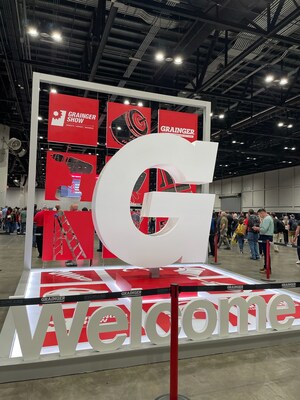
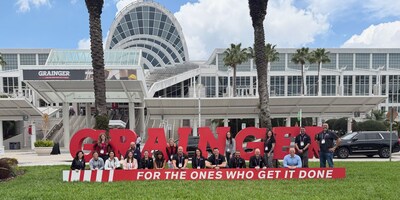
CHICAGO, March 27, 2026 /PRNewswire/ — Grainger (NYSE: GWW), a leading broad line distributor of maintenance, repair and operating (MRO) products and services, brought together more than 10,000 customers, suppliers and industry leaders at the Grainger Show in Orlando, Florida, on March 15-17.
The biennial event is one of the largest MRO gatherings in the world and focuses on the latest trends, advancements and challenges shaping the industry. Grainger and its partners help customers simplify the complexity of MRO – providing practical solutions and strategic insights that save time, reduce costs and help keep operations running safely and efficiently.
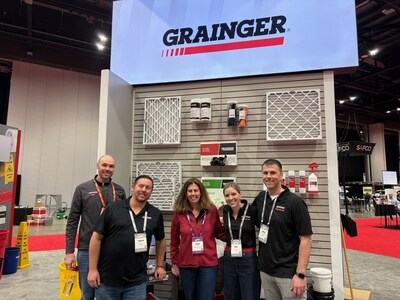
At the Grainger Show, customers participated in three days of seminars and roundtable discussions designed to help them reduce downtime, gain better control of indirect inventory and strengthen workplace safety – challenges that directly impact productivity and cost in day-to-day operations. Attendees also had opportunities to network with industry peers, connect directly with suppliers and explore hands-on demonstrations showcasing cutting-edge innovations for operations, inventory, procurement and safety.
“The Grainger Show is designed to spark new ideas, showcase our solutions and equip customers with practical strategies they can put to work right away to run safer, more resilient operations,” said Paige Robbins, Senior Vice President and President of the Grainger Business Unit. “Whether it’s strengthening supply chains, ensuring workforce readiness or leveraging smarter tools and AI-driven insights, our focus is simple: helping customers stay ahead of today’s challenges and what’s next by being a partner they can count on.”
During the event, Grainger also announced the recipients of its “Partners in Performance” awards, which is a distinction reserved for top-performing suppliers that consistently demonstrate excellence across operations, commercial performance, product content and partnership. Klein Tools received top honors as “Supplier of the Year,” while newcomer Essity was named “New Supplier of the Year.”
These partners play a critical role in helping Grainger deliver reliable products, fast fulfillment, and consistent service so customers can count on having what they need when they need it.
The 2026 Partners in Performance award recipients include:
- Overall Supplier of the Year: Klein Tools
- New Supplier of the Year: Essity
- Sustainability Supplier: Schneider Electric
- Excellence in Partnership (Individual): Teresa Wu, 3M
- Sourcing Partner: Husky Rack & Wire
- Contact of the Year (Individual): Brandon Sonich, Elkay Inc.
- Carrier/Transportation Partners: Southeastern Freight Lines; Continental Courier Inc.
- Direct Suppliers: MCR Safety Group; Interplast; 3M; Mechanix Wear; Klever; Nu-Calgon; Knipex Tools; Vikan; Fein Power Tools; Ghent; Agsco Corporation; Zipwall; The Jel Sert Company
- Indirect Suppliers: WTW; Quad Graphics
“Fewer than one percent of our more than 5,000 suppliers are selected annually for this distinction,” said Barry Greenhouse, Senior Vice President of Merchandising and Supplier Management at Grainger. “These partners exemplify the innovation, reliability and customer-focused approach that define our most valued relationships, allowing us both to grow together. Their commitment to quality and continuous improvement has directly contributed to our ability to deliver the products and services our customers rely upon every day.”
The Partners in Performance program underscores Grainger’s commitment to fostering collaborative partnerships that drive innovation and value throughout the MRO industry. By celebrating suppliers who go above and beyond to support customer success, Grainger reinforces its purpose to keep the world working.
From its world-class supply chain to on-the-ground expertise, Grainger continues to invest in the capabilities that help customers solve any MRO challenge with confidence.

SourceGrainger
EMR Analysis
More information on Grainger: See the full profile on EMR Executive Services
More information on D.G. Macpherson (Chairman and Chief Executive Officer, Grainger): See the full profile on EMR Executive Services
More information on Deidra C. Merriwether (Senior Vice President and Chief Financial Officer, Grainger): See the full profile on EMR Executive Services
More information on Paige K. Robbins (Senior Vice President and President, Grainger Business Unit, Grainger): See the full profile on EMR Executive Services
More information on Barry Greenhouse (Senior Vice President and President, Merchandising and Supplier Management, Grainger): See the full profile on EMR Executive Services
More information on Klein Tools: https://www.kleintools.com + the Klein brand is the #1 preferred hand tool in the electrical industry, as well as the leading brand used in the maintenance, construction, plumbing and industrial trades. Loyalty to Klein Tools is strong due to Klein Tools’ commitment to supplying durable and reliable products to professional tradesmen; professionals feel the difference every day.
The world has come a long way since 1857. Klein Tools has become over a billion-dollar manufacturer… yet a company still concerned about meeting professional needs – and making products to professional-quality standards.
Klein Tools is still owned and managed by the Klein family. Direct descendants of Mathias Klein are actively engaged in every aspect of the business. Its products are still sold through distributors who serve the professional tradesman. And Klein Tools still makes dependable, efficient, durable and reliable tools and equipment. Nothing less than the best to equip the professional.
Klein remains dedicated to supplying only the finest quality products. Made for professional users, Klein tools are available through stocking distributors worldwide.
More information on Thomas R. Klein (Chairman and Chief Executive Officer, Klein Tools): https://www.kleintools.com/careers/leadership + https://www.linkedin.com/in/tom-klein-9565a77/
More information on Essity: https://www.essity.com/ + Essity – a globally leading hygiene and health company. Our expertise in hygiene and health began with the acquisition of the Swedish company Mölnlycke in 1975, through which our roots stretch back to 1849. Today, our sustainable innovations from globally trusted brands, designed for everybody and every body, care for the well-being of 1 billion people in 150 countries every day.
Our leading global brands TENA and Tork, and other strong brands such as Actimove, Cutimed, JOBST, Knix, Leukoplast, Libero, Libresse, Lotus, Modibodi, Nosotras, Saba, Tempo, TOM Organic and Zewa. In 2025, Essity had net sales of approximately SEK 138bn (EUR 13bn) and employed 36,000 people. The company’s headquarters is located in Stockholm, Sweden and Essity is listed on Nasdaq Stockholm.
More information on Ulrika Kolsrud (President and Chief Executive Officer, Essity): https://www.essity.com/company/organization-and-management/executive-management-team/ + https://www.linkedin.com/in/ulrika-kolsrud-%E2%99%A6%EF%B8%8F-3b2562b/
EMR Additional Notes:
- OEM vs. MRO vs. Integrated Supply:
- OEM (Original Equipment Manufacturer):
- An Original Equipment Manufacturer (OEM) is a company that produces parts and equipment that may be marketed by another manufacturer, often under that manufacturer’s brand name. An OEM can make complete devices or specific components.
- The term OEM usually refers to products that are made specifically for an original product, whereas aftermarket refers to equipment made by another company that a consumer may use as a replacement.
- MRO (Maintenance, Repair and Operations):
- MRO refers to all the activities and supplies needed to keep a company’s facilities and production processes running smoothly. These are supplies consumed in the production process that do not become part of the final product.
- Examples of MRO items include maintenance tools, replacement parts for equipment, personal protective equipment, cleaning supplies, and office supplies.
- Integrated Supply:
- Integrated Supply is a large-scale business strategy for managing the MRO supply chain in a more efficient, end-to-end process. The goal is to improve response time, reduce costs, and cut inventory by leveraging technology to create a closer working relationship between suppliers and buyers.
- For example, a supplier’s computer system may be set up to deliver real-time data to a buyer’s system, providing up-to-date information on inventory and order status.
- OEM (Original Equipment Manufacturer):
- Supply Chain:
- Network of all the individuals, organizations, resources, activities and technology involved in the creation and sale of a product. A supply chain encompasses everything from the delivery of source materials from the supplier to the manufacturer through to its eventual delivery to the end user.
- At the most fundamental level, Supply Chain Management (SCM) is management of the flow of goods, data, and finances related to a product or service, from the procurement of raw materials to the delivery of the product at its final destination.
- AI – Artificial Intelligence:
- Artificial intelligence is the simulation of human intelligence processes by machines, especially computer systems.
- As the hype around AI has accelerated, vendors have been scrambling to promote how their products and services use AI. Often what they refer to as AI is simply one component of AI, such as machine learning. AI requires a foundation of specialized hardware and software for writing and training machine learning algorithms. No one programming language is synonymous with AI, but several, including Python, R and Java, are popular.
- In general, AI systems work by ingesting large amounts of labeled training data, analyzing the data for correlations and patterns, and using these patterns to make predictions about future states. In this way, a chatbot that is fed examples of text chats can learn to produce lifelike exchanges with people, or an image recognition tool can learn to identify and describe objects in images by reviewing millions of examples.
- AI programming focuses on three cognitive skills: learning, reasoning and self-correction.
- The 4 types of artificial intelligence?
- Type 1: Reactive machines. These AI systems have no memory and are task specific. An example is Deep Blue, the IBM chess program that beat Garry Kasparov in the 1990s. Deep Blue can identify pieces on the chessboard and make predictions, but because it has no memory, it cannot use past experiences to inform future ones.
- Type 2: Limited memory. These AI systems have memory, so they can use past experiences to inform future decisions. Some of the decision-making functions in self-driving cars are designed this way.
- Type 3: Theory of mind. Theory of mind is a psychology term. When applied to AI, it means that the system would have the social intelligence to understand emotions. This type of AI will be able to infer human intentions and predict behavior, a necessary skill for AI systems to become integral members of human teams.
- Type 4: Self-awareness. In this category, AI systems have a sense of self, which gives them consciousness. Machines with self-awareness understand their own current state. This type of AI does not yet exist.
- Machine Learning (ML):
- Developed to mimic human intelligence, it lets the machines learn independently by ingesting vast amounts of data, statistics formulas and detecting patterns.
- ML allows software applications to become more accurate at predicting outcomes without being explicitly programmed to do so.
- ML algorithms use historical data as input to predict new output values.
- Recommendation engines are a common use case for ML. Other uses include fraud detection, spam filtering, business process automation (BPA) and predictive maintenance.
- Classical ML is often categorized by how an algorithm learns to become more accurate in its predictions. There are four basic approaches: supervised learning, unsupervised learning, semi-supervised learning and reinforcement learning.
- Deep Learning (DL):
- Subset of machine learning, Deep Learning enabled much smarter results than were originally possible with ML. Face recognition is a good example.
- DL makes use of layers of information processing, each gradually learning more and more complex representations of data. The early layers may learn about colors, the next ones about shapes, the following about combinations of those shapes, and finally actual objects. DL demonstrated a breakthrough in object recognition.
- DL is currently the most sophisticated AI architecture we have developed.
- Generative AI (GenAI):
- Generative AI technology generates outputs based on some kind of input – often a prompt supplied by a person. Some GenAI tools work in one medium, such as turning text inputs into text outputs, for example. With the public release of ChatGPT in late November 2022, the world at large was introduced to an AI app capable of creating text that sounded more authentic and less artificial than any previous generation of computer-crafted text.
- Small Language Models (SLM) and Large Language Models (LLM):
- Small Language Models (SLMs) are artificial intelligence (AI) models capable of processing, understanding and generating natural language content. As their name implies, SLMs are smaller in scale and scope than large language models (LLMs).
- LLM means Large Language Models — a type of machine learning/deep learning model that can perform a variety of natural language processing (NLP) and analysis tasks, including translating, classifying, and generating text; answering questions in a conversational manner; and identifying data patterns.
- For example, virtual assistants like Siri, Alexa, or Google Assistant use LLMs to process natural language queries and provide useful information or execute tasks such as setting reminders or controlling smart home devices.
- Computer Vision (CV) / Vision AI & Machine Vision (MV):
- Field of AI that enables computers to interpret and act on visual data (images, videos). It works by using deep learning models trained on large datasets to recognize patterns, objects, and context.
- The most well-known case of this today is Google’s Translate, which can take an image of anything — from menus to signboards — and convert it into text that the program then translates into the user’s native language.
- Machine Vision (MV) :
- Specific application for industrial settings, relying on cameras to analyze tasks in manufacturing, quality control, and worker safety. The key difference is that CV is a broader field for extracting information from various visual inputs, while MV is more focused on specific industrial tasks.
- Machine Vision is the ability of a computer to see; it employs one or more video cameras, analog-to-digital conversion and digital signal processing. The resulting data goes to a computer or robot controller. Machine Vision is similar in complexity to Voice Recognition.
- MV uses the latest AI technologies to give industrial equipment the ability to see and analyze tasks in smart manufacturing, quality control, and worker safety.
- Multimodal Intelligence and Agents:
- Subset of artificial intelligence that integrates information from various modalities, such as text, images, audio, and video, to build more accurate and comprehensive AI models.
- Multimodal capabilities allows AI to interact with users in a more natural and intuitive way. It can see, hear and speak, which means that users can provide input and receive responses in a variety of ways.
- An AI agent is a computational entity designed to act independently. It performs specific tasks autonomously by making decisions based on its environment, inputs, and a predefined goal. What separates an AI agent from an AI model is the ability to act. There are many different kinds of agents such as reactive agents and proactive agents. Agents can also act in fixed and dynamic environments. Additionally, more sophisticated applications of agents involve utilizing agents to handle data in various formats, known as multimodal agents and deploying multiple agents to tackle complex problems.
- Agentic AI:
- Agentic AI is an artificial intelligence system that can accomplish a specific goal with limited supervision. It consists of AI agents—machine learning models that mimic human decision-making to solve problems in real time. In a multiagent system, each agent performs a specific subtask required to reach the goal and their efforts are coordinated through AI orchestration.
- Unlike traditional AI models, which operate within predefined constraints and require human intervention, agentic AI exhibits autonomy, goal-driven behavior and adaptability. The term “agentic” refers to these models’ agency, or, their capacity to act independently and purposefully.
- Agentic AI builds on generative AI (gen AI) techniques by using large language models (LLMs) to function in dynamic environments. While generative models focus on creating content based on learned patterns, agentic AI extends this capability by applying generative outputs toward specific goals.
- Edge AI Technology:
- Edge artificial intelligence refers to the deployment of AI algorithms and AI models directly on local edge devices such as sensors or Internet of Things (IoT) devices, which enables real-time data processing and analysis without constant reliance on cloud infrastructure.
- Simply stated, edge AI, or “AI on the edge“, refers to the combination of edge computing and artificial intelligence to execute machine learning tasks directly on interconnected edge devices. Edge computing allows for data to be stored close to the device location, and AI algorithms enable the data to be processed right on the network edge, with or without an internet connection. This facilitates the processing of data within milliseconds, providing real-time feedback.
- Self-driving cars, wearable devices, security cameras, and smart home appliances are among the technologies that leverage edge AI capabilities to promptly deliver users with real-time information when it is most essential.
- High-Density AI:
- High-density AI refers to the concentration of AI computing power and storage within a compact physical space, often found in specialized data centers. This approach allows for increased computational capacity, faster training times, and the ability to handle complex simulations that would be impossible with traditional infrastructure.
- Explainable AI (XAI) and Human-Centered Explainable AI (HCXAI):
- Explainable AI (XAI) refers to methods for making AI model decisions understandable to humans, focusing on how the AI works, whereas Human-Centered Explainable AI (HCXAI) goes further by contextualizing those explanations to a user’s specific task and understanding needs. While XAI aims for technical transparency of the model, HCXAI emphasizes the human context, emphasizing user relevance, and the broader implications of explanations, including fairness, trust, and ethical considerations.
- Physical AI & Embodied AI:
- Physical AI refers to a branch of artificial intelligence that enables machines to perceive, understand, and interact with the physical world by directly processing data from a variety of sensors and actuators.
- Physical AI provides the overarching framework for creating autonomous systems that act intelligently in real-world settings. Embodied AI, as a subset, focuses on the sensory, decision-making, and interaction capabilities that enable these systems to function effectively in dynamic and unpredictable environments.
- Federated Learning and Reinforcement Learning:
- Federated Learning is a machine-learning technique where data stays where it is, and only the learned model updates are shared. “Training AI without sharing your data”.
- Reinforcement Learning is a type of AI where an agent learns by interacting with an environment and receiving rewards or penalties. “Learning by trial and error”
- Federated Learning (FL) and Reinforcement Learning (RL) can be combined into a field called Federated Reinforcement Learning (FRL), where multiple agents learn collaboratively without sharing their raw data. In this approach, each agent trains its own RL policy locally and shares model updates, like parameters or gradients, with a central server. The server aggregates these updates to create a more robust, global model. FRL is used in applications like optimizing resource management in communication networks and enhancing the performance of autonomous systems by learning from diverse, distributed experiences while protecting privacy.
- AI Factories:
- AI Factories are specialized, high-performance computing centers designed to train, tune, and deploy artificial intelligence models at scale.
- Companies and organizations involved in AI factory infrastructure and development include Nvidia, AWS, Microsoft, OpenAI, CoreWeave, Lambda, Nebius, Supermicro, and HPE. The European Union is also establishing AI Factories through its EuroHPC Joint Undertaking to foster regional innovation.