ABB – ABB completes acquisition of power electronics business of Gamesa Electric
- Acquisition strengthens ABB’s position in renewable power conversion
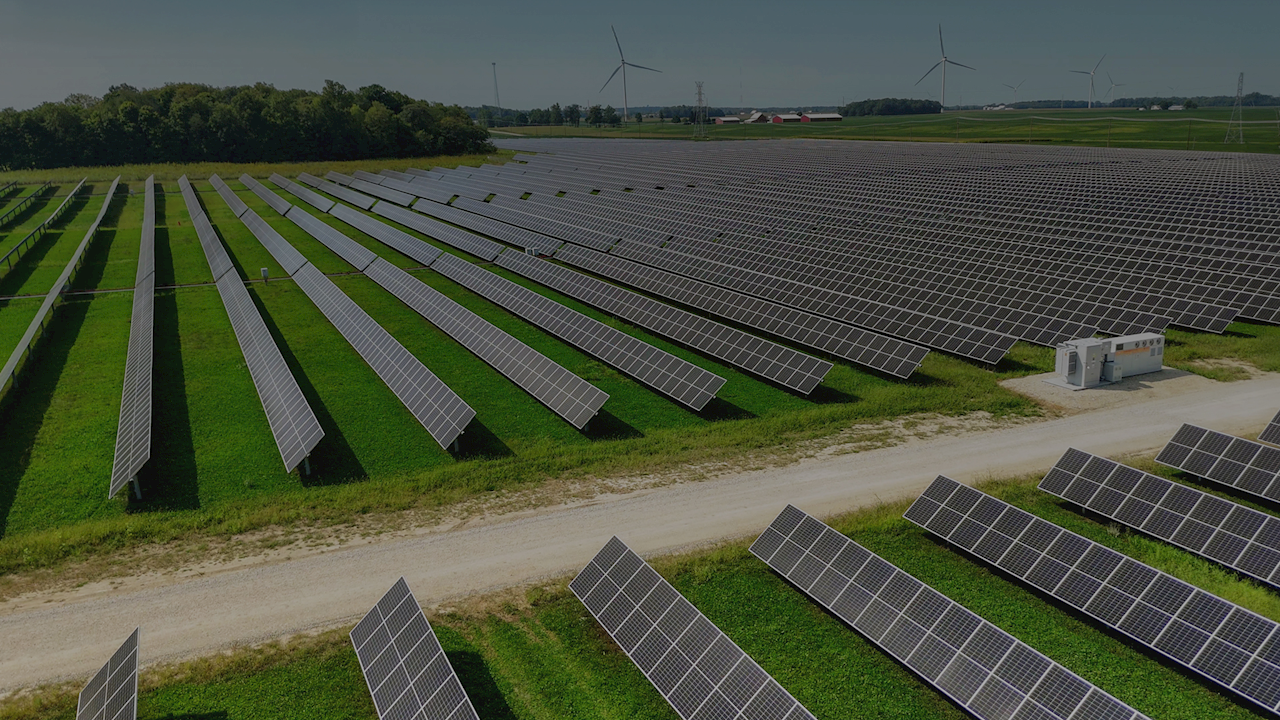
- By 2030, renewable energy is expected to supply 43%1 of global electricity, driven by strong growth in solar and wind
- Positions ABB to capitalize on International Energy Agency’s predicted market growth with modernization and service opportunities in the renewable sector
ABB announced today the completion of its acquisition of Gamesa Electric’s power electronics business in Spain from Siemens Gamesa, originally announced on December 18, 2024. Financial terms were not disclosed. The business reported annual revenues of approximately €145 million for the fiscal year ended September 30, 2025.
The acquired portfolio includes power conversion products such as wind converters for doubly-fed induction generator (DFIG), industrial battery energy storage systems (BESS), and utility-scale solar inverters. The transaction brings in around 400 employees, including key resources in India, China, United States, and Australia, and two converter factories in Madrid and Valencia. ABB has also entered into a supply and services agreement with Siemens Gamesa. The acquisition increases the total capacity of ABB’s serviceable installed base of wind converters by approximately 46 gigawatts and supports the profitable growth strategy of the Motion business area. With over 45 years of experience in power electronics, Gamesa Electric brings deep technical expertise in solar and renewable applications and strong customer relationships.
“By combining ABB’s global reach and Gamesa Electric’s portfolio and expertise, the company is well positioned to capture growing demand and accelerate renewable energy adoption worldwide,” said Daniel Gerber, Business Line Manager, Renewable Power of ABB’s Motion High Power division.
According to the International Energy Agency2, electricity generation from renewables is expected to increase 60% from 9,900 TWh in 2024 to 16,200 TWh in 2030. In fact, renewables are expected to surpass coal at the end of 2025 (or by mid-2026 at the latest, depending on hydropower availability) to become the largest source of electricity generation globally. Solar PV alone accounts for over half of this increase, followed by wind at roughly 30 percent.
1 IEA (2025), Renewables 2025, IEA, Paris https://www.iea.org/reports/renewables-2025, Licence: CC BY 4.0
2 IEA (2025), Renewables 2025, IEA, Paris https://www.iea.org/reports/renewables-2025, Licence: CC BY 4.0
SourceABB
EMR Analysis
More information on ABB: See full profile on EMR Executive Services
More information on Morten Wierod (Chief Executive Officer and Member of the Group Executive Committee, ABB): See full profile on EMR Executive Services
More information on Timo Ihamuotila (Chief Financial Officer, ABB till end of 2026 + Member of the Executive Committee, ABB till February 1, 2026): See full profile on EMR Executive Services
More information on Christian Nilsson (Chief Financial Officer, Electrification Business Area, ABB till February 1, 2026 + Chief Financial Officer and Member of the Executive Committee, ABB as from February 1, 2026): See full profile on EMR Executive Services
More information on Motion Business Area by ABB: See the full profile on EMR Executive Services
More information on Brandon Spencer (President, Motion Business Area and Member of the Executive Committee, ABB): See full profile on EMR Executive Services
More information on Daniel Gerber (Business Line Manager, Renewable Power, Motion High Power Division, Motion Business Area, ABB): See full profile on EMR Executive Services
More information on Gamesa Electric by Motion Business Area by ABB: https://www.gamesaelectric.com/ + Gamesa Electric is a worldwide leader in the design and manufacturing of electrical equipment, with extensive experience in photovoltaics, hydro-electric energy, marine propulsion, wind power and energy storage applications, among others.
In April 2017, Gamesa merged Siemens Wind to form Siemens Gamesa Renewable Energy. Gamesa Electric is a 100% subsidiary of this merged company.
More information on Juan Barandiaran (Managing Director, Gamesa Electric, Renewable Power, Motion High Power Division, Motion Business Area, ABB): See the full profile on EMR Executive Services
More information on Siemens Energy: See the full profile on EMR Executive Services
More information on Dr. -Ing. Christian Bruch (President, Chief Executive Officer and Chief Sustainability Officer, Siemens Energy AG + President and Chief Executive Officer of Siemens Energy Management GmbH, Siemens Energy AG): See the full profile on EMR Executive Services
More information on Maria Ferraro (Chief Financial Officer, Siemens Energy AG): See the full profile on EMR Executive Services
More information on Siemens Gamesa Renewable Energy, S.A. (SGRE) by Siemens Energy AG: https://www.siemensgamesa.com/en-int + At Siemens Gamesa, when the wind blows, we see infinite possibilities. 40 years ago, we saw the potential to blend nature and engineering. We envisioned the possibility of powering factories and lighting up cities, all whilst cleaning the air we breathe. Today, we’ve made that vision a reality by producing clean energy to power our homes, schools, and hospitals to keeping us moving all over the world – from the largest cities to the most remote corners of the planet.
We are a team of 28,150 individuals from over 100 nationalities, all motivated to tackle the greatest challenge of our generation – the climate crisis. We’re inspired by the prospect of working in a continuously evolving industry alongside expert colleagues, pushing the boundaries of possibility.
More information on Vinod Philip (Member of the Executive Board for Wind Power, Siemens Energy AG + Member of the Executive Board of Siemens Energy Management GmbH, Siemens Energy AG + Chief Executive Officer, Siemens Gamesa Renewable Energy, Siemens Energy AG): See the full profile on EMR Executive Services
More information on IEA (International Energy Agency): https://www.iea.org + The International Energy Agency (IEA) works with governments and industry to shape a secure and sustainable energy future for all.
- We work with a broad range of international organisations and forums to ensure secure, affordable and sustainable energy systems
- Our technology programme provides the basis for international public and private research partnerships
- We help ensure a quick and effective response to energy supply disruptions through emergency response measures and other mechanisms
- We carry out training activities around the world on energy statistics, modelling, technology, energy efficiency and policies for clean energy transitions
The IEA was created in 1974 to help co-ordinate a collective response to major disruptions in the supply of oil. While oil security this remains a key aspect of our work, the IEA has evolved and expanded significantly since its foundation.
Since 2015, the IEA has opened its doors to major emerging countries to expand its global impact, and deepen cooperation in energy security, data and statistics, energy policy analysis, energy efficiency, and the growing use of clean energy technologies.
More information on Dr. Fatih Birol (Executive Director, International Energy Agency): https://www.iea.org/about + https://www.linkedin.com/in/fatih-birol/
EMR Additional Notes:
- Power Electronics:
- Power electronics is a branch of electrical engineering that deals with the efficient conversion, control, and conditioning of electric power. It uses static devices, primarily semiconductor switches, to convert electric power from its available input form (e.g., AC or DC) into a desired electrical output form. This field is essential for processing high voltages and currents to deliver power for a wide variety of applications.
- Power Conversion:
- In electrical engineering, power conversion is the process of converting electric energy from one form to another. A power converter is an electrical device for converting electrical energy between alternating current (AC) and direct current (DC). It can also change the voltage or frequency of the current.
- Doubly-Fed Induction Generator (DFIG):
- A Doubly-Fed Induction Generator (DFIG) is a variable-speed generator, commonly used in wind turbines, that produces fixed-frequency AC power from a variable speed input. It has three-phase windings on both the rotor and the stator, allowing it to manage both active and reactive power and operate at different rotational speeds (typically ±30%) around its synchronous speed. The generator’s ability to control the rotor’s magnetic field through a power converter allows it to maintain a constant output frequency while the prime mover, like a wind turbine rotor, varies its speed.
- Energy Storage System (ESS):
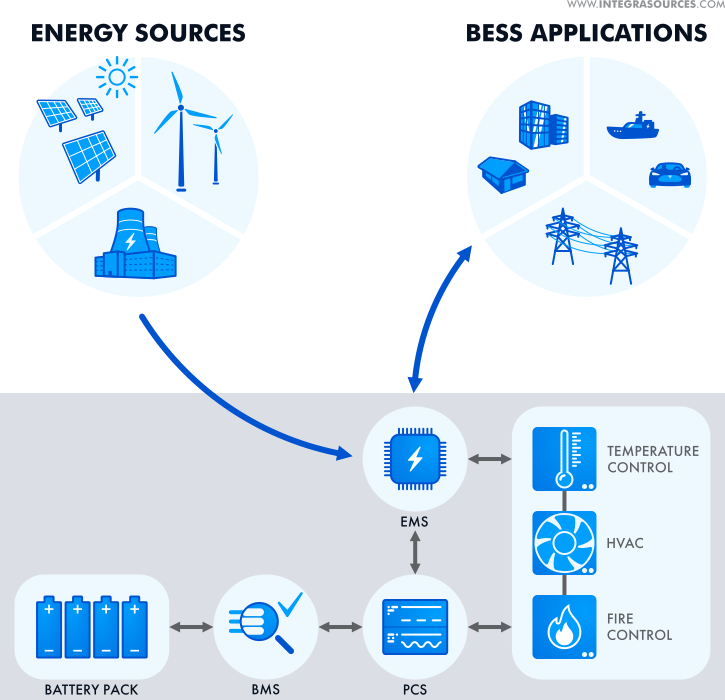
- An energy storage system, often abbreviated as ESS, is a device or group of devices assembled together, capable of storing energy in order to supply electrical energy at a later time. An energy storage system consists of three main components:
- a power conversion system, which transforms electrical energy into another form of energy and vice versa;
- a storage unit, which stores the converted energy;
- a control system, which manages the energy flow between the converter and the storage unit.
- An energy storage system, often abbreviated as ESS, is a device or group of devices assembled together, capable of storing energy in order to supply electrical energy at a later time. An energy storage system consists of three main components:
- Battery Energy Storage System (BESS):
- A BESS is an energy storage system (ESS) that captures energy from different sources, accumulates this energy, and stores it in rechargeable batteries for later use.
- Hybridized Energy Storage System (HESS):
- Combines two or more energy storage technologies in a single system to leverage their complementary strengths, improving overall performance, efficiency, and lifespan compared to using a single storage technology. An energy storage system must be reactive and flexible depending on demand which can vary considerably. As a result, within a fit for purpose HESS system there are storage components dedicated to “high power” demand such as supercapacitors and others dedicated to “high energy” demand such as batteries.
- Distributed Energy Storage Systems (DESS):
- Distributed Energy Storage Systems (DESS) are energy storage devices deployed at multiple locations across an electrical grid rather than in one large, centralized facility. These systems, which can be as small as a home battery or as large as a utility substation system, store excess energy generated during low-demand periods or from renewable sources like solar and wind. They then release that energy when demand is high or renewable supply is low, which improves grid stability, resilience, and efficiency.
- Motors, Generators and Drives:
- Motor: Mechanical or electrical device that generates the rotational or linear force used to power a machine.
- NEMA / IEC Motors: NEMA motors are commonly made with rolled steel or cast iron frames while IEC motors are commonly made with cast aluminum or cast iron frames.
- North American NEMA (National Electrical Manufacturers Association) and IEC (International Electrotechnical Commission) standards are crucial because they ensure that motors from different manufacturers are interchangeable and meet specific criteria for performance, safety, and physical dimensions.
- Servo Motor: Self-contained electrical device, that rotate parts of a machine with high efficiency and with great precision. The output shaft of this motor can be moved to a particular angle, position and velocity that a regular motor does not have. It consists of a suitable motor coupled to a sensor for position feedback. It also requires a relatively sophisticated controller.
- Shaft Grounded Motor: Electric motor that is equipped with a device to safely redirect harmful electrical currents away from its internal bearings. Without this protection, these currents can cause significant damage and lead to premature motor failure.
- NEMA / IEC Motors: NEMA motors are commonly made with rolled steel or cast iron frames while IEC motors are commonly made with cast aluminum or cast iron frames.
- Generator: Does the opposite of this, converting mechanical energy into electricity. It does not create electricity; rather, it forces the movement of existing electric charges (electrons) in a conductor to produce an electric current.
- Drive: (also often referred to as an electric controller) is the electronic device that harnesses and controls the electrical energy sent to the motor.
- By positioning a drive between the electrical supply and the motor, power is fed into the drive, and the drive then controls and regulates the power that is fed into the motor. This allows control of speed, direction, acceleration, deceleration, torque and, in some applications, position of the motor shaft.
- Motor: Mechanical or electrical device that generates the rotational or linear force used to power a machine.
- Variable Speed Drive (VSD) – Variable Frequency Drive (VFD) – Inverter:
- Variable Speed Drive (VSD): Device used in electromechanical drives to control the speed and torque of an AC motor by adjusting the motor’s input frequency and voltage. Variable speed drives may be either electric, hydraulic, mechanical or even electronic.
- Variable Frequency Drive (VFD): Type of motor controller that drives an electric motor by varying the frequency and voltage supplied to the electric motor. Frequency (or hertz) is directly related to the motor’s speed (RPMs). In other words, the faster the frequency, the faster the RPMs go.
- Other names for a VFD are variable speed drive, adjustable speed drive, adjustable frequency drive, AC drive, microdrive, and inverter.
- Inverter: Device that converts direct current (DC) electricity to alternating current (AC) either for stand-alone systems or to supply power to an electricity grid.
- An inverter is one of the most important pieces of equipment in a solar energy system. It’s a device that converts direct current (DC) electricity, which is what a solar panel generates, to alternating current (AC) electricity, which the electrical grid uses.
- Crucially, an inverter is a key internal component of a Variable Frequency Drive (VFD) that performs the DC to AC conversion necessary to control the motor.
- Most inverters are installed and used in conjunction with a battery bank of some sort – a common set up in off-grid solar installations.
- => A variable frequency drive (VFD) refers to AC drives only and a variable speed drive (VSD) refers to either AC Drives or DC Drives. VFDs vary the speed of an AC motor by varying the frequency to the motor. VSDs referring to DC motors vary the speed by varying the voltage to the motor. In essence, a VFD is a specific type of VSD, and an inverter is the critical component inside a VFD that allows it to convert power and control the motor’s speed.
- Fundamental Units of Electricity:
- Ampere – Amp (A):
- Amperes measure the flow of electrical current (charge) through a circuit. Ampere (A) is the unit of measure for the rate of electron flow, or current, in an electrical conductor.
- One ampere is defined as one coulomb of electric charge moving past a point in one second. The ampere is named after the French physicist André-Marie Ampère, who made significant contributions to the study of electromagnetism.
- Milliampere (mA) is a unit of electric current equal to one-thousandth of an ampere (1mA=10−3A). The prefix “milli” signifies 10−3 in the metric system. This unit is commonly used to measure small currents in electronic circuits and consumer devices.
- Volts measure the force or potential difference that drives the flow of electrons through a circuit.
- Kilovolt (kV) is a unit of potential difference equal to 1,000 volts.
- Watts measure the rate of energy consumption or generation, also known as power.
- Amperes measure the flow of electrical current (charge) through a circuit. Ampere (A) is the unit of measure for the rate of electron flow, or current, in an electrical conductor.
- Power vs. Energy: how electricity is measured and billed.
- Power (measured in kW, MW, GW, TW): Rate at which energy is used or generated at a given moment.
- Energy (measured in kWh, MWh, GWh, TWh): Total amount of power consumed or generated over a period of time (i.e., Power x Time).
- Real Power Units: actual power that performs work.
- Kilowatt (KW):
- A kilowatt is simply a measure of how much power an electric appliance consumes—it’s 1,000 watts to be exact. You can quickly convert watts (W) to kilowatts (kW) by dividing your wattage by 1,000: 1,000W 1,000 = 1 kW.
- Megawatt (MW):
- One megawatt equals one million watts or 1,000 kilowatts, roughly enough electricity for the instantaneous demand of 750 homes at once.
- Gigawatt (GW):
- A gigawatt (GW) is a unit of power, and it is equal to one billion watts.
- According to the Department of Energy, generating one GW of power takes over three million solar panels or 310 utility-scale wind turbines
- Terawatt (TW):
- One terawatt is equal to one trillion watts (1,000,000,000,000 watts). The main use of terawatts is found in the electric power industry, particularly for measuring very large-scale power generation or consumption.
- According to the United States Energy Information Administration, America is one of the largest electricity consumers in the world, using about 4,146.2 terawatt-hours (TWh) of energy per year.
- Kilowatt (KW):
- Apparent Power Units: measures the total power in a circuit, including power that does not perform useful work.
- Kilovolt-Amperes (kVA):
- Kilovolt-Amperes (kVA) stands for Kilo-volt-amperes, a term used for the rating of an electrical circuit. A kVA is a unit of apparent power, which is the product of the circuit’s maximum voltage and current rating.
- The difference between real power (kW) and apparent power (kVA) is crucial. Real power (kW) is the actual power that performs work, while apparent power (kVA) is the total power delivered to a circuit, including the real power and the reactive power (kVAR) that doesn’t do useful work. The relationship between them is defined by the power factor. Since the power factor is typically less than 1, the kVA value will always be higher than the kW value.
- Megavolt-Amperes (MVA):
- Megavolt-Amperes (MVA) is a unit used to measure the apparent power in a circuit, primarily for very large electrical systems like power plants and substations. It’s a product of the voltage and current in a circuit.
- 1 MVA is equivalent to 1,000 kVA, or 1,000,000 volt-amperes.
- Kilovolt-Amperes (kVA):
- Specialized Power Units: used specifically for renewable energy, especially solar.
- KiloWatt ‘peak’ (KWp):
- kWp stands for kilowatt ‘peak’ power output of a system. It is most commonly applied to solar arrays. For example, a solar panel with a peak power of 3kWp which is working at its maximum capacity for one hour will produce 3kWh. kWp (kilowatt peak) is the total kw rating of the system, the theoretical ‘peak’ output of the system. e.g. If the system has 4 x 270 watt panels, then it is 4 x 0.27kWp = 1.08kWp.
- The Wp of each panel will allow you to calculate the surface area needed to reach it. 1 kWp corresponds theoretically to 1,000 kWh per year.
- KiloWatt ‘peak’ (KWp):
- Ampere – Amp (A):